The Future of Jewelry Design: How AI is Revolutionizing the Industry in 2025
Discover how generative AI jewelry design is transforming the industry, from rapid ideation to marketing applications. Explore top AI tools including Tashvi.ai, legal considerations, and the future of jewelry manufacturing.
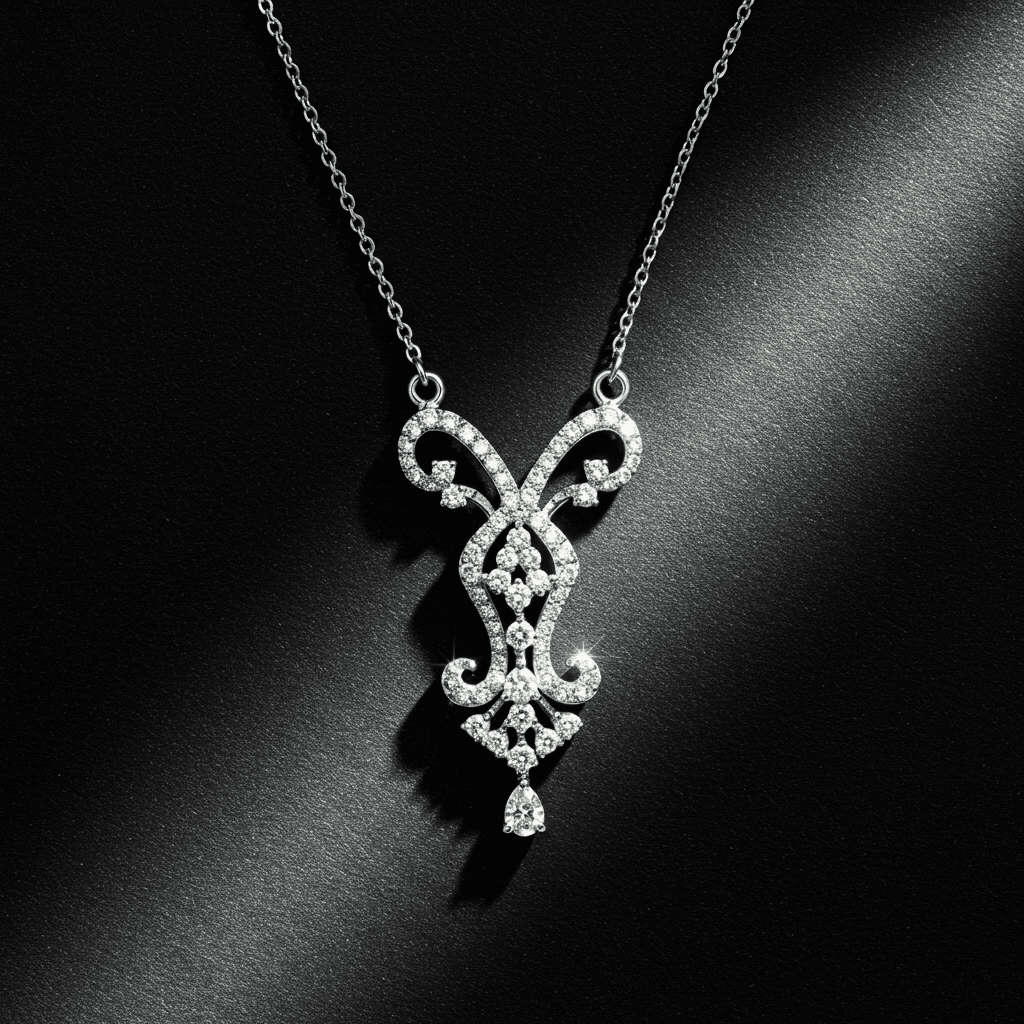
The jewelry industry stands at a fascinating crossroads where centuries-old craftsmanship meets cutting-edge artificial intelligence. While traditional tools and techniques remain the foundation of jewelry making, generative AI jewelry design is rapidly emerging as a revolutionary force that's transforming how designers conceptualize, create, and market their pieces.
According to a comprehensive study published by the Gemological Institute of America (GIA) in their Fall 2024 Gems & Gemology journal, AI must now be recognized as a revolutionary tool to assist jewelers, despite the controversy surrounding its use in creative arts.
Understanding AI in Jewelry Design
What is Generative AI for Jewelry?
Artificial intelligence jewelry design utilizes sophisticated algorithms and machine learning to create original jewelry concepts from text descriptions or image prompts. Unlike traditional computer-aided design (CAD) software, AI jewelry design tools can generate completely new designs with minimal human input, opening unprecedented creative possibilities.
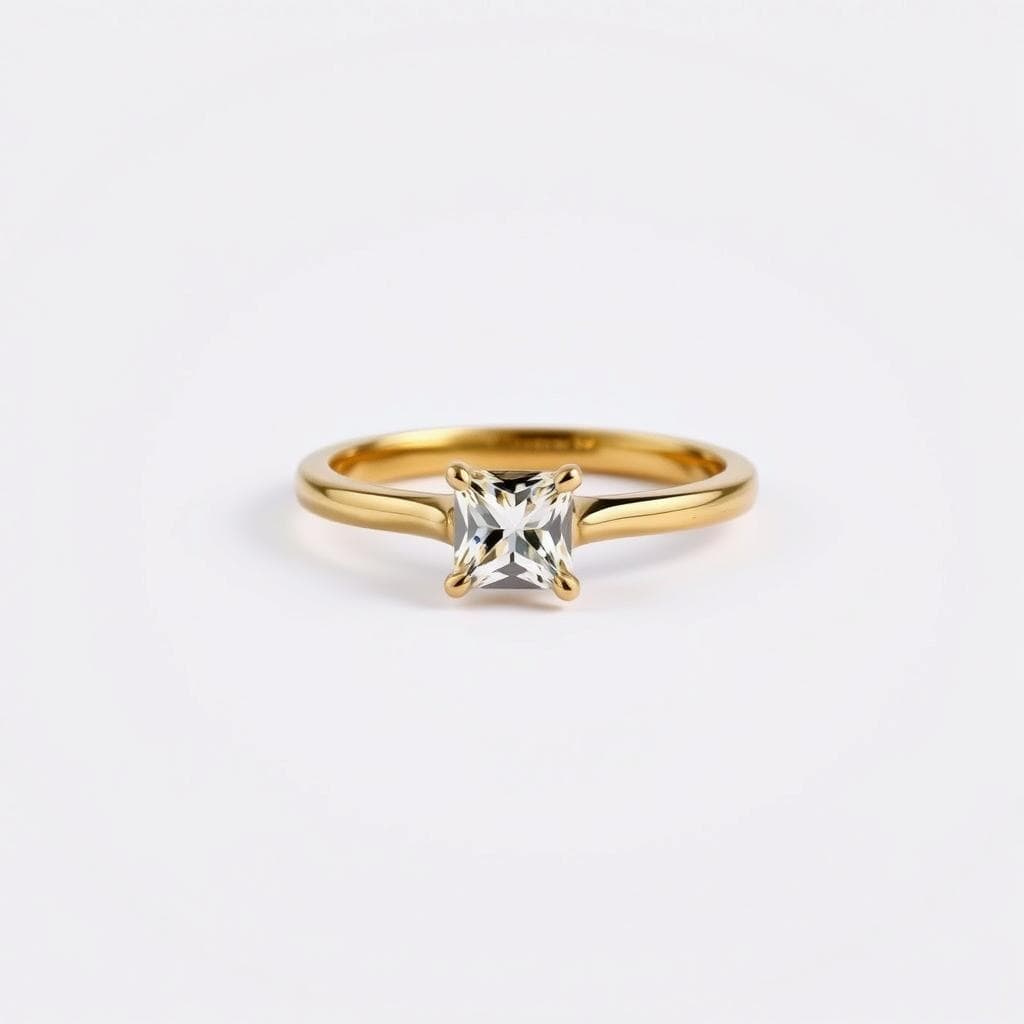
The GIA research explains that generative AI operates through complex diffusion models, similar to particle diffusion in physics. The technology trains on trillions of images, learning patterns that enable it to create entirely new designs rather than simply copying existing ones. This process, sometimes called "hallucination" in AI terminology, actually represents a benefit for creative applications—the AI generates original compositions rather than collaging existing images.
The Rise of "AIdeation"
One of the most powerful applications of AI-assisted jewelry design is rapid ideation. The GIA study coins this capability as "AIdeation"—the ability to brainstorm design concepts at incredible speed. With just a few words describing desired styles, materials, or aesthetics, designers can generate dozens of variations within minutes.
For example, a designer seeking to create earrings blending Art Deco and ancient Egyptian styles can simply input that prompt and receive multiple unique interpretations in seconds. Each generated image becomes a stepping stone for further refinement, allowing designers to explore creative directions they might never have considered.
Top AI Jewelry Design Tools and Software
Comprehensive Comparison of Leading Platforms
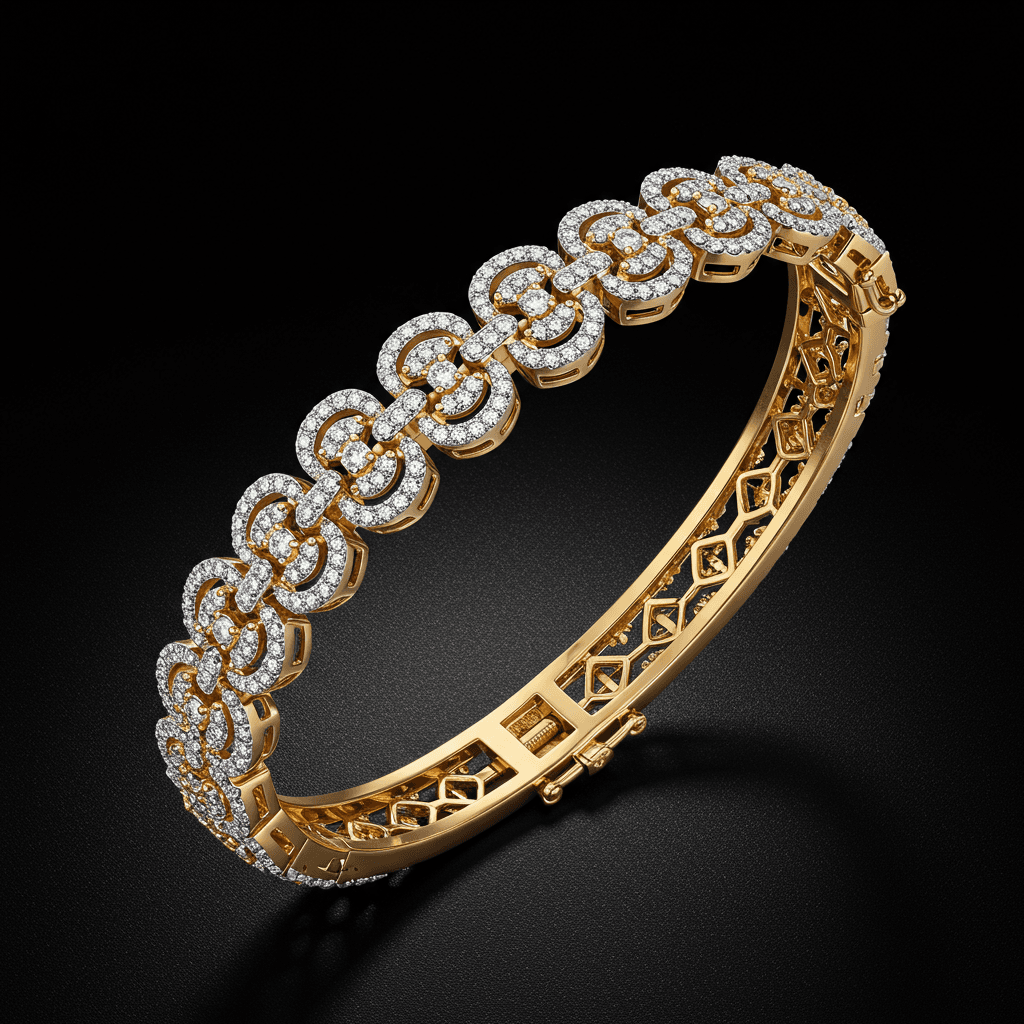
The jewelry design landscape now features several robust AI jewelry design programs, each with unique strengths. While platforms like Midjourney, Stable Diffusion, and DALL·E offer general AI image generation, specialized jewelry-focused platforms like Tashvi.ai are emerging as game-changers for the industry, offering features specifically designed for jewelry designers, retailers, and custom jewelers.
Midjourney for Jewelry Design
Currently one of the most popular platforms, Midjourney jewelry AI excels at creating highly detailed, creative, and realistic jewelry images. The platform demonstrates reasonable understanding of jewelry terminology and can generate variations through an iterative refinement process. According to the GIA analysis, designers can produce 16 or more variations in approximately five minutes.
However, Midjourney currently requires access through the Discord interface, which can present a learning curve for users unfamiliar with gaming platforms. The platform offers various subscription tiers, with higher levels providing privacy modes for protecting proprietary designs.
Stable Diffusion Jewelry Design
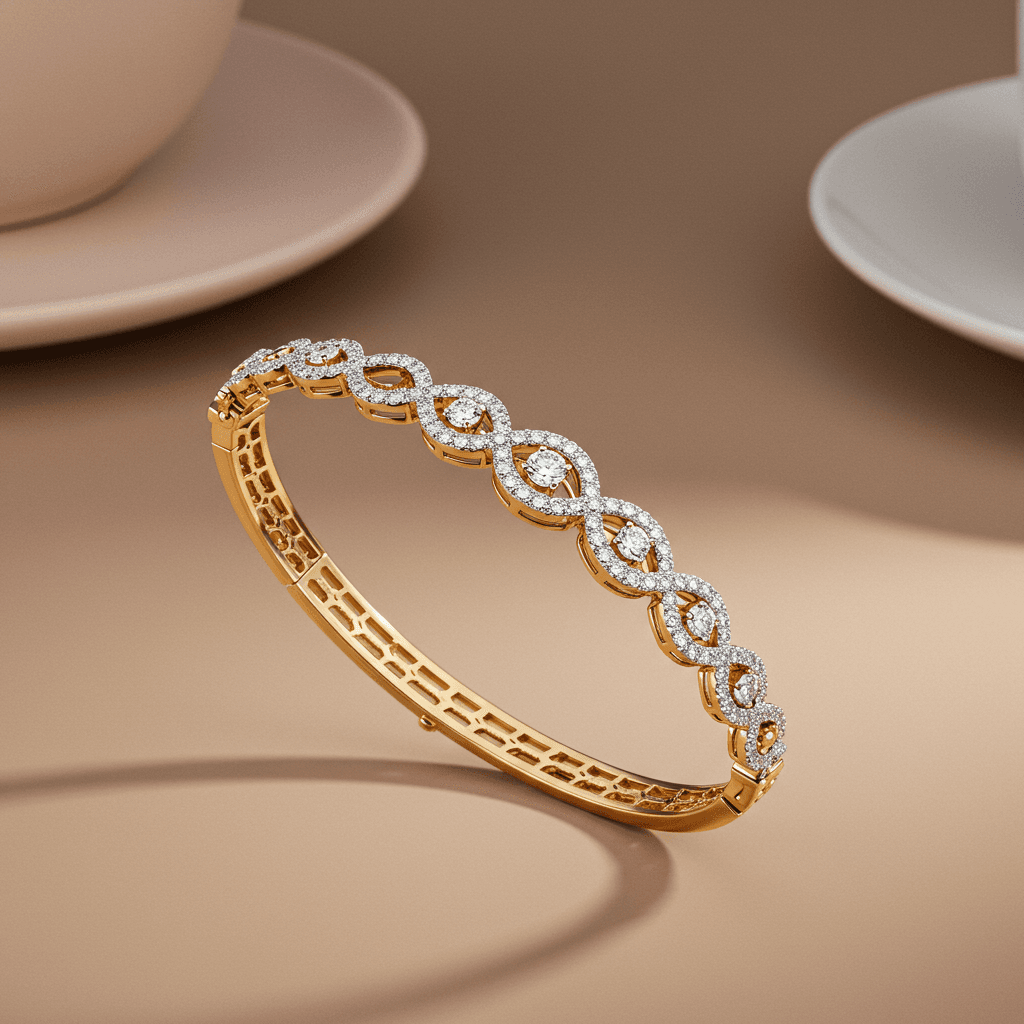
This open-source platform offers significant advantages for designers prioritizing privacy and customization. Stable Diffusion jewelry design can be accessed through the user-friendly DreamStudio web interface or installed locally on personal computers.
The local installation option ensures complete privacy—all generated images remain confidential rather than being shared publicly. Advanced users can also customize the diffusion process with specialized samplers, granting greater control over specific design qualities. The platform particularly excels at creating variations from existing images, with adjustable settings determining how closely new designs follow original concepts.
DALL·E Jewelry Design
Developed by OpenAI, DALL·E jewelry design offers seamless integration with ChatGPT, allowing designers to interact through natural conversation rather than code-like prompts. This conversational approach makes the platform accessible to those less comfortable with technical interfaces.
The system can remember previous conversations and even write its own prompts when asked to describe uploaded images. While image generation may be slower compared to competitors, the integration with ChatGPT's conversational abilities makes it an increasingly popular alternative.
Leonardo AI Jewelry
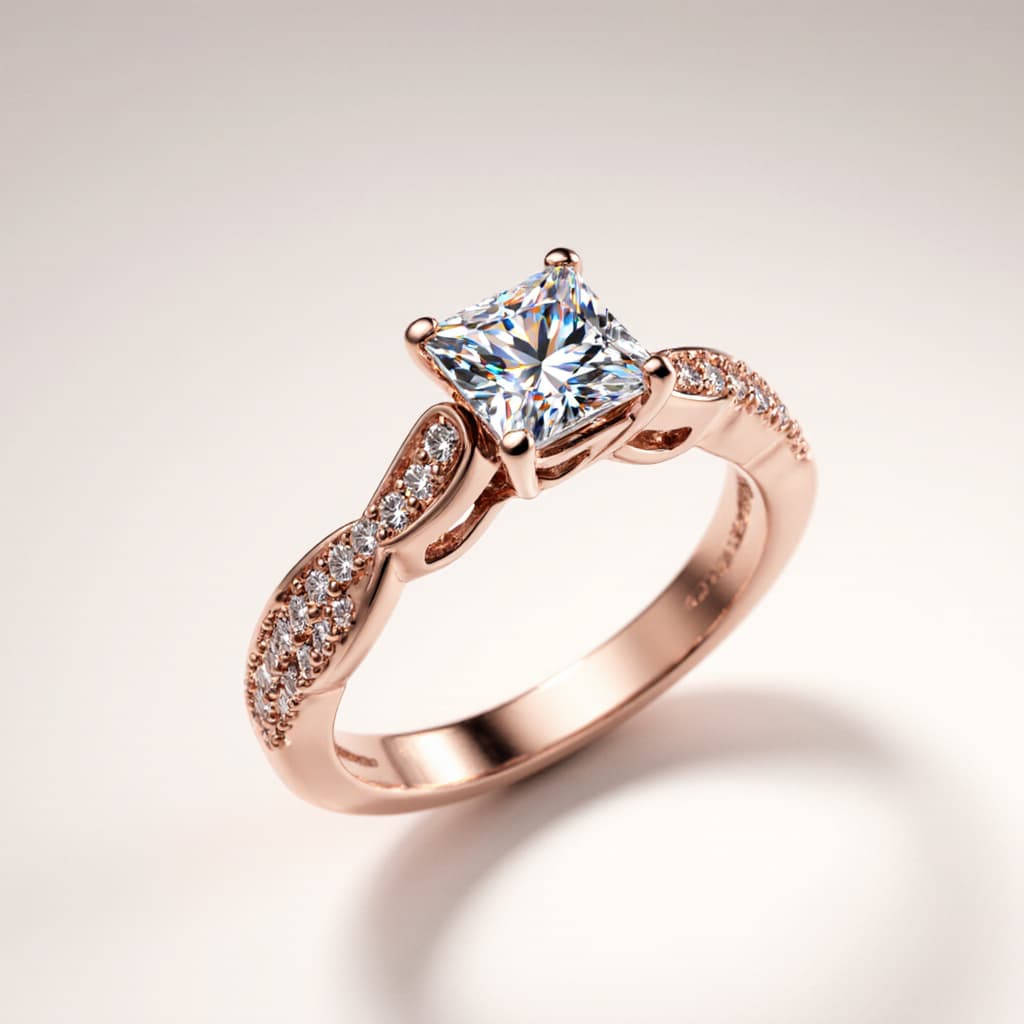
Leonardo AI jewelry design tools provide extensive variety and control over both prompt types and image styles. The platform features a sophisticated web interface offering more customization options than many competitors.
A standout feature is the Realtime Canvas—a live sketching program that constantly updates generated images as users draw, within specified text prompt parameters. Leonardo also allows designers to "train" custom image models using their own design portfolios (up to 40 images), enabling the AI to generate new designs heavily influenced by existing work.
Adobe Firefly Jewelry AI
Adobe Firefly jewelry AI represents a unique approach to the generative AI landscape. As both a standalone generator and integrated Photoshop plugin, Firefly offers excellent inpainting and outpainting capabilities for modifying existing designs.
Critically, Adobe trained Firefly exclusively on Adobe Stock images, openly licensed content, and public domain materials—not on scraped internet data. This approach provides clearer regulatory standing and helps address copyright concerns. However, this more limited training dataset means Firefly has less understanding of jewelry-specific forms and terminology compared to platforms trained on broader internet content.
Specialized Jewelry-Focused AI Platforms
Tashvi.ai: Purpose-Built for Jewelry Design
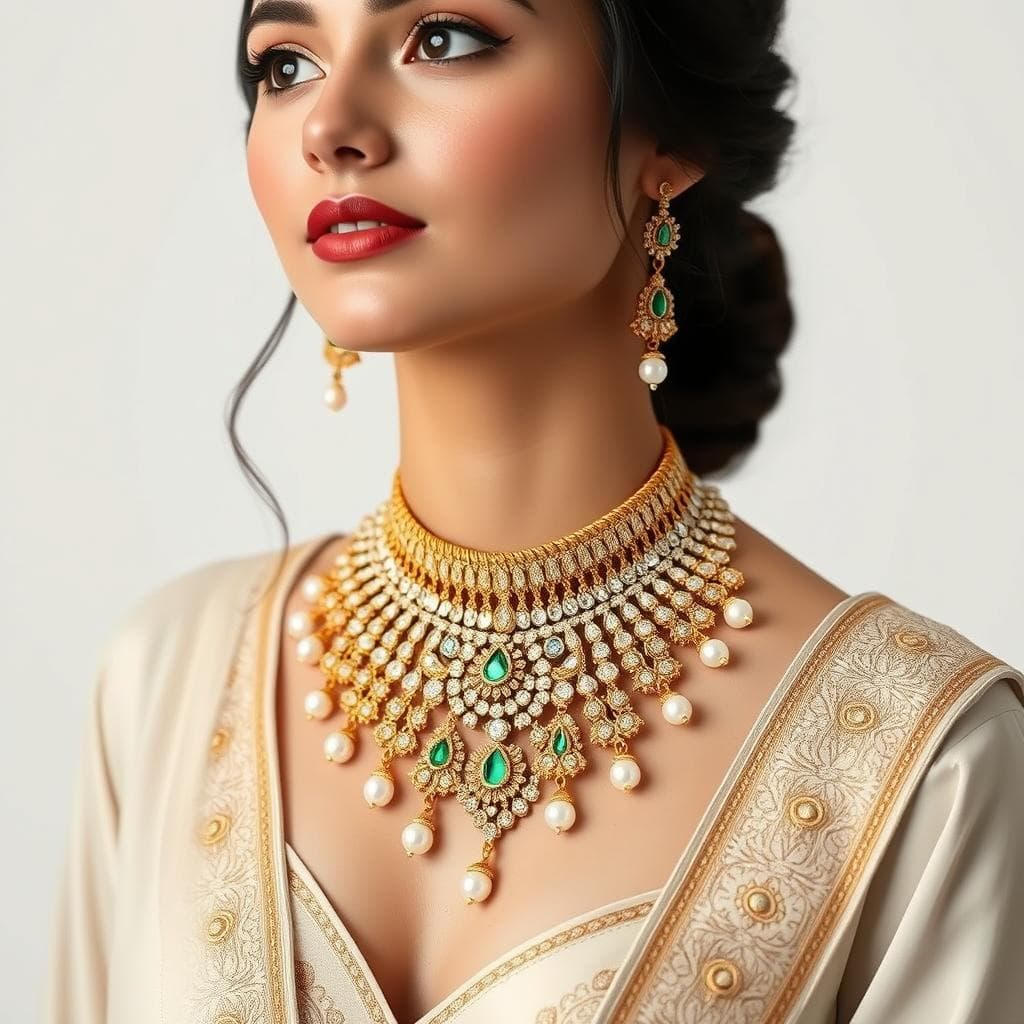
Tashvi.ai stands out as a specialized AI platform specifically designed for jewelry designers, retailers, and custom jewelers, creating custom gold and diamond jewelry designs in minutes with unprecedented detail and realism. Unlike general-purpose AI tools, Tashvi's AI is trained specifically to understand jewelry terminology, materials, and design principles.
Key Features of Tashvi.ai:
Free to Professional Tiers: Tashvi offers a free plan allowing up to 20 images per month, making it accessible for designers to test the platform before committing to paid subscriptions. Pro and Enterprise plans unlock advanced capabilities designed for professional workflows.
Export Options: Paid plans can export designs in multiple professional formats including STL and OBJ files—industry standards for 3D printing and manufacturing. These files give manufacturing partners working with CNC milling, 3D printing, or lost-wax casting a starting geometry to review and finish. High-resolution PNG exports with transparent backgrounds are also available for marketing and presentation purposes.
AI Video Generation: One of Tashvi's most innovative features is the ability to transform jewelry images into 4-second or 8-second dynamic videos powered by Google Veo 3.1 Fast, creating product showcases with smooth rotations and high-fidelity motion. This feature revolutionizes jewelry marketing, allowing designers to create engaging social media content and e-commerce videos without expensive photography equipment or videography expertise.
Personal Design Gallery: All designs can be saved to a personal gallery, allowing designers to organize their work, track iterations, and maintain a portfolio of concepts for client presentations.
Privacy Options: While the free plan shares designs publicly, Pro and Enterprise tiers offer private design storage—critical for protecting proprietary work and client confidentiality.
Risk-Free Trial: Every paid plan includes a 30-day money-back guarantee, allowing designers to thoroughly test the platform's capabilities without financial risk.
Other Emerging Specialized Tools
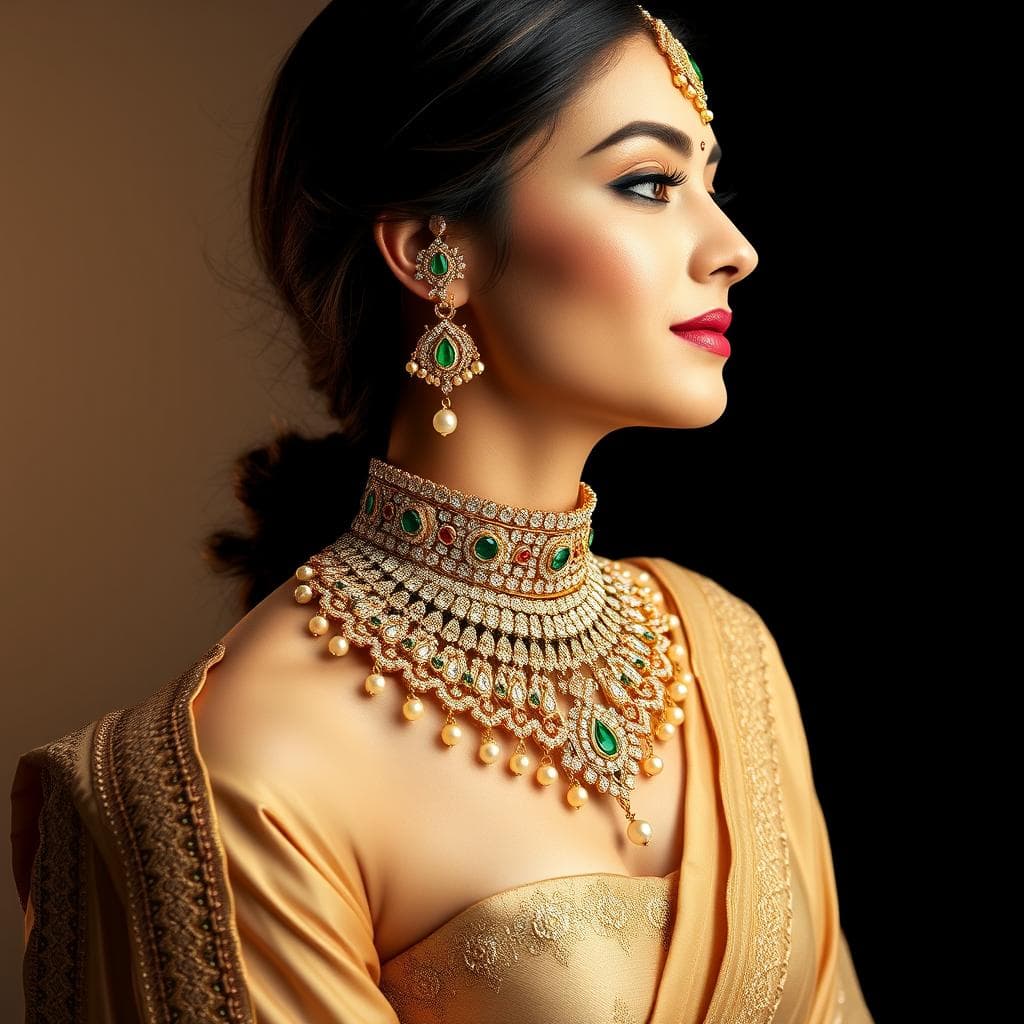
Beyond Tashvi.ai, other specialized AI jewelry design software is emerging:
- Dzine.ai: Focuses on "sketch to render" technology, transforming hand-drawn sketches into photorealistic jewelry renderings
- BLNG: Offers a comprehensive suite of tools covering the entire jewelry production journey, from initial sketches to final marketing materials
- Vizcom.ai: Provides quick conversion of rough design sketches into refined, realistic product images
How to Use AI for Jewelry Design: Practical Applications
Custom Jewelry Design with AI
AI tools for custom jewelry design are revolutionizing the designer-client relationship. The GIA research highlights several practical workflows:
Sketch-to-Render Technology
One of the most promising developments in jewelry design innovation AI is the sketch-to-render approach. Designers or salespeople can create loose hand sketches or digital drawings, then use AI to generate fully rendered, photorealistic images complete with materials, lighting, and 3D depth.
This approach offers multiple advantages. First, it keeps design control firmly in human hands—the designer creates the original sketch before AI enhancement. Second, it dramatically reduces time spent on preliminary CAD modeling. Custom jewelry clients increasingly expect photorealistic renderings before approval, which traditionally requires hours of CAD work. With AI rendering sketches, salespeople can obtain client approval and deposits before investing significant modeling time.
Importantly, this method also establishes stronger copyright protection. Starting with human-created drawings helps satisfy the "human authorship" requirement for copyright, even if AI modifications are added later.
Marketing and Content Creation
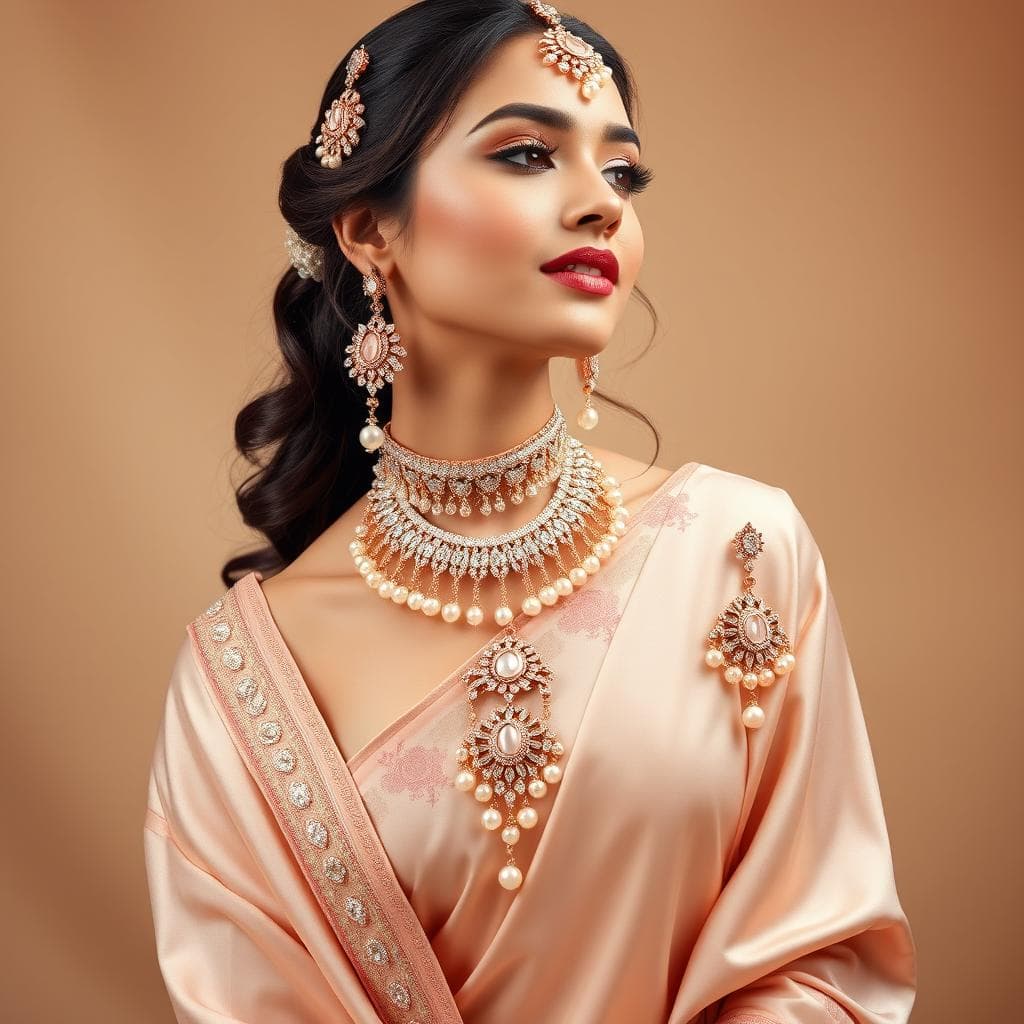
AI-generated jewelry images excel for marketing purposes. Designers can quickly create:
- Product visualization for e-commerce platforms
- Social media content showcasing designs on diverse skin tones
- Lookbook photography without waiting for physical samples
- Video content demonstrating jewelry from multiple angles
The BLNG platform specifically emphasizes marketing applications, offering tools to transform CAD models into scalable marketing content with diverse digital models showcasing jewelry across different styles and occasions.
Design Ideation and Variation
For jewelry lines, AI accelerates the ideation process dramatically. Designers can:
- Generate multiple style variations from single concepts
- Explore unexpected design directions
- Test material and gemstone combinations virtually
- Create collection cohesion by generating related designs
The speed of AI jewelry rendering means designers can explore creative territories that would be impractical with traditional methods, then selectively develop the most promising concepts.
Benefits of AI in Jewelry Creation
Speed and Accessibility
The most immediate advantage of generative AI for jewelry marketing images is velocity. What once required days or weeks of hand sketching and rendering can now happen in minutes. This acceleration democratizes design, making sophisticated visualization accessible regardless of traditional artistic training.
According to the GIA analysis, the two greatest current assets of generative AI are accessibility and speed. Anyone can now create jewelry images in seconds using just a few words and appropriate software.
Cost Efficiency
AI jewelry design software significantly reduces preliminary design costs. Rather than investing hours in CAD modeling before client approval, designers can generate photorealistic representations from simple sketches. This efficiency allows more time for actual manufacturing and reduces the financial risk of exploring multiple design directions.
Creative Exploration
AI removes creative barriers, allowing designers to visualize concepts that might be difficult to sketch by hand. The technology excels at combining unexpected elements—blending historical styles, merging cultural influences, or experimenting with unconventional material combinations.
The GIA research notes that AI images are not collages from training data but original "hallucinated" compositions. This originality enables genuinely new design exploration rather than variations on existing pieces.
Personalization at Scale
For custom jewelers, AI enables rapid personalization. Designers can quickly generate variations tailored to individual client preferences, showing multiple options during consultations. This capability enhances the custom design experience while maintaining efficiency.
Legal Issues and Ethics in AI Jewelry Design
Copyright Challenges with AI-Generated Designs
AI copyright in jewelry design represents one of the most complex aspects of this technology. According to the U.S. Copyright Office, as cited in the GIA study, art generated solely by AI programs cannot be copyrighted or attributed to any human author.
The Copyright Office states that copyright can protect only material that is the product of human creativity, and when AI receives only a prompt and produces works in response, the traditional elements of authorship are determined by the technology—not the human user.
However, there's an important exception: designers who modify AI-generated material to a sufficient degree can copyright those human-authored modifications. This creates a gray area where the boundary between AI generation and human creativity becomes crucial.
Protecting Original Work
Smart approaches to AI jewelry design ethics include:
- Starting with human-created elements: Begin with hand sketches or original photographs, then use AI for enhancement rather than generation
- Substantial human modification: Significantly alter AI outputs through manual design work
- Documentation: Maintain detailed records of the creative process showing human involvement
- Using proprietary training data: Companies with large design portfolios might train private AI models on their own work, avoiding copyright complications
The GIA research suggests that using AI to create variations of one's own preexisting work ensures the main input comes from personal creativity, strengthening copyright claims.
Industry Legal Landscape
Several high-profile intellectual property lawsuits are currently addressing AI-generated content copyright issues. The U.S. Copyright Office is conducting ongoing studies regarding copyright questions raised by generative AI.
Some major AI companies are taking protective measures. OpenAI, for instance, announced it would pay legal costs for enterprise customers facing copyright infringement claims related to ChatGPT and DALL·E.
Adobe's approach with Firefly stands out for its careful attention to training data sources. By using only licensed Adobe Stock images and public domain content, Adobe can offer limited intellectual property indemnification for enterprise customers. The company also founded the Content Authenticity Initiative, developing tools to verify digital image provenance and establish ownership records.
Ethical Considerations Beyond Copyright
AI and creativity in jewelry crafting raises questions beyond legal issues:
- Authenticity: When AI heavily influences design, who is the true author?
- Craftsmanship value: Does AI accessibility diminish appreciation for skilled artisans?
- Design homogenization: Will AI optimization for efficiency create similar-looking jewelry?
- Artist attribution: AI can mimic specific artists' styles, raising ethical concerns about proper credit
The GIA research emphasizes viewing AI as a tool supporting human creators rather than an independent creator with its own ideas. This perspective helps navigate philosophical complexities while maintaining respect for human creativity.
Importantly, the jewelry industry remains fundamentally about tangible goods. While AI generates extraordinary images, designs still require manufacturing. This reality ensures continued value for craftspeople who possess deep understanding of materials, manufacturing processes, ergonomics, and wearability.
Future of AI in Jewelry Manufacturing
Emerging Technologies
The future of AI in jewelry manufacturing points toward several exciting developments:
Text-to-Video Generation
Text to video technology allows creation of short videos from text prompts alone. Since jewelry objects benefit from multiple-angle views—similar to the top, front, and side views in CAD programs—simple 360-degree rotation videos can describe designs more accurately than single images. Platforms like Leonardo.AI and Stability AI have begun offering this capability, though accuracy with complex jewelry designs remains limited.
Image-to-3D Depth Mapping
Advanced programs can now convert AI-generated images into depth maps—grayscale images where shading denotes relative depth. Tools like ZoeDepth can translate these depth maps into actual 2.5D geometry manipulable in CAD programs such as Rhinoceros or ZBrush. This technology narrows the gap between AI visualization and a workable CAD model.
Text-to-3D Mesh Generation
Perhaps the most revolutionary future development is text-to-3D capability. Rather than generating 2D images, these programs create actual 3D models from text prompts. While current examples like Meshy.ai exist, they're primarily geared toward video game props and lack the resolution quality needed for jewelry production.
However, major players are developing sophisticated solutions. TurboSquid (owned by Shutterstock) maintains over a million 3D models for training. Autodesk announced Project Bernini for generative AI 3D shape creation in May 2024. Meta published research on Gen3D for creating 3D objects from text for Metaverse applications. These developments suggest high-quality text-to-mesh programs suitable for jewelry may emerge soon.
Integration with Traditional Craftsmanship
The GIA research concludes that the two greatest future assets for designers using AI tools will be:
- Reality-checking capability: Translating AI images into actual manufacturable models, understanding what's physically possible
- Personalization and customization: Pushing AI-generated designs toward specific directions or purposes that reflect brand identity or individual client preferences
Designers' expertise in materials, manufacturing processes, dimensions, tolerances, ergonomics, and how jewelry interacts with wearers' bodies remains irreplaceable. AI handles visualization; humans handle realization.
Best Practices for Implementing AI Jewelry Design with Tashvi.ai
Getting Started with Tashvi.ai
For jewelers looking to implement AI tools for custom jewelry design, Tashvi.ai offers a streamlined path from concept to manufacturing. Here's how to maximize the platform's capabilities:
Starting Your Journey: The Free Plan Advantage
Begin with Tashvi's free plan to explore the platform's AI capabilities without financial commitment. The free tier provides 20 image generations per month—enough to:
- Test how well the AI understands your design language and terminology
- Experiment with different prompt styles for various jewelry types
- Generate initial concepts for client presentations
- Evaluate whether the platform suits your workflow before upgrading
This risk-free exploration period helps designers understand how generative AI for jewelry marketing images can fit into their existing processes.
Crafting Effective Prompts for Jewelry AI
Tashvi's AI is specifically trained to understand jewelry terminology, materials, and design principles. To create the best results:
Be Specific About Materials: Instead of "gold ring," specify "18-karat yellow gold ring with brushed finish" or "platinum engagement ring with high polish." The AI understands metal types, karats, and finishes.
Detail Gemstone Characteristics: Rather than "diamond necklace," describe "pendant necklace featuring a 2-carat cushion-cut diamond center stone, flanked by two tapered baguette diamonds, set in white gold."
Reference Design Styles: The AI responds well to style references like "Art Deco geometric patterns," "Victorian filigree detailing," "minimalist Scandinavian design," or "organic nature-inspired forms."
Specify Setting Types: Be clear about technical details: "prong setting," "bezel setting," "pavé diamonds," "channel-set side stones," "halo design," or "tension setting."
Include Context and Purpose: Mentioning the jewelry's intended use helps the AI generate appropriate designs: "bridal engagement ring," "statement cocktail ring," "everyday wear earrings," or "heirloom brooch."
Leveraging Tashvi.ai's Advanced Features
Export and CAD Handoff Workflow
One of Tashvi's most significant advantages for professional jewelers is its manufacturing integration:
STL Export for 3D Printing: Pro and Enterprise users can export designs directly as STL files—the industry standard for 3D printing. This enables immediate prototyping workflows:
- Send files directly to 3D printers for wax models
- Share with casting houses using lost-wax techniques
- Create rapid prototypes for client approval
- Test design feasibility before committing to production
OBJ Export for CAD Integration: OBJ files allow seamless integration with professional CAD software like Rhinoceros, Matrix, or ZBrush. Designers can:
- Import AI-generated concepts into CAD for refinement
- Combine AI ideation with traditional CAD modeling
- Add technical details like sizing, measurements, and tolerances
- Prepare final production files with precise specifications
High-Resolution PNG for Presentations: Transparent background PNG exports are perfect for:
- Client presentation decks
- Website and e-commerce listings
- Social media marketing content
- Catalog and lookbook photography
Video Generation for Dynamic Marketing
Tashvi's integration with Google Veo 3.1 Fast for video generation transforms static jewelry images into engaging product showcases:
Social Media Content Creation: Generate 4-8 second videos showing jewelry from multiple angles, perfect for Instagram Reels, TikTok, Facebook, and Pinterest. The smooth rotations and dynamic presentation capture attention in crowded social feeds.
E-Commerce Enhancement: Product videos significantly increase online conversion rates. Tashvi allows you to create professional product videos without expensive equipment, studios, or videography expertise.
Client Presentations: Dynamic videos help clients visualize jewelry pieces more completely than static images. Show how light plays across facets, how designs look from different angles, and how pieces might appear when worn.
Marketing Campaigns: Create video content for email marketing, website headers, digital advertising, and promotional materials—all generated from a single AI design in minutes.
Organizing Your Design Workflow
Personal Gallery Management: Tashvi's gallery feature enables efficient project organization:
- Save multiple design iterations for client review
- Organize concepts by collection, client, or project
- Track design evolution from initial concept to final selection
- Build a portfolio of your AI-assisted design work
- Reference past projects for future inspiration
Privacy Considerations: For commercial jewelers working with proprietary designs or confidential client projects, Tashvi's Pro and Enterprise plans offer private design storage. This ensures:
- Competitive designs remain confidential
- Client-specific custom work isn't publicly visible
- Intellectual property protection for your design concepts
- Professional security for high-value commission work
Tashvi.ai Applications Across the Jewelry Business
For Custom Jewelry Designers
Accelerated Client Consultation: During initial consultations, quickly generate multiple design concepts based on client preferences. Instead of scheduling follow-up meetings after creating hand sketches or CAD models, show realistic options immediately.
Design Variation Exploration: Generate 5-10 variations of a concept in the time it would take to sketch one by hand. Clients can see their jewelry in different metals, with various gemstone arrangements, or featuring alternative design elements.
Deposit-Worthy Presentations: Use Tashvi's photorealistic images to secure client deposits before investing hours in detailed CAD modeling. The AI-generated visualizations are convincing enough for clients to commit, protecting your time investment.
From Concept to CAD: Export approved designs as OBJ files and import them into your preferred CAD software. This hybrid workflow combines AI's speed for ideation with CAD's precision for production-ready models.
For Jewelry Retailers
Rapid Custom Program Development: Retailers without in-house design staff can now offer custom jewelry services. Generate design options for customers seeking personalized pieces without hiring dedicated designers.
Marketing Content Generation: Create endless product photography variations:
- Show rings on different skin tones
- Display necklaces with various neckline styles
- Generate lifestyle imagery without models or photographers
- Produce seasonal marketing campaigns quickly and affordably
Virtual Inventory Expansion: Generate images of jewelry in materials you don't currently stock. Show a popular ring design in rose gold, white gold, and yellow gold without manufacturing all three versions.
Video Content for Every Product: Transform your entire catalog into dynamic video content. Tashvi's video generation enables retailers to create engaging e-commerce videos for hundreds of products in a fraction of the time traditional photography requires.
For Jewelry Manufacturers
Collection Development: Rapidly prototype new collection concepts before committing manufacturing resources. Generate 50+ design variations to identify promising directions before producing physical samples.
Trade Show Preparation: Create compelling visual presentations of upcoming collections. Export high-resolution images for catalogs, booth displays, and buyer presentations—all before manufacturing sample pieces.
B2B Marketing Materials: Generate product videos and images for wholesale catalogs, buyer presentations, and marketing materials that can be shared with retail partners.
Design Communication: Export STL and OBJ files to share with production teams, ensuring clear communication between design and manufacturing departments.
Integrating Tashvi.ai With Traditional Workflows
The Hybrid Design Approach
The most successful designers don't abandon traditional methods—they enhance them with AI:
- Sketch Initial Concepts: Begin with hand sketches or mood boards defining design direction and client preferences
- Generate AI Variations: Input sketches or descriptions into Tashvi to create multiple refined interpretations
- Client Selection: Present AI-generated options for client feedback and selection
- CAD Refinement: Export approved design as OBJ file and refine in CAD software
- Technical Detailing: Add precise measurements, sizing, tolerances, and production specifications
- Manufacturing: Send final CAD files to production with confidence
This approach maintains human creativity and expertise while leveraging AI's speed and visualization capabilities.
Copyright Protection Strategy
When using AI copyright in jewelry design considerations, Tashvi.ai users should:
- Document your process: Save prompts, iterations, and modifications showing substantial human involvement
- Start with original sketches: Use your hand-drawn concepts as basis for AI generation, establishing human authorship
- Make significant modifications: Substantially alter AI outputs in CAD software before production
- Keep records: Maintain detailed project files showing the evolution from concept to final design
Starting with human-created elements (sketches, mood boards, technical specifications) and using AI for enhancement rather than generation provides stronger copyright protection than relying solely on AI-created designs.
Maximizing Return on Investment
Pricing Considerations
Tashvi's tiered pricing model accommodates different business scales:
Free Plan: Ideal for hobbyists, students, or professionals exploring AI capabilities. Twenty monthly generations provide enough experience to understand the platform's value proposition.
Pro Plan: Designed for working designers and small studios needing regular design generation, export capabilities, and privacy features. The video generation feature alone can replace expensive product photography services, potentially offsetting the subscription cost through marketing savings.
Enterprise Plan: Built for manufacturers, larger retailers, or design houses requiring high-volume generation, multiple user accounts, and priority support. Advanced export options and expanded private storage support production-scale operations.
30-Day Guarantee: Every paid subscription includes a money-back guarantee, eliminating financial risk when upgrading. Test the platform's full capabilities with your actual design projects before committing long-term.
Time Savings Calculation
Consider the time investment for traditional workflows:
- Hand sketching concepts: 30-60 minutes per variation
- CAD modeling from scratch: 2-4 hours per design
- Photorealistic rendering: 1-2 hours including lighting and material setup
- Product photography: $100-500 per piece for professional shoots
- Video production: $500-2,000 per product video
With Tashvi, designers can generate photorealistic concepts in seconds, export 3D files for CAD review in minutes, and create product videos. The time savings alone justifies investment for most professional applications.
Quality Control and Technical Considerations
Evaluating AI-Generated Designs
While AI jewelry design tools like Tashvi are sophisticated, designers must apply professional judgment:
Structural Feasibility: AI may generate visually appealing designs that are impractical to manufacture. Evaluate whether gemstone settings would be secure, metal elements have adequate thickness, and overall construction is sound.
Wearability: Consider how jewelry will interact with the wearer's body. Is the ring profile comfortable for daily wear? Will earrings be too heavy? Does the clasp mechanism make sense?
Material Properties: Verify that material choices are appropriate. Can the specified metal support the design's weight? Are gemstone selections realistic for the intended setting style?
Scale and Proportions: AI doesn't always nail dimensions. Use the OBJ export feature to check actual measurements in CAD software before production.
This reality-checking phase is where human expertise remains irreplaceable. AI handles visualization; designers ensure viability.
Continuous Learning and Platform Evolution
Tashvi.ai continues developing new features and capabilities. To stay current:
- Monitor platform updates and new feature announcements
- Experiment with new tools as they become available
- Join user communities to share techniques and learn from others
- Provide feedback to help shape future development
- Regularly review your workflow to identify optimization opportunities
The rapid evolution of AI in the jewelry industry means early adopters who master platforms like Tashvi gain competitive advantages while the technology is still novel.
Conclusion: Embracing AI While Honoring Craft with Tashvi.ai
The integration of artificial intelligence in the jewelry industry represents neither threat nor panacea—it's a powerful tool that, when used thoughtfully, enhances rather than replaces human creativity and craftsmanship.
Platforms like Tashvi.ai demonstrate how AI can be specifically tailored for jewelry design, offering industry-focused features that bridge the gap between creative ideation and manufacturing reality. With capabilities ranging from rapid design generation to professional export formats and dynamic video creation, tools like Tashvi empower designers, retailers, and manufacturers to work more efficiently while maintaining creative control.
As the GIA research eloquently states, designers must decide whether to become early adopters, accepting both risks and rewards, or to wait and learn from others' experiences. Either approach is valid, but understanding AI's capabilities, limitations, and implications is essential for all jewelry professionals.
The most successful future designers will likely be those who master the synergy between AI's computational power and human artistry—using technology to accelerate ideation and visualization while applying irreplaceable expertise in materials, manufacturing, personalization, and the intangible qualities that make jewelry emotionally resonant.
The jewelry industry has always evolved through technological advances, from ancient goldsmithing tools to modern CAD/CAM systems. AI jewelry design innovation represents the latest chapter in this ongoing story, promising to democratize design capabilities while raising the bar for craftsmanship and creative vision.
Whether you're a custom jeweler seeking to streamline client consultations, a retailer building a custom program, or a manufacturer developing new collections, Tashvi.ai offers a specialized, accessible entry point into AI jewelry design. Start with the free plan to explore possibilities, upgrade as your needs grow, and discover how AI can complement—not replace—your creative expertise.
Key Sources and Further Reading
For more detailed information on AI in jewelry design, including technical processes, tool comparisons, and ethical frameworks, explore these resources:
- GIA Gems & Gemology: Generative Artificial Intelligence as a Tool for Jewelry Design - Comprehensive Fall 2024 research study
- Gemological Institute of America (GIA) - Leading authority on gems and jewelry education
Ready to transform your jewelry design workflow? Visit Tashvi.ai to start creating stunning jewelry designs with AI today. With a free plan offering 20 images per month and advanced features available through Pro and Enterprise subscriptions, there's never been a better time to explore the intersection of artificial intelligence and jewelry craftsmanship.