Lab-Grown Diamond & Gemstone Jewelry Design: Ethical, Sustainable, and Stunning
Everything you need to know about lab-grown diamonds, lab-created sapphires, emeralds, and sustainable engagement rings. Discover eco-friendly jewelry design with AI — from conflict-free diamonds to recycled gold.
Why Ethical Diamond Jewelry and Sustainable Engagement Rings Matter in 2026
The jewelry industry is in the middle of its biggest shift in decades. Consumers — especially millennials and Gen Z — are asking where their gemstones come from, how they were produced, and what environmental cost they carry. The answer for a growing number of designers and buyers is lab-grown diamonds and lab-created gemstones.
Lab-grown diamonds, sapphires, emeralds, and rubies offer the same brilliance, durability, and beauty as their mined counterparts — with a fraction of the environmental impact. Whether you are looking for a lab-grown diamond engagement ring, a conflict-free diamond necklace, or a sustainable diamond ring for everyday wear, the options have never been better. Paired with AI jewelry design tools, sustainable jewelry has never been more accessible or more creative.
What Are Lab-Grown Diamonds and Lab-Created Gemstones?
Lab-grown gemstones — also called lab-created gemstones, synthetic gemstones, or man-made gems — are created in controlled laboratory environments that replicate the natural conditions under which stones form in the earth. The result is a gemstone that is chemically, physically, and optically identical to its mined equivalent.
How They Are Made
There are two primary methods for growing diamonds in a lab:
-
HPHT (High Pressure, High Temperature): Mimics the extreme heat and pressure found deep in the earth's mantle. A small diamond seed is placed in carbon and subjected to temperatures above 1,400°C and pressures of 5–6 GPa. The carbon crystallizes around the seed, forming a rough diamond.
-
CVD (Chemical Vapor Deposition): A diamond seed is placed in a sealed chamber filled with carbon-rich gas (usually methane). The gas is ionized into plasma, and carbon atoms deposit layer by layer onto the seed. This method allows for greater control over the final stone's properties.
For colored gemstones like sapphires and emeralds, different techniques apply:
- Flame fusion and hydrothermal growth are used for sapphires and rubies
- Hydrothermal and flux methods produce emeralds with the same inclusions and color depth as natural stones
Conflict-Free Diamonds: The Environmental Case for Lab-Grown
The sustainability advantages of lab-grown gemstones over earth-mined stones are significant:
| Factor | Mined Diamonds | Lab-Grown Diamonds |
|---|---|---|
| Land displaced per carat | ~100 sq ft | Negligible |
| Water usage per carat | ~126 gallons | ~18 gallons |
| Carbon emissions per carat | ~125 lbs CO₂ | ~6 lbs CO₂ |
| Energy source potential | Fossil fuels | Renewable energy compatible |
| Ecosystem disruption | Significant | None |
Many lab-grown producers now run their facilities on renewable energy, further reducing the carbon footprint. Some companies have achieved carbon-neutral certification for their entire production process.
Beyond environmental impact, lab-grown stones eliminate concerns about conflict diamonds and unethical sourcing — a persistent issue in diamond mining regions. Choosing a conflict-free diamond means knowing exactly where and how your stone was made.
Designing Custom Lab-Grown Diamond Rings and Jewelry
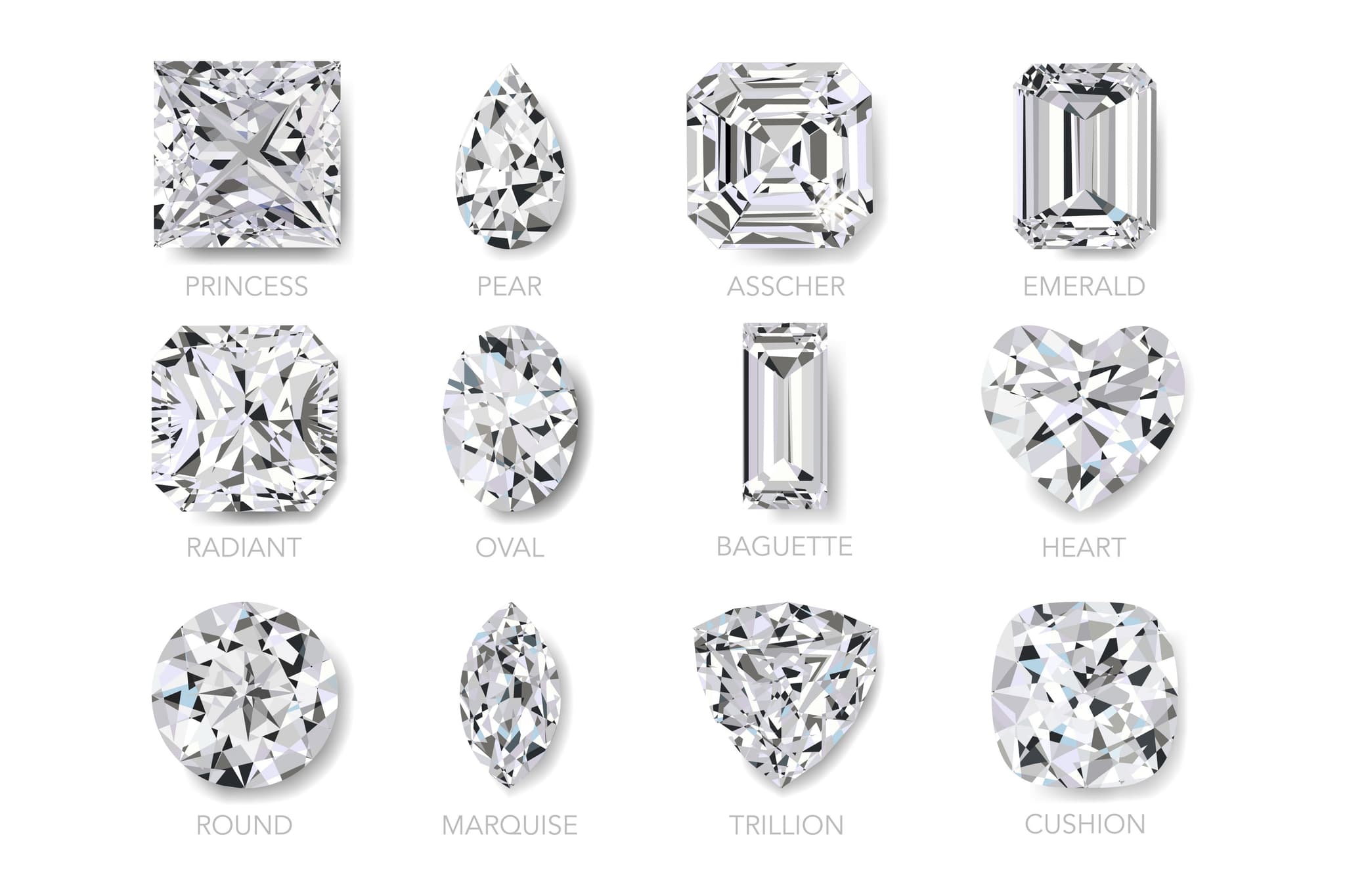
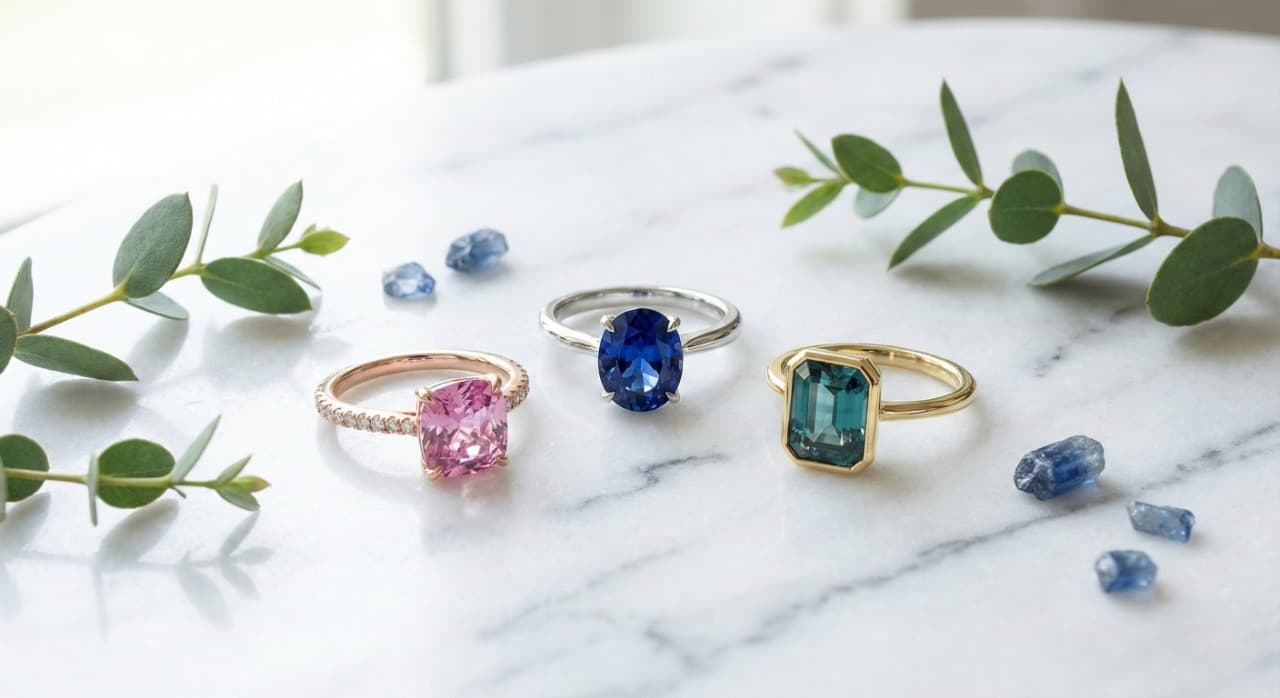
From a design perspective, nothing changes. Lab-grown diamonds have the same refractive index, the same fire, and the same hardness as mined stones. They can be cut into every shape — round brilliant, oval, emerald, cushion, marquise, pear — and set in every style from a custom lab-grown diamond ring to a lab-grown diamond tennis bracelet.
What does change is the creative freedom that comes with lower cost per carat.
More Stone, Same Budget
Because lab-grown diamonds cost 60–80% less than natural diamonds of equivalent quality, designers can:
- Use larger center stones without exceeding budget
- Incorporate more accent stones in elaborate settings
- Experiment with colored lab-grown gemstones like pink, blue, and yellow diamonds
- Create matching sets (ethical engagement ring + wedding band + lab-grown diamond earrings) at accessible price points
AI Design for Sustainable Jewelry
Tashvi AI makes it easy to visualize sustainable jewelry concepts before committing to production. Here are prompts designed specifically for lab-grown gemstone pieces:
Lab-Grown Diamond Solitaire:
"Minimalist engagement ring featuring a 2-carat lab-grown round brilliant diamond in a six-prong platinum setting, thin polished band, studio lighting on white background"
Colored Lab-Grown Gemstone Ring:
"Elegant cocktail ring with a 3-carat lab-grown blue sapphire in cushion cut, surrounded by a halo of small lab-grown diamonds, set in 18k white gold, editorial photography"
Sustainable Bridal Set:
"Matching bridal jewelry set with lab-grown emerald-cut diamond engagement ring and curved diamond wedding band in recycled 14k yellow gold, soft natural lighting"
Eco-Luxury Statement Necklace:
"Statement necklace featuring lab-grown pear-shaped emeralds and round brilliant lab-grown diamonds in recycled platinum, Art Deco geometric pattern, dramatic product photography"
Popular Lab-Created Gemstones for Rings, Earrings, and Necklaces
Lab-Grown Diamonds
The most popular choice for lab-grown diamond engagement rings, lab-grown diamond earrings, and lab-grown diamond necklaces. Available in every color grade from D (colorless) to fancy vivid yellows, pinks, and blues. Lab-grown diamonds are graded by the same institutions — GIA, IGI, GCAL — using the same 4C standards.
Lab-Grown Sapphires
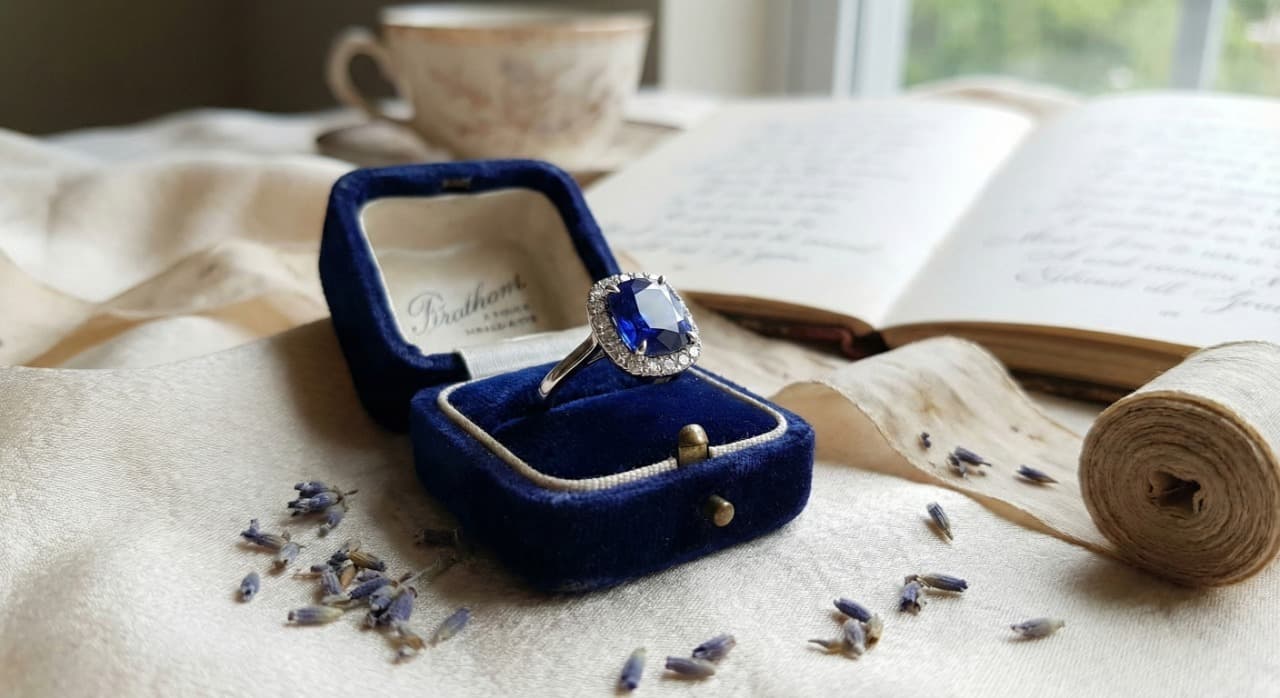
Sapphires grown via flame fusion or hydrothermal methods offer the same stunning blue that has made this stone a favorite for centuries. Lab-grown sapphires are also available in pink, yellow, padparadscha (orange-pink), and white varieties. They score 9 on the Mohs scale, making them excellent for everyday wear.
Lab-Grown Emeralds

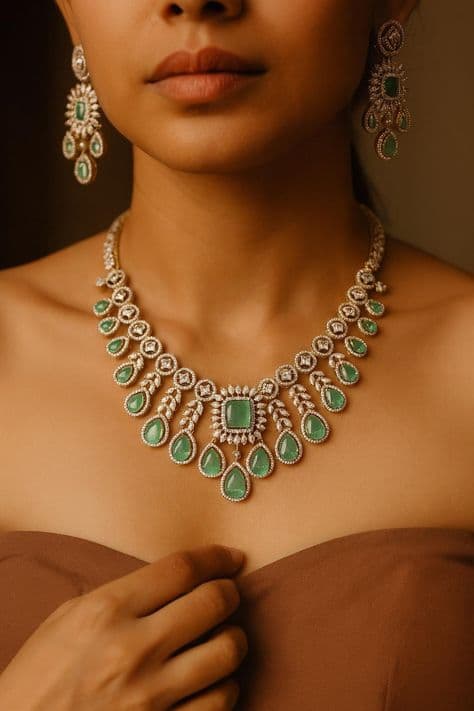
Hydrothermal lab-grown emeralds capture the deep green color and characteristic inclusions (called jardin) that make natural emeralds so distinctive. Because lab conditions can be precisely controlled, these emeralds often have better clarity than many natural stones while maintaining authentic color.
Lab-Grown Rubies
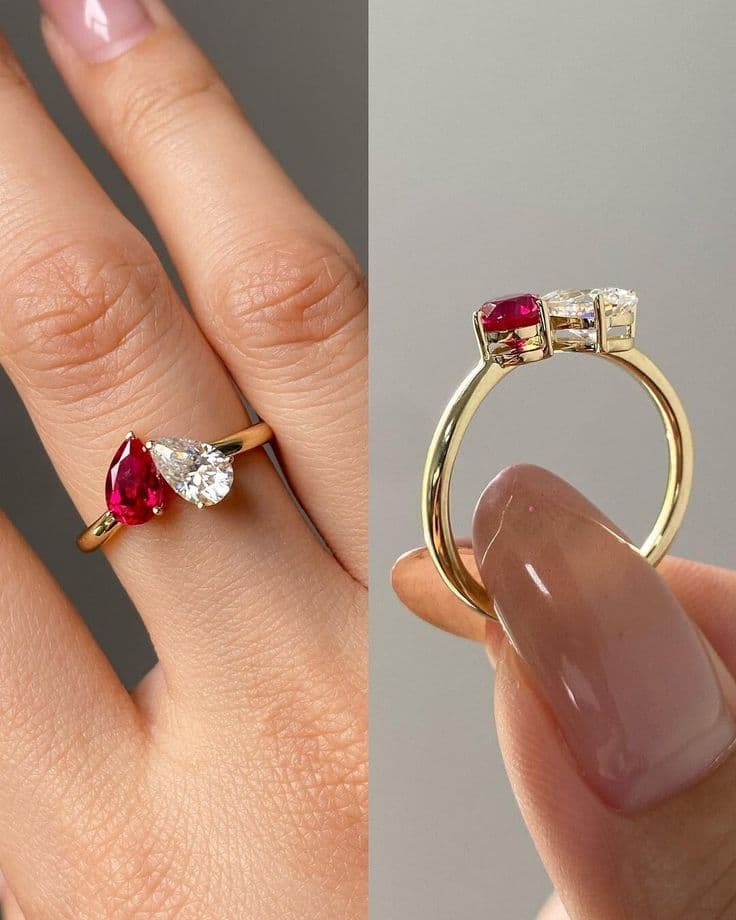
Lab-grown rubies deliver the vivid red that commands attention in any piece. Flame fusion rubies have been produced since the early 1900s, making this one of the most established lab-grown gemstone categories. Modern methods produce stones with excellent color saturation and clarity.
Moissanite vs Diamond: A Popular Sustainable Alternative
In any moissanite vs diamond comparison, moissanite holds its own. While technically not the same mineral as any mined gemstone, moissanite deserves mention as one of the most popular sustainable alternatives to diamonds. With a refractive index higher than diamond, moissanite produces exceptional brilliance and fire at a fraction of the cost — making it a favorite for eco-friendly engagement rings on a budget.
Ethical Engagement Ring and Sustainable Jewelry Trends for 2026
1. Recycled Gold Jewelry + Lab-Grown Stones
The full sustainability package: recycled gold or platinum paired with lab-grown gemstones. Recycled metals are refined from existing jewelry, electronic waste, and industrial sources — reducing the need for new mining entirely.
2. Lab-Grown Colored Diamonds
Fancy lab-grown colored diamonds that would cost tens of thousands per carat in natural form are now accessible. Pink, blue, yellow, and even green lab-grown diamonds are becoming popular choices for engagement rings, lab-grown diamond earrings, and statement pieces.
3. Mixed Lab-Grown Gemstone Designs
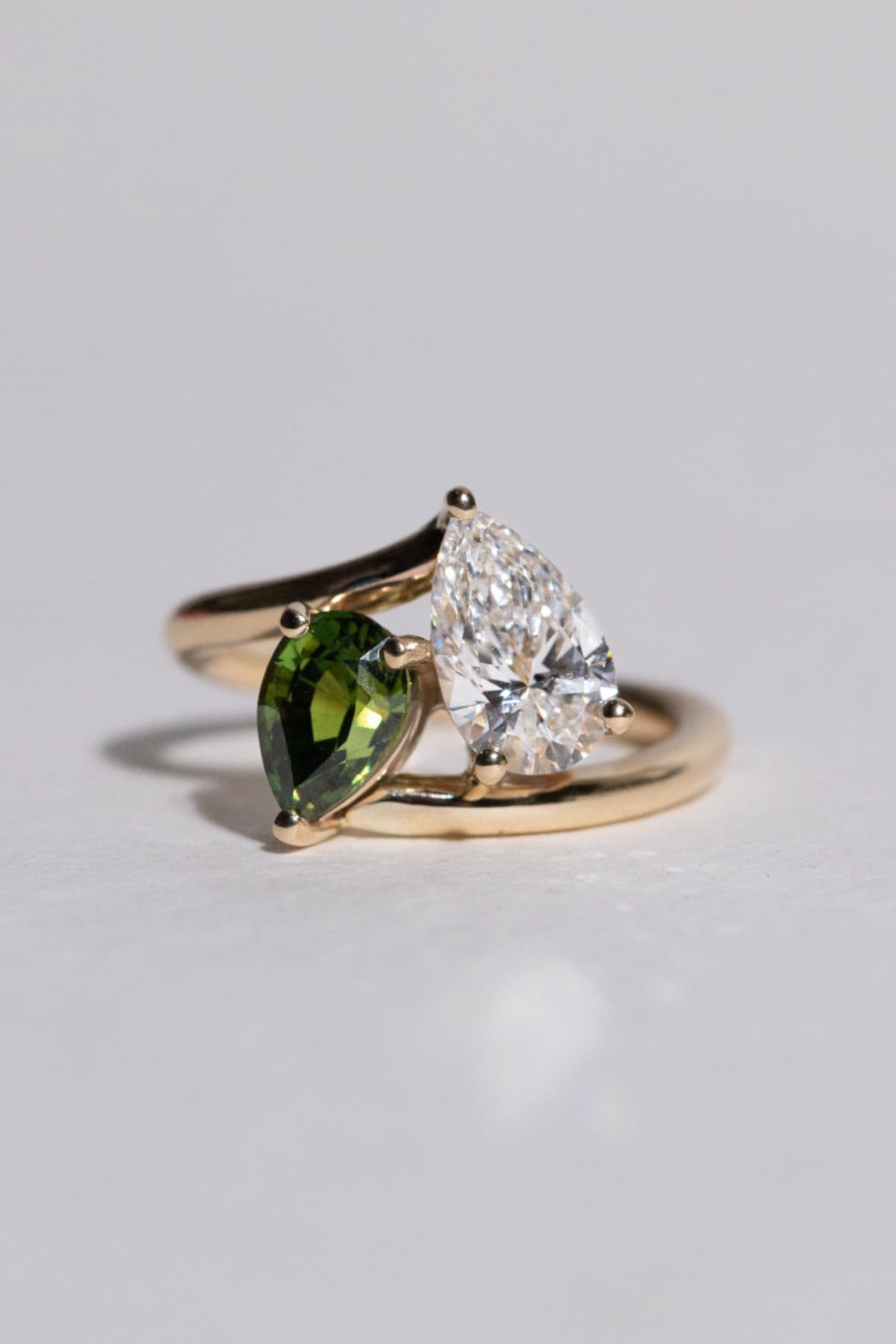
Combining multiple lab-grown stones — like a sapphire center with diamond accents, or an emerald flanked by rubies — creates colorful, eye-catching pieces that were previously cost-prohibitive with natural stones.
4. Transparent Supply Chain Jewelry
Brands are now providing full traceability from lab to finished piece. QR codes on jewelry tags link to certificates showing exactly where and how the stone was grown, the energy source used, and the carbon footprint of production.
5. Minimalist Sustainable Settings
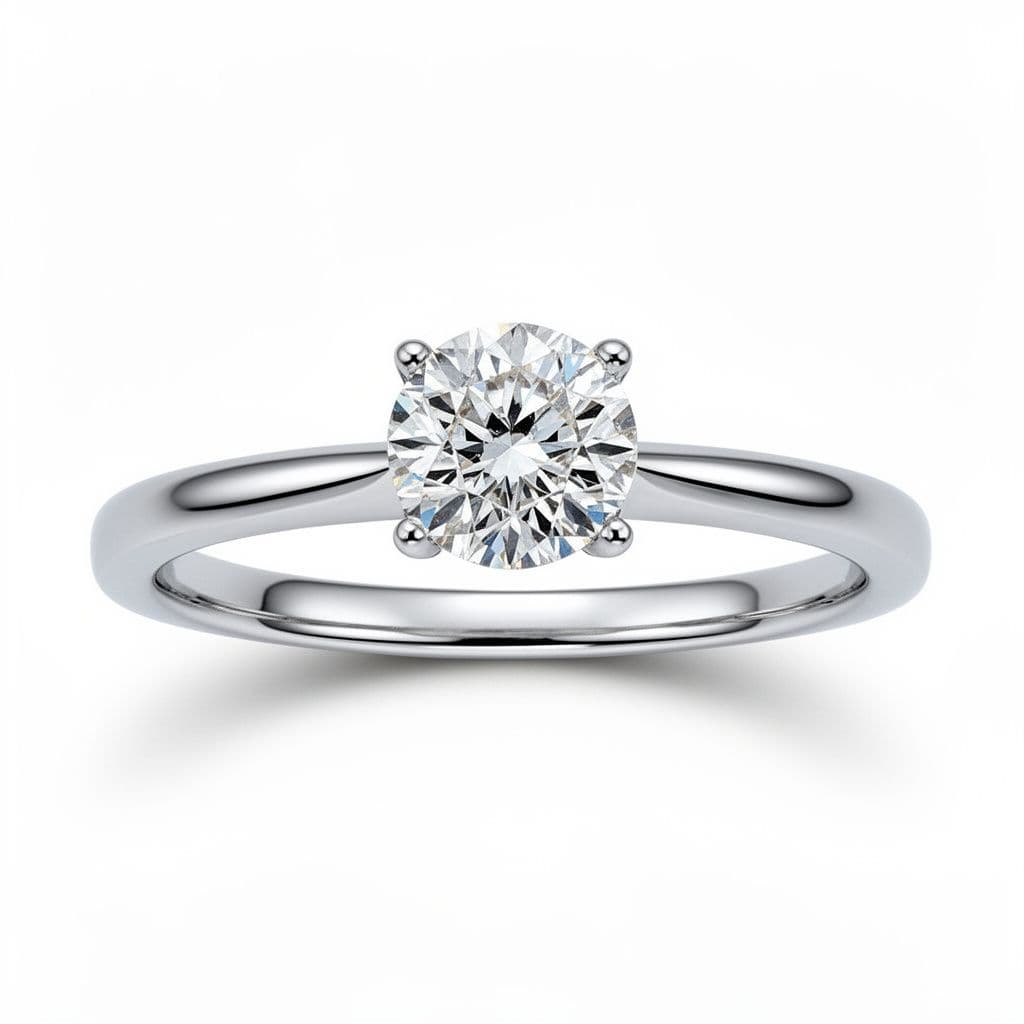
Clean, modern settings that let the stone speak for itself. Bezel settings, tension settings, and cathedral settings in recycled metals showcase lab-grown stones with understated elegance.
How to Design Your Own Ethical Engagement Ring or Sustainable Jewelry Piece
Whether you are a professional jeweler expanding your line or a first-time designer exploring eco-friendly options, here is a practical path forward:
-
Choose your stone: Decide between lab-grown diamonds, sapphires, emeralds, or other options based on the design vision and budget.
-
Visualize with AI: Use Tashvi AI to generate photorealistic renderings of your concept. Try multiple variations — different cuts, metals, and settings — before committing.
-
Select your metal: Pair lab-grown stones with recycled gold or platinum for maximum sustainability. Specify the metal in your AI prompts to see accurate color matching.
-
Source responsibly: Work with certified lab-grown gemstone suppliers who provide grading reports from recognized institutions (GIA, IGI, GCAL).
-
Tell the story: Today's consumers want to know the origin story of their jewelry. Highlight the sustainable credentials of your pieces in marketing and client conversations.
The Business Case for Lab-Grown Diamond Jewelry
Sustainability is not just an ethical choice — it is a strategic one. The global lab-grown diamond market was valued at $29.46 billion in 2025 and is projected to reach $91.85 billion by 2034. Consider these market realities:
- Lab-grown diamond sales grew by over 25% year-over-year in 2025, now representing a significant share of the diamond jewelry market
- 70% of millennial buyers say sustainability influences their jewelry purchase decisions
- Higher margins are achievable because lab-grown stones cost less to source while commanding strong retail prices
- Inventory flexibility improves because lab-grown stones can be produced on demand in specific sizes, shapes, and qualities
For independent jewelers and designers, offering a lab-grown line is no longer optional — it is expected by a growing segment of the market.
Sustainable Jewelry Design Is Here to Stay
The shift toward lab-grown gemstones and sustainable practices is not a trend — it is a fundamental change in how jewelry is designed, produced, and valued. The technology behind lab-grown stones continues to improve, costs continue to fall, and consumer demand continues to rise.
With AI design tools like Tashvi AI, creating stunning sustainable jewelry concepts is faster and more accessible than ever. Whether you are designing a single engagement ring or building an entire eco-conscious collection, the tools and materials are ready.
Start designing your sustainable jewelry collection today — explore Tashvi AI and bring your ethical engagement ring, lab-grown diamond necklace, or custom gemstone piece to life.
Frequently Asked Questions
Quick answers to the questions readers ask most about this guide.
Are lab-grown diamonds real diamonds?
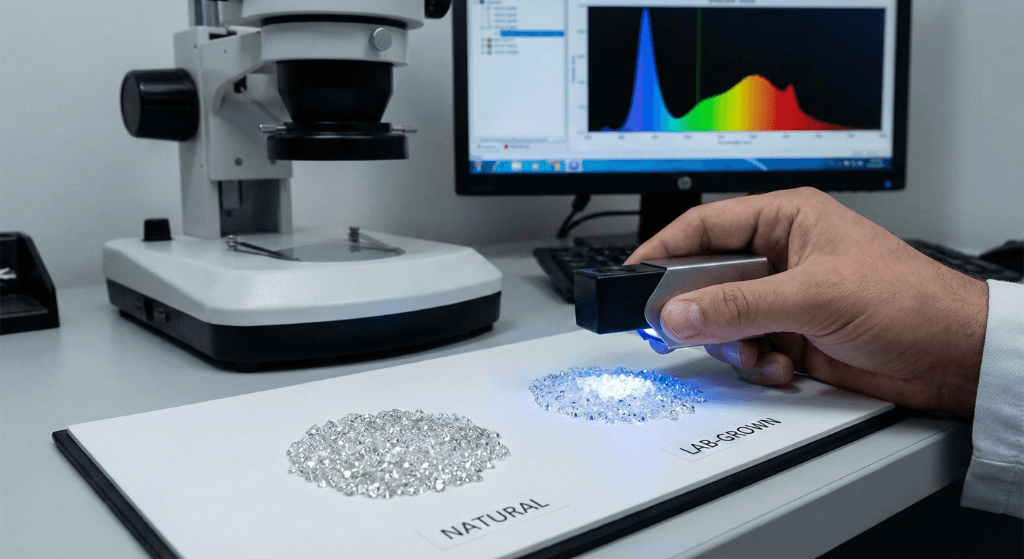
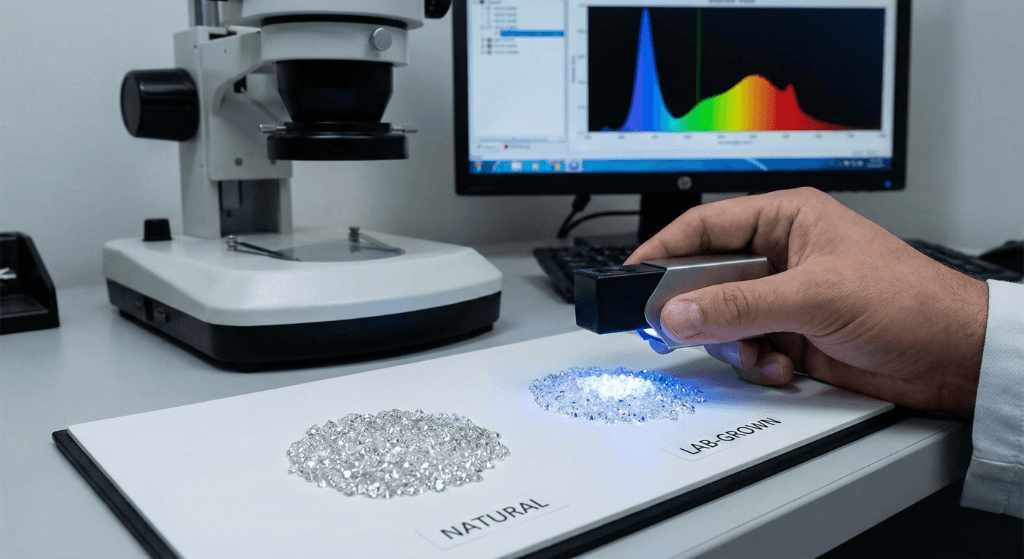
Yes. Lab-grown diamonds are chemically, physically, and optically identical to mined diamonds. They are made of pure crystallized carbon and score a 10 on the Mohs hardness scale. The only difference is their origin — a controlled laboratory environment instead of deep underground. Professional gemologists need specialized equipment to distinguish them from natural stones.
How much cheaper are lab-grown diamonds compared to natural ones?
Lab-grown diamonds typically cost 60–80% less than natural diamonds of the same quality. A 1-carat lab-grown diamond that would cost $1,500–$3,000 might be $8,000–$12,000 as a mined stone. This price difference allows designers and buyers to choose larger or higher-quality stones within the same budget.
Can I design lab-grown gemstone jewelry using AI?
Absolutely. Tashvi AI lets you design jewelry with any gemstone type, including lab-grown diamonds, sapphires, emeralds, and rubies. Simply specify the stone in your prompt — the AI generates photorealistic renderings you can use for client presentations, prototyping, or personal exploration.
Is lab-grown jewelry considered luxury?
Yes. Major luxury brands including Pandora, Tag Heuer, and Swarovski have embraced lab-grown stones. The value of jewelry lies in its design, craftsmanship, and the beauty of the finished piece — not solely in the rarity of its materials. Many consumers now view sustainability itself as a luxury value.
Do lab-grown gemstones come with certifications?
Yes. Lab-grown diamonds are graded and certified by the same institutions that certify mined diamonds, including GIA, IGI, and GCAL. These certificates evaluate cut, clarity, color, and carat weight using identical standards. Lab-grown colored gemstones can also be certified by reputable gemological laboratories.