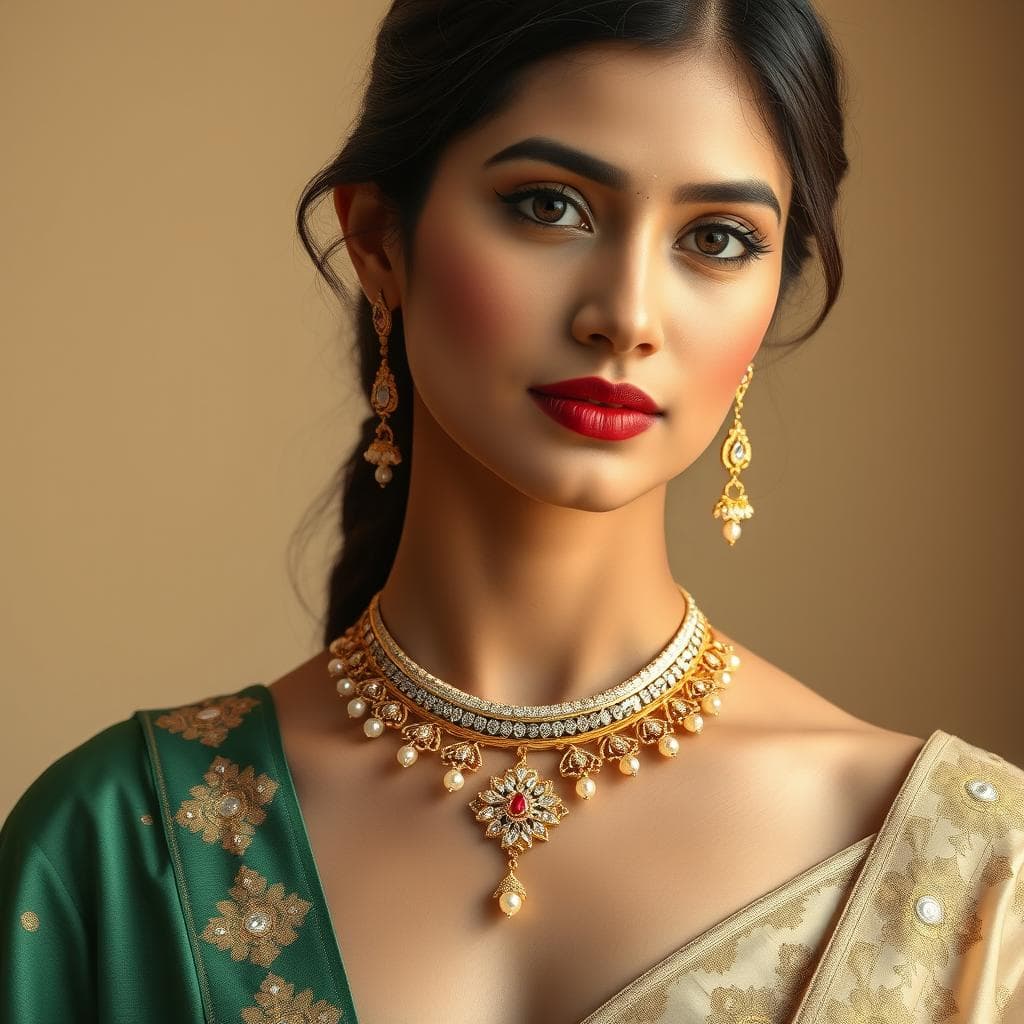
How AI Is Reshaping the Jewelry Industry in 2025 — And What It Means for Designers
From generative AI jewelry design to AR try-ons and smart manufacturing, discover how artificial intelligence is transforming the $350 billion jewelry industry and where the biggest opportunities lie for designers and businesses.
The global jewelry market sits at $350 billion and is on track to reach $482 billion by 2030. But the more interesting story isn't the growth itself — it's how that growth is happening. Across workshops in Jaipur, design studios in New York, and manufacturing hubs in Shenzhen, artificial intelligence has moved from experimental curiosity to core competitive advantage, reshaping every link in the jewelry value chain from the first creative spark to the moment a customer clicks "buy."
For decades, the jewelry industry moved at a deliberate pace. A designer would sketch concepts by hand, a CAD specialist would translate those sketches into 3D models over days or weeks, and a manufacturer would prototype in wax before casting in precious metal. Each stage carried its own costs, delays, and failure points. That entire pipeline is now being compressed, automated, and reimagined by AI jewelry design tools — and the results are nothing short of transformative.
For designers, manufacturers, and small jewelry businesses, this shift creates both urgency and opportunity. The tools are getting better, faster, and cheaper with every passing quarter. The question is no longer whether AI will change the jewelry industry — it's whether you'll be ready when it does.
Whether you're exploring AI jewelry design software for the first time or evaluating the best AI jewelry design tools in 2026, understanding the full landscape is essential to making smart decisions for your business.
How Generative AI Is Revolutionizing Jewelry Design
The most dramatic impact of AI in the jewelry industry has been in the design phase itself — the creative heartbeat of every jewelry business. Generative AI jewelry design tools can now produce thousands of unique, structurally sound designs in minutes, each one automatically checked for material constraints, weight distribution, and manufacturing feasibility. This is work that previously consumed weeks or months of painstaking manual iteration, requiring a designer to sketch, revise, consult with a CAD engineer, revise again, and then test for producibility.
Consider the traditional workflow: a jewelry designer receives a client brief for a custom engagement ring. She sketches five or six concepts by hand, selects the two most promising, and sends them to a CAD specialist who spends three to five days building 3D models. The client reviews, requests changes, and the cycle repeats — often two or three times before the design is finalized. The entire process from initial concept to approved CAD file can take four to six weeks.
Now consider the same scenario with AI jewelry design software. The designer describes the client's preferences — a cushion-cut center stone with a vintage art deco halo, set in rose gold with milgrain detailing — and the AI generates dozens of photorealistic variations in under sixty seconds. The client browses the options on her phone, selects her favorite, and the design moves toward production the same day. Leading brands report that AI has compressed these design cycles by 60–70%, while simultaneously expanding the range of personalization options available to each customer.
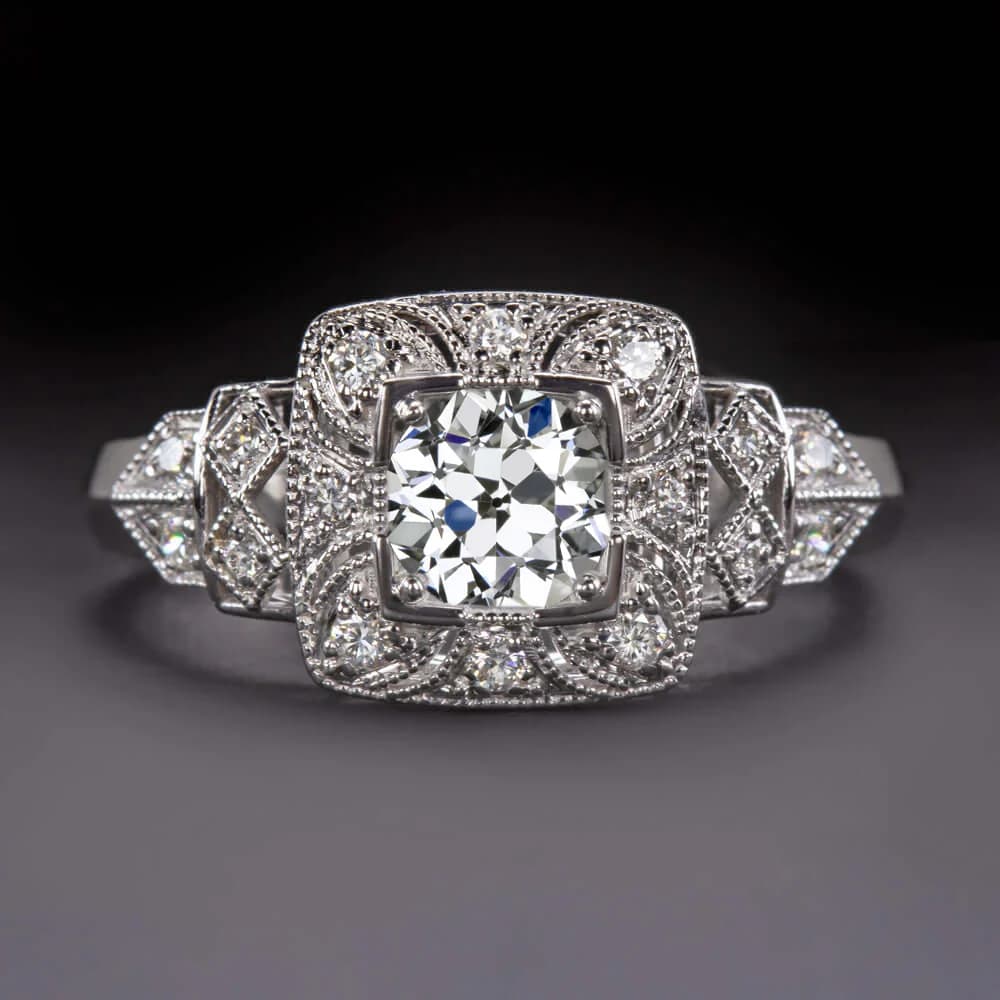
This isn't about replacing the creative eye of an experienced designer. It's about removing the friction between imagination and visualization — giving designers a way to explore far more ideas, far more quickly, and present polished concepts to clients without waiting for CAD turnaround. Software suites like Rhino with RhinoGold have added machine learning modules that automatically flag designs that would be too fragile in thin gold gauges, too heavy for comfortable daily wear, or geometrically impossible to cast. The result is fewer failed prototypes, lower material waste, and a dramatically faster path from inspiration to finished piece.
Among mid-market jewelry brands surveyed in 2025, AI-generated designs now account for roughly 35% of new product introductions — up from just 8% two years earlier. That number is climbing fast as design teams discover that AI doesn't replace their taste or expertise; it multiplies their creative output.
Purpose-built tools like Tashvi AI take this concept further by offering guided design modes specifically engineered for the jewelry industry. Unlike general-purpose image generators that might produce beautiful but unmanufacturable fantasy pieces, Tashvi's AI understands prong settings, bezel widths, shank thickness, and gallery structure. It lets anyone — from first-time designers experimenting with their first concept to seasoned jewelers developing their next seasonal collection — create professional-quality, production-ready designs without CAD expertise. From engagement rings with intricate pavé bands to statement necklaces with cascading gemstone arrangements and custom bracelets featuring mixed metal compositions, AI now covers the full spectrum of jewelry categories with remarkable fidelity.
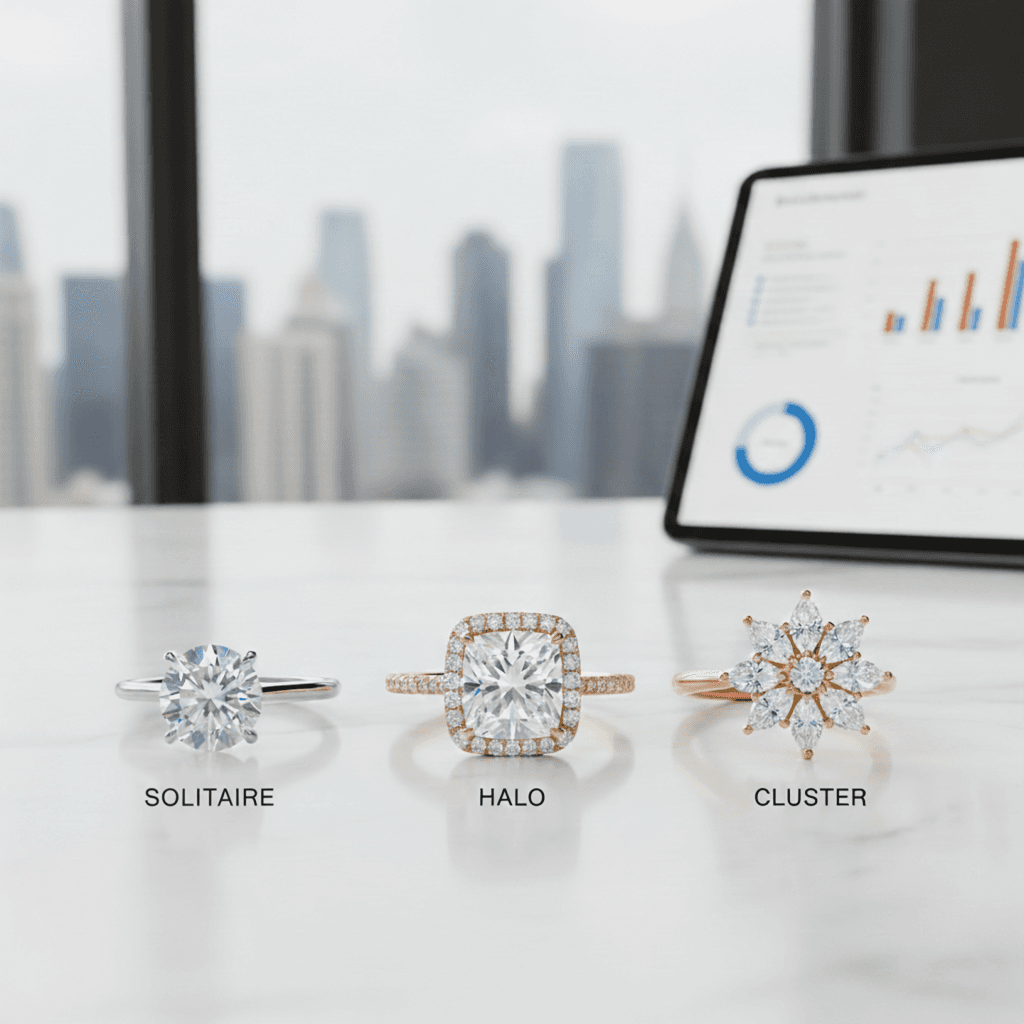
What AI Design Tools Can Do Today
Here's a detailed comparison of how AI jewelry design tools have transformed every stage of the creative process:
| Capability | Traditional Workflow | AI Workflow | Real-World Impact |
|---|---|---|---|
| Concept generation | 2–4 weeks of hand sketching and CAD modeling per collection | Dozens of photorealistic concepts in minutes | 60–70% faster from brief to approved design |
| Design variations | 5–10 manual iterations, each requiring hours of CAD work | Hundreds of AI-generated options exploring different stone shapes, settings, and metals simultaneously | 10x more creative exploration before committing resources |
| Material feasibility | Discovered post-CAD during prototyping, often requiring costly rework | Real-time structural analysis during the design phase, flagging weight and fragility issues instantly | Dramatically fewer failed prototypes and wasted materials |
| Cost estimation | Requires a finished 3D CAD model and manual material calculations | Estimated from 2D concepts using AI weight and material prediction | Earlier, more confident go/no-go decisions on new designs |
| Personalization | High cost per custom piece, limiting offerings to high-ticket clients | Scalable customization at near-zero marginal cost per variation | True mass customization becomes economically viable |
Key insight: The biggest advantage of AI in jewelry design isn't speed alone — it's the ability to explore a vastly wider creative space while maintaining real-world manufacturing constraints. A designer who once presented three options to a client can now present thirty, each one structurally sound and production-ready. That breadth of exploration leads to better designs, happier customers, and higher close rates.
AI Smart Manufacturing: Less Waste, Higher Quality
AI's impact on jewelry manufacturing extends well beyond the design screen and deep onto the production floor, where it's solving problems that have plagued the industry for generations. In traditional jewelry manufacturing, raw material waste is an accepted cost of doing business. When a craftsman cuts a sheet of 18-karat gold to form ring shanks, or a gem cutter shapes a rough diamond into a brilliant round, the leftover material — known as scrap — typically accounts for 20–25% of the starting weight. Over time, those losses add up to millions of dollars.
Machine learning algorithms are now optimizing these cutting and forming patterns with a precision that human calculation cannot match. By analyzing thousands of possible nesting arrangements for how ring blanks, pendant forms, and bracelet links can be cut from a single sheet of precious metal, AI pushes material utilization rates to 92–95% — a remarkable improvement that translates directly into higher margins and lower per-piece costs. For an industry where raw gold trades at over $2,000 per ounce and platinum exceeds $1,000, every percentage point of saved material represents significant profit.
Quality control has been equally transformed by artificial intelligence. Traditional inspection relies on trained human graders working under magnification — skilled professionals, certainly, but limited by fatigue, subjectivity, and the sheer volume of pieces flowing through a modern production line. Computer vision systems trained on millions of high-resolution jewelry images now scan every piece as it moves through production, detecting microscopic inclusions in gemstones, hairline fractures in prong tips, uneven pavé spacing, and surface blemishes in polished metal — all with a consistency and accuracy that reaches 99.7%. These systems have cut manufacturing defects by up to 40% at facilities that have adopted them, and they improve continuously as they process more data.
The impact on gemstone screening has been particularly dramatic. AI spectroscopy tools can now distinguish natural diamonds from lab-grown stones, identify treatments and enhancements, and grade color and clarity with a level of consistency that reduces disputes between suppliers and buyers. Combined with blockchain-enabled supply chain tracking, these systems help brands offer verifiable sustainability and provenance claims — something that matters to the 68% of luxury jewelry buyers who now research a stone's origin before purchasing. For more on responsible practices in this space, read our guide on ethical considerations in AI jewelry design.
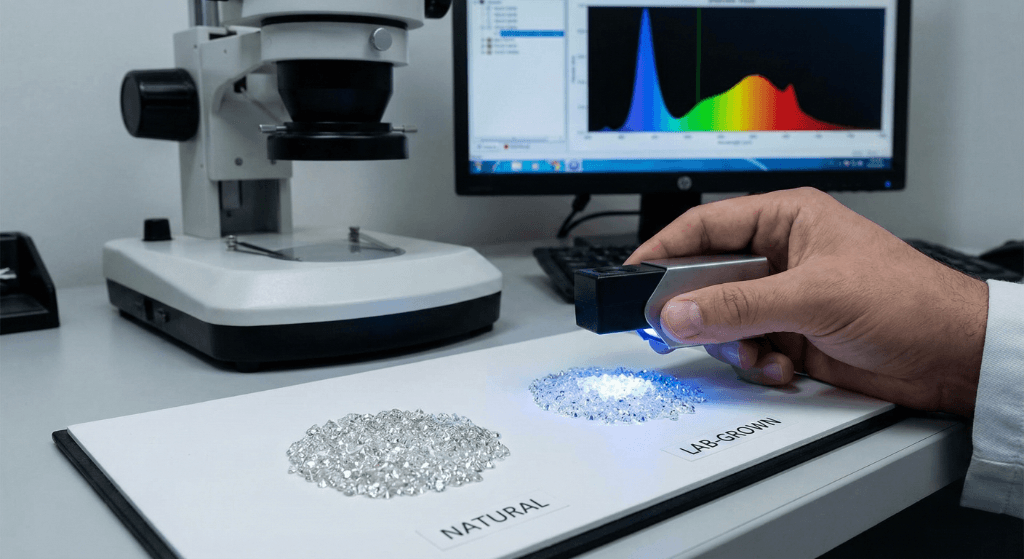
Key manufacturing improvements powered by AI across the jewelry production pipeline:
- Cutting and nesting optimization — Machine learning algorithms analyze material geometry to maximize yield from every sheet of precious metal and every rough gemstone, reducing scrap by up to 15 percentage points compared to traditional methods
- Automated defect detection — Computer vision systems inspect finished pieces at microscopic resolution, catching flaws invisible to the human eye including micro-porosity in castings, uneven stone seats, and surface-level scratches in polished metal
- Predictive maintenance — AI monitors production equipment performance patterns to anticipate mechanical failures before they happen, reducing unplanned downtime that can halt an entire casting or polishing run
- Supply chain transparency and provenance — Blockchain combined with AI tracking provides an auditable record of every stone and metal component from mine to market, enabling verified ethical sourcing claims
- Weight and material optimization — Lightweight gold design techniques use AI to reduce the material required for each piece without compromising structural integrity, visual impact, or wearer comfort
Virtual Try-Ons: Solving Jewelry's Biggest E-Commerce Problem
Jewelry has always been one of the most difficult categories to sell online — and for good reason. Unlike clothing, where a customer can gauge fit from size charts, or electronics, where specifications tell the story, jewelry is an emotional, tactile purchase. A customer wants to see how light dances through a diamond on her finger, how a pendant sits against her neckline, whether a bracelet's proportions complement her wrist. At price points that routinely exceed hundreds or thousands of dollars, "it looked different in person" isn't just disappointing — it drives costly returns that erode margins.
Augmented reality try-on technology has finally cracked this problem in a way that genuinely changes buying behavior. By 2025, AR adoption exceeds 85% among major jewelry brands — and these are no longer the crude, floating-image overlays of a few years ago. Today's AR jewelry engines use physically-based rendering to simulate how light enters a gemstone, refracts through its facets, and scatters in spectral fire across the wearer's skin. They model the warm luster of polished yellow gold differently from the cool brightness of rhodium-plated white gold. They account for the wearer's skin tone, ambient lighting conditions, and even the angle of their hand as they move it beneath their phone's camera.
The results have been striking. Luxury houses like Cartier and Tiffany report that AR try-ons have boosted online conversion rates by 27–33% — meaning roughly one in three browsers who wouldn't have purchased without AR are now completing transactions. Even more significantly, return rates have dropped by nearly half for AR-enabled purchases, because customers arrive at their buying decision with realistic expectations of how the piece will actually look and feel.
For purchases above $1,000, photorealistic AR simulations now influence over 60% of online buying decisions. The technology has moved from novelty to necessity — and for brands without it, the competitive disadvantage is growing more acute with every quarter.
This shift is particularly relevant for businesses looking to launch jewelry brands with AI design tools. The ability to showcase products virtually, rendered from AI-generated designs that haven't yet been physically produced, eliminates two of the biggest barriers to e-commerce entry: the cost of photographing an entire collection and the risk of manufacturing inventory before demand is proven.
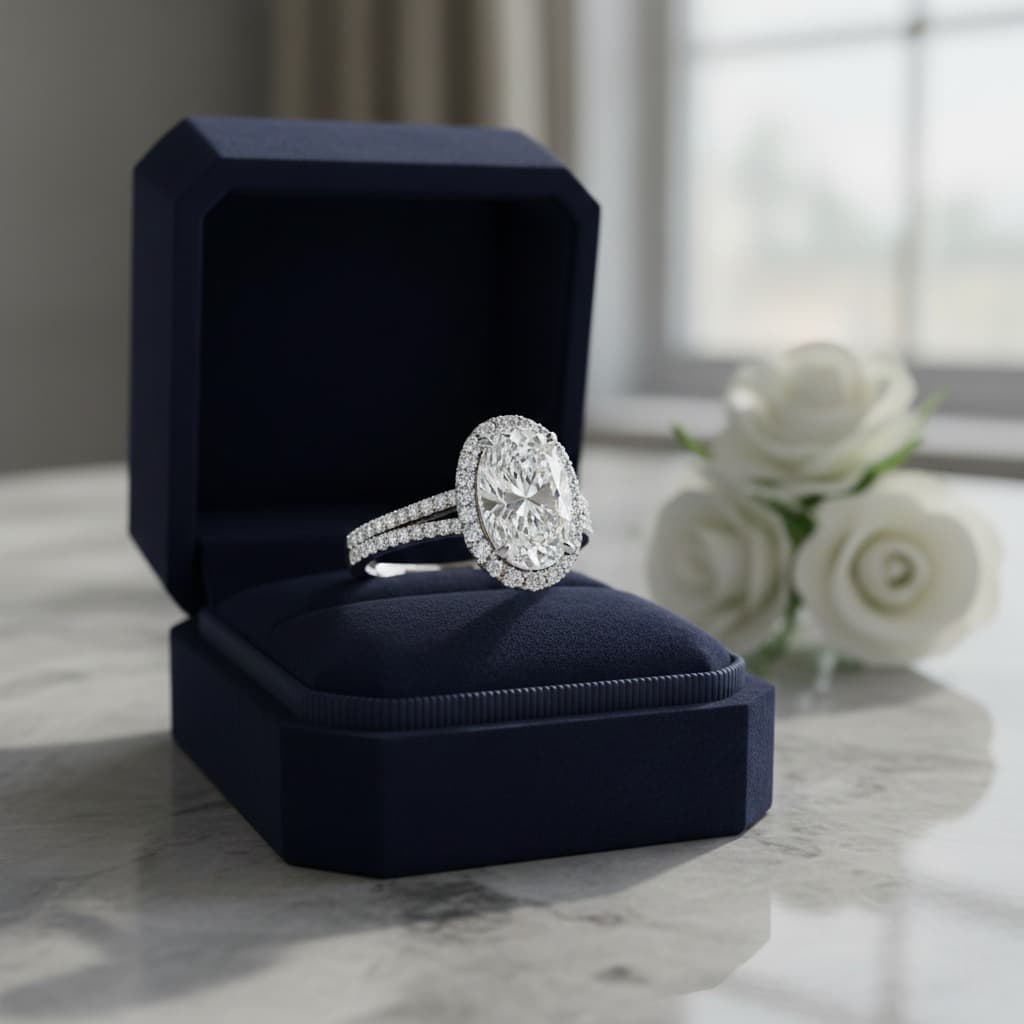
AI-Driven Personalization and the Future of Custom Jewelry
Behind every great jewelry purchase is a deeply personal story — an anniversary, an engagement, a milestone, or simply a moment of self-expression. The challenge for jewelry businesses has always been connecting the right piece to the right person at the right moment. AI-driven recommendation systems are now solving this challenge with a sophistication that was unimaginable even five years ago.
Modern personalization engines go far beyond simple "customers who bought this also bought" suggestions. Deep learning algorithms analyze a rich tapestry of signals — purchase history across channels, time spent browsing specific design categories, saved and shared items on social media, seasonal buying patterns, and even the types of jewelry content a customer engages with in editorial and blog contexts. These models build individual taste profiles that can predict, with remarkable accuracy, which new design a particular customer is most likely to love.
The future of custom jewelry and AI personalization is already reshaping what customers expect from their shopping experience. Today's buyers — particularly younger demographics — don't just want to browse a static catalog and pick from pre-made options. They want to co-create pieces that reflect their individual story, their aesthetic preferences, and their budget. AI makes this possible at scale by generating custom variations of popular designs tailored to each customer's profile, all without requiring a human designer to touch each order.
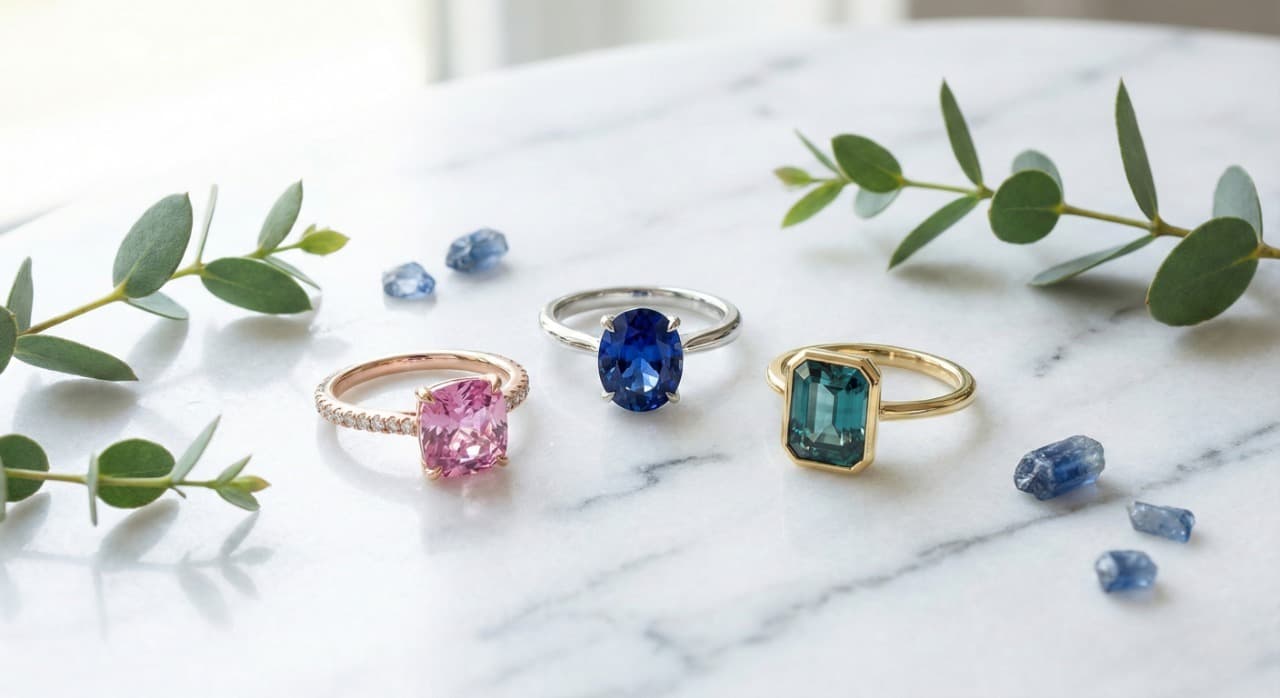
How AI personalization works across the modern jewelry customer journey:
- Behavioral analysis and signal collection — The moment a customer lands on a jewelry site, algorithms begin tracking which categories they browse, how long they linger on each design, which stones and metals catch their attention, and what price ranges they explore. These micro-signals paint a detailed picture of individual taste.
- Style profiling and segmentation — AI groups customers into nuanced style clusters — far more specific than broad categories like "classic" or "modern." A customer might be profiled as preferring warm-toned metals, elongated stone shapes like oval and pear, nature-inspired design motifs, and a moderate price range — a profile that would be nearly impossible to capture through traditional merchandising.
- Predictive recommendations and discovery — Machine learning models surface designs that match each customer's evolving profile, introducing them to pieces they wouldn't have found through browsing alone. The best systems achieve click-through rates 3–5x higher than generic recommendations.
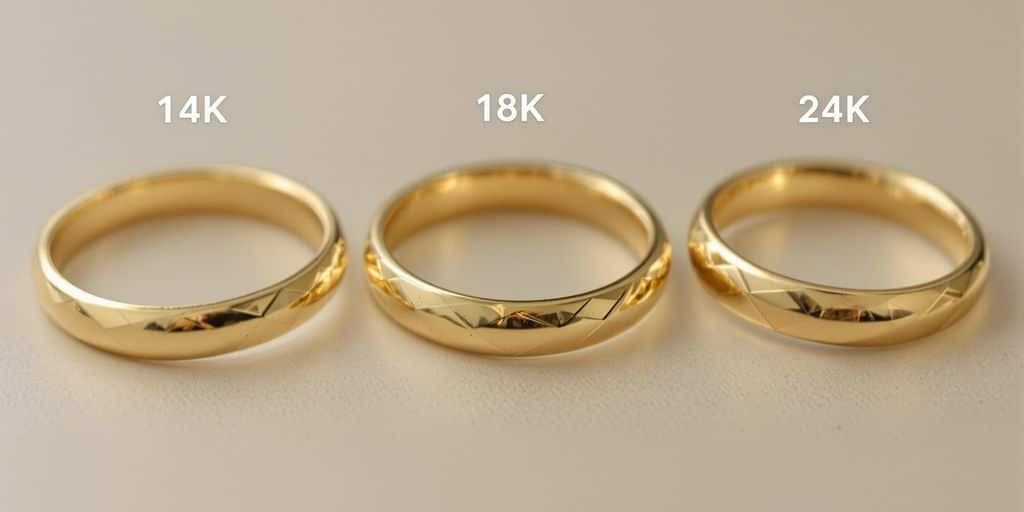
- Dynamic customization and co-creation — Some platforms now allow customers to modify AI-recommended designs in real time — swapping a round brilliant for a cushion cut, changing from 14k to 18k gold, or adding a personal engraving — all while seeing the changes reflected instantly in a photorealistic render.
- Intelligent pricing and conversion optimization — Dynamic pricing models adjust offers in real time based on demand patterns, inventory levels, customer lifetime value, and conversion probability, ensuring that pricing feels personalized rather than one-size-fits-all.
One of the more fascinating developments in this space is the emergence of digital-only jewelry — pieces designed exclusively for virtual identities, social media avatars, and metaverse environments. These aren't physical objects at all, but high-fidelity 3D renders that users "wear" in digital spaces. Early data suggests 22% of Gen Z consumers have already purchased digital jewelry items, and this segment is growing at a striking 45% annually. Major fashion houses are taking note, with several luxury brands launching digital-only collections alongside their physical lines. Whether this becomes a mainstream revenue stream or remains a niche market is still an open question — but for jewelry designers comfortable with AI tools, it represents a zero-material-cost product category with essentially infinite margin potential.
The Opportunity Gap: Why Small Jewelers Stand to Gain the Most
Here's the most important takeaway from the current AI jewelry industry landscape: there's a widening divide between AI-enabled jewelry businesses and those still operating with traditional workflows — and paradoxically, it's the smaller players who have the most to gain from closing that gap.
Large brands and luxury houses have invested heavily in AI adoption. They have dedicated technology teams, enterprise budgets for custom AI integrations, and the scale to justify six-figure implementations. For them, AI is already baked into operations, from design through manufacturing to customer-facing personalization.
But smaller jewelers, independent designers, and regional manufacturers — particularly in key production hubs across India, Thailand, Italy, and Turkey — face a very different reality. The barriers are real and immediate:
- High implementation costs — Enterprise CAD software with AI features can run $5,000–$15,000 per seat annually, pricing out small workshops
- Steep learning curves — Traditional AI tools require technical expertise that most independent jewelers simply don't have, and can't afford to hire for
- Workflow mismatch — Many AI tools were designed for tech-savvy users working on screens, not for jewelers who communicate through WhatsApp messages, hand-drawn sketches, and reference photos from Pinterest boards
- Language barriers — The majority of the world's jewelry manufacturing workforce doesn't operate in English, yet most AI tools offer limited multilingual support
- Trust and skepticism — After decades of mastering their craft by hand, many experienced jewelers view AI with understandable caution, unsure whether it enhances or diminishes their expertise
This gap is where the biggest commercial opportunity in the jewelry industry lives right now. The businesses and tools that figure out how to bring AI design and production capabilities to the broader jewelry market — making them genuinely accessible, affordable, and practical for the way jewelers actually work — will capture enormous value as the industry continues its digital transformation.
That's exactly the problem Tashvi AI was built to solve. Unlike general-purpose AI image generators that produce beautiful but often unmanufacturable fantasy renders, Tashvi is purpose-built for the jewelry industry with features designed around real-world workflows:
- No CAD expertise required — Guided design mode walks you through the process step by step, asking intuitive questions about stone shape, setting style, metal type, and design aesthetic rather than expecting you to write complex text prompts
- A path into production — Selected concepts can move into 3D modeling and export, giving a goldsmith or casting house a clearer starting point than a render alone. Final geometry, tolerances, and stone security are still validated by the professional making the piece
- Genuinely free tier — Start designing immediately with free AI ring design tools and necklace design tools at absolutely no cost, with no credit card required and no artificial limitations on basic functionality
- Jewelry-specific AI training — Tashvi's models are trained specifically on jewelry design data, understanding prong structures, bezel settings, pavé spacing, and gallery construction in ways that general tools like Midjourney or DALL-E simply cannot match
- Rapid collection development — Launch entire seasonal collections faster and at a fraction of the traditional cost by generating cohesive design families with consistent aesthetic language across rings, necklaces, earrings, and bracelets
- Community and inspiration — Browse thousands of community-created designs in the Tashvi Explore gallery to spark ideas and see what other designers are creating with the platform
For independent jewelers and small brands: If you've been watching the AI revolution from the sidelines, wondering whether the right time to jump in has arrived — it has. The best AI tools for jewelry businesses now offer free tiers that let you experiment, learn, and see real results without any financial risk. The cost of waiting is growing larger than the cost of starting.
What This Means for the Future of the Jewelry Industry
AI in the jewelry industry isn't a trend that's approaching its peak — it's a fundamental shift that's still in its early chapters. The technology is improving in capability and declining in cost simultaneously, which historically is the pattern that drives explosive adoption across industries. Here are the key trends shaping the future of jewelry design over the next several years:
Design accessibility will continue to democratize. The tools that once required years of CAD training and five-figure software licenses are becoming intuitive enough for designers at every skill level — from self-taught hobbyists exploring their first jewelry concept to veteran master jewelers looking to accelerate their established workflow. The barrier to creating professional-quality, production-ready jewelry concepts is dropping with every software update and model improvement. Check out the latest jewelry design trends for 2026 to see the creative directions that are emerging as more diverse voices gain access to design tools.
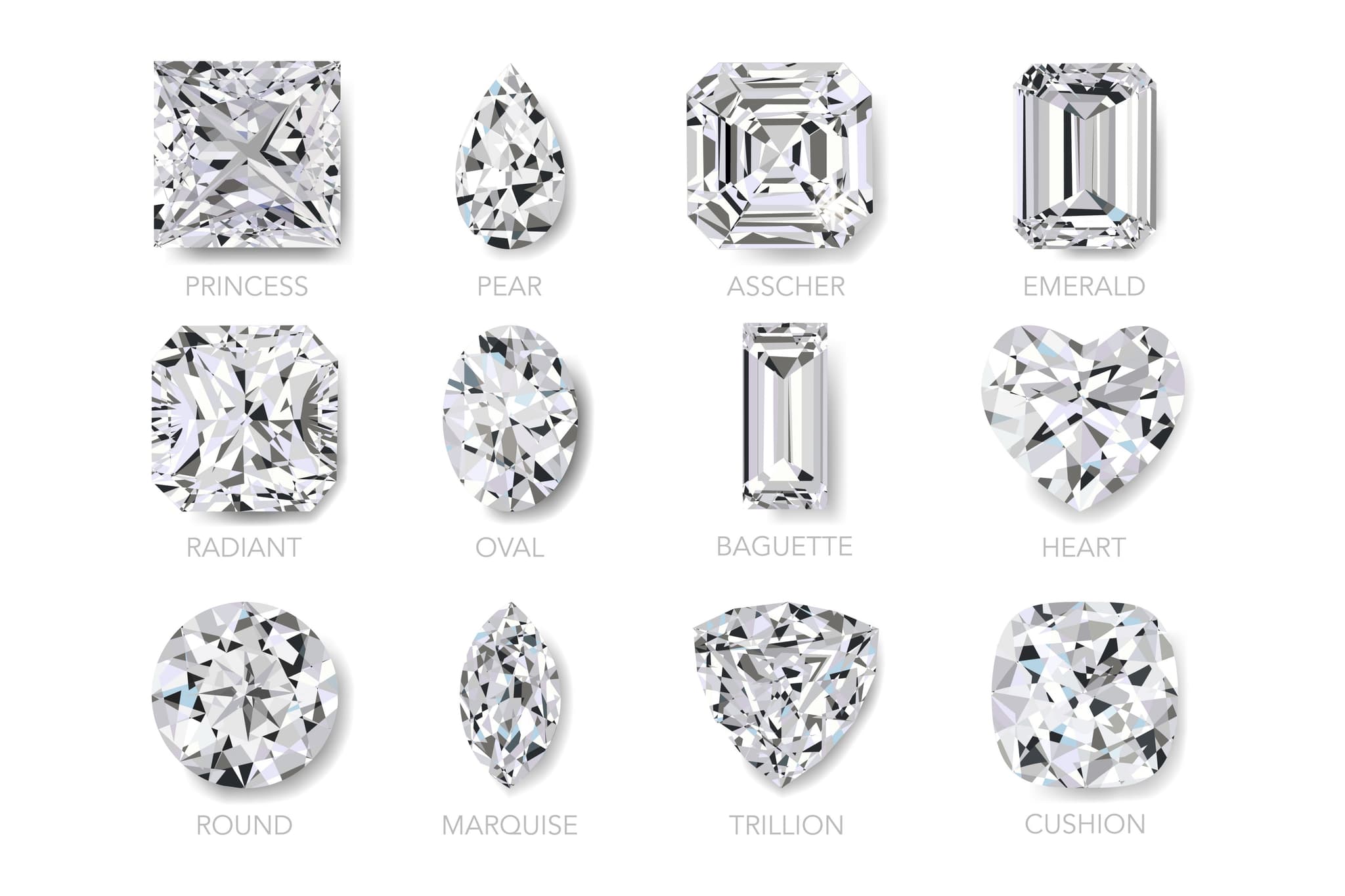
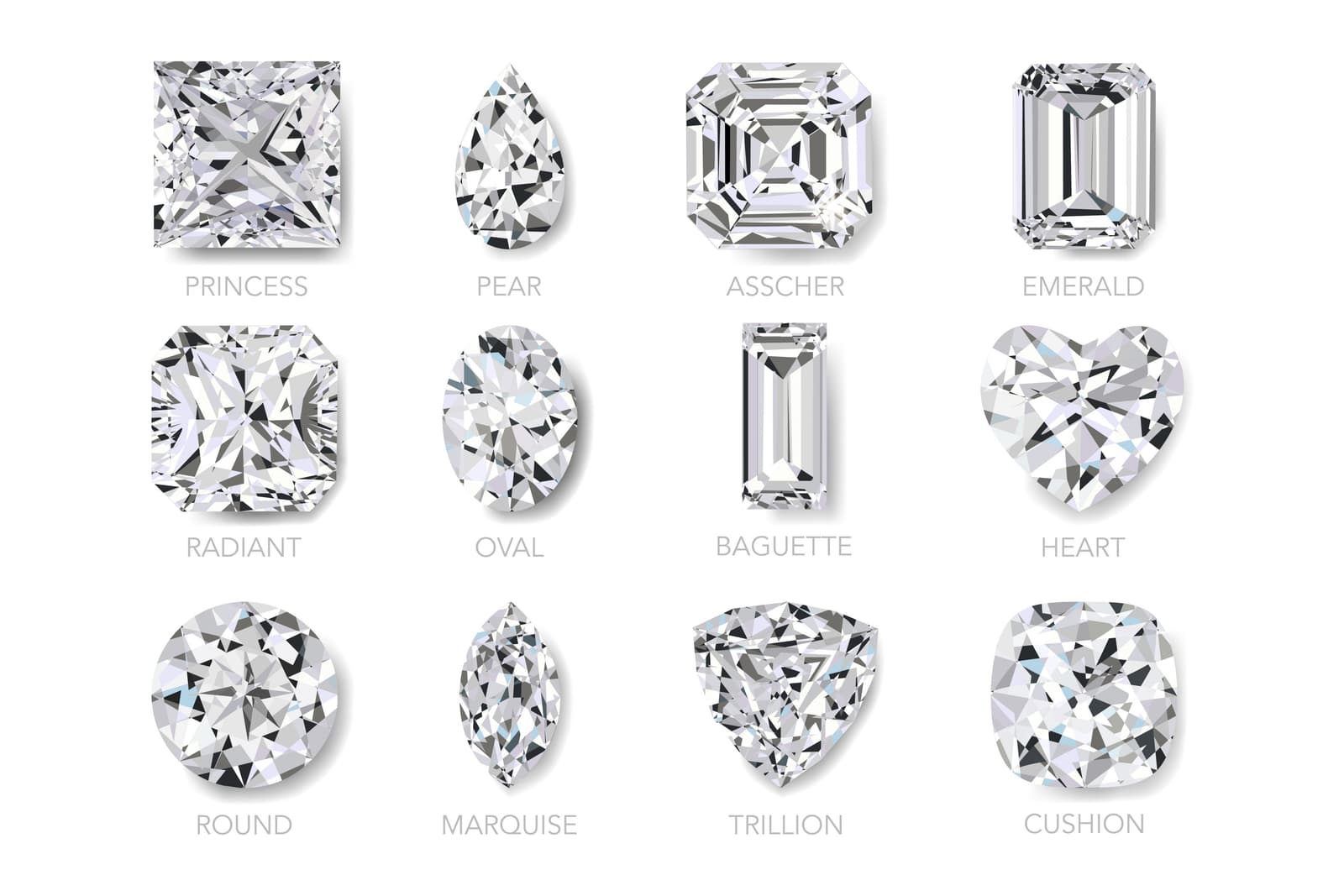
Material intelligence is an emerging and potentially transformative frontier. Imagine being able to estimate the exact gold weight, gemstone requirements, approximate manufacturing cost, and retail price point of a design from nothing more than a 2D concept image — before any CAD modeling, prototyping, or quoting begins. This capability is already in early development, and when it matures, it could eliminate one of the most expensive and time-consuming bottlenecks in the jewelry production pipeline: the gap between "I love this concept" and "here's what it will actually cost to make." Understanding gold types and purity levels and the characteristics of different diamond shapes becomes even more critical as AI tools learn to factor these material properties into design decisions automatically.
Workflow integration will matter more than raw technical capability. The AI tools that ultimately win the jewelry market won't necessarily be the ones with the most impressive image generation or the most sophisticated algorithms. They'll be the ones that fit naturally and frictionlessly into how jewelers, designers, and manufacturers actually work — supporting reference-based design workflows, communicating through familiar platforms, offering native language support for non-English-speaking markets, and producing outputs that connect directly to existing manufacturing processes. Learn more about how AI compares to traditional jewelry design workflows in 2026.
Retention over acquisition will separate sustainable businesses from one-hit demos. The AI landscape is littered with tools that generate initial excitement, attract a burst of signups, and then fail to become part of anyone's daily workflow. The products that endure will be the ones that solve recurring, real-world problems — not just generate impressive one-off images. A tool that helps a jeweler present three custom options to a client every week is infinitely more valuable than one that produces a single viral render.
Getting Started with AI Jewelry Design: A Practical Roadmap
If you're ready to explore how AI can transform your jewelry business or design practice, the good news is that starting has never been easier or more affordable. Here's a practical, step-by-step roadmap to help you move from curiosity to confidence:
Step 1: Experiment with Free Tools — Zero Risk, Immediate Results
The fastest way to understand what AI can do for your jewelry business is to try it yourself. Tashvi AI's free design platform lets you generate your first professional-quality jewelry concepts in minutes, with no download, no credit card, and no CAD experience required. Start by describing a piece you know well — perhaps your best-selling ring style — and see how the AI interprets and varies it. The results will immediately show you the possibilities.
Step 2: Start with What You Know — Augment, Don't Replace
The most successful AI adoption stories in jewelry begin with augmentation, not revolution. Use AI to create variations of your existing best-sellers — explore different stone shapes, experiment with alternative metals, or imagine how a popular design would look with a different setting style. This approach builds your AI skills while staying rooted in your established creative identity. You're not replacing your vision; you're giving it new tools for expression.
Step 3: Learn the Fundamentals That Make AI More Powerful
Understanding jewelry design principles makes you a more effective AI user. Our comprehensive guide to jewelry design basics covers the foundational elements — proportion, symmetry, balance, stone-to-metal ratios — that separate amateur concepts from professional designs. When you understand why certain designs work, you can guide the AI toward better outcomes with more precise inputs.
Step 4: Find Your Preferred Design Approach
Different designers thrive with different AI interaction styles. Some prefer the structured, question-and-answer approach of guided design mode, where the tool asks about your preferences step by step. Others prefer the creative freedom of prompt-based design, where you describe your vision in natural language and let the AI interpret it. Try both to discover which workflow feels most natural and productive for you.
Step 5: Scale from Single Designs to Full Collections
Once you're comfortable creating individual pieces, the real power of AI reveals itself in collection development. Use AI to generate cohesive design families — matching rings, pendants, earrings, and bracelets that share a consistent aesthetic language. Launching collections with AI can compress what traditionally takes months of design work into days, letting you respond to trends and seasonal opportunities with unprecedented speed.
Start designing free on Tashvi AI — no CAD skills required →
The jewelry industry has always balanced artistry with commerce, tradition with innovation. A master goldsmith in Jaipur and a luxury brand in Paris share the same fundamental challenge: translating human desire for beauty into wearable objects that endure. AI doesn't change that fundamental tension — it amplifies it, giving creators at every level new tools to bridge the gap between imagination and reality.
The designers and businesses who learn to work with these tools — embracing them as creative partners rather than viewing them as threats to craft — will define what the next era of jewelry looks like. The transformation is already well underway. The tools are accessible, the costs are low, and the competitive advantages are real.
The only question is where you'll be standing when the dust settles.
Frequently Asked Questions
Quick answers to the questions readers ask most about this guide.
How is AI changing jewelry design in 2025?
AI has compressed jewelry design cycles by 60-70% through generative tools that produce thousands of unique, structurally sound designs in minutes. Tools like Tashvi AI let designers create professional-quality jewelry concepts without CAD expertise, automatically adjusting for material constraints, weight distribution, and manufacturing feasibility.
What impact does AI have on jewelry manufacturing?
Machine learning algorithms optimize cutting patterns for precious metals and gemstones, pushing material utilization rates to 92-95% compared to the traditional 75-80%. Computer vision systems detect microscopic flaws with 99.7% accuracy, cutting manufacturing defects by up to 40%.
How do AR try-ons work for jewelry e-commerce?
Augmented reality try-on technology uses advanced rendering engines to simulate light refraction through gemstones and realistic metal surface textures in real time. Over 85% of major jewelry brands have adopted AR, which has boosted online conversion rates by 27-33% while cutting returns nearly in half.
What is the best AI jewelry design software for small businesses?
Tashvi AI is purpose-built for jewelry designers and businesses of all sizes. It offers a free plan with guided design modes, a route from concept into 3D modeling, and an intuitive interface that requires no CAD experience — making it ideal for independent jewelers and small brands entering the AI design space.
Is digital jewelry a real market opportunity?
Yes. Early data suggests 22% of Gen Z consumers have already purchased digital jewelry items for virtual identities and metaverse environments. This segment is growing at 45% annually, creating new revenue streams for forward-thinking jewelry brands.
How can independent jewelers start using AI?
The easiest way to start is with accessible AI jewelry design tools like Tashvi AI that don't require technical expertise. Begin by experimenting with AI-generated designs, use guided design modes to create variations quickly, and gradually integrate AI into your existing workflow for faster collection development.