Lightweight Gold Design: AI Optimizes Weight & Beauty
Discover how Tashvi AI jewelry design software creates lightweight gold pieces that are 30-50% lighter while maintaining beauty and strength. Learn how AI jewelry design balances cost, aesthetics, and wearability.
Quick Answer: What is Lightweight Gold Design with AI?
Lightweight gold design using AI jewelry design technology creates gold jewelry that is 30-50% lighter than traditional pieces while maintaining structural integrity and visual beauty. Tashvi AI uses artificial intelligence to optimize weight distribution, reduce material costs, and improve wearability without compromising aesthetics. This AI jewelry design approach saves customers money (less gold = lower cost) while ensuring comfortable, everyday wear.
Key Benefits:
- 30-50% weight reduction compared to traditional designs
- Cost savings due to less gold material needed
- Enhanced comfort for all-day wear
- Maintained structural integrity through intelligent optimization
- Preserved aesthetic beauty with AI design algorithms
Try Tashvi AI for your next jewelry design →
The Art and Science of AI Jewelry Design for Lightweight Gold
In jewelry design, there's a persistent challenge that has puzzled craftspeople for centuries: how do you create gold pieces that feel comfortable for daily wear, remain affordable, and still capture breathtaking beauty? Traditional approaches often meant choosing between these priorities—a lighter piece might feel flimsy, while a structurally sound design could be too heavy or expensive.
Tashvi AI jewelry design software is rewriting the rules of lightweight gold jewelry design. By analyzing thousands of design parameters simultaneously and optimizing for multiple factors at once, AI jewelry design enables the creation of pieces that are remarkably light yet structurally sound, cost-effective yet luxurious, and comfortable yet stunning.
Why Lightweight Matters: More Than Just Comfort
Before exploring how AI achieves this balance, let's understand why lightweight design has become increasingly important in modern jewelry:
Everyday Wearability
Heavy jewelry quickly becomes uncomfortable. Earrings pull on earlobes, necklaces strain the neck, and rings feel restrictive. Lightweight pieces disappear on your skin—you forget you're wearing them, yet everyone notices their beauty. This comfort factor dramatically increases how often people actually wear their jewelry.
Cost Considerations
Gold is priced by weight. Every gram saved translates directly to cost savings without compromising the visual impact. For customers, lightweight designs make luxury more accessible. For jewelers, it means better margins and the ability to offer competitive pricing.
Contemporary Aesthetics
Modern design sensibilities favor delicate, refined aesthetics over heavy, ostentatious pieces. Lightweight jewelry aligns perfectly with minimalist trends, layering styles, and the desire for pieces that complement rather than dominate.
Practical Durability
Counterintuitively, lightweight jewelry can be more durable for daily wear. Heavier pieces are more prone to deformation from their own weight, cause more stress on attachment points, and are more likely to catch on clothing or objects.
Traditional Approaches to Lightweight Design
Historically, jewelers had limited techniques for reducing weight:
Hollow Construction
Creating hollow chambers within the jewelry piece reduces weight significantly but introduces challenges. Hollow pieces can collapse under pressure, sound tinny when tapped, and require careful construction to maintain structural integrity.
Thinner Materials
Simply using thinner gold sheets or wires reduces weight but compromises durability. Too thin, and pieces become fragile, prone to bending, and lose their premium feel.
Minimal Design
Reducing design elements and decorative features cuts weight but limits creative expression and can make pieces look plain or unfinished.
These traditional methods work, but they involve trade-offs. You gain lightness but often sacrifice something important—strength, visual richness, or manufacturing reliability.
How AI Jewelry Design Transforms Lightweight Gold: The Tashvi AI Approach
Tashvi AI jewelry design software approaches lightweight design fundamentally differently, using computational power to explore solutions that would be impossible to discover through traditional methods. This AI jewelry design system revolutionizes how designers create lightweight gold pieces:
1. Intelligent Structural Optimization with AI
Tashvi AI's artificial intelligence analyzes the stress distribution across every part of a design, identifying exactly where material is load-bearing and where it's purely decorative. This AI jewelry design technology then:
- Preserves strength in high-stress areas like ring shanks, earring posts, and clasp connections
- Reduces material in low-stress decorative areas without visible impact
- Optimizes thickness continuously across the piece rather than using uniform dimensions
- Adds strategic reinforcement in microscopic ways that maintain aesthetics
The result? AI-designed jewelry that's up to 30% lighter than traditionally designed pieces while maintaining equivalent or superior structural integrity—a breakthrough in lightweight gold design.
2. Advanced Hollow Design Techniques with AI Jewelry Design
Rather than simple hollow chambers, Tashvi AI's AI jewelry design creates sophisticated internal structures inspired by nature and engineering:
- Honeycomb internal structures that distribute stress like aircraft wings
- Variable wall thickness that's thicker at stress points and thinner elsewhere
- Internal ribbing invisible from the outside that prevents collapse
- Optimized chamber geometry that maintains premium weight feel despite reduced mass
These AI jewelry design patterns are so complex they'd be nearly impossible to create through traditional CAD methods, yet Tashvi AI generates them naturally as part of the optimization process.
3. Material Distribution Intelligence
AI doesn't just remove material—it redistributes it strategically:
- Visual weight concentration places material where it creates maximum aesthetic impact
- Functional material placement ensures strength where the piece experiences stress
- Balance optimization prevents pieces from tilting, twisting, or sitting awkwardly
- Touch-point enhancement maintains premium feel in areas that contact skin or are frequently handled
You get a piece that looks substantial, feels high-quality, yet weighs remarkably little.
4. Aesthetic Preservation
Perhaps most impressively, AI maintains visual beauty while reducing weight:
- Curve optimization creates flowing lines that look substantial from any angle
- Light interaction analysis ensures reduced material doesn't create thin or translucent appearances
- Visual rhythm maintains design balance despite asymmetric material distribution
- Shadow and depth calculations preserve three-dimensional richness
The final design looks as rich and detailed as heavier traditional pieces—sometimes more so.
Real-World Impact: Tashvi AI Jewelry Design Case Studies
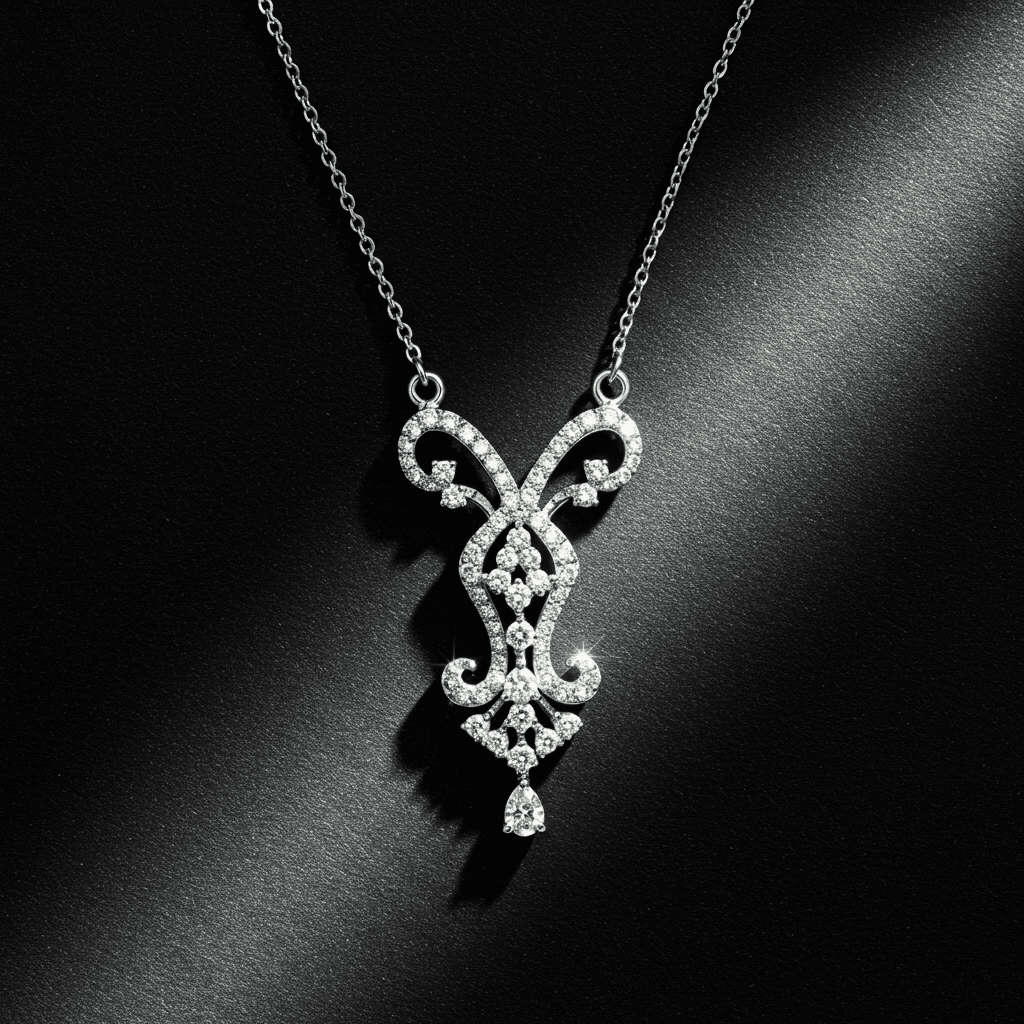
Case Study 1: The Delicate Diamond Necklace
A jewelry designer wanted to create a statement necklace featuring multiple diamonds in an intricate setting. Traditional design would require substantial gold to support the gemstones and create visual impact, resulting in a piece weighing 45 grams.
Using Tashvi AI's lightweight gold optimization:
- Final weight: 28 grams (38% reduction)
- Cost savings: Significant reduction in gold cost while maintaining retail price point
- Structural integrity: Superior—the distributed support system actually reduced stress on individual points
- Customer feedback: "Looks expensive but feels comfortable enough to wear all day"
Case Study 2: The Everyday Gold Band
A custom ring design featuring intricate engraving patterns. The client wanted visual richness but found traditional versions too heavy for daily wear.
Tashvi AI jewelry design optimization achieved:
- Weight reduction from 8 grams to 5.2 grams (35% lighter)
- Enhanced engraving that used depth variation to create richer visual texture
- Improved comfort with AI-optimized inner band contours
- Better durability through strategic material placement in high-wear areas
Case Study 3: The Lightweight Chandelier Earrings
Elaborate earrings that traditionally would be too heavy to wear comfortably, especially for extended periods.
The Tashvi AI solution:
- 50% weight reduction through sophisticated hollow construction with internal honeycomb
- Perfect balance ensuring earrings hang correctly despite complex geometry
- Movement optimization creating natural, graceful motion without feeling heavy
- All-day comfort transforming statement earrings into practical luxury
The Technical Process: How Tashvi AI Jewelry Design Works
When you design with Tashvi AI's AI jewelry design platform, the lightweight optimization happens seamlessly, but here's what's occurring behind the scenes in this revolutionary AI jewelry design system:
Step 1: Design Intent Analysis
The AI first understands your design goals—the style, aesthetic, intended use, and target price point. This contextual understanding guides optimization decisions.
Step 2: Initial Form Generation
The system creates the initial design based on your specifications, using traditional proportions and material distribution as a starting point.
Step 3: Structural Analysis
Advanced simulation analyzes how the piece will behave under real-world conditions:
- Weight distribution and balance
- Stress from daily wear
- Pressure points during putting on and removing
- Long-term durability considerations
Step 4: Multi-Objective Optimization
This is where the magic happens. The AI simultaneously optimizes for:
- Minimum weight while maintaining structural requirements
- Maximum aesthetic impact preserving visual richness
- Manufacturing feasibility ensuring the design can be produced reliably
- Cost effectiveness balancing material costs with production complexity
- Wearability optimizing comfort and practical use
Step 5: Iterative Refinement
The system generates hundreds of variations, testing each against the optimization criteria, learning from each iteration, and converging on the optimal solution.
Step 6: Human Review and Adjustment
The designer reviews the optimized design and can make adjustments. The AI then re-optimizes incorporating these preferences, ensuring the final piece reflects human creative vision enhanced by computational intelligence.
Beyond Weight: The Complete Value Proposition
Lightweight design optimization creates benefits that extend beyond just reduced weight:
Enhanced Customization
Lighter pieces are more affordable, making custom design accessible to more customers. This democratization of custom jewelry opens new business opportunities for jewelers.
Greater Creative Freedom
When weight isn't a limiting constraint, designers can explore more ambitious, elaborate designs that would be impractical in traditional heavy construction.
Improved Sustainability
Less gold means smaller environmental impact. Lightweight design aligns with growing consumer demand for sustainable luxury.
Better Profit Margins
Jewelers save on material costs while maintaining premium pricing for designs that look substantial and feature advanced optimization technology.
Expanded Market Reach
Lightweight jewelry appeals to customers who previously avoided fine jewelry due to comfort concerns, opening new market segments.
Design Principles for Lightweight Excellence
While AI handles the complex optimization, understanding these principles helps designers create even better lightweight pieces:
Embrace Asymmetry
Material doesn't need to be evenly distributed. Strategic asymmetry can create visual interest while optimizing weight.
Think Three-Dimensionally
Lightweight design isn't about making things flat—it's about using depth, layers, and three-dimensional forms to create visual impact with less material.
Consider Negative Space
Empty space is a design element. Strategic openings and cut-outs reduce weight while creating visual rhythm and allowing light interaction.
Trust the Structure
AI-optimized internal structures may look delicate in technical drawings but perform excellently in reality. Trust the simulation data.
Design for the Viewing Angle
Most jewelry is seen from specific angles. Optimize material placement for how the piece is actually viewed rather than trying to make every angle equally substantial.
The Future of Lightweight Design
AI is continuously evolving, and the future holds even more exciting possibilities:
Material Innovation Integration
As new gold alloys and hybrid materials emerge, AI will instantly incorporate their properties into optimization algorithms, enabling even lighter designs with new aesthetic possibilities.
Real-Time Manufacturing Feedback
Integration with manufacturing systems will allow AI to optimize not just for weight and strength, but for specific production methods, workshop capabilities, and even individual craftsperson preferences.
Customer Biometric Integration
Future systems might optimize jewelry for individual customers' hand sizes, ear shapes, and even activity levels, creating truly personalized lightweight designs.
Augmented Reality Previews
AR technology will let customers experience the weight and feel of optimized designs virtually before production, ensuring comfort and wearability expectations are met.
Making It Practical: Getting Started with Tashvi AI Jewelry Design
Ready to incorporate AI lightweight optimization into your jewelry design process?
For Individual Designers
Start by designing pieces you'd normally create, then let Tashvi AI's AI jewelry design software optimize them. Compare the results—you'll be amazed at the 30-50% weight reduction possible without sacrificing your design vision.
For Jewelry Businesses
Consider offering lightweight options for your popular designs using Tashvi AI. The material savings can improve margins while the comfort factor creates a compelling selling point that sets you apart from competitors.
For Custom Clients
When working with clients, present Tashvi AI's lightweight optimization as a standard feature. Most will appreciate the improved wearability and cost savings, and it demonstrates your commitment to cutting-edge AI jewelry design technology.
The Balance of Art and Algorithm
The beauty of AI-optimized lightweight design is that it enhances rather than replaces human creativity. The designer still makes all the important creative decisions—style, aesthetics, emotional impact—while AI handles the complex engineering challenges that make those visions practical, wearable, and affordable.
This partnership between human artistry and computational intelligence represents the future of jewelry design—one where beauty, wearability, and cost-effectiveness aren't competing priorities but complementary goals achieved through intelligent optimization.
Conclusion: Lightness with Substance Through AI Jewelry Design
Lightweight gold jewelry represents more than just a trend—it's a fundamental shift in how we think about luxury, wearability, and design excellence. Tashvi AI's AI jewelry design makes this shift possible by solving the complex optimization challenges that have always limited lightweight design.
With Tashvi AI jewelry design software, you can create pieces that:
- Feel comfortable enough to wear every single day
- Look as rich and substantial as heavier traditional designs
- Cost 20-40% less due to reduced gold weight without appearing less valuable
- Demonstrate structural integrity that matches or exceeds conventional construction
- Showcase your unique creative vision without compromise
The result is AI-designed jewelry that people actually wear—pieces that become part of their daily lives rather than special occasion treasures. And isn't that the ultimate goal of beautiful design?
Experience the future of lightweight gold design with Tashvi AI—where every gram is optimized, every curve is calculated, and every piece is perfectly balanced between cost, aesthetics, and wearability.
Frequently Asked Questions About AI Jewelry Design for Lightweight Gold
What is AI jewelry design?
AI jewelry design uses artificial intelligence and machine learning algorithms to create, optimize, and refine jewelry designs. Tashvi AI specifically uses AI to analyze thousands of design parameters simultaneously, optimizing for weight, strength, aesthetics, and cost-effectiveness in ways impossible through traditional design methods.
How much lighter can AI-designed jewelry be compared to traditional designs?
Tashvi AI jewelry design typically achieves 30-50% weight reduction compared to traditionally designed pieces while maintaining equivalent or superior structural integrity. For example, a traditional 45-gram necklace can be optimized to 28 grams (38% reduction), and chandelier earrings can achieve 50% weight reduction.
Does lighter weight mean the jewelry is less durable?
No. AI jewelry design from Tashvi AI actually enhances durability by:
- Strategically placing material where stress occurs
- Using advanced hollow construction with honeycomb internal structures
- Optimizing thickness variations throughout the piece
- Reducing stress points that cause traditional heavy pieces to deform
AI-optimized lightweight jewelry often exceeds the durability of heavier traditional designs.
How does Tashvi AI reduce gold weight without compromising beauty?
Tashvi AI uses four key AI jewelry design techniques:
- Intelligent structural optimization - Places material only where needed for strength and visual impact
- Advanced hollow design - Creates sophisticated internal structures invisible from outside
- Material distribution intelligence - Redistributes gold strategically for maximum aesthetic effect
- Aesthetic preservation algorithms - Maintains visual richness, curves, and three-dimensional beauty
The result is jewelry that looks substantial while weighing significantly less.
Can AI jewelry design save me money on gold costs?
Yes. Because Tashvi AI reduces gold weight by 30-50%, you save proportionally on material costs. Less gold weight = lower gold cost. A design requiring 45 grams traditionally might only need 28 grams with Tashvi AI optimization, resulting in significant cost savings while maintaining the same visual impact and retail value.
Is AI jewelry design suitable for custom pieces?
Absolutely. Tashvi AI excels at custom jewelry design because:
- It optimizes each unique design individually
- It adapts to specific customer requirements (comfort, budget, style)
- It enables more affordable custom pieces through weight reduction
- It maintains the designer's creative vision while adding technical optimization
What types of jewelry can benefit from AI lightweight design?
Tashvi AI jewelry design works for all types of gold jewelry:
- Rings - Wedding bands, engagement rings, statement rings
- Necklaces - Chains, pendants, statement necklaces
- Earrings - Studs, hoops, chandelier earrings
- Bracelets - Bangles, chain bracelets, charm bracelets
- Custom pieces - Any unique design concept
How does Tashvi AI compare to traditional CAD jewelry design software?
Tashvi AI differs from traditional CAD in key ways:
| Feature | Traditional CAD | Tashvi AI Jewelry Design |
|---|---|---|
| Weight optimization | Manual process | Automatic AI optimization |
| Design time | Hours to days | Minutes |
| Technical expertise required | High (years of training) | Low (intuitive interface) |
| Structural analysis | Limited or separate | Built-in AI analysis |
| Weight reduction | 10-15% typical | 30-50% typical |
| Cost | Expensive licenses | Accessible pricing |
Can I use Tashvi AI if I'm not a professional jewelry designer?
Yes! Tashvi AI jewelry design software is built for both professionals and beginners:
- Natural language input - Describe what you want in plain English
- Guided design mode - Step-by-step assistance
- Automatic optimization - AI handles technical complexity
- No CAD experience needed - Intuitive interface for all skill levels
How does AI help with lightweight designs, and who confirms they can be made?
Tashvi AI includes manufacturability analysis in its optimization process:
- Verifies designs meet production requirements
- Ensures proper tolerances for casting or 3D printing
- Checks structural feasibility
- Provides production-ready specifications jewelers can use directly
Every AI-optimized design is automatically checked for real-world manufacturing viability.
What's the difference between hollow gold jewelry and AI-optimized lightweight jewelry?
Traditional hollow jewelry simply removes material to create empty chambers, which can:
- Sound tinny when tapped
- Collapse under pressure
- Feel cheap despite appearance
Tashvi AI's AI lightweight design creates:
- Sophisticated honeycomb internal structures
- Variable wall thickness optimized for stress distribution
- Strategic internal ribbing for strength
- Premium weight feel despite reduced mass
AI-optimized designs maintain the quality feel of solid jewelry while achieving dramatic weight reduction.
Can AI jewelry design work with gemstones and diamonds?
Yes. Tashvi AI optimizes lightweight designs that incorporate gemstones by:
- Ensuring proper support for stone settings
- Maintaining structural integrity around prongs and bezels
- Balancing weight distribution with stone placement
- Optimizing metal around stones for both security and minimal weight
The AI considers gemstone weight, size, and setting requirements in the optimization process.
How long does it take to create an AI-optimized lightweight design with Tashvi AI?
Tashvi AI jewelry design is remarkably fast:
- Initial design generation: 1-5 minutes
- AI optimization: 2-10 minutes
- Refinement and adjustments: 5-15 minutes
- Total time: 10-30 minutes for most pieces
Compare this to traditional design which can take hours to days for complex optimization.
Is Tashvi AI suitable for high-end luxury jewelry?
Absolutely. Tashvi AI is ideal for luxury jewelry because:
- Lightweight designs increase wearability of expensive pieces
- Customers appreciate comfortable everyday wear of luxury items
- Cost savings on gold can be invested in higher-quality gemstones
- AI optimization demonstrates cutting-edge craftsmanship
- Premium aesthetic is fully preserved or enhanced
Many high-end jewelers use Tashvi AI to differentiate their offerings with advanced technology.
What makes Tashvi AI different from other AI jewelry design tools?
Tashvi AI specializes in:
- Lightweight optimization - Industry-leading 30-50% weight reduction
- Structural integrity focus - Ensures durability alongside weight savings
- Aesthetic preservation - Maintains or enhances visual beauty
- User-friendly interface - Accessible to all skill levels
- Production-ready output - Designs ready for immediate manufacturing
The platform is specifically engineered for the balance of cost, aesthetics, and wearability.
How do I get started with Tashvi AI jewelry design?
Getting started with Tashvi AI's AI jewelry design is simple:
- Visit Tashvi AI to access the platform
- Choose between Guided Design or Prompt-Based Design mode
- Describe your desired piece or answer design questions
- Review AI-generated designs
- Request optimizations and refinements
- Download production-ready specifications
No previous jewelry design experience required—Tashvi AI guides you through the entire process.
Start Designing Lightweight Gold Jewelry with Tashvi AI Today
Ready to experience the future of AI jewelry design? Tashvi AI makes it possible to create stunning lightweight gold pieces that balance cost-effectiveness, breathtaking beauty, and everyday wearability—all through the power of artificial intelligence.
Whether you're a professional jeweler looking to optimize your designs, a business seeking competitive advantages, or an individual wanting to create custom pieces, Tashvi AI's AI jewelry design platform puts advanced lightweight optimization at your fingertips.
Get Started with Tashvi AI Today →
Transform your jewelry designs with Tashvi AI—where artificial intelligence meets artistic excellence.