Diamond Shapes Guide - Round, Oval, Princess, Cushion & More
Complete diamond shapes guide for 2025. Compare round brilliant, oval, princess, cushion, emerald, pear, and marquise cuts. Learn which shape suits your style, finger type, and budget.
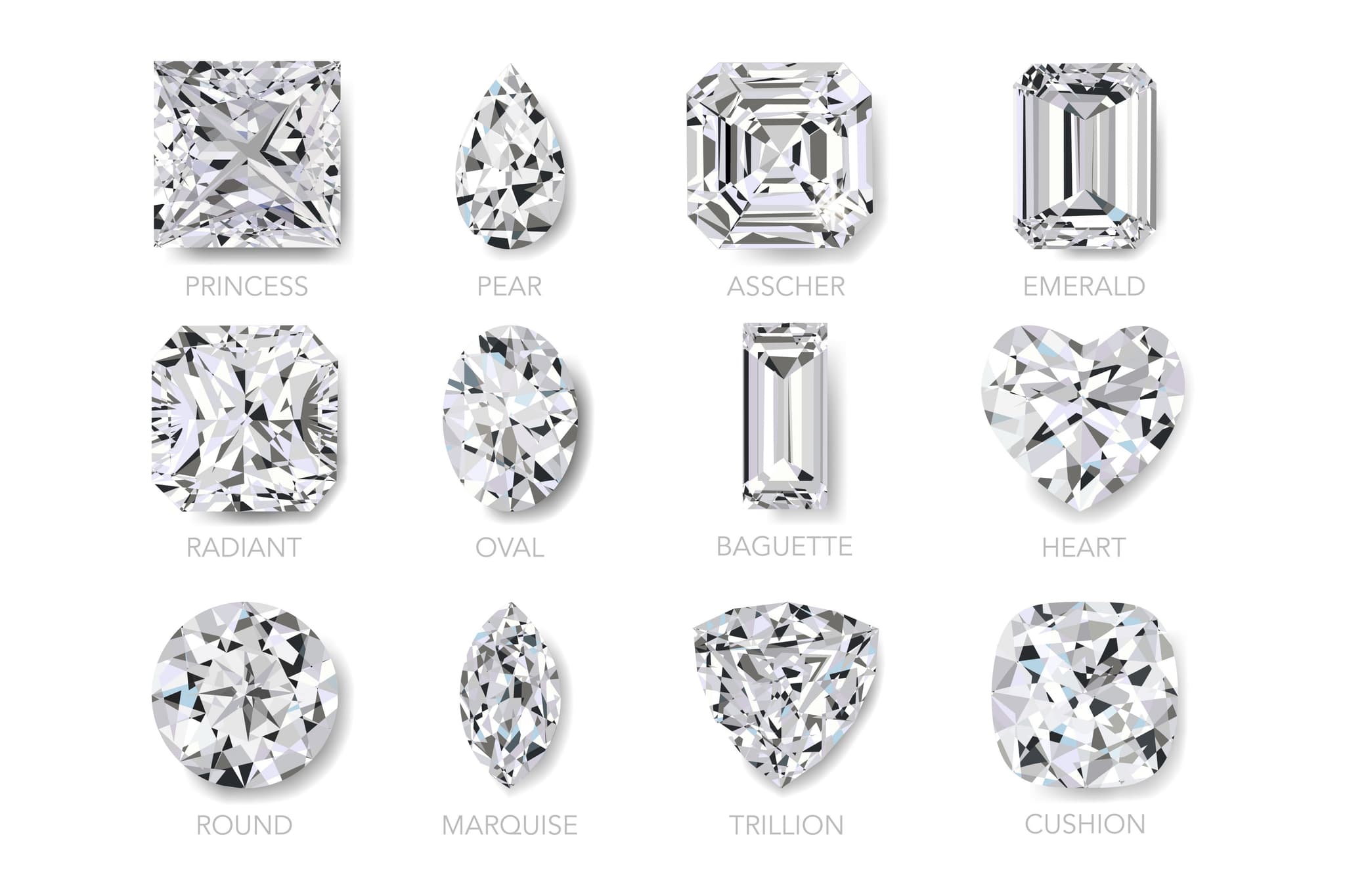
Choosing a diamond shape is one of the most personal decisions in selecting an engagement ring. While the 4Cs (cut, color, clarity, carat) determine a diamond's quality, the shape defines its character and how it reflects your personal style.
Diamond shape refers to the geometric outline and appearance of the stone, and each shape offers unique characteristics that affect brilliance, perceived size, and overall aesthetic. Understanding these differences helps you select a diamond that perfectly matches your vision and lifestyle.
Whether you're drawn to classic round brilliance or prefer the modern elegance of an oval, this comprehensive guide explores every major diamond shape to help you make an informed choice.
Once you've selected your ideal shape, explore our complete engagement ring buying guide for setting options, or dive into our ring settings guide to understand how different settings complement various diamond shapes.
Diamond Shape vs Diamond Cut
Before exploring individual shapes, it's crucial to distinguish between two terms often used interchangeably. Shape refers to the outline or external figure of the diamond, while cut refers to how well the diamond's facets interact with light.
Shape describes the actual outline of the diamond—round, square, pear, or other geometric forms.
Cut refers to how the diamond's facets interact with light, graded from Ideal/Excellent to Poor.
Important distinction: You can have a "Round shape" with a "Poor cut" (dull and lifeless) or an "Excellent cut" (fiery and brilliant). Shape is personal preference; cut quality directly affects brilliance and value.
Both factors significantly impact a diamond's beauty, but never sacrifice cut quality regardless of which shape you choose.
The Big 4 Diamond Shapes
These four shapes dominate the engagement ring market and offer the widest selection and best value options.
Round Brilliant Diamond (The Classic)
Market Share: ~75% of all diamonds sold | Vibe: Timeless, traditional, maximum sparkle
The round brilliant remains the most popular diamond shape, accounting for approximately 75% of all diamonds sold. Engineered specifically to reflect the most light, it delivers unmatched brilliance and timeless versatility.
Round brilliant diamonds feature 57 or 58 facets precisely arranged to maximize light reflection. The round brilliant cut was developed over centuries and perfected with mathematical precision to achieve optimal fire, brilliance, and scintillation.
Pros:
- Maximum sparkle and brilliance of any shape
- Hides yellow tint and inclusions better than any other shape
- Timeless—never goes out of style
- Easiest to match with any setting style
Cons:
- Most expensive shape per carat (due to high waste during cutting and high demand)
- So popular it may feel less unique
Best For: Those who want maximum sparkle and a classic look. The safest choice if you're uncertain about shape preference.
Oval Cut Diamond (The Trending Favorite)
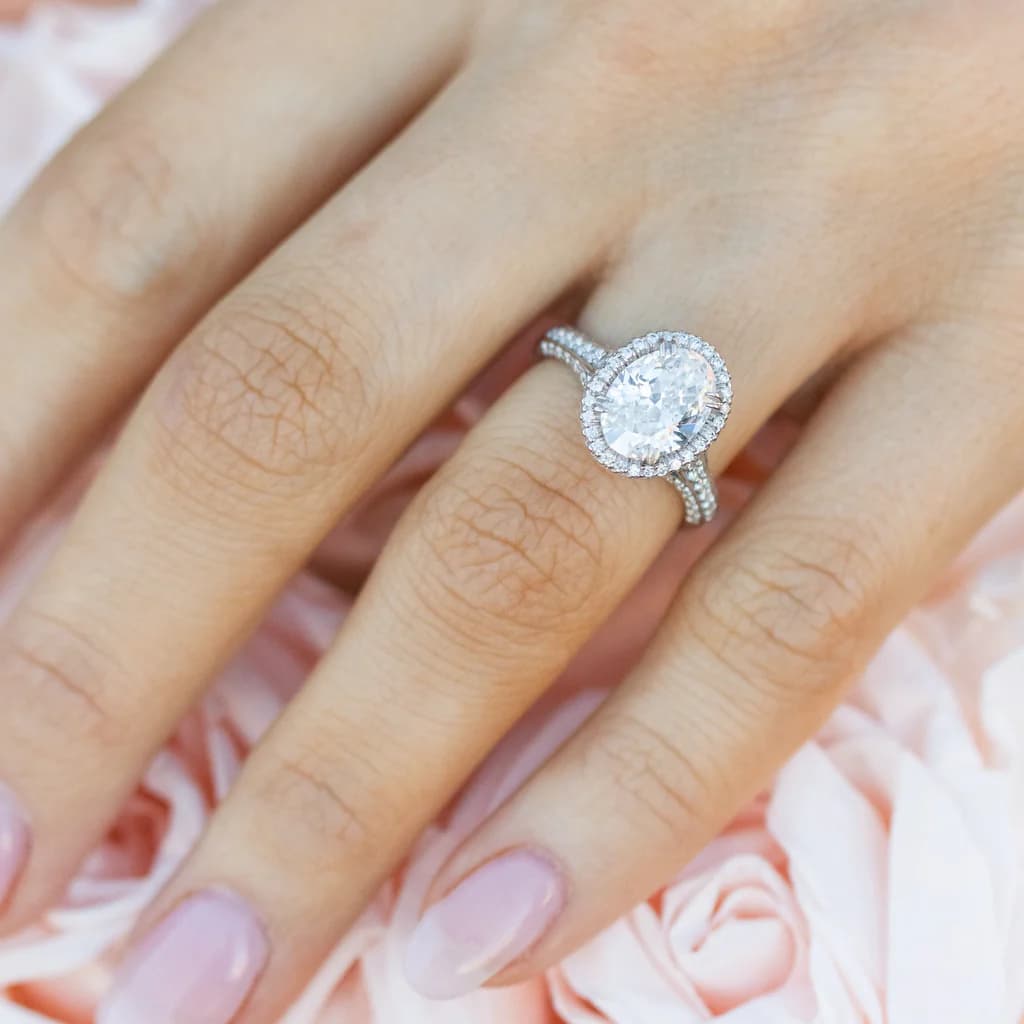
Vibe: Elegant, elongating, feminine | Ideal L:W Ratio: 1.35-1.50
Oval diamonds have surged in popularity, becoming the second most requested shape thanks to celebrity influence and their flattering elongated silhouette.
Oval diamonds combine the brilliance of round cuts with an elongated shape that creates the illusion of greater size. An oval diamond of the same carat weight appears approximately 10% larger than a round diamond due to its extended surface area.
Pros:
- Creates an illusion of longer, slender fingers
- Looks larger than a round diamond of the same carat weight
- Excellent brilliance similar to round
- Generally 20-30% less expensive than round
Cons:
- Susceptible to the "Bow-Tie Effect" (a dark shadow across the center)
- Must visually inspect the stone to ensure the bow-tie isn't distracting
Ideal Length-to-Width Ratio:
- Classic oval: 1.35-1.50 (sweet spot: 1.40-1.45)
- Elongated oval: 1.50-1.70
- Rounder oval: 1.25-1.35
Best For: Making fingers look slender; buyers who want a big look for their budget.
Princess Cut Diamond (The Modern Square)
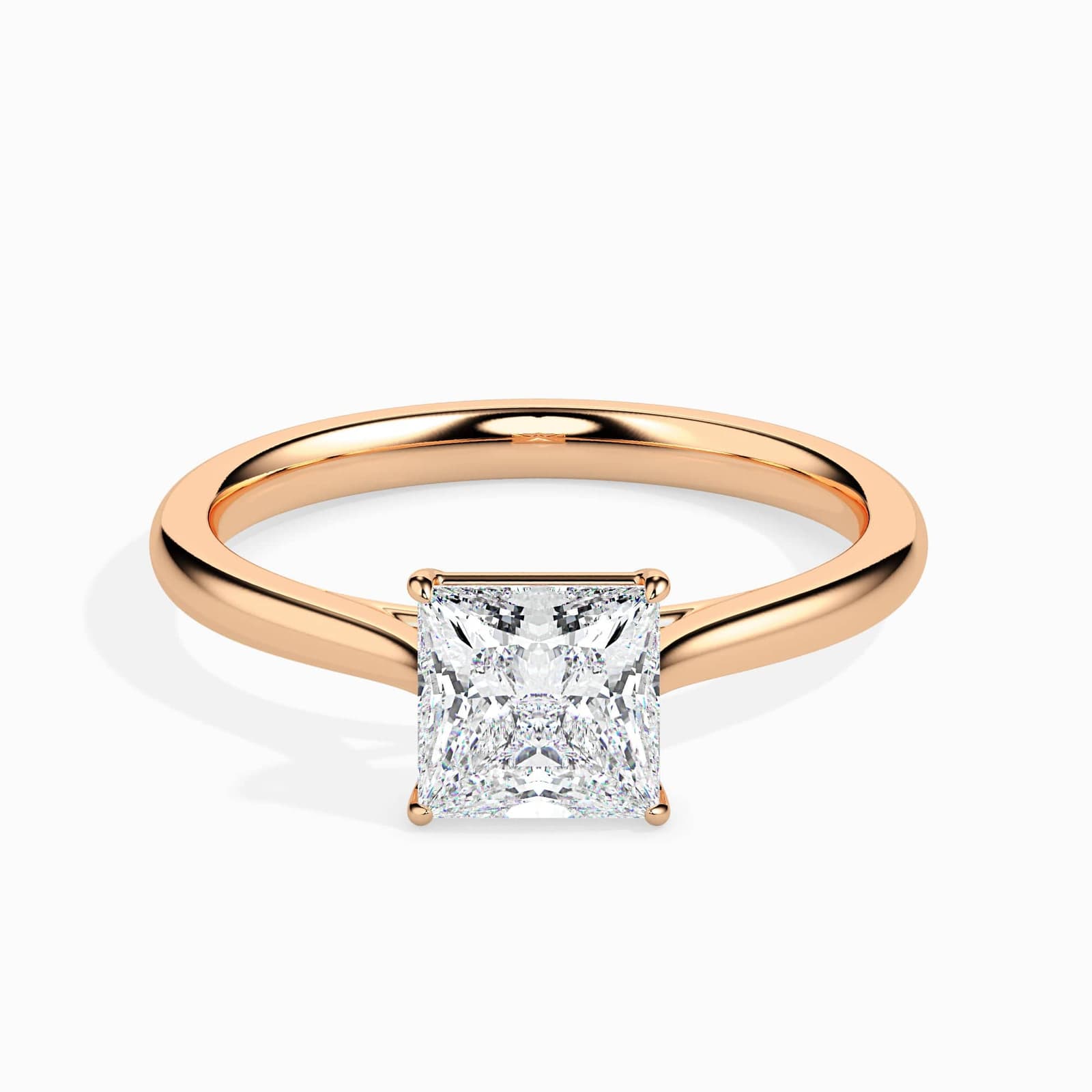
Vibe: Contemporary, geometric, edgy | Ideal L:W Ratio: 1.00-1.05
The princess cut ranks as the second most popular fancy shape, offering contemporary geometric appeal with exceptional brilliance.
Princess cut diamonds feature a square or slightly rectangular outline with pointed corners and typically 57-76 facets. The princess cut was created in the 1960s and refined in the 1980s as a modern alternative to round brilliants.
Pros:
- Excellent brilliance (almost as much as round)
- Generally 20-30% cheaper than round diamonds of the same weight (cutting process retains more rough stone)
- Modern, fashion-forward aesthetic
- Square shape is distinctive yet versatile
Cons:
- Sharp corners are prone to chipping
- Must be set in a "V-prong" or bezel to protect the tips
Ideal Length-to-Width Ratio:
- Perfect square: 1.00-1.05
- Slightly rectangular: 1.05-1.10
Best For: Modern styles and getting more carat weight for your budget.
Cushion Cut Diamond (The Romantic)
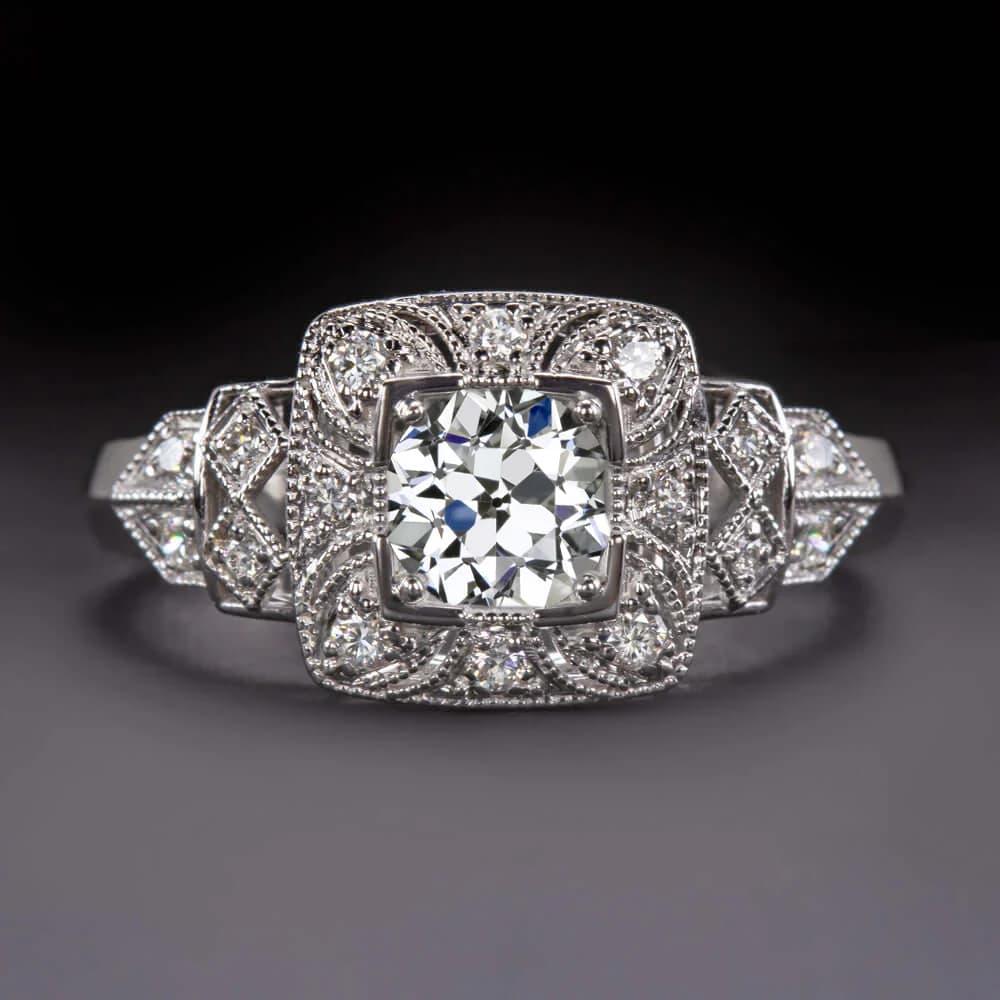
Vibe: Vintage, soft, pillow-like | Ideal L:W Ratio: 1.00-1.10
Cushion cuts blend old-world romance with modern cutting techniques, featuring soft, rounded corners that resemble a pillow or cushion.
Cushion cuts have been popular for over 200 years, predating round brilliants. Modern cushion cuts typically feature 58 facets in either "crushed ice" or "chunky" patterns.
Pros:
- High dispersion of light (fire/rainbow flashes)
- Very durable due to rounded edges
- Romantic, vintage aesthetic
- Excellent value compared to round
Cons:
- Can be cut "deep," meaning a 1-carat Cushion might look physically smaller (face-up) than a 1-carat Round or Oval
- Two distinct styles (crushed ice vs chunky) require preference decision
Cut Styles:
- Crushed ice cushions: Sparkly, scattered light pattern with smaller facets
- Chunky cushions: Larger, more distinct light and dark patterns with broader facets
Ideal Length-to-Width Ratio:
- Square cushion: 1.00-1.10
- Elongated cushion: 1.15-1.30
Best For: Vintage-inspired settings and halos; budget-conscious buyers wanting romance.
Fancy Diamond Shapes
Beyond the Big 4, these distinctive shapes offer unique aesthetics for those seeking something different.
Emerald Cut Diamond
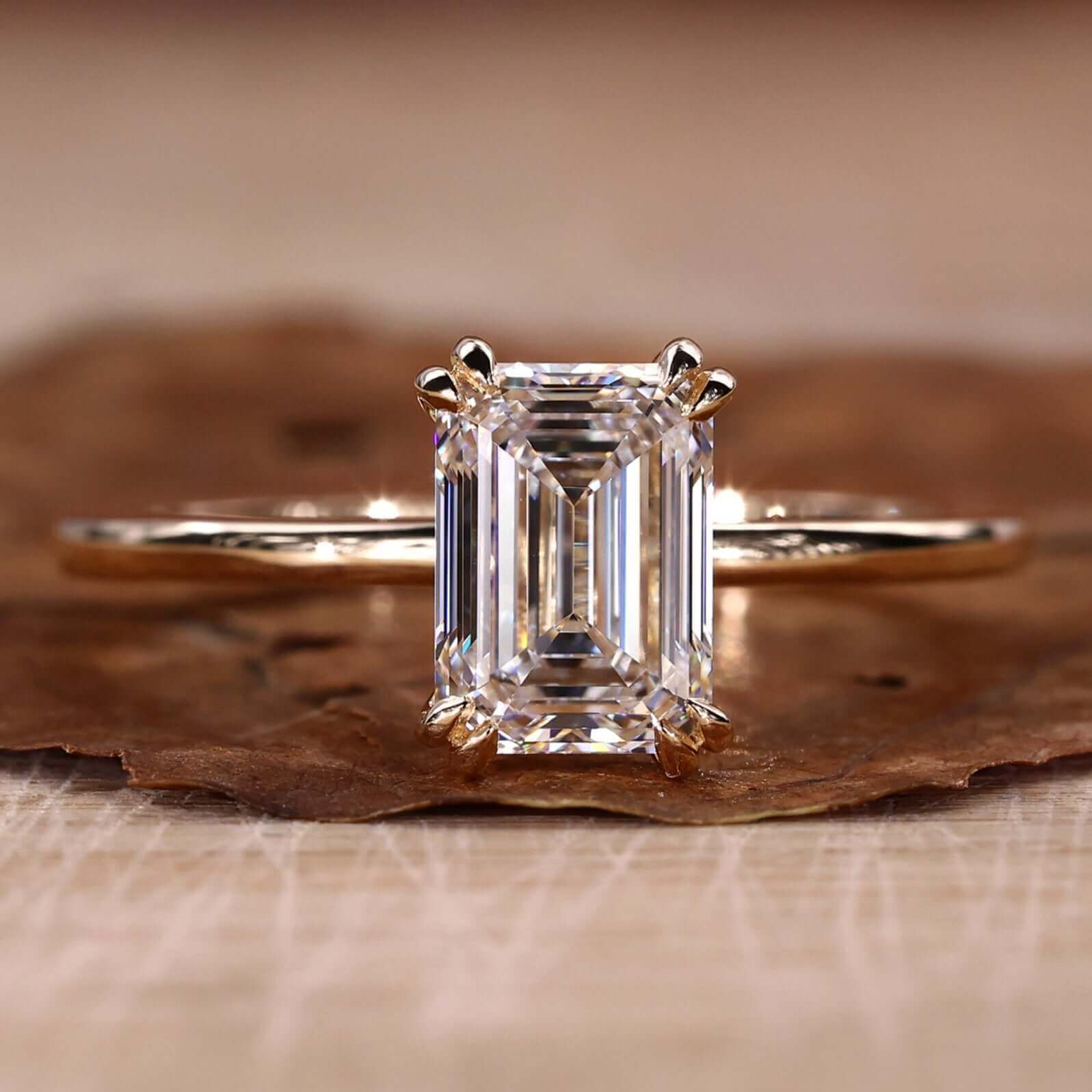
Cut Style: Step Cut | Vibe: Art Deco elegance | Ideal L:W Ratio: 1.30-1.50
Emerald cuts showcase a sophisticated step-cut faceting pattern that emphasizes clarity over brilliance, creating a hall-of-mirrors effect prized by those who appreciate understated elegance.
Unlike brilliant cuts that maximize sparkle, emerald cuts feature long, parallel facets that create dramatic flashes of light rather than continuous sparkle. The open table and step-cut facets make inclusions and color more visible, requiring higher clarity grades than brilliant cuts.
Pros:
- Elegant "Hall of Mirrors" effect
- Looks large due to elongated shape
- Vintage Art Deco style
- Often best value per carat
Cons:
- Reveals inclusions easily (needs VS1+ clarity)
- Less sparkle than brilliant cuts
- Shows color more readily
Best For: Sophisticated, understated aesthetics; Art Deco lovers; those with high-clarity stones.
Pear Shaped Diamond
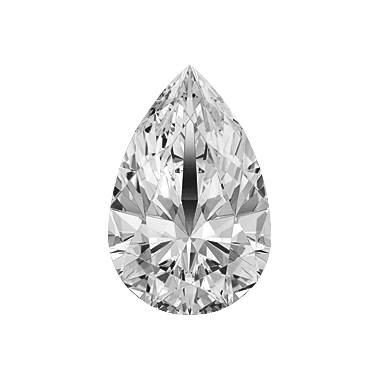
Cut Style: Brilliant | Vibe: Unique teardrop | Ideal L:W Ratio: 1.45-1.70
Pear shaped diamonds combine the brilliance of round cuts with a distinctive teardrop silhouette, creating unique pieces that stand out from traditional shapes.
Also called teardrop diamonds, pear shapes feature one rounded end and one pointed end. Worn with the point facing up elongates the finger; point facing down creates a contemporary look.
Pros:
- Unique teardrop shape
- Makes finger look long and slender
- Excellent value
- Versatile orientation options
Cons:
- Pointed tip is fragile (needs V-prong protection)
- Prone to Bow-Tie effect
- Asymmetry requires careful examination
Best For: Artistic personalities; those wanting distinctive, finger-elongating designs.
Marquise Diamond
Cut Style: Brilliant | Vibe: Regal, dramatic | Ideal L:W Ratio: 1.85-2.10
The marquise diamond's elongated shape with pointed ends creates the largest face-up appearance per carat of any diamond shape.
Legend attributes the marquise shape to King Louis XV of France, who commissioned a diamond cut to resemble the lips of his mistress, the Marquise de Pompadour. The football-shaped outline maximizes carat weight, making stones appear significantly larger than their actual weight.
Pros:
- Looks Biggest: Largest surface area per carat of any shape
- Dramatic finger elongation
- Excellent brilliance
- Great value for visual impact
Cons:
- Pointed tips chip easily (needs V-prong protection)
- Styling can feel dated if not set modernly
- Prone to Bow-Tie effect
Best For: Maximum perceived size per carat; those wanting dramatic, regal statement pieces.
Radiant Cut Diamond
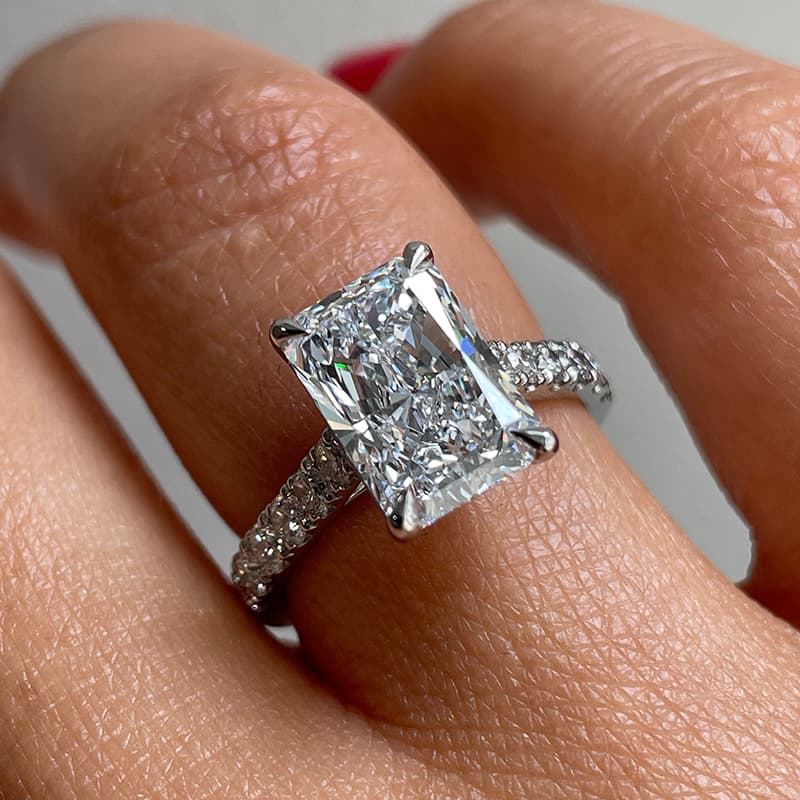
Cut Style: Brilliant | Vibe: Modern sparkle | Ideal L:W Ratio: 1.15-1.35
Radiant cuts combine the elegant shape of emerald cuts with the brilliance of round diamonds, offering the best of both worlds.
Created in 1977, the radiant cut was the first square cut with brilliant faceting. The 70-facet design delivers exceptional fire and brilliance while the cropped corners add durability and contemporary appeal.
Pros:
- Combines Emerald shape with Round sparkle
- Very durable (beveled corners)
- Hides inclusions well
- Modern yet versatile
Cons:
- Carat weight is often hidden in depth (deep cut)
- Less common, may be harder to find
Best For: Those who want emerald cut shape with more sparkle; active lifestyles.
Asscher Cut Diamond
Cut Style: Step Cut | Vibe: Vintage glamour | Ideal L:W Ratio: 1.00-1.05
The Asscher cut is essentially a square emerald cut with a distinctive X pattern visible when viewed from above.
Developed in 1902 by the Asscher Brothers of Holland, this cut features step-cut facets like emerald cuts but in a square shape. The high crown and deep pavilion create a mesmerizing hall-of-mirrors effect with exceptional depth.
Pros:
- Unique "X" pattern when viewed from above
- Deep, mesmerizing draw
- Vintage Art Deco appeal
- Architectural elegance
Cons:
- Faces up small (looks smaller than its weight)
- Reveals inclusions easily (needs VS1+ clarity)
- Less sparkle than brilliant cuts
Best For: Art Deco enthusiasts; those who appreciate vintage glamour with geometric precision.
Heart Shaped Diamond
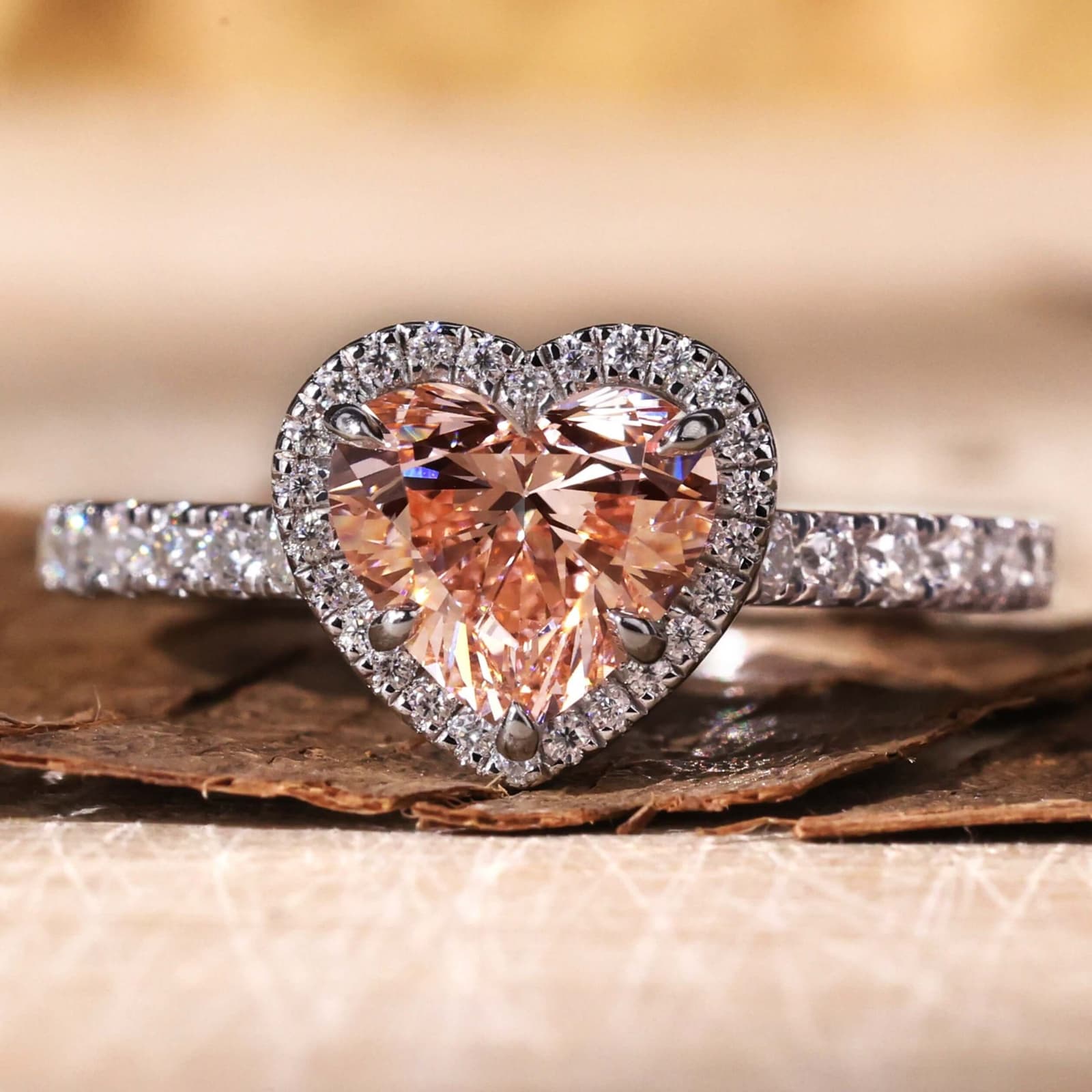
Cut Style: Brilliant | Vibe: Ultimate romance | Ideal L:W Ratio: 0.90-1.10
Heart shaped diamonds represent the ultimate symbol of love, making them meaningful choices for romantic occasions.
Heart shapes require exceptional cutting skill to achieve proper symmetry. The two halves must match perfectly, and the cleft must be distinct for the shape to read clearly as a heart.
Pros:
- Ultimate symbol of romance
- Unique and distinctive
- Good brilliance
- Deeply meaningful
Cons:
- Shape is hard to see in stones under 0.50ct
- Difficult to cut symmetrically
- Pointed tip needs protection
Best For: Romantic, sentimental choices; larger carat weights where the heart shape is clearly visible.
Fancy Shape Quick Comparison
Emerald (Step Cut)
- Ideal L:W: 1.30-1.50
- Pros: Hall of Mirrors effect, looks large, Art Deco style
- Cons: Reveals inclusions (needs VS1+), less sparkle
Radiant (Brilliant Cut)
- Ideal L:W: 1.15-1.35
- Pros: Emerald shape + Round sparkle, very durable
- Cons: Carat weight hidden in depth
Pear (Brilliant Cut)
- Ideal L:W: 1.45-1.70
- Pros: Unique teardrop, elongates finger, great value
- Cons: Fragile tip, prone to Bow-Tie
Marquise (Brilliant Cut)
- Ideal L:W: 1.85-2.10
- Pros: Largest face-up size per carat
- Cons: Tips chip easily, can look dated
Asscher (Step Cut)
- Ideal L:W: 1.00-1.05
- Pros: Unique X pattern, vintage appeal
- Cons: Faces up small, reveals inclusions
Heart (Brilliant Cut)
- Ideal L:W: 0.90-1.10
- Pros: Ultimate romance symbol, unique
- Cons: Hard to see under 0.50ct, needs symmetry
Critical Buying Tips
Understanding these key factors will help you make a smarter purchase regardless of which shape you choose.
The Bow-Tie Effect
Elongated shapes (Oval, Pear, Marquise) often display a dark area across the center that resembles a bow tie. This occurs when light doesn't reflect properly through the center facets.
Good bow-tie: A subtle shadow adds contrast and depth. Bad bow-tie: A large, black void that kills the sparkle.
Critical tip: Never buy these shapes "blind." Always view a video or photo to check the severity of the bow-tie before purchasing.
Length-to-Width Ratio Matters
For fancy shapes, the L:W ratio determines if the stone looks chubby or slender.
Example (Oval):
- 1.30 ratio = rounder, chubby appearance
- 1.50 ratio = slender, elegant appearance
Stick to the ideal ratio ranges in this guide for the most aesthetically pleasing proportions.
Clarity Sensitivity by Cut Style
Different cut styles show inclusions differently:
Brilliant Cuts (Round, Princess, Oval, Cushion, Radiant, Pear, Marquise, Heart): The intense sparkle masks flaws. You can often get away with SI1 or SI2 clarity and still have an eye-clean stone.
Step Cuts (Emerald, Asscher): The long, flat facets act like windows into the stone. You typically need VS1 or higher clarity to ensure the diamond looks clean to the naked eye.
Price Hierarchy
From most expensive to least expensive (assuming same Carat/Color/Clarity):
- Round (Most expensive—premium for popularity and rough loss)
- Oval / Pear / Marquise (Moderate premium for popularity)
- Princess / Cushion / Radiant (Good value with excellent sparkle)
- Emerald / Asscher (Often best value per carat, but require higher clarity grades)
How to Choose the Right Diamond Shape
Selecting your ideal diamond shape involves balancing multiple factors including personal style, practical considerations, and budget.
Consider Your Personal Style
Your jewelry preferences offer clues to your ideal diamond shape:
- Classic and traditional: Round brilliant or cushion
- Modern and contemporary: Princess, radiant, or emerald
- Romantic and vintage: Oval, pear, or cushion
- Unique and distinctive: Marquise, pear, or heart
- Sophisticated and refined: Emerald or Asscher
Finger Shape and Size
Different shapes complement different hand types:
- Long, slender fingers: Any shape works; square and round shapes add width
- Short fingers: Elongated shapes (oval, marquise, pear) create lengthening illusion
- Wide fingers: Elongated shapes balance proportions
- Small hands: Delicate shapes and smaller carat weights maintain proportion
Lifestyle Considerations
Daily activities affect shape practicality:
- Active lifestyles: Round, cushion, and radiant cuts have no vulnerable points
- Desk work: Pointed shapes (princess, pear, marquise) may catch on materials
- Manual work: Bezel-set rounds or cushions offer maximum protection
Budget Optimization
Shape significantly affects price per carat:
Higher price per carat:
- Round brilliant (premium due to popularity and rough loss)
Moderate price per carat:
- Princess, cushion, radiant
Lower price per carat:
- Oval, pear, marquise, emerald, Asscher
Fancy shapes can cost 25-40% less than equivalent round diamonds while often appearing larger due to elongated shapes.
Diamond Shape Price Comparison
Understanding relative pricing helps maximize your budget:
- Round: 100% (baseline), standard face-up size
- Oval: 70-80% of round price, 10% larger face-up
- Princess: 65-75% of round price, similar face-up size
- Cushion: 65-75% of round price, similar face-up size
- Emerald: 60-70% of round price, 5% larger face-up
- Radiant: 65-75% of round price, similar face-up size
- Pear: 60-70% of round price, 15% larger face-up
- Marquise: 55-65% of round price, 20% larger face-up
- Asscher: 60-70% of round price, similar face-up size
Prices approximate and vary by specific stone quality
Design Your Diamond Ring with Tashvi AI
Visualizing different diamond shapes in your ideal setting transforms the selection process from abstract comparison to concrete decision-making. Tashvi AI at design.tashvi.ai enables you to explore custom engagement ring designs featuring any diamond shape before committing to purchase.
How Tashvi AI Helps with Shape Selection
Tashvi AI uses advanced AI models (DALL-E 3, Imagen, and FLUX) to generate photorealistic engagement ring designs from your text descriptions. See exactly how different diamond shapes look in various settings, metals, and styles.
Example Diamond Shape Prompts:
Basic:
Oval diamond engagement ring in yellow gold
Better:
1.5 carat oval diamond solitaire engagement ring in 18k yellow
gold with thin band and four-prong setting
Advanced:
2 carat elongated cushion cut diamond in platinum setting with
thin pavé diamond band, low profile design, ratio 1.25:1,
modern minimalist aesthetic
Compare Shapes Side by Side
Generate multiple designs featuring different shapes to compare directly:
- See how round vs oval looks on similar settings
- Compare princess vs cushion in halo designs
- Visualize emerald vs radiant in three-stone settings
- Test pear vs marquise for finger elongation
Customize Every Detail
Once you've selected your preferred shape, refine every aspect:
- Setting styles: Solitaire, halo, three-stone, vintage
- Metal options: Platinum, white gold, yellow gold, rose gold
- Band designs: Plain, pavé, twisted, split-shank
- Proportions: Length-to-width ratios for fancy shapes
From Visualization to Reality
Your AI-generated designs provide clear references for jewelers. Generate 360-degree rotation videos to see your design from every angle, or use Draft Studio to create 3D CAD models ready for manufacturing.
Ready to visualize your perfect diamond shape? Launch Tashvi AI and explore engagement ring designs featuring every shape.
Quick Recommendations by Priority
Not sure where to start? Here's a quick guide based on what matters most to you:
For Maximum Sparkle: Round Brilliant or Radiant For Maximum Size Appearance: Oval, Pear, or Marquise For Vintage/Unique Style: Emerald, Asscher, or Cushion For Budget Value: Princess or Cushion For Finger Elongation: Oval, Pear, or Marquise For Durability: Round, Cushion, or Radiant (no pointed corners)
Conclusion
Every diamond shape offers unique characteristics that appeal to different preferences, styles, and practical considerations. Round brilliants deliver unmatched sparkle for traditionalists, while ovals and cushions offer romantic alternatives with excellent value. Princess and radiant cuts suit modern aesthetics, emerald and Asscher cuts appeal to sophisticated tastes, and pear and marquise shapes create distinctive statement pieces.
The perfect diamond shape is ultimately the one that speaks to you—the shape you can't stop looking at, that feels right when you imagine wearing it every day. Consider your personal style, lifestyle needs, and budget, but trust your instincts when making the final choice.
Take time to view different shapes in person when possible, and use visualization tools to see how various shapes look in your preferred settings. Whether you choose the timeless brilliance of a round diamond or the unique elegance of a fancy shape, your engagement ring will be a lasting symbol of your love story.
Ready to explore diamond shapes in custom ring designs? Discover how AI technology can help you visualize and create the perfect engagement ring featuring your ideal diamond shape.
Frequently Asked Questions
Quick answers to the questions readers ask most about this guide.
What is the difference between diamond shape and diamond cut?
Diamond shape refers to the geometric outline (round, oval, princess, etc.) while cut refers to how well the facets interact with light (graded Excellent to Poor). You can have a round shape with a poor cut. Shape is personal preference; cut quality directly affects sparkle and value.
Which diamond shape looks the biggest for its carat weight?
Oval and marquise diamonds look largest for their carat weight because their elongated shapes have more surface area. An oval diamond appears approximately 10% larger than a round diamond of the same carat weight. Pear and emerald cuts also face up larger than round.
What is the most popular diamond shape for engagement rings?
Round brilliant diamonds remain the most popular, accounting for about 75% of all diamonds sold. Oval diamonds have surged to become the second most popular shape, followed by princess cut and cushion cut diamonds.
Which diamond shape is the most affordable?
Princess, cushion, and radiant cuts are typically 20-40% less expensive than round diamonds of the same carat weight. This is because less rough stone is wasted during cutting. Marquise and pear shapes also offer good value.
What is the bow-tie effect in diamonds?
The bow-tie effect is a dark shadow that appears across the center of elongated diamond shapes like oval, pear, and marquise. It's caused by light leaking through the pavilion. Always visually inspect these shapes to ensure the bow-tie isn't distracting.
Which diamond shape hides inclusions best?
Round brilliant diamonds hide inclusions best because their many facets create maximum sparkle that masks imperfections. Cushion and radiant cuts also hide inclusions well. Step cuts like emerald and Asscher show inclusions more easily due to their large, open facets.