The Complete Diamond Buying Guide: Cut, Color, Clarity, and Carat
Master diamond buying with this comprehensive guide to the 4Cs. Learn how cut, color, clarity, and carat weight affect a diamond's beauty and value so you can make a confident, informed purchase.
Everything You Need to Know Before Buying a Diamond
The four Cs of diamond quality, cut, color, clarity, and carat weight, work together to determine a diamond's beauty and value, with cut being the most critical factor for visual brilliance, followed by color and clarity for appearance, and carat weight for size. Understanding how these factors interact empowers you to find a stunning diamond at any budget.
Diamonds represent one of the most significant purchases most people will make, and the industry's technical jargon can feel overwhelming. This guide demystifies every aspect of diamond buying, giving you the knowledge to shop with confidence whether you are buying an engagement ring, a pendant, or a pair of studs.
Understanding Diamond Cut
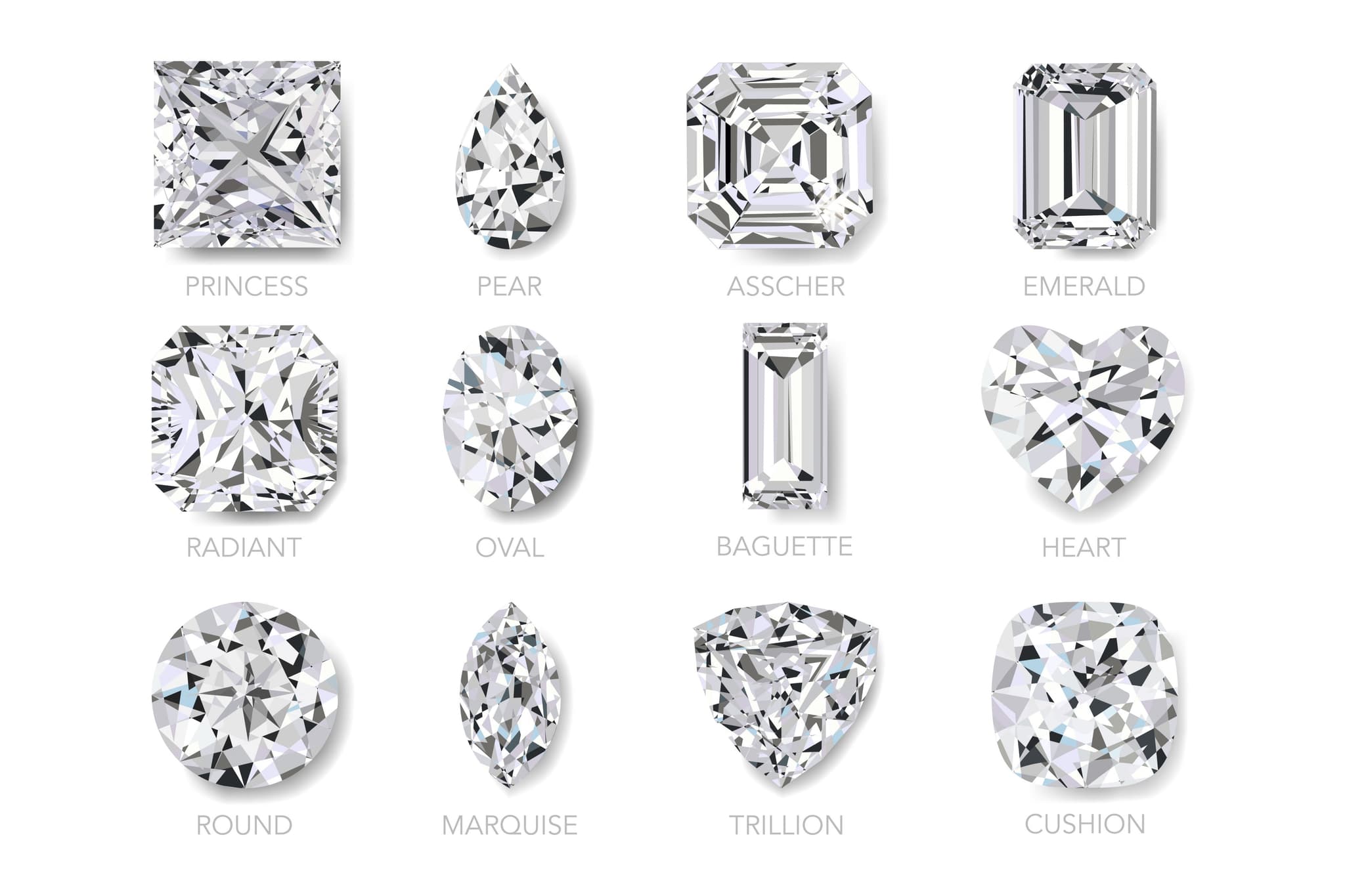
Cut is the most important of the four Cs and the one most often misunderstood. Cut does not refer to a diamond's shape (round, oval, princess) but rather to the precision of its proportions, symmetry, and polish, the factors that determine how effectively the diamond interacts with light.
Why Cut Matters Most
A diamond's magic lies in its ability to capture light and return it to your eye as brilliance (white light), fire (rainbow flashes), and scintillation (sparkle when moved). All three depend entirely on cut quality. A perfectly colorless, flawless diamond with a poor cut will look dull, while a well-cut diamond with slight color tint and minor inclusions will sparkle magnificently.
Cut Grades Explained
GIA grades round brilliant diamond cuts on a five-point scale.
Excellent cut diamonds reflect nearly all light that enters, creating exceptional brilliance. These represent the top 15 percent of diamonds. Very Good cut diamonds reflect almost as much light as Excellent cuts and offer outstanding value, representing approximately the top 25 percent. Good cut diamonds capture most of the light entering the stone and represent strong budget-conscious choices. Fair and Poor cut diamonds allow significant light leakage through the bottom or sides, resulting in noticeably less brilliance.
For maximum sparkle, prioritize Excellent or Very Good cut grades. The visual difference between these two grades is subtle, but the price difference can be meaningful.
Cut Parameters to Know
Three specific measurements define a diamond's cut quality. Table percentage refers to the width of the top flat facet relative to the diamond's total width. Depth percentage measures the total height relative to width. Crown angle describes the angle of the facets above the girdle. For round brilliants, look for table percentages between 54 and 60, depth percentages between 59 and 62.5, and crown angles between 34 and 35.5 degrees for optimal light performance.
Understanding Diamond Color
Diamond color actually measures the absence of color. The most valued diamonds are completely colorless, allowing light to pass through and disperse as spectral colors without any tint.
The Color Scale
GIA's color scale runs from D (colorless) to Z (light yellow or brown). The differences between adjacent grades are extremely subtle and often invisible without side-by-side comparison under controlled lighting.
| Grade Range | Description | Notes |
|---|---|---|
| D to F | Colorless | Premium pricing, differences visible only to experts |
| G to J | Near colorless | Best value, appear colorless when set |
| K to M | Faint tint | Visible warmth, pairs well with yellow gold |
| N to Z | Noticeable color | Significant tint, lower pricing |
Color and Setting Interaction
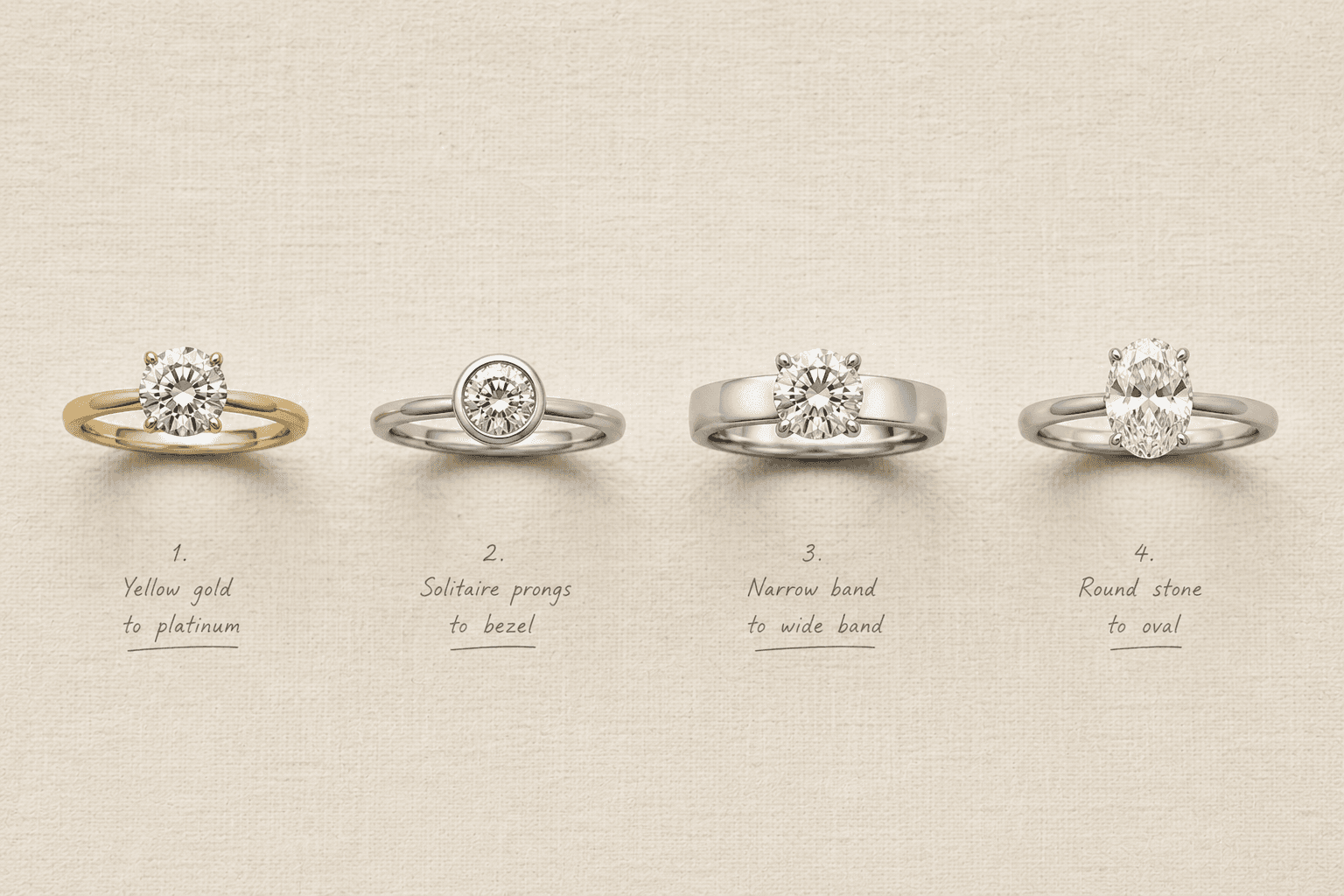
The metal in your ring setting affects how diamond color is perceived. White gold and platinum settings can make faint color more visible because of the contrast. Yellow and rose gold settings tend to mask warm tints in the K to M range, making these settings excellent choices for slightly tinted diamonds.
Smart Color Buying
For most engagement rings, G to I color diamonds offer the optimal balance of appearance and value. Set in white gold or platinum, these diamonds appear colorless to everyone except trained gemologists with comparison stones. The savings compared to D to F grades can be 15 to 30 percent, money that can be redirected toward a better cut or larger size.
Understanding Diamond Clarity
Clarity measures the presence of internal characteristics (inclusions) and surface characteristics (blemishes) that formed during the diamond's creation deep within the earth.
The Clarity Scale
GIA's clarity scale includes eleven grades, from Flawless (no inclusions or blemishes visible at 10x magnification) to Included (inclusions visible to the naked eye).
Flawless and Internally Flawless diamonds are exceptionally rare, representing less than 1 percent of gem-quality diamonds. VVS1 and VVS2 (Very Very Slightly Included) contain minute inclusions difficult for a skilled grader to see at 10x magnification. VS1 and VS2 (Very Slightly Included) contain minor inclusions ranging from difficult to somewhat easy to see at 10x magnification. SI1 and SI2 (Slightly Included) contain noticeable inclusions at 10x magnification that are typically not visible to the naked eye in SI1. I1, I2, and I3 (Included) contain obvious inclusions visible to the naked eye.
The Eye-Clean Standard
For most buyers, the practical goal is finding a diamond that appears flawless to the naked eye, known as "eye-clean." VS2 and SI1 diamonds are typically eye-clean, offering the best balance of clarity and value. You are paying for a difference that only matters under magnification.
Inclusion Types Matter
Not all inclusions are equal. Small white feathers near the edge of a diamond are far less impactful than a dark crystal directly beneath the table (the large top facet). When evaluating clarity, ask to see the diamond's inclusion plot on the certificate and understand where and what type the inclusions are.
Understanding Diamond Carat Weight
Carat is a unit of weight, not size. One carat equals 200 milligrams. While carat weight correlates with physical size, the relationship is not linear because different diamond shapes carry their weight differently.
Carat Weight and Visual Size
A one-carat round diamond measures approximately 6.5 millimeters in diameter. However, a one-carat marquise diamond, with its elongated shape, measures approximately 10 x 5 millimeters and can appear significantly larger despite weighing the same.
Diamonds are priced per carat, and prices jump at popular weight thresholds (0.5, 0.75, 1.0, 1.5, and 2.0 carats). A 0.99-carat diamond can cost 10 to 20 percent less than a 1.01-carat diamond of identical quality, despite being visually indistinguishable.
Smart Carat Shopping
Buying just below popular thresholds, like 0.9 instead of 1.0 carats, offers substantial savings with negligible visual difference. The size difference is fractions of a millimeter, invisible without precise measurement.
Also consider that cut quality affects perceived size. A well-cut diamond with ideal proportions can face up larger than its carat weight suggests, while a deeply cut diamond may look smaller because weight is hidden in depth.
How the 4Cs Work Together
No single C should be evaluated in isolation. The magic of diamond buying lies in finding the right balance for your priorities and budget.
Budget Allocation Strategy
For maximum visual impact per dollar spent, consider allocating your budget with the following priorities. Invest the most in cut quality, as this has the greatest impact on beauty. Accept near-colorless rather than colorless grades. Choose eye-clean clarity rather than technical perfection. Select the largest carat weight that fits your remaining budget after optimizing the other three Cs.
A 1-carat diamond with Excellent cut, G color, and VS2 clarity will typically outshine a 1.2-carat diamond with Good cut, D color, and VVS1 clarity, despite the latter having technically superior color and clarity grades.
Beyond the 4Cs
Several additional factors affect a diamond's beauty and value.
Fluorescence
About 30 percent of diamonds exhibit fluorescence, a blue glow under ultraviolet light. Mild fluorescence in a near-colorless diamond can actually improve appearance by counteracting yellowish tints. Strong fluorescence, however, can make a diamond appear hazy or oily in some lighting conditions. Fluorescent diamonds are typically priced 10 to 15 percent lower.
Diamond Certification
Always purchase certified diamonds. GIA (Gemological Institute of America) is considered the gold standard for grading consistency. AGS (American Gem Society is equally respected, particularly for cut quality evaluation. Other labs may grade more leniently, meaning a "G color" from a lesser-known lab might be an "I color" by GIA standards.
Natural vs. Lab-Grown
Lab-grown diamonds are chemically, physically, and optically identical to natural diamonds but cost 50 to 70 percent less. For buyers prioritizing size and visual impact over natural origin, lab-grown diamonds offer exceptional value.
How Tashvi AI Helps You Visualize Your Diamond
Tashvi AI lets you see how different diamond shapes, sizes, and settings look together before you buy. Generate photorealistic renderings of rings featuring various diamond specifications to compare appearances side by side. This visual comparison is invaluable because understanding the 4Cs intellectually is different from seeing how they translate into actual beauty on your hand.
Experiment with different combinations, perhaps a slightly smaller diamond in a halo setting versus a larger solitaire, to see which option appeals to you more visually before making your purchasing decision.
Try designing on Tashvi AI free
Your Diamond Buying Checklist
Armed with knowledge of the 4Cs, you are ready to shop confidently. Prioritize cut above all else, target the sweet spot of G to I color and VS2 to SI1 clarity for maximum value, consider buying just under popular carat thresholds, and always insist on certification from GIA or AGS. The perfect diamond for you is the one that looks beautiful to your eyes and fits comfortably within your budget.
Frequently Asked Questions
Quick answers to the questions readers ask most about this guide.
Which of the 4Cs is most important when buying a diamond?
Cut is widely considered the most important C because it has the greatest impact on a diamond's sparkle and visual beauty. A well-cut diamond with slightly lower color or clarity will often look more brilliant than a poorly cut stone with perfect color and clarity grades.
What is the best diamond color for an engagement ring?
For most people, diamonds in the G to I color range offer the best value. These appear colorless to the naked eye when mounted in a setting, yet cost significantly less than D to F diamonds. The setting metal color also affects perceived diamond color.
Can you see inclusions in an SI1 clarity diamond?
SI1 inclusions are typically not visible to the naked eye, making this grade an excellent value choice. However, the location and type of inclusions matter. An SI1 diamond with inclusions near the edge performs differently than one with a dark inclusion directly under the table.
Is a bigger diamond always better?
Not necessarily. A larger diamond with poor cut quality can look less impressive than a smaller, excellently cut stone. Also, as carat weight increases, visual size does not increase proportionally. Going from 1.0 to 1.5 carats adds 50 percent weight but only about 17 percent diameter.
Should I buy a certified diamond?
Absolutely. A diamond certificate from a reputable lab like GIA or AGS provides an independent, objective assessment of the diamond's qualities. Without certification, you are relying entirely on the seller's claims, which introduces significant risk, especially for larger purchases.