Balance in Jewelry Design: Symmetrical vs Asymmetrical (Visual Guide)
Balance makes jewelry feel stable and visually pleasing. Learn the 3 types of balance (symmetrical, asymmetrical, radial), how visual weight works, and why comfort balance matters for wearability.
What Is Balance in Jewelry Design?
Balance is what makes jewelry feel stable, comfortable, and visually pleasing. Even bold, dramatic designs need balance to work.
Think of balance like a seesaw. When both sides feel equal, even if they're not identical, the design appears intentional and refined. When balance is off, something feels wrong, like the piece might "tip over" visually.
Balance is one of the seven principles of jewelry design that separates professional work from amateur attempts. Understanding it will immediately improve how you evaluate and create jewelry.
The 3 Types of Balance
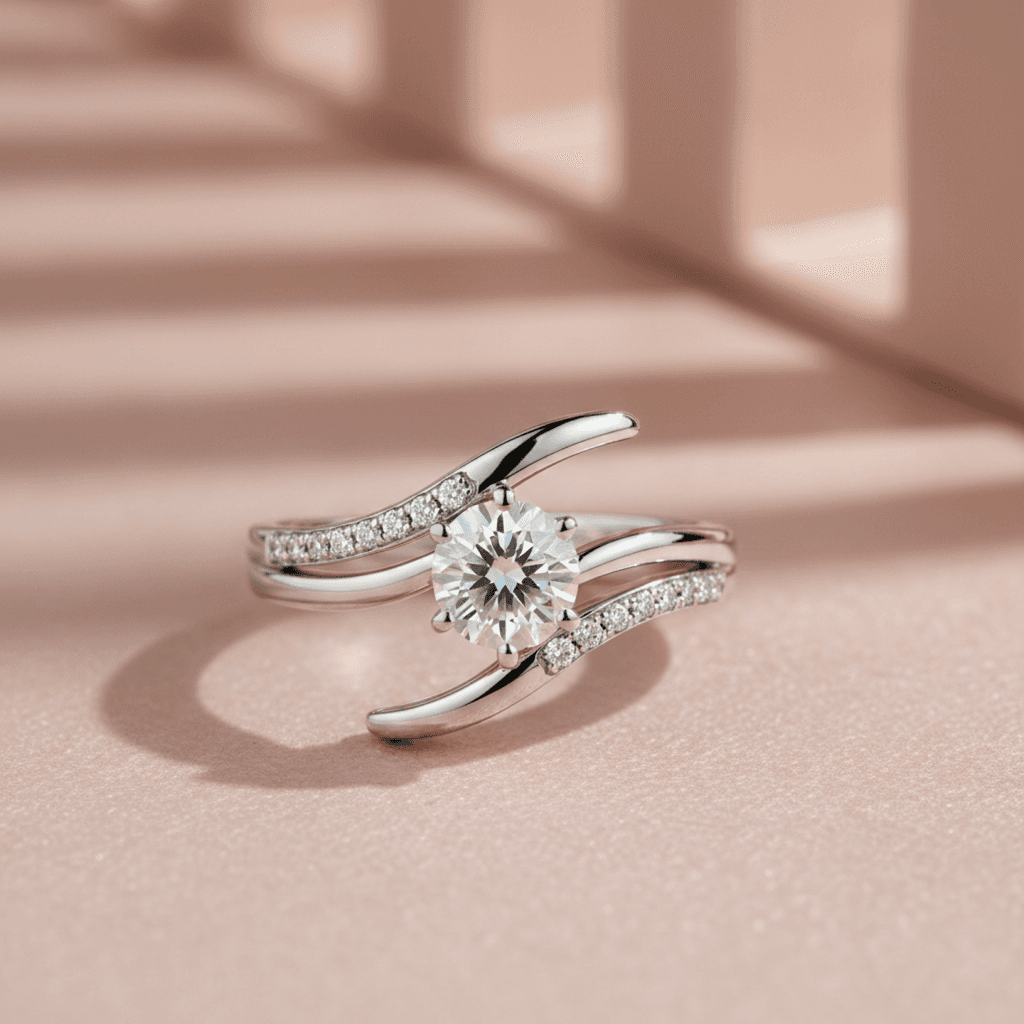
1. Symmetrical Balance
Symmetrical balance creates a mirror image. Draw a line down the center, and both sides are identical.
Characteristics:
- Classic, formal, and timeless
- Conveys stability and elegance
- Easier to achieve
- Can feel static if overused
Examples in jewelry:
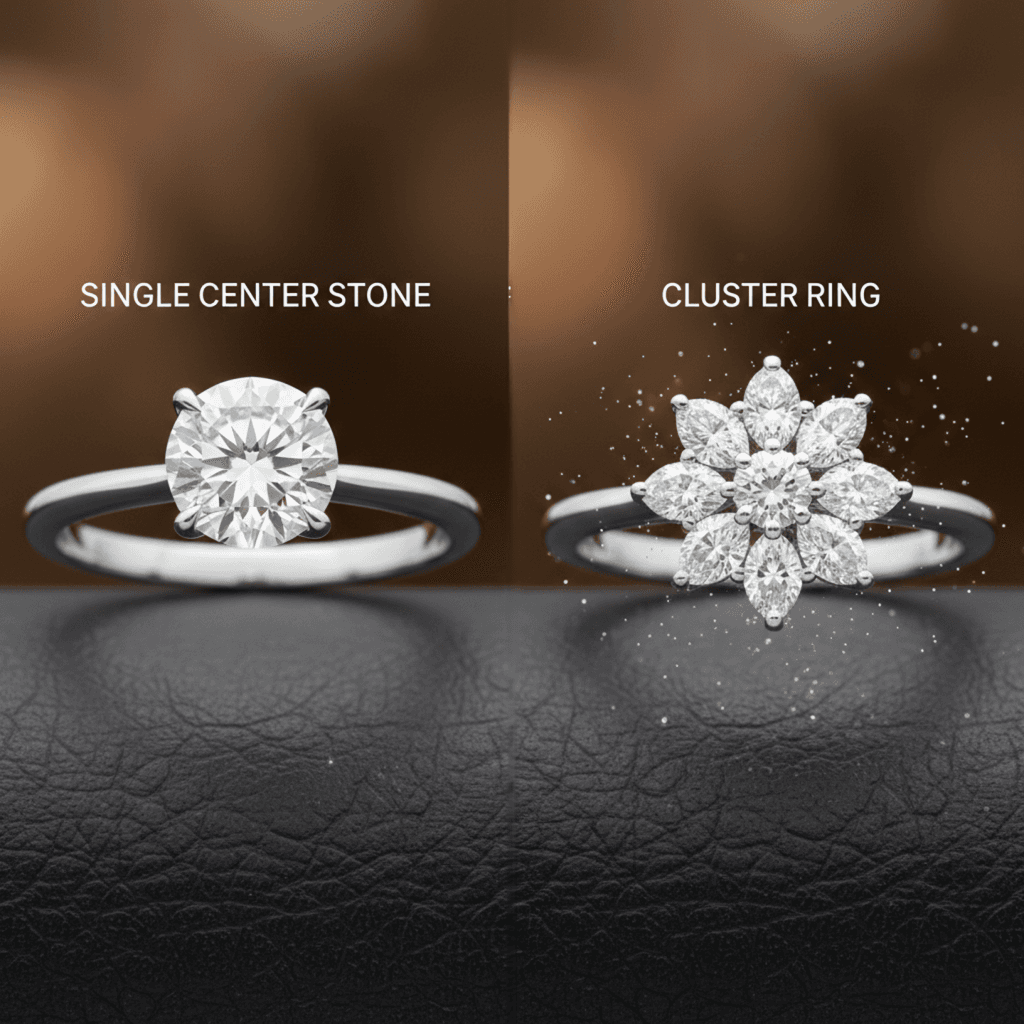
- Traditional solitaire engagement rings
- Matched stud earrings
- Centered pendant necklaces
- Three-stone rings with equal side stones
Symmetrical balance is the "safe" choice. It conveys stability and elegance but can feel static. Most bridal jewelry uses symmetrical balance because it photographs well and appeals to broad tastes.
2. Asymmetrical Balance
Asymmetrical balance uses different elements on each side that still feel visually equal. It's harder to achieve but creates more dynamic, modern designs.
Characteristics:
- Contemporary and artistic
- Creates visual interest and movement
- Appears more casual and personal
- Requires careful planning
Examples in jewelry:
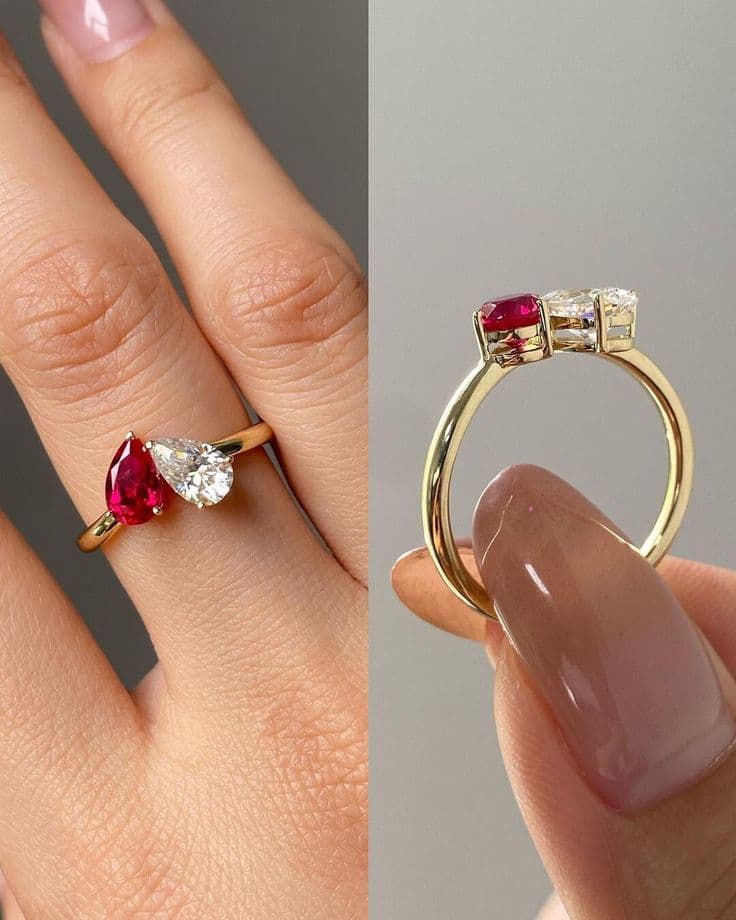
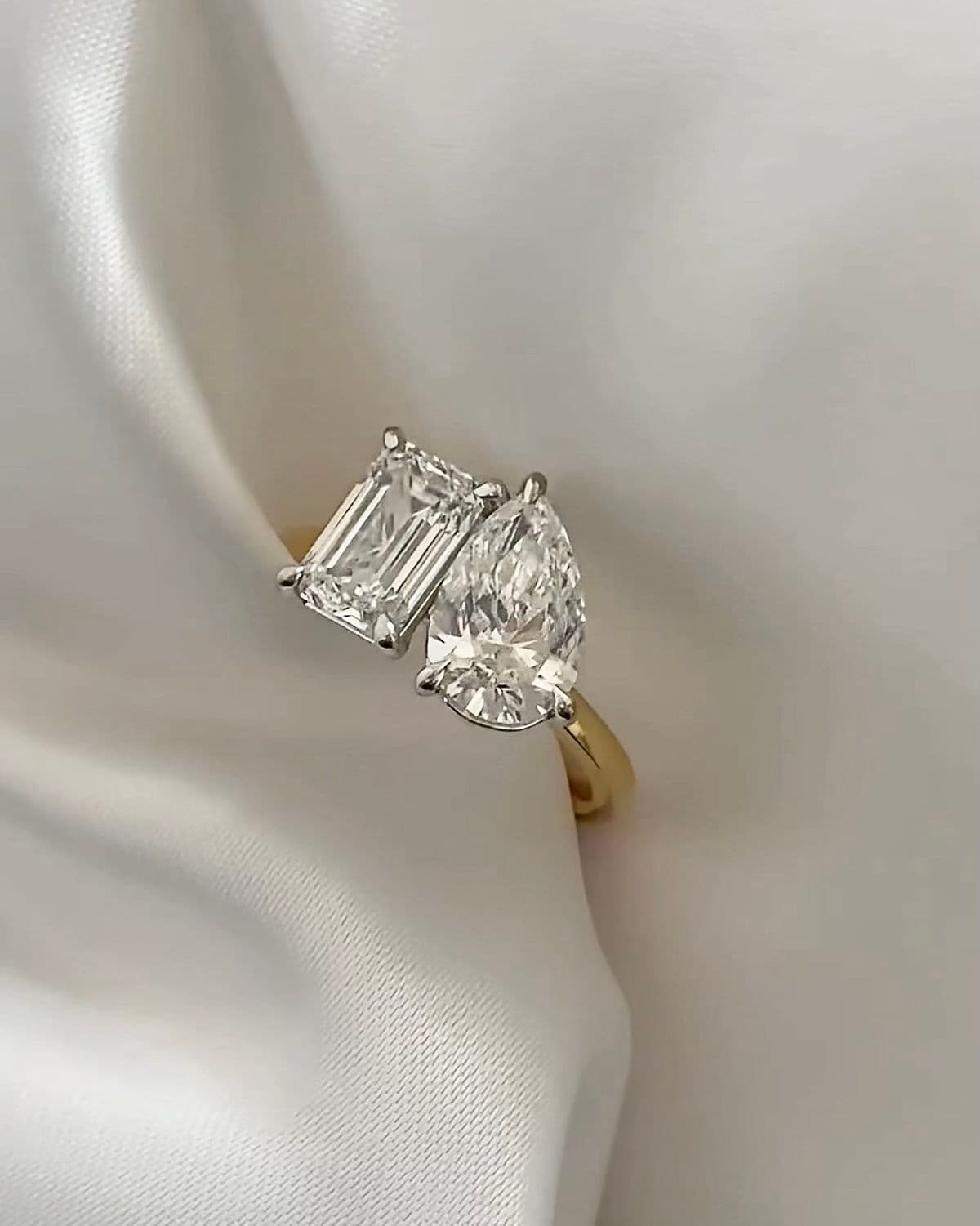
- Toi et moi rings (two different stones)
- Bypass rings (ends that don't meet)
- Mismatched earring pairs
- Off-center pendant designs
- East-west stone settings
The key to asymmetrical balance: equalize visual pull, not identical elements. A large sapphire on one side can balance three smaller diamonds on the other if their visual weights feel equal.
3. Radial Balance
Radial balance arranges elements around a central point, radiating outward like spokes on a wheel or petals on a flower.
Characteristics:
- Natural focal point at center
- Stable from all viewing angles
- Often nature-inspired
- Works well for statement pieces
Examples in jewelry:
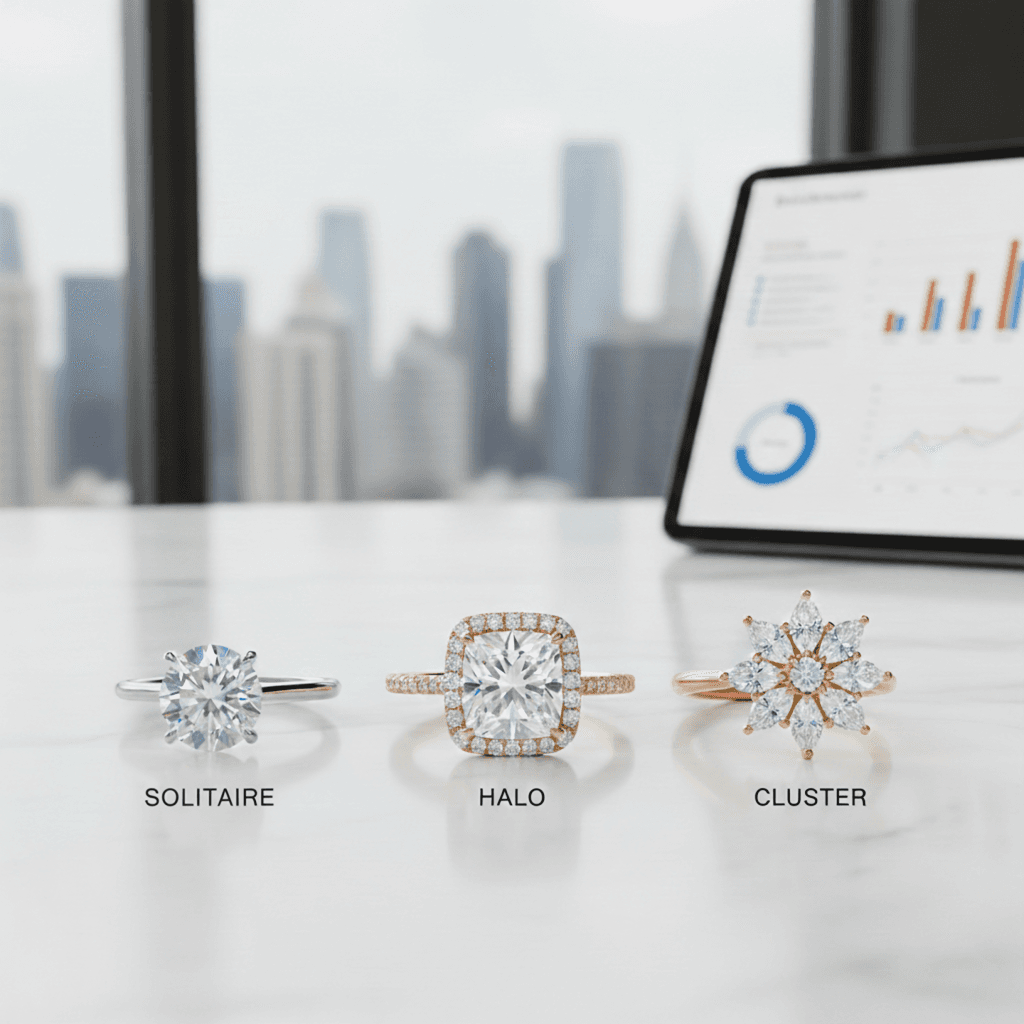
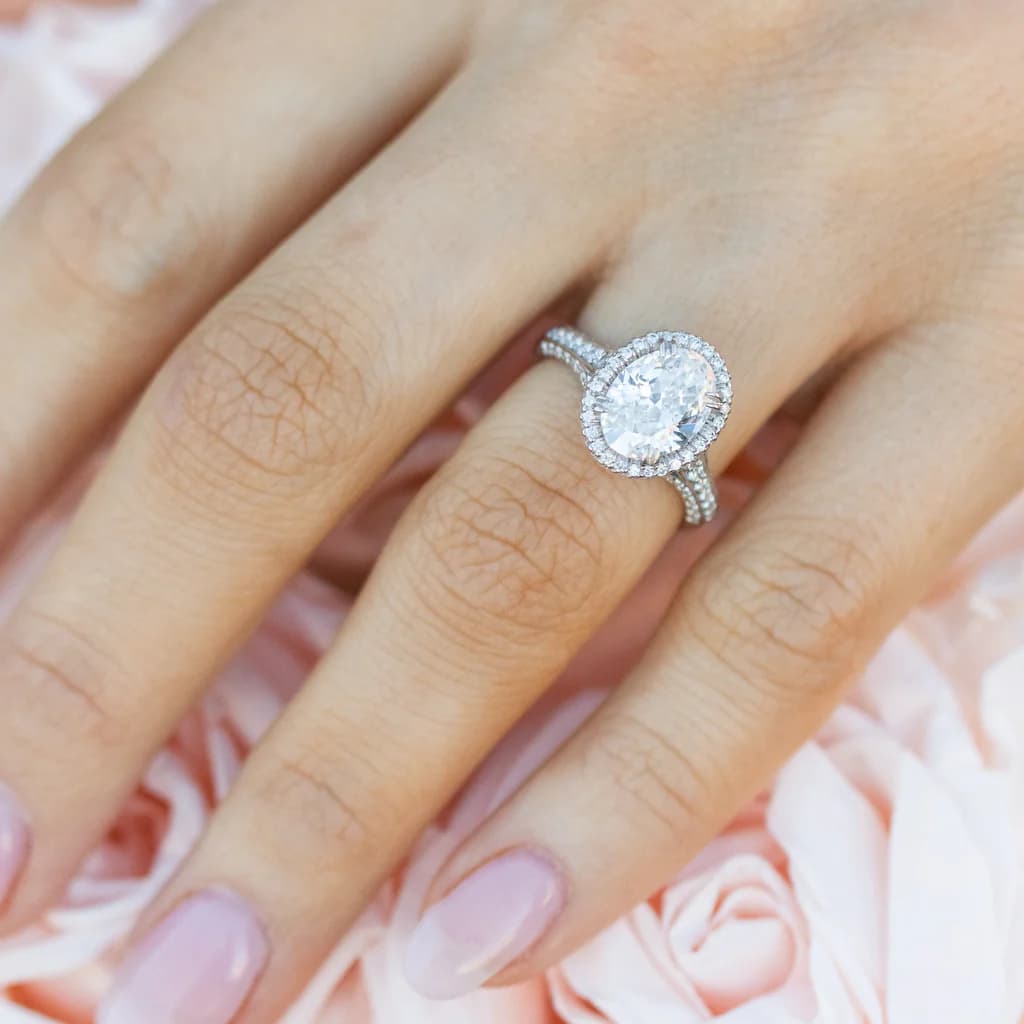
- Halo engagement rings (stones surrounding center)
- Starburst pendants and brooches
- Flower-motif rings
- Eternity bands (continuous radial pattern)
- Cluster rings
Radial balance is particularly effective when you want a strong center focal point while maintaining visual harmony around it.
Understanding Visual Weight
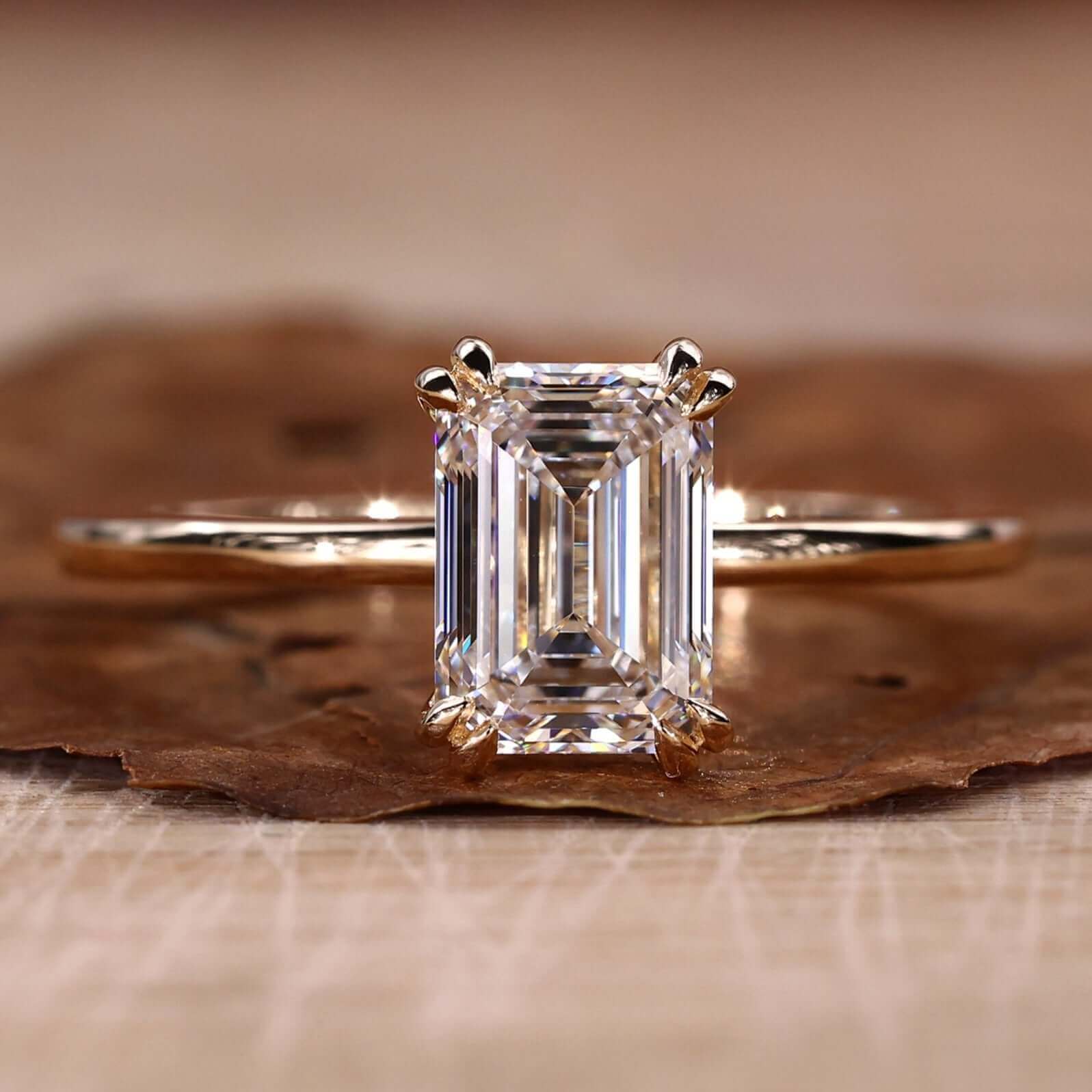
Balance isn't just about physical shape. It's about visual weight. According to design principles, visual weight is how "heavy" an element appears to your eye, regardless of its actual mass.
Factors That Increase Visual Weight
| Factor | Higher Weight | Lower Weight |
|---|---|---|
| Size | Larger elements | Smaller elements |
| Color | Darker, saturated colors | Lighter, muted colors |
| Contrast | High contrast with surroundings | Low contrast, blends in |
| Sparkle | More brilliance/fire | Matte or subtle |
| Detail density | Intricate, busy areas | Simple, clean areas |
| Position | Away from center | Near center |
| Texture | Rough, dimensional | Smooth, flat |
Visual Weight in Practice
A small, dark blue sapphire can have equal visual weight to a larger, pale aquamarine. A highly detailed filigree section can balance a larger plain metal area. Understanding this lets you create asymmetrical designs that still feel balanced.
Example: In a toi et moi ring, a 1-carat emerald (dark green, high saturation) might balance a 1.5-carat morganite (light pink, lower saturation) because their visual weights are similar despite different carat sizes.
Comfort Balance: Why It Matters for Wearability
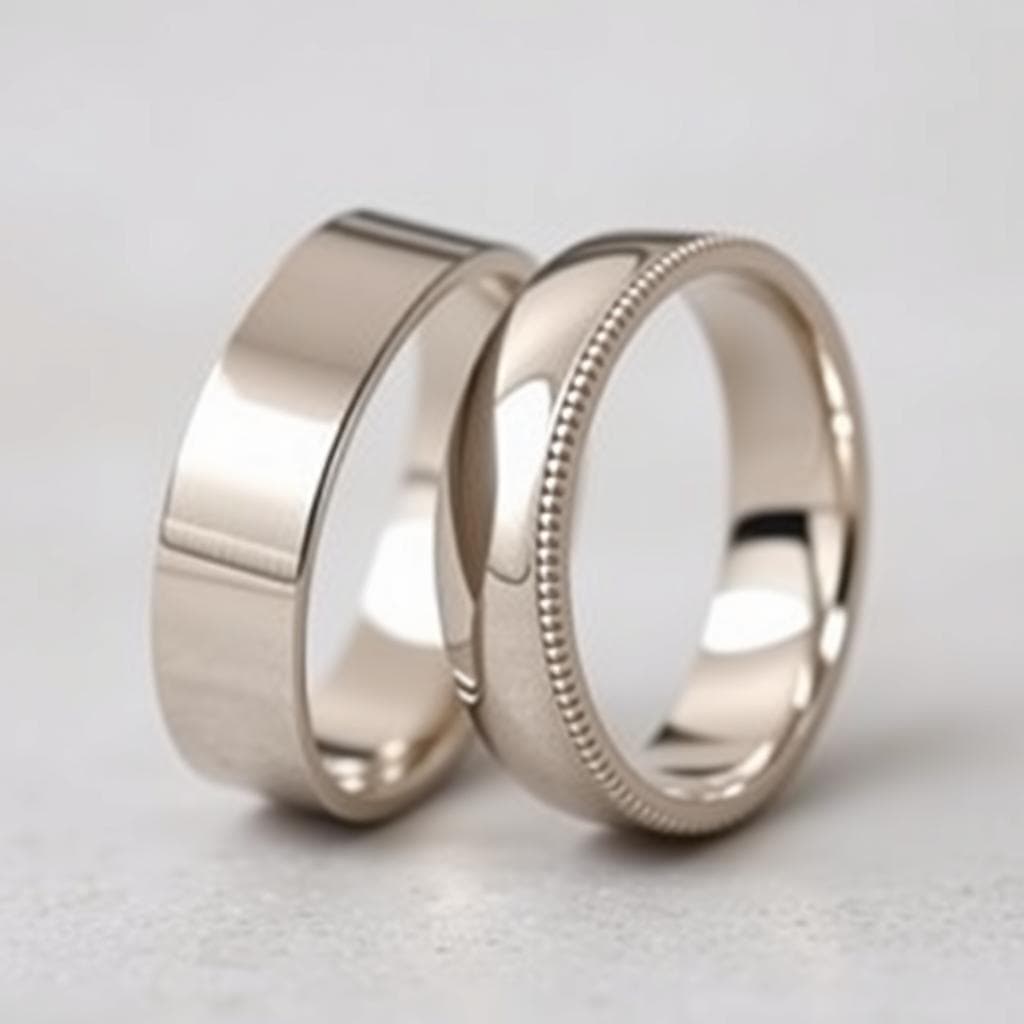
Beyond visual appeal, balance affects how jewelry feels when worn.
Physical Balance Issues
| Problem | Cause | Effect |
|---|---|---|
| Ring twists on finger | Heavy top, light band | Stone rotates underneath |
| Necklace clasp migrates | Uneven weight distribution | Clasp ends up at front |
| Earrings pull forward | Front-heavy design | Uncomfortable, looks droopy |
| Bracelet flips over | One-sided weight | Clasp or back shows on top |
Design Solutions for Comfort Balance
Rings:
- Match band width to stone size (see our ring proportions guide)
- Add counterweight in the gallery (underside)
- Use cathedral settings to distribute weight along the band
Necklaces:
- Balance pendant weight with appropriate chain thickness
- Consider double-bail pendants for heavy pieces
- Add decorative elements near clasp if needed
Earrings:
- Distribute visual interest along the full length
- Use lighter materials for long drop earrings
- Consider the leverage effect: weight at the bottom pulls more
Balance Mistakes and How to Fix Them
| Mistake | Why It Fails | Fix |
|---|---|---|
| Huge stone on wire-thin band | Top-heavy, physically and visually | Increase band width proportionally |
| All detail on one side | Feels unfinished, accidental | Add balancing element or redistribute |
| Mismatched earrings without intention | Looks like a mistake | Make the difference obvious and deliberate |
| Overcrowded halo | Competes with center stone | Reduce halo size or simplify |
| Pendant too heavy for chain | Looks precarious, uncomfortable | Use thicker chain or lighter pendant |
| Everything perfectly symmetrical | Static, predictable, boring | Add one asymmetrical accent |
When to Use Each Type of Balance
| Design Goal | Recommended Balance | Why |
|---|---|---|
| Timeless bridal | Symmetrical | Classic appeal, photographs well |
| Modern statement | Asymmetrical | Dynamic, conversation-starting |
| Nature-inspired | Radial | Organic, natural focal point |
| Minimalist | Symmetrical | Clean, simple |
| Artistic/avant-garde | Asymmetrical | Unexpected, personal |
| Vintage revival | Symmetrical or radial | Historical accuracy |
| Everyday wear | Any, with comfort balance | Must sit well on body |
Design Balanced Jewelry with Tashvi AI
Understanding balance theory is one thing. Seeing it in action is another.
Tashvi AI helps you experiment with balance instantly:
- Test symmetrical vs asymmetrical: Generate the same concept with a centered stone vs an east-west setting. See which balance approach fits your vision.
- Experiment with visual weight: Try different stone colors and sizes to see how visual weight shifts. Watch how a dark sapphire changes the balance compared to a light morganite.
- Explore toi et moi variations: The classic asymmetrical design. Test different stone combinations and see which pairings feel balanced.
- Check radial designs: Generate halo variations with different stone counts and sizes. Find the radial balance that highlights your center stone best.
- Iterate in seconds: Traditional CAD takes hours to test balance variations. AI generates options in under a minute, letting you find the perfect balance faster.
Good balance helps jewelry look refined rather than accidental. It's one of those details that people notice without realizing what they're noticing.
Start designing balanced jewelry with Tashvi AI →
Related Reads
- Jewelry Design Basics: Elements & Principles: Balance is one of four core design principles
- Ring Band Width Guide: Proportion and balance work together
- Toi et Moi Rings Guide: The classic asymmetrical balance design
- Bypass Engagement Rings: Another asymmetrical balance example
- Halo vs Solitaire vs Cluster: Compare radial and symmetrical balance in ring settings
Frequently Asked Questions
Quick answers to the questions readers ask most about this guide.
What is balance in jewelry design?
Balance in jewelry design refers to how visual weight is distributed across a piece. Think of a seesaw: when both sides feel equal, the design appears stable and intentional. Balance can be achieved through symmetry (mirror image), asymmetry (different but equal elements), or radial arrangement (elements around a center point). A well-balanced piece feels comfortable to look at and wear.
What is the difference between symmetrical and asymmetrical balance?
Symmetrical balance creates a mirror image where both sides are identical, giving a classic, formal, and stable look. Asymmetrical balance uses different elements on each side that still feel visually equal, like a large gemstone balanced by several smaller stones. Symmetrical is easier to achieve but can feel static; asymmetrical is more dynamic but harder to execute well.
What is visual weight in jewelry?
Visual weight is how 'heavy' an element appears to the eye, regardless of its actual weight. Factors that increase visual weight include: larger size, darker colors, higher contrast, more sparkle, denser detail, and placement away from center. A small dark sapphire can have equal visual weight to a larger light-colored stone, allowing for balanced asymmetrical designs.
What is radial balance in jewelry design?
Radial balance occurs when design elements radiate outward from a central point, like spokes on a wheel or petals on a flower. Examples include starburst pendants, flower-motif rings, halo settings, and eternity bands. Radial balance naturally creates a focal point at the center while maintaining visual stability in all directions.
Why does balance matter for jewelry comfort?
Physical balance affects how jewelry sits and moves on your body. An unbalanced ring will twist on your finger, bringing stones underneath where they can be damaged. An unbalanced necklace will shift and the clasp will migrate to the front. Well-balanced pieces stay in position, feel more comfortable, and wear better over time.
Can asymmetrical jewelry still be balanced?
Yes, absolutely. Asymmetrical balance is about equalizing visual pull, not creating identical sides. A large center stone can be balanced by a cluster of smaller stones, a heavy pendant can be balanced by a thicker chain, and a long ornate earring can be paired with a smaller but distinct stud. The key is that both sides feel intentional, not accidental.
How does Tashvi AI help with jewelry balance?
Tashvi AI is trained on thousands of well-balanced jewelry designs, so it naturally generates pieces with proper visual weight distribution. You can experiment with symmetrical vs asymmetrical layouts, test different stone arrangements, and see how changes affect overall balance, all in seconds rather than hours of manual CAD work.