Flow in Jewelry Design: Guiding the Eye with Movement (Visual Guide)
Flow is the path your eye travels across a jewelry piece. Learn how line direction, graduation, repetition, and body-conscious design create natural movement that makes jewelry feel cohesive and intentional.
What Is Flow in Jewelry Design?
Flow is the path your eye travels when you look at a piece of jewelry. It's the visual journey from one element to the next.
When flow works well, your eye moves smoothly across the design, landing on focal points at just the right moments, then continuing onward. The piece feels complete, intentional, and satisfying to look at.
When flow fails, your eye jumps around uncomfortably, gets stuck in one spot, or reaches a dead end with nowhere to go. Even beautiful individual elements can't save a design with poor flow.
According to Fire Mountain Gems, movement is one of the seven key design principles. The eye travels along lines, edges, gradations of sizes, repeated shapes, and from darker to lighter elements. Flow is the direction that movement takes. These same principles are taught in professional programs like GIA's Jewelry Design curriculum, where students learn design theory including texture, shape, form, balance, and negative space.
Understanding flow will immediately change how you evaluate jewelry. You'll start seeing why some pieces feel "right" while others feel off, even when you can't articulate why.
Line Direction and Movement
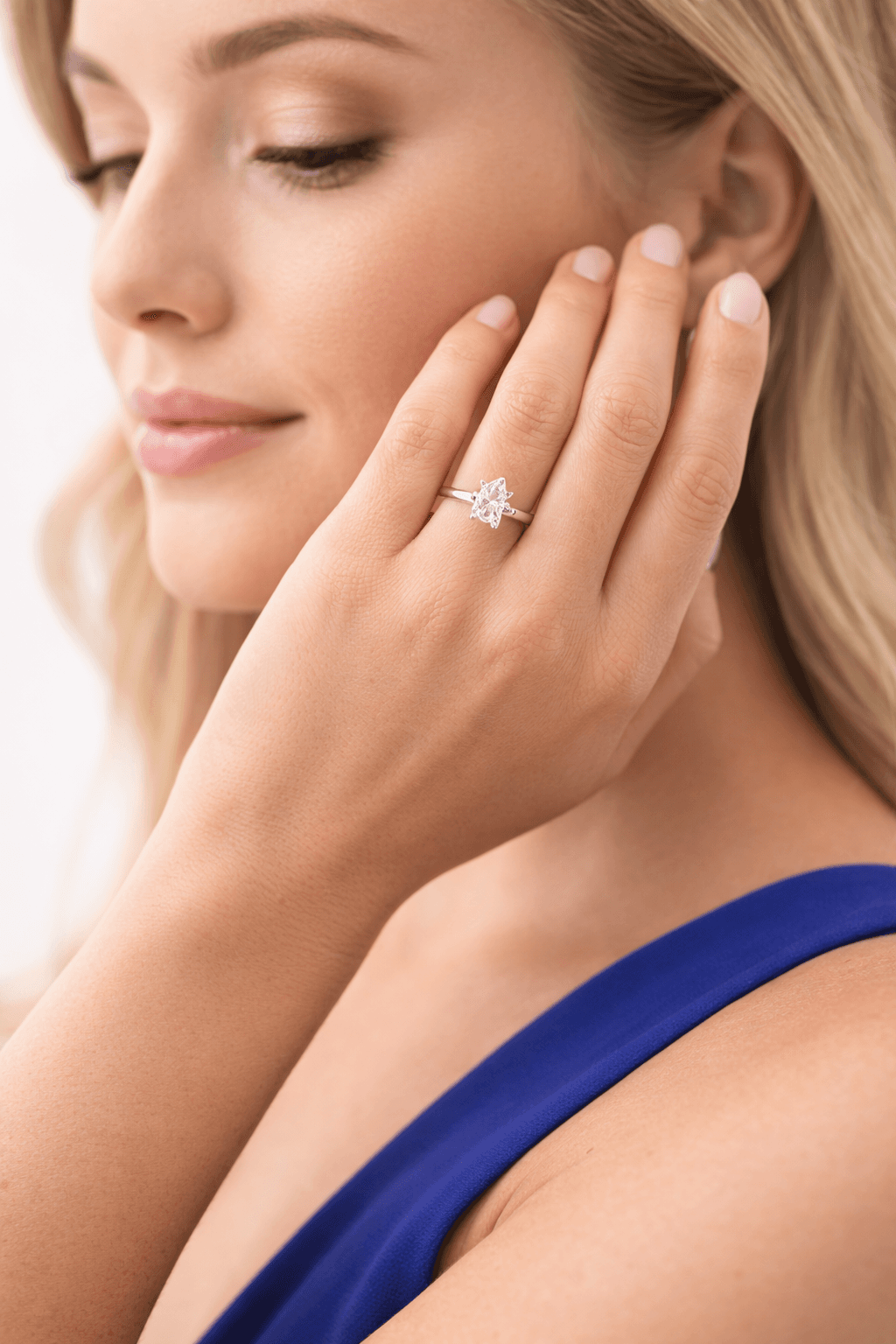
Lines are the most powerful tool for creating flow. According to Envato Tuts+, the eye naturally follows lines from start to finish, making line direction the primary driver of visual movement.
Curved Lines: Grace and Continuity
Curved lines suggest softness, organic movement, and endless flow. Think of waves, vines, or the curve of a neck. As noted by design researchers, studies show that our brains associate curved shapes with positive emotions like happiness and relaxation, while straight lines are associated with hardness and rigidity. Curved lines in jewelry create:
- Continuous movement: The eye follows the curve without stopping
- Feminine elegance: Curves feel graceful and flowing
- Natural harmony: Organic shapes that echo the body
- Gentle guidance: Leading the eye without force
Examples: Twist bands, vine-inspired settings, swirl pendants, curved dangles
Straight Lines: Structure and Direction
Straight lines convey strength, precision, and purposeful direction. According to the Columbus College of Art & Design, straight lines travel in one direction and stimulate designated emotional responses depending on their orientation: passive horizontal, inspirational vertical, or agitated diagonal. They create:
- Clear direction: The eye moves decisively from point A to point B
- Modern sophistication: Geometric, architectural feel
- Visual stability: Structured, intentional appearance
- Bold statements: Lines that demand attention
Examples: Bar necklaces, channel-set bands, geometric pendants, linear drop earrings
Diagonal Lines: Energy and Dynamism
Diagonal lines create energy, tension, and active movement. The Interaction Design Foundation explains that diagonal lines are neither at rest (horizontal) nor static (vertical), which creates visual tension:
- Dynamic energy: Suggests motion even when still
- Visual interest: More engaging than purely horizontal or vertical
- Directional pull: Guides the eye at an angle
Examples: East-west settings, asymmetrical arrangements, angular geometric designs
Leading Lines in Practice
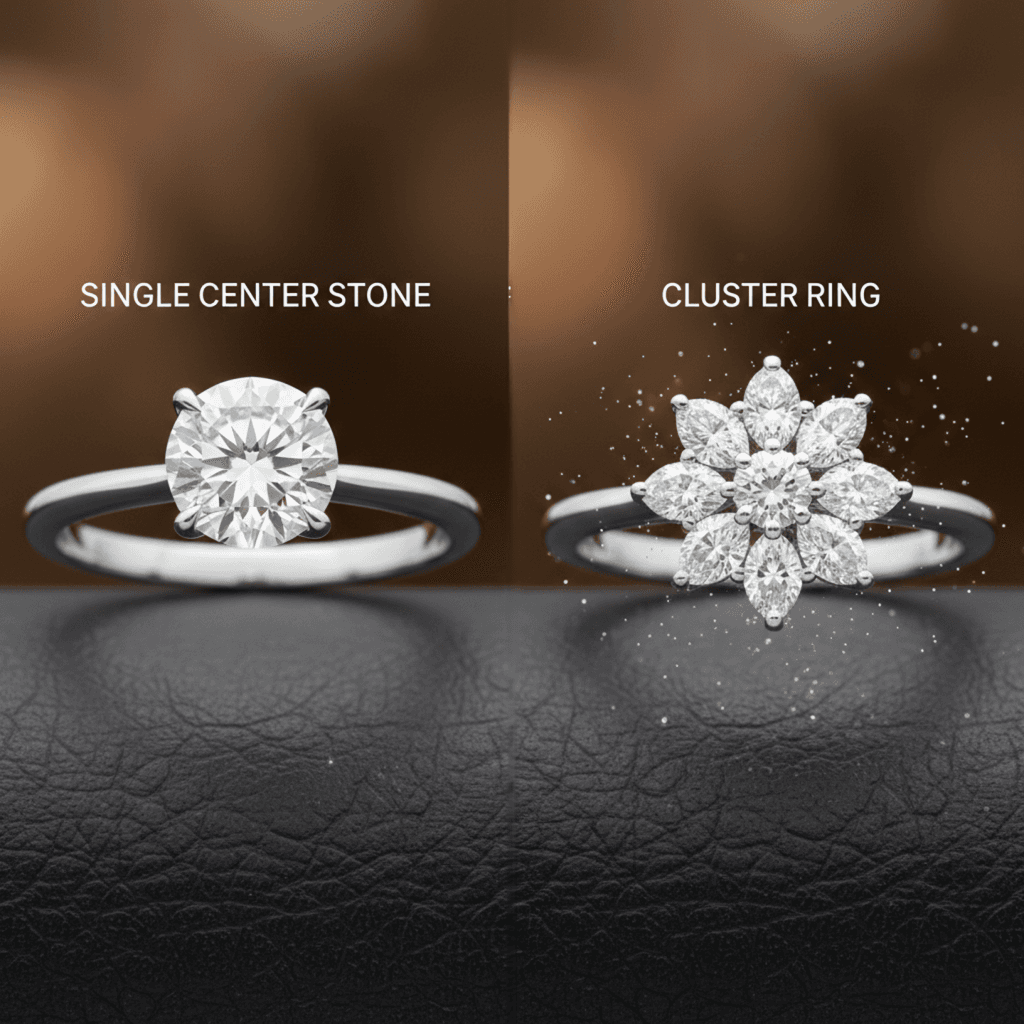
Leading lines guide the eye toward focal points. Consider a pear-shaped engagement ring: the tapered point creates a natural arrow directing attention toward the rounded end where the maximum sparkle occurs. The shape itself tells your eye where to look.
Stone Placement and Graduation
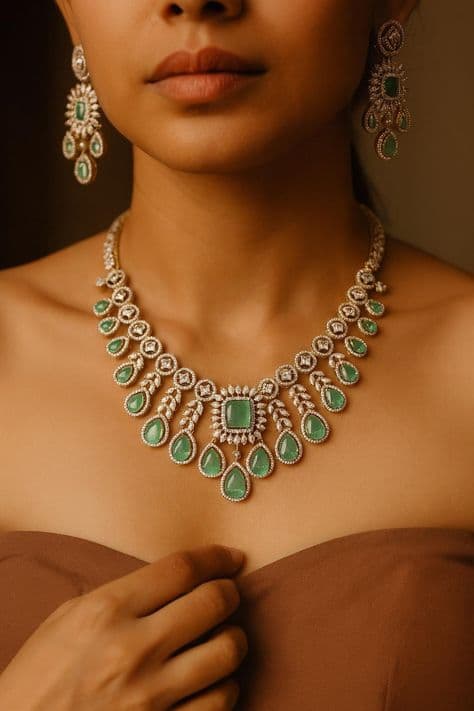
Graduation is the gradual change in size, color, or spacing that creates a visual progression. According to John Lovett Design, graduation helps create smooth transitions between different parts of a work and gives it a sense of flow. It's one of the most effective ways to guide the eye naturally.
Size Graduation
As Smashing Magazine explains, the eye travels from large elements to small elements, from dark elements to lighter elements. When stones or elements gradually change in size, the eye follows that progression like reading a sentence:
| Direction | Effect | Best For |
|---|---|---|
| Small to large | Eye travels toward the larger focal point | Pendants, center stone emphasis |
| Large to small | Creates elongation and elegance | Drop earrings, tapered designs |
| Center outward | Frames the focal point symmetrically | Three-stone rings, graduated necklaces |
Classic example: A graduated diamond necklace where stones increase in size toward the center creates natural flow that draws attention to the face while the smaller stones near the clasp fade gracefully.
Color Graduation
Ombre effects in gemstones create directional movement through color:
- Light to dark pulls the eye toward the darker, more visually weighted end
- Warm to cool creates temperature-based movement
- Saturated to muted guides attention toward intensity
According to design principles, the eye naturally moves from light areas to dark areas, making color graduation a reliable flow technique.
Spacing Graduation
Varying the gaps between elements creates rhythm and movement:
- Tighter spacing in one area creates visual density and weight
- Wider spacing allows the eye to breathe and move faster
- Gradual spacing changes create smooth transitions
Repeating Shapes and Rhythm
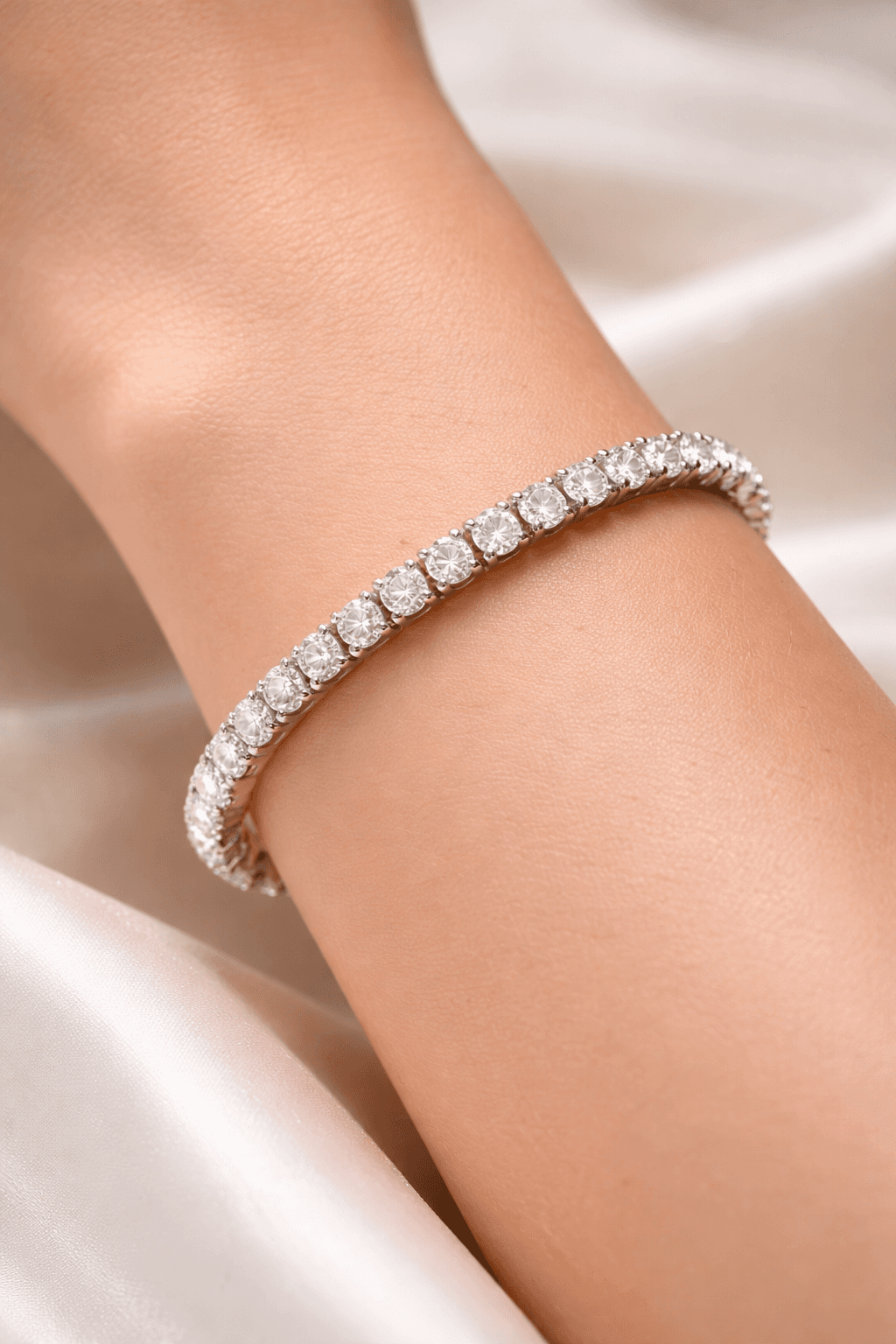
Repetition creates rhythm, and rhythm creates flow. According to Humanities LibreTexts, rhythm is created when design elements are used repeatedly to establish a feeling of organized movement. When elements repeat, the eye follows the pattern automatically.
The Power of Repetition
A tennis bracelet demonstrates this perfectly. The identical diamonds create a continuous visual rhythm that flows endlessly around the wrist. There's no start or end, just smooth, unbroken movement.
Repetition in jewelry creates:
- Predictable path: The eye knows where to go next
- Visual cohesion: Varied elements feel unified
- Continuous movement: Rhythm that doesn't stop
- Comfortable viewing: Patterns the brain enjoys processing
Types of Rhythmic Flow
Design theory identifies five types of visual rhythm: random, regular, alternating, flowing, and progressive. In jewelry, four are most common:
| Rhythm Type | Description | Example |
|---|---|---|
| Regular rhythm | Identical elements, even spacing | Tennis bracelet, eternity band |
| Alternating rhythm | Two elements that alternate | Baguette-round patterns |
| Progressive rhythm | Gradual change in repeating elements | Graduated pearl strand |
| Flowing rhythm | Organic, wave-like repetition | Vine motifs, scroll patterns |
Building Rhythm with Variety
Rhythm doesn't require identical elements. Repeating similar shapes, colors, or sizes creates cohesion while allowing variety:
- Same shape, different sizes: Graduated designs
- Same metal finish, different shapes: Mixed geometric pieces
- Same stone color, different cuts: Varied but unified
The key is consistency in at least one element so the eye recognizes the pattern.
Flow with the Body
Jewelry doesn't exist in a vacuum. It lives on a moving, curved human body. According to Interweave, professional jewelry designers focus on how to bring knowledge of movement, connection, and presentation to their designs. The best pieces acknowledge this by flowing with natural body lines rather than fighting against them.
Necklaces and the Neckline
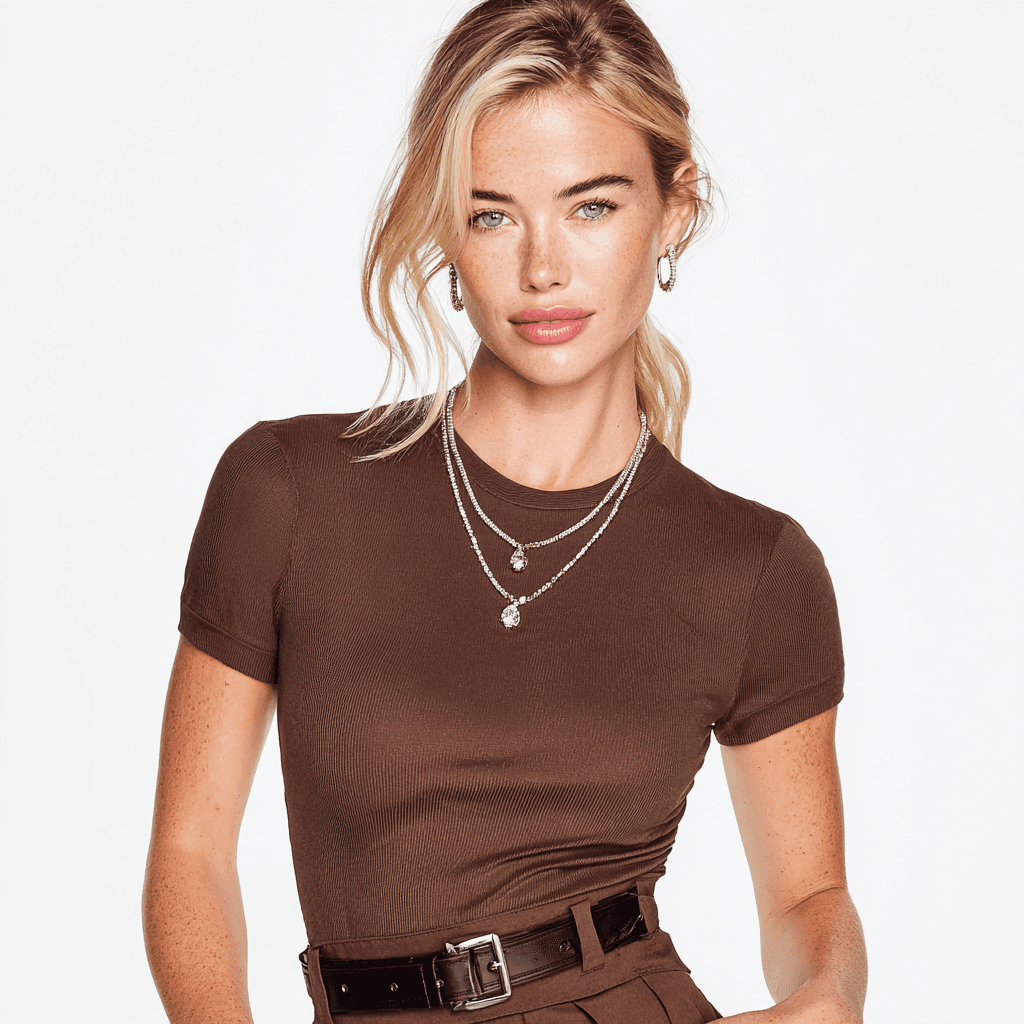
The collarbone creates a natural horizontal line. Necklaces that follow this curve look more elegant than those that fight it:
- Chokers: Follow the neck's cylinder shape
- Princess length: Rests along the collarbone curve
- Matinee/opera: Creates vertical flow down the torso
- Pendants: Add a vertical element that draws the eye downward
Earrings and the Face
Earrings frame the face and should complement its shape:
- Drops and dangles: Create vertical flow that elongates
- Hoops: Echo the curve of the earlobe and jaw
- Studs: Provide a focal point without directional flow
- Chandeliers: Combine horizontal spread with vertical drop
Rings and Hand Movement
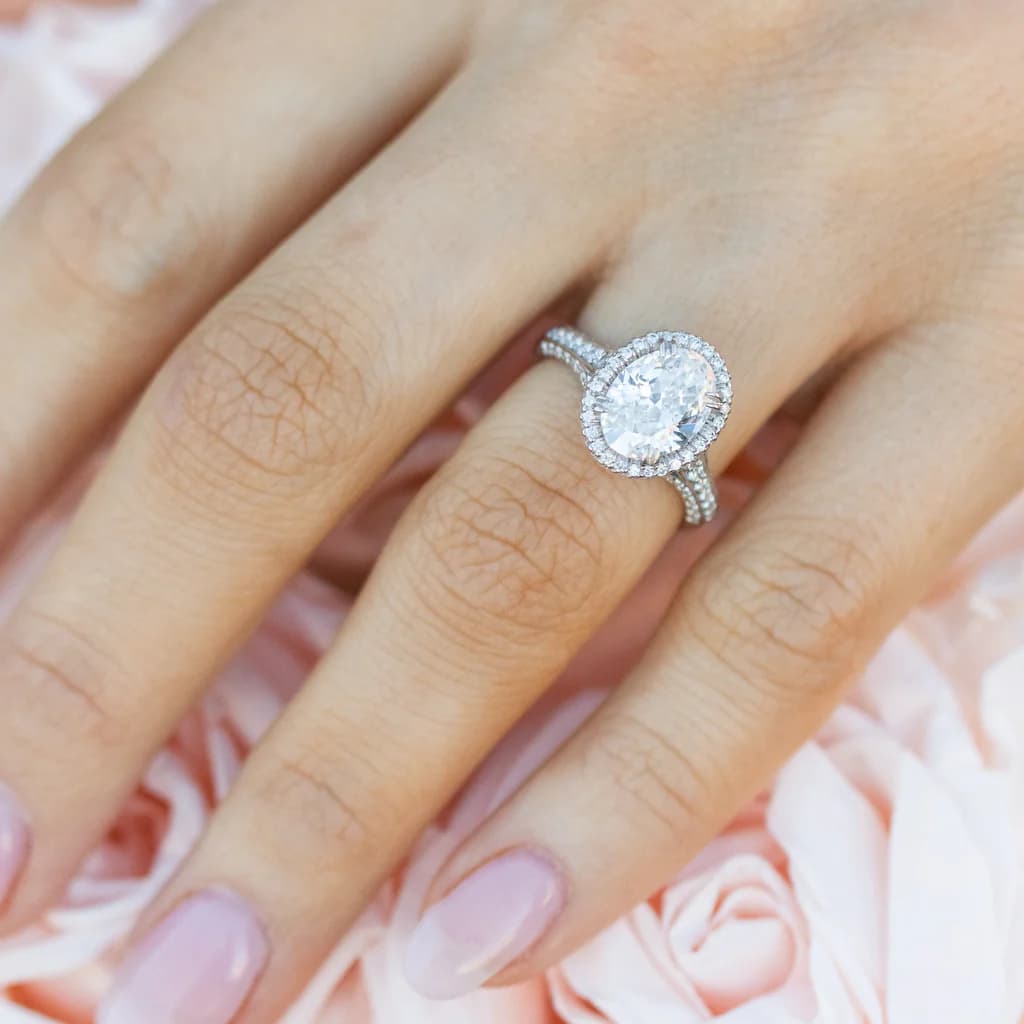
Rings move constantly with hand gestures. Designs that acknowledge this:
- Continuous bands: Flow around the finger seamlessly
- Cathedral settings: Lines flow from band up to stone
- Split shanks: Create movement that embraces the finger
- Bypass designs: Suggest motion and energy
Bracelets and Wrist Motion
The wrist rotates and flexes constantly. Research on wearable design shows that human movement provides both a constraint and a resource, with the body's form changing significantly even with simple motion. Flexible bracelets (chains, tennis bracelets) flow with this movement. Rigid bangles slide and rotate. Consider how the piece will move with the wearer.
Common Flow Mistakes
| Mistake | Why It Breaks Flow | How to Fix |
|---|---|---|
| Abrupt size jumps | Eye jerks instead of gliding | Use graduation between sizes |
| Conflicting line directions | Visual tension and confusion | Choose one dominant direction |
| Isolated floating elements | Eye doesn't know where to go | Connect elements visually |
| Dead ends | Flow stops with nowhere to continue | Add exit paths or continuation |
| Overcrowded focal area | Eye gets stuck, overwhelmed | Simplify or add breathing room |
| Fighting body curves | Looks awkward, feels uncomfortable | Align with natural body lines |
| No focal point | Eye wanders without purpose | Establish hierarchy with size or position |
| Too many competing rhythms | Visual chaos, no clear path | Simplify to one dominant rhythm |
Design with Natural Flow Using Tashvi AI
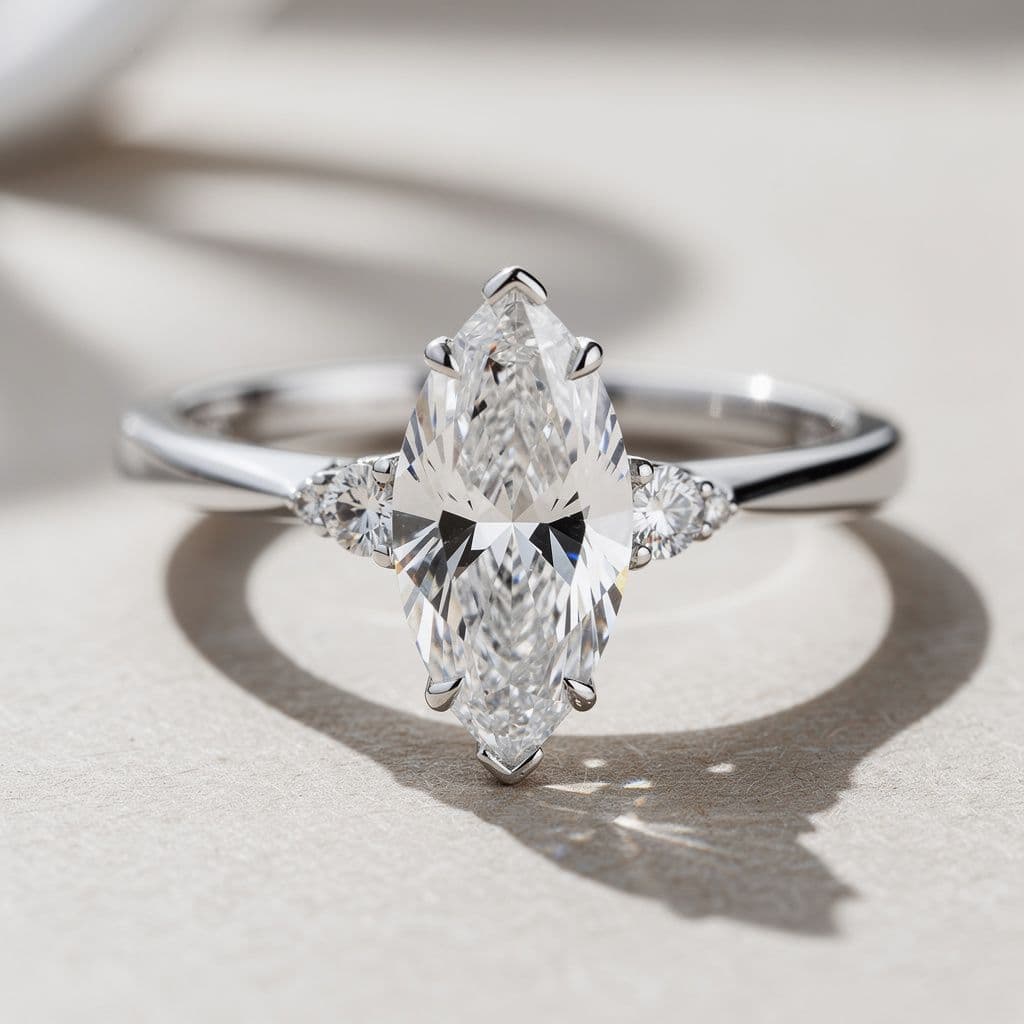
Understanding flow theory helps you evaluate designs. But seeing flow in action accelerates learning dramatically.
Tashvi AI helps you experiment with flow instantly:
- Test line directions: Generate the same concept with curved vs straight lines. See how each version guides the eye differently.
- Experiment with graduation: Try different size progressions. Watch how graduating stones toward the center vs toward the ends changes the focal point.
- Explore repetition and rhythm: Generate pieces with regular vs alternating vs progressive rhythms. Find the flow that feels right for your vision.
- Check body flow: Generate earrings that elongate vs widen. See how different necklace lengths create different flows relative to the neckline.
- Compare flow patterns: Generate multiple variations and compare how each guides the eye. You'll quickly develop intuition for what works.
Flow is subtle but powerful. It's often the difference between jewelry that feels "professional" and jewelry that feels "amateur," even when the individual elements are similar. Once you start seeing flow, you can't unsee it.
Start designing jewelry with natural flow →
Related Reads
- Jewelry Design Basics: Elements & Principles: Flow works with proportion, balance, and emphasis
- Ring Proportions Guide: How proportion affects visual flow
- Balance in Jewelry Design: Balance and flow work together
- Pear Shaped Engagement Rings: A shape built for directional flow
- What Is a Tennis Bracelet?: The classic example of rhythmic flow
Frequently Asked Questions
Quick answers to the questions readers ask most about this guide.
What is flow in jewelry design?
Flow in jewelry design refers to the visual path your eye naturally follows when looking at a piece. It's created by how lines, shapes, sizes, and colors guide your gaze from one element to the next. Good flow makes jewelry feel cohesive and intentional, while poor flow makes the eye jump around uncomfortably or get stuck with nowhere to go.
How do lines create movement in jewelry?
Lines create movement by directing the eye in specific directions. Curved lines suggest softness, grace, and continuous movement, like waves or vines. Straight lines convey structure, strength, and directional purpose. Diagonal lines create energy and dynamism. The eye naturally follows lines from their starting point toward where they lead, making line direction a powerful tool for guiding visual flow.
What is graduation in jewelry design?
Graduation is the gradual change in size, color, or spacing of elements along a piece. When stones or shapes gradually increase or decrease in size, the eye follows that progression naturally, like reading a story. Graduation can guide the eye toward a focal point (stones getting larger toward center) or create length and elegance (stones getting smaller toward ends).
How does repetition create flow in jewelry?
Repetition creates flow by establishing a visual rhythm that the eye follows automatically. When the same shape, size, or pattern repeats, it creates a predictable path that feels natural and cohesive. Think of a tennis bracelet: the repeated diamonds create a continuous flow around the wrist. Repetition also builds unity, making varied elements feel like they belong together.
Why should jewelry flow with the body?
Jewelry exists on a moving, curved human body, not in a static display case. Pieces that follow natural body lines look more elegant and feel more comfortable. A necklace should follow the collarbone curve. Earrings should complement the jawline. Bracelets should flow with wrist movement. When jewelry fights the body's natural lines, it looks awkward and feels uncomfortable.
What happens when flow is broken in jewelry design?
When flow breaks, the eye gets stuck or jumps around uncomfortably. Common problems include abrupt size changes that jar the eye, conflicting line directions that create visual tension, isolated elements that feel disconnected, and dead ends where the eye has nowhere to go. Broken flow makes jewelry feel unfinished, chaotic, or amateurish even when individual elements are beautiful.
Can AI help create natural flow in jewelry designs?
Yes. Tashvi AI is trained on thousands of professionally designed jewelry pieces with proper flow and movement. It understands how lines, graduation, and repetition work together. You can describe the type of flow you want, such as elegant cascade, continuous rhythm, or dramatic focal point, and the AI generates designs with that visual movement built in.