What Is a Tennis Bracelet
A diamond tennis bracelet is a flexible line of gemstones that sits close to the wrist. Learn what a tennis bracelet is, how much it costs, sizing, settings, and how to choose between gold and platinum options.
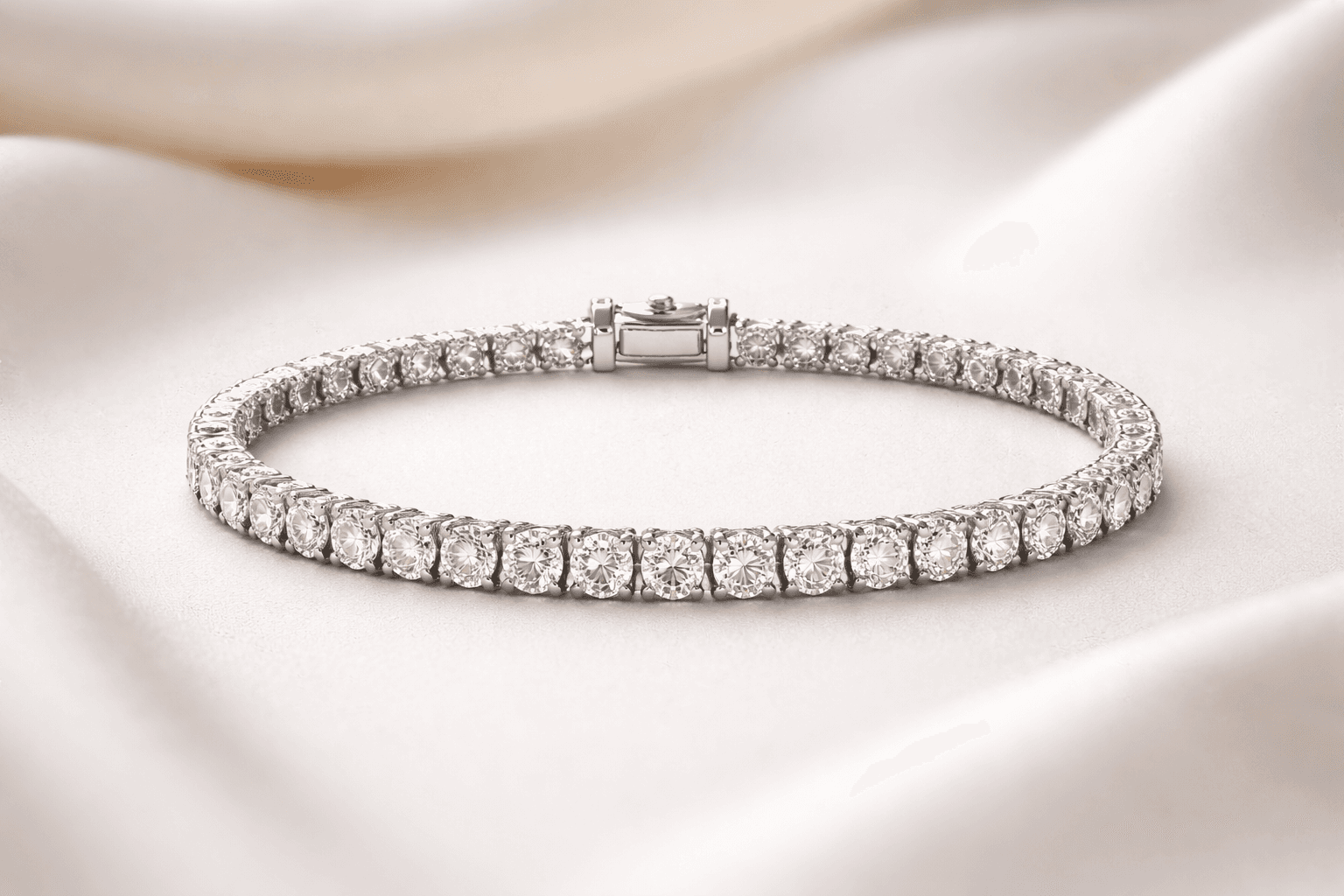
A tennis bracelet is one of the most recognizable pieces in fine jewelry. It looks simple at first glance, a single line of sparkle, but it is also a small feat of engineering. Each stone must sit securely, flex smoothly, and stay comfortable on the wrist. Whether you are looking at a diamond tennis bracelet for women or a gold tennis bracelet as a gift, understanding the basics helps you make a confident choice.
This tennis bracelet buying guide explains what it is, how it got its name, how it is built, how much it costs, and what to check when you wear or buy one. It is written for beginners, but it includes the details that experienced shoppers care about.
What is a tennis bracelet
A tennis bracelet is a flexible line bracelet made with a continuous row of diamonds or gemstones. The stones are set link by link so the bracelet drapes around the wrist rather than staying rigid.
You may also see it called a diamond line bracelet. Auction and heritage guides often describe the tennis bracelet as the modern name for the classic line bracelet style. A good overview is the Sotheby's buyer guide for tennis bracelets.
Sotheby's essential buyer's guide to tennis bracelets
Why it is called a tennis bracelet
The name became famous after a 1987 US Open match involving tennis player Chris Evert. Her diamond bracelet came off during play, and the match paused while it was found. After that, the public started calling this style a tennis bracelet.
If you want a readable version of the story from major publications, Vogue and Rockefeller Center both cover the origin in detail.
Vogue on the tennis bracelet origin story
Rockefeller Center on tennis bracelet history
What parts make up a tennis bracelet
Even though it looks like one continuous line, a tennis bracelet is a series of repeating units. Understanding these parts helps you compare quality across brands and price points.
Stones
Most tennis bracelets use round diamonds, but many modern designs use ovals, emerald cuts, or mixed shapes. Some use colored gemstones like sapphires for a more personal look.
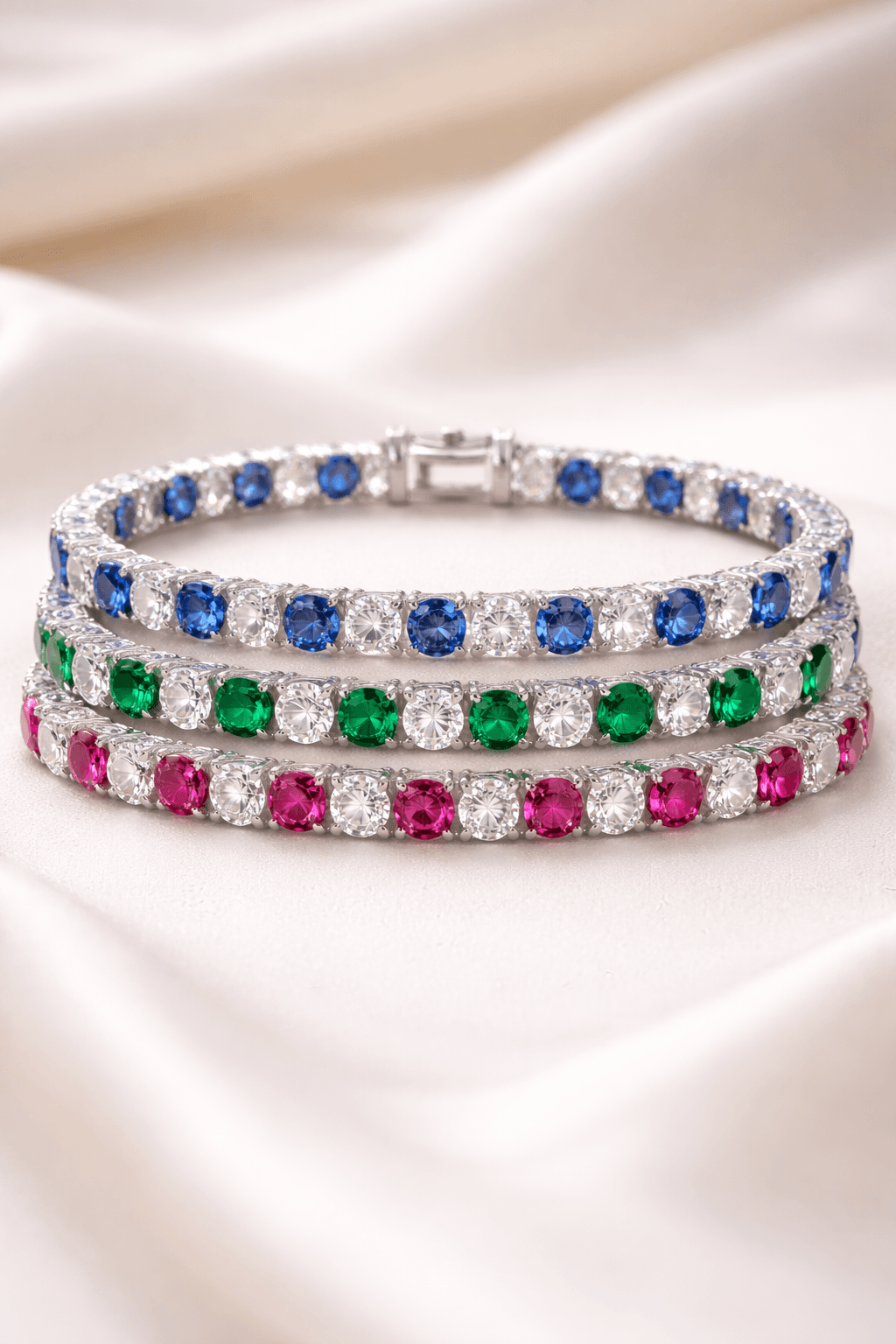
Many tennis bracelets are built with small stones. In the diamond trade, very small diamonds are often sold in parcels and described as melee. The Gemological Institute of America defines melee diamonds as diamonds under 0.20 carats.
GIA definition of melee diamonds
If you want the full size ranges and terminology, we also have a complete guide.
Links
Each stone is usually set into an individual link, then connected so the bracelet flexes. Better made bracelets feel smooth when you bend them and do not pinch the skin.
Look for even spacing, consistent alignment, and clean finishing on the underside. Rough edges and stiff movement are common signs of lower craftsmanship.
Setting
The setting is how the metal holds each stone. It affects sparkle, durability, and how comfortable the bracelet feels day to day.
- Prong settings hold stones with small claws and usually maximize light and sparkle.
- Bezel settings wrap a thin rim of metal around each stone and often offer more protection.
- Channel settings place stones between metal walls and create a smoother profile.
There is no single best setting for everyone. If you want maximum brilliance, prongs are common. If you want more protection and fewer snags, bezels and channels can be a better fit.
Metal choices
The metal you choose affects both color and durability. The most common options for a diamond tennis bracelet are gold and platinum.
Gold tennis bracelets come in several varieties. A 14k gold tennis bracelet is a popular choice because it balances durability with a rich gold color. 18k gold offers a warmer hue but is slightly softer. White gold tennis bracelets pair well with colorless diamonds and have a modern, cool tone. Rose gold tennis bracelets have become popular for their warm blush color and distinctive look.
Platinum tennis bracelets are heavier and more durable than gold. Platinum is naturally white, so it never needs rhodium plating like white gold does. It costs more, but many buyers prefer it for pieces they plan to wear every day.
For a deeper look at gold options, see our complete guide to gold types.
Types of gold 10k vs 14k vs 18k vs 24k
Clasp and safety
The clasp is one of the most important parts because it is the point of failure if anything opens. Many fine tennis bracelets use a box style clasp plus a secondary safety latch.
When you try on a bracelet, open and close the clasp a few times. It should feel crisp and secure. If it feels loose or inconsistent, have a jeweler check it before purchase.
What is total carat weight and why it matters
Tennis bracelets are often sold by total carat weight, also called TCW. Total carat weight means the combined weight of all stones in the bracelet.
This is important because two bracelets can have the same total carat weight but look different. A design with fewer larger stones looks bolder, while a design with more smaller stones can look like a finer continuous line of sparkle.
If you want the bracelet to read as a clean everyday line, smaller stones can be ideal. If you want a statement wrist look, larger stones can deliver that faster.
How much does a tennis bracelet cost
Tennis bracelet prices vary widely based on total carat weight, diamond quality, and metal choice. Understanding the price range helps you set realistic expectations before you start shopping.
At the entry level, a tennis bracelet with smaller lab grown diamonds in 14k gold can start around $500 to $1,500. A natural diamond tennis bracelet with 2 to 3 total carats in good quality typically runs $3,000 to $8,000. Higher end pieces with 5 to 10 total carats and excellent quality diamonds can range from $10,000 to $50,000 or more.
The four main factors that affect tennis bracelet price are total carat weight, diamond quality (cut, color, clarity), metal type (gold vs platinum), and brand. Lab grown diamonds offer the same visual result at roughly 50 to 70 percent less than natural diamonds, which is why they have become popular for tennis bracelets.
If budget is a concern, prioritize cut quality over carat weight. A well cut 3 carat tennis bracelet will sparkle more than a poorly cut 5 carat version at a similar price.
For more on the lab grown option, see our complete comparison.
How a tennis bracelet should fit
A tennis bracelet should sit close to your wrist with a small amount of movement. You want enough room that it drapes and stays comfortable, but not so much that it spins or slides down toward the hand.

Tennis bracelet sizing guide
Standard tennis bracelet lengths range from 6 inches to 8 inches. The most common sizes for women are 6.5 to 7.5 inches. Here is a quick sizing reference.
| Wrist Size | Bracelet Length | Fit |
|---|---|---|
| 5.5 to 6 inches | 6.5 inch | Snug fit |
| 6 to 6.5 inches | 7 inch | Standard fit |
| 6.5 to 7 inches | 7.5 inch | Comfortable fit |
| 7 to 7.5 inches | 8 inch | Relaxed fit |
If you are buying online, measure your wrist with a flexible tape or a strip of paper. Add about half an inch to your wrist measurement to get your ideal bracelet length. If you are between sizes, it is usually better to size up and have a jeweler remove links if needed.
Can you wear a tennis bracelet every day
Many people wear tennis bracelets daily, but the right choice depends on your lifestyle. If you work with your hands, lift weights, or do frequent cleaning, remove it during those activities.
Daily wear also means you should treat inspections as normal maintenance. A jeweler can check prongs, links, and the clasp and catch issues early.
How to clean and care for a tennis bracelet
A safe default cleaning method is warm water, mild soap, a soft brush, a thorough rinse, and gentle drying. This approach is widely recommended by jewelry retailers and avoids harsh chemicals.
Ritani provides a clear step by step care guide that matches this approach and is easy for beginners to follow.
How to clean and care for a diamond tennis bracelet
For long term care, store your bracelet separately so it does not scratch other jewelry or get tangled. If you own multiple bracelets, consider a soft pouch for each one.
Popular tennis bracelet styles
Tennis bracelets come in several variations beyond the classic round diamond design. Here are the most popular styles you will see.
Classic round brilliant is the traditional choice. Round diamonds maximize sparkle and create a uniform line of light around the wrist.
Emerald cut tennis bracelets use rectangular step cut stones for a sleeker, more architectural look. They have less sparkle than round cuts but offer a sophisticated Art Deco feel.
Oval tennis bracelets have become popular because ovals face up larger than rounds of the same carat weight, giving you more visual impact.
Colored gemstone tennis bracelets use sapphires, rubies, emeralds, or a mix of stones. These are popular for adding personality or creating a signature piece.
Alternating stone designs mix diamonds with colored gems or alternate different stone sizes for a more unique pattern.
How Tashvi AI helps you design tennis bracelet concepts
Tennis bracelets look simple, but small changes in stone size, spacing, setting style, and metal color can completely change the vibe. With Tashvi AI you can prototype variations quickly and decide what you like before you commit to production.
If you are exploring modern options, try concepts like a bezel set tennis bracelet for daily wear, mixed metal links for contrast, or alternating diamonds and sapphires for a signature look.
Related guides
Frequently Asked Questions
Quick answers to the questions readers ask most about this guide.
What is a tennis bracelet
A tennis bracelet is a flexible line bracelet made with a continuous row of diamonds or gemstones set in precious metal. It drapes around the wrist and is known for its elegant, sparkling appearance.
Why is it called a tennis bracelet
The name became popular after a 1987 US Open match involving tennis player Chris Evert. Her diamond bracelet came off during play, and the match paused while it was recovered.
How much does a tennis bracelet cost
Tennis bracelet prices range from $500 to $1,500 for lab grown diamond options, $3,000 to $8,000 for natural diamond bracelets with 2 to 3 carats, and $10,000 to $50,000 or more for high end pieces with 5 to 10 carats.
What size tennis bracelet should I get
Measure your wrist and add about half an inch. Most women wear 6.5 to 7.5 inch bracelets. A 7 inch tennis bracelet fits wrists measuring 6 to 6.5 inches.
Is 14k or 18k gold better for a tennis bracelet
14k gold is more durable and affordable, making it a popular choice for daily wear. 18k gold has a richer color but is slightly softer. Both are excellent options for a gold tennis bracelet.
How should a tennis bracelet fit
It should sit close to the wrist with a little drape so it moves slightly but does not spin or slide over the wrist bone.
What is total carat weight in a tennis bracelet
Total carat weight is the combined weight of all stones in the bracelet, not the size of one diamond. A 5 carat tennis bracelet has stones that add up to 5 carats total.
Can you wear a tennis bracelet every day
Yes, many people wear tennis bracelets daily. Choose a durable setting like bezel or channel for everyday wear, and have a jeweler inspect the prongs and clasp regularly.
How do you clean a tennis bracelet
Soak in warm water with mild soap for 10 to 15 minutes, gently brush with a soft toothbrush, rinse thoroughly, and dry with a lint free cloth. Avoid harsh chemicals.