How 3D Scanning Transforms Jewelry Repair and Reproduction
3D scanning captures precise digital models of existing jewelry for repair, reproduction, and resizing. Learn about scanning technologies, accuracy benchmarks, software workflows, and practical applications transforming jewelry restoration.
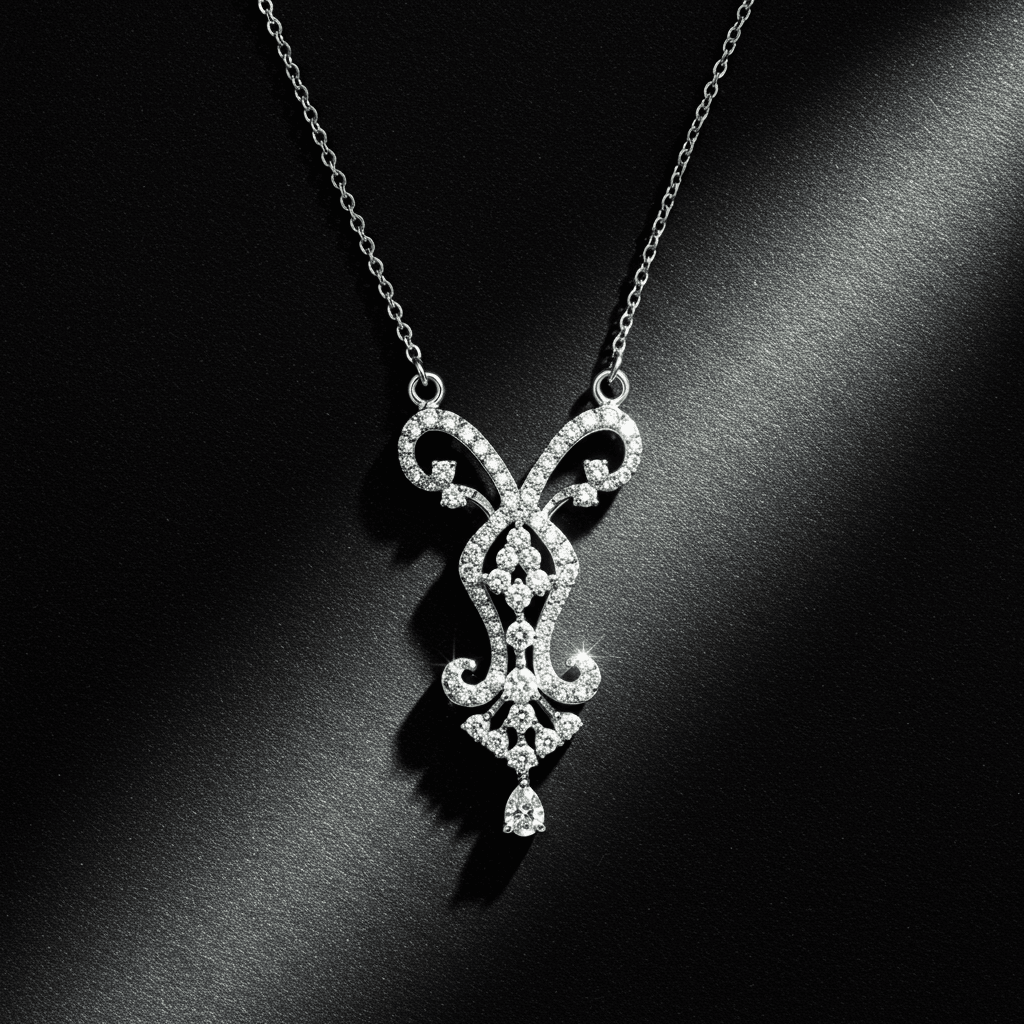
3D scanning for jewelry is the process of using optical, laser, or X-ray technology to capture the precise three-dimensional geometry of an existing piece, converting physical jewelry into a digital model that can be modified, reproduced, or used as a reference for repair work. This technology has fundamentally changed how jewelers approach restoration, reproduction, and custom modifications of existing pieces.
Before 3D scanning, reproducing a piece of jewelry required a skilled craftsperson to take precise measurements with calipers, create hand-drawn technical illustrations, and manually carve a new wax model that approximated the original. This process was time-consuming, expensive, and inherently imprecise. Details were inevitably lost or interpreted differently. With 3D scanning, a jeweler can capture every surface detail of a piece in minutes with micron-level accuracy, creating a perfect digital record that serves as the foundation for any subsequent work.
Scanning Technologies for Jewelry
Structured Light Scanning
Structured light scanners project a pattern of light (usually stripes or dots) onto the object and use cameras to capture how the pattern deforms across the surface. By analyzing these deformations, the software calculates the 3D coordinates of thousands of surface points per second.
For jewelry, structured light scanners offer an excellent balance of resolution, speed, and cost. The Shining 3D AutoScan-DS-MIX, one of the most popular jewelry scanners, uses structured light to achieve accuracy of 10 microns across the scanning volume. A complete ring scan takes approximately 2 to 5 minutes.
Laser Triangulation
Laser scanners project a line or point of laser light onto the object and use cameras positioned at known angles to calculate surface geometry through triangulation. Laser scanning is particularly effective for capturing fine surface textures like engraving, milgrain, and hammered finishes.
The Artec Micro, a desktop scanner designed for small detailed objects, combines laser and structured light technology to achieve 10-micron accuracy. It is particularly well-suited for jewelry because its turntable-based system automates the scanning process, reducing the need for manual repositioning.
Micro-CT Scanning
Micro-computed tomography (micro-CT) uses X-rays to create cross-sectional images that are reconstructed into a full 3D model. Unlike surface scanning methods, micro-CT captures both the exterior surface and internal structure of a piece.
For jewelry, micro-CT is invaluable for examining internal features that surface scanners cannot reach. Hidden cavities, internal channel settings, the interior of closed-back settings, and the internal structure of chain links can all be captured. The technology also works regardless of surface finish, easily scanning both polished mirror surfaces and matte textures that can challenge optical scanners.
The limitation of micro-CT is cost and accessibility. Systems from Nikon, Zeiss, and Bruker cost 100,000 to over 500,000 dollars. Most jewelers access micro-CT through service bureaus or academic institutions.
Photogrammetry
Photogrammetry reconstructs 3D geometry from multiple overlapping photographs taken from different angles. While photogrammetry has improved dramatically with AI-powered reconstruction software, it remains the least accurate method for jewelry scanning. Surface detail is typically captured at 50 to 100 microns, which is adequate for overall form but insufficient for reproducing fine details like prong geometry or stone seats.
Photogrammetry's advantage is accessibility. Any jeweler with a good camera and software like Agisoft Metashape or RealityCapture can attempt photogrammetry. It works well as a starting point for designs that will be refined in CAD rather than reproduced exactly.
| Technology | Accuracy | Speed | Cost | Internal Capture |
|---|---|---|---|---|
| Structured Light | 5 to 15 microns | 2 to 5 min | 3,000 to 30,000 dollars | No |
| Laser Triangulation | 5 to 10 microns | 3 to 8 min | 5,000 to 50,000 dollars | No |
| Micro-CT | 1 to 5 microns | 15 to 60 min | 100,000 dollars plus | Yes |
| Photogrammetry | 50 to 100 microns | 15 to 30 min | 500 to 3,000 dollars | No |
Practical Applications in Jewelry Repair
Reproducing Broken or Damaged Elements
When a customer brings in a ring with a broken prong, worn setting, or missing design element, 3D scanning the intact portions of the piece provides the geometric reference needed to recreate the damaged section. The scan data is imported into CAD software where the broken area is digitally reconstructed, often by mirroring symmetrical elements from the undamaged side of the piece. The repaired digital model is then 3D printed and cast to produce the replacement component.
Ring Resizing With Complex Designs
Traditional ring resizing involves cutting the band and adding or removing metal, which can distort intricate patterns, pavé settings, and engraved details. 3D scanning the original ring, digitally resizing the model in CAD, and printing a new casting model preserves every detail at the new size without the distortions that mechanical stretching or cutting can introduce.
This approach is particularly valuable for rings with continuous patterns around the entire band, eternity bands with stones on all sides, and rings with complex structural elements that would be compromised by traditional resizing.
Matching Pieces for Sets
When a customer wants a wedding band that perfectly matches their existing engagement ring, 3D scanning the engagement ring provides the precise profile data needed to design a band that nests against it without gaps. The scan data shows the exact curvature and dimensions of the engagement ring's profile, allowing the CAD designer to model a band that conforms precisely.
Reproducing Vintage and Discontinued Pieces
Vintage jewelry, family heirlooms, and discontinued commercial designs can be exactly reproduced through 3D scanning. The scan captures every design detail including patina-smoothed edges and wear patterns, allowing the jeweler to decide whether to reproduce the piece exactly as it is (including wear) or to restore it to its probable original condition.
The Scanning Workflow
A typical jewelry scanning workflow follows a predictable sequence that becomes routine with practice.
Preparation
Clean the piece thoroughly to remove oils, fingerprints, and any surface contamination that could affect scan accuracy. For highly reflective polished surfaces, apply a thin coating of scanning spray (a chalk-based aerosol that creates a matte white surface). Modern scanners with advanced algorithms can handle some reflectivity, but coating remains the most reliable approach for mirror-polished jewelry.
Scanning
Mount the piece on the scanner's turntable or fixture. Run the automated scanning sequence, which typically captures the piece from multiple angles as the turntable rotates. Most scanners require two or more scan passes with the piece repositioned to capture undercuts and hidden surfaces.
Processing
The raw scan data (a cloud of points) is processed into a watertight 3D mesh using the scanner's software. This involves aligning multiple scan passes, filling small gaps, and smoothing noise. For jewelry, maintaining sharp edges during processing requires careful parameter selection to avoid over-smoothing design details.
Cleanup and Export
The final mesh is inspected for accuracy, compared against physical measurements, and exported as an STL or OBJ file for use in CAD software. Some scan software also supports direct export to jewelry CAD formats.
Limitations and Workarounds
3D scanning is not a perfect process for jewelry. Several inherent challenges require workarounds.
Reflective and transparent surfaces remain the biggest challenge for optical scanners. Polished gold, platinum, and silver surfaces can create scanning artifacts, and transparent gemstones confuse optical measurement systems. The standard workaround is scanning spray for metals and removing stones before scanning where possible.
Very small details at the limit of scanner resolution may not be captured accurately. Micro-pavé stone seats, fine milgrain, and ultra-thin filigree wires can fall below the resolution threshold of affordable scanners. For these features, micro-CT or manual CAD reconstruction from photographs may be necessary.
Scan data produces mesh geometry rather than parametric CAD geometry. This means the resulting model is a collection of triangles rather than the mathematically defined surfaces (NURBS) that jewelry CAD software works with natively. Converting mesh to NURBS for editing in CAD is possible using reverse engineering software like Geomagic Design X, but it adds a step to the workflow.
How Tashvi AI Complements 3D Scanning
While 3D scanning captures what a piece looks like today, Tashvi AI helps envision what it could become. When a customer brings in a damaged or outdated piece for redesign, scanning preserves the original geometry while Tashvi AI generates visual concepts for how the piece could be transformed into a new design.
This combination is powerful for jewelry redesign services. A jeweler can scan the customer's existing piece, show them the digital model of their current jewelry, then use Tashvi AI to generate concepts showing how those same stones and metals could be configured in a completely new design style. The customer sees both the before and after, making the decision to proceed much easier.
Try designing on Tashvi AI free
Building a Scanning Practice
For jewelers considering adding 3D scanning to their services, the entry point has never been more accessible. Desktop structured light scanners capable of jewelry-grade accuracy start at approximately 3,000 dollars. The learning curve is manageable, with most jewelers achieving production-quality scans within a few weeks of practice.
The return on investment comes quickly. Charging 75 to 200 dollars per scan for reproduction, resizing, and repair reference work, a busy repair shop can recover the scanner cost within a few months. The digital files also create a valuable archive, as once a piece is scanned, the data is preserved indefinitely for future reference, making the technology an investment that continues to pay dividends over time.
Frequently Asked Questions
Quick answers to the questions readers ask most about this guide.
How accurate is 3D scanning for jewelry?
Professional jewelry 3D scanners achieve accuracy of 5 to 15 microns, which is more than sufficient for reproducing fine details like prong tips, pavé stone seats, and engraved text. Micro-CT scanners can achieve even higher resolution at 1 to 5 microns, capturing internal structures that surface scanners cannot detect.
Can you 3D scan a ring to make a copy?
Yes, 3D scanning a ring produces a precise digital model that can be used to 3D print an exact replica or a modified version. This is commonly used to reproduce vintage or discontinued pieces, create matching wedding bands, or resize rings while preserving intricate design details.
What 3D scanner is best for jewelry?
The Artec Micro and Shining 3D AutoScan-DS-MIX are popular choices for jewelry scanning. For the highest precision, micro-CT scanners from companies like Nikon and Zeiss offer sub-micron resolution. Budget-conscious jewelers can achieve acceptable results with structured light scanners under 5,000 dollars.
How much does it cost to 3D scan jewelry?
Professional jewelry scanning services charge 50 to 300 dollars per piece depending on complexity and required accuracy. Purchasing a dedicated jewelry scanner ranges from 3,000 to 50,000 dollars, with micro-CT systems costing 100,000 dollars and above. Many jewelers outsource scanning rather than investing in equipment.
Can 3D scanning capture gemstone details?
3D scanning can capture the external shape and position of gemstones, but transparent and highly reflective stones present challenges for optical scanners. Most jewelers scan the metal setting separately and digitally model the stones based on measurements. Micro-CT scanning can capture both metal and stone geometry simultaneously.