
How Tashvi AI Handles Revision Requests in Real Time
See how Tashvi AI processes design revision requests instantly, letting jewelers refine concepts in real time without restarting the creative process.
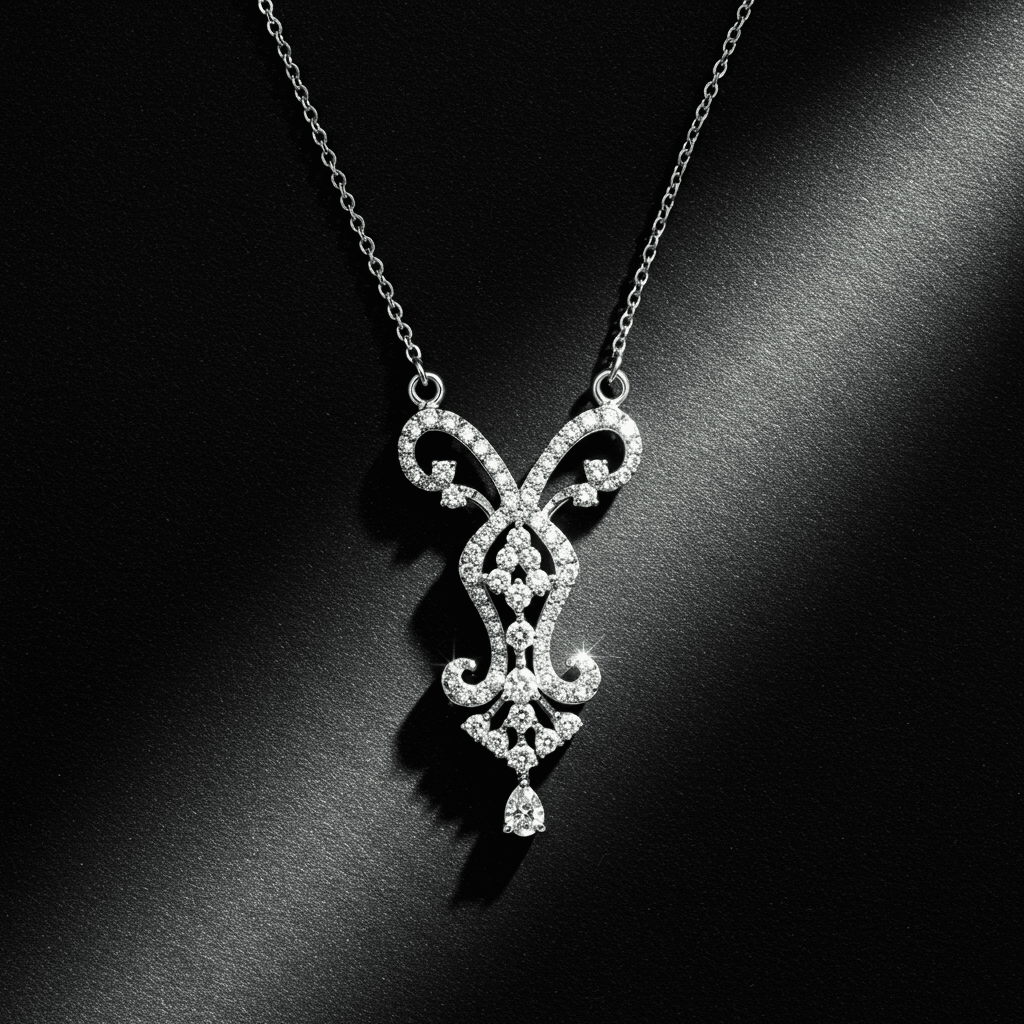
Tashvi AI processes design revision requests in seconds, allowing jewelers to refine concepts instantly without starting over. By preserving every version and generating updated visualizations on the fly, the platform transforms what was once a multi-day revision cycle into a fluid, real-time creative conversation.
Why Revisions Matter More Than the First Draft
In custom jewelry design, the first concept is rarely the final product. Clients often struggle to articulate exactly what they want until they see something close to it. A client might love the overall silhouette of a ring but want the stones repositioned, or they might approve the setting style but request a different metal tone. These refinements are where the real design work happens.
Traditional workflows treat each revision as a separate project. A designer receives feedback, interprets it, rebuilds or modifies a CAD model, renders new images, and sends them back for another round of review. According to McKinsey's research on generative AI in product design, companies that adopted AI-driven iteration tools reduced their product development timelines by 30 to 60 percent. Industries that have embraced AI are now seeing labor productivity grow 4.8 times faster than the global average. In jewelry, where design approval delays directly impact production schedules and client satisfaction, that acceleration is transformative.
Tashvi AI was built with the understanding that iteration is the core of design. Rather than treating revisions as interruptions, the platform treats them as the natural next step in a continuous creative flow.
The Traditional Revision Bottleneck
To appreciate what real-time revision means, it helps to understand the conventional process. When a jeweler receives revision feedback from a client, the typical workflow involves several sequential steps that each consume time and attention.
The designer first reviews the client's notes, which might arrive as an email, a phone call summary, or a marked-up image. They then open their CAD software, locate the original model file, and begin making adjustments. Even a seemingly simple change, like widening a band by 0.5mm or swapping a round stone for an oval, requires careful manipulation of the 3D geometry. After making changes, the designer re-renders the model, exports presentation-quality images, and sends them to the client.
Each cycle typically takes one to three business days. Most custom jewelry projects go through three to five of these cycles before reaching final approval. That means the revision phase alone can stretch across two to four weeks, during which the client's enthusiasm may wane and the production schedule keeps slipping. When you consider that the average custom engagement ring takes six to eight weeks from initial consultation to finished piece, and the CAD design phase alone consumes one to three of those weeks, the revision bottleneck becomes the single largest threat to staying on schedule.
| Revision Step | Traditional Timeline | With Tashvi AI |
|---|---|---|
| Receive and interpret feedback | 2 to 4 hours | Immediate, in conversation |
| Modify the design | 3 to 8 hours | Seconds |
| Render updated visuals | 1 to 3 hours | Seconds |
| Send to client for review | 1 business day | Instant, on screen |
| Full revision cycle | 1 to 3 business days | Under 5 minutes |
| Total for 4 revision rounds | 1 to 4 weeks | Under 30 minutes |
The table above illustrates why so many jewelers describe revisions as the single biggest drain on their time. The creative work itself is often quick, but the logistics of each cycle add enormous overhead.
Beyond the time cost, there is a direct financial impact. Industry pricing data shows that a basic jewelry CAD design runs between $50 and $300, while intricate custom pieces range from $300 to $1,500 or more. Most designers include one or two revisions within that base price, but additional rounds cost $25 to $100 each for minor adjustments and $100 to $400 for substantial redesigns. A project that goes through five revision cycles can easily add $200 to $800 in CAD revision fees alone, costs that either erode the jeweler's margin or get passed along to the client. Tashvi AI eliminates that overhead by keeping the designer and the design in constant, immediate dialogue.
How Tashvi AI Processes Revisions
When you generate a design in Tashvi AI and then request a change, the platform does not discard your original concept and start from scratch. Instead, it builds on the existing design context, understanding what you liked about the current version and modifying only what you asked to change.
This contextual awareness is what separates Tashvi AI from generic image generation tools. If you ask to "make the band thinner," the AI knows which element is the band, understands your current proportions, and generates a variation that adjusts the band while preserving everything else. The stones, the setting style, the overall aesthetic, and the metal finish all remain consistent.
The revision process works through natural language. You describe what you want changed in plain words, just as you would explain it to a human designer. "Switch the center stone to an emerald cut." "Add milgrain detailing along the edges." "Show me this in rose gold instead of white gold." Each request generates a new variation within seconds.
This natural language interface removes one of the biggest friction points in traditional revision workflows. Clients no longer need to learn CAD terminology or draw sketches to communicate their vision. They simply say what they want, and they see it immediately.
Tashvi AI also introduces material estimation directly from 2D design concepts. As you iterate, the platform can approximate metal weight, stone sizes, and production costs without requiring a full CAD model. This pre-CAD intelligence layer means that each revision comes with practical manufacturing context, so the client and designer can evaluate not just whether a variation looks right but also whether it fits within budget. Manufacturers and retailers who previously needed a complete CAD file to quote custom work can now provide ballpark estimates during the concept phase itself. For a deeper look at how this conversational approach works, explore the differences between guided and prompt-based design within the Tashvi platform.
Types of Revisions Tashvi AI Supports
The range of revisions you can request spans from subtle adjustments to complete aesthetic overhauls. Understanding the full scope helps you get the most out of real-time iteration.
Material and Metal Changes
Switching between metals is one of the most common revision requests. A client who initially envisioned a yellow gold engagement ring might want to see the same design in platinum, rose gold, or two-tone combinations. Tashvi AI renders these material changes with accurate color representation and surface finish characteristics, so you can see how light interacts differently with each metal.
Stone Modifications
Gemstone revisions cover shape changes, size adjustments, color swaps, and arrangement modifications. You can replace a solitaire round brilliant with a cushion cut, resize accent stones, switch from diamonds to sapphires, or change from a single center stone to a three-stone arrangement. Each variation maintains structural plausibility so that the revised design remains practical for actual production.
Proportion and Scale Adjustments
Fine-tuning proportions is where many designs evolve from good to exceptional. Tashvi AI handles requests to widen or narrow bands, increase or decrease stone prominence, adjust the height of a setting, or modify the overall scale of a piece. These changes are often difficult to visualize mentally, which makes instant rendering especially valuable.
Style and Era Shifts
Sometimes a client wants to see the same fundamental design interpreted through a different stylistic lens. A modern minimalist ring might be reimagined with art deco geometry, or a vintage-inspired pendant could be updated with contemporary clean lines. Tashvi AI understands these stylistic vocabularies and can shift the aesthetic of a design while maintaining its core structure.
Detail and Texture Additions
Adding or removing decorative elements, like filigree work, engraving patterns, milgrain borders, or pave accents, transforms the personality of a piece. These detail-level revisions are especially time-consuming in traditional CAD but happen instantly through Tashvi AI's revision system.
Preserving Design History
One of the most powerful aspects of Tashvi AI's revision system is version preservation. Every iteration you generate remains saved and accessible. This creates a visual timeline of the design's evolution that serves multiple purposes.
During client consultations, version history lets you scroll back through previous concepts to compare directions. A client who is torn between two approaches can see both side by side without anyone needing to recreate an earlier version. This eliminates the frustrating scenario where a client says "actually, I liked the version from two weeks ago better" and the designer has to dig through files or rebuild from memory.
Version history also serves as a learning tool. By reviewing how a design evolved through multiple iterations, designers develop a sharper instinct for what works and what does not. Over time, this leads to stronger initial concepts and fewer revision rounds per project.
For jewelers who manage multiple concurrent projects, the preserved history within Tashvi AI keeps every client's design journey organized and retrievable. There is no risk of overwriting files, losing a favored version, or mixing up revision sequences between clients.
Real-Time Revision in Client Consultations
The most transformative application of Tashvi AI's revision capabilities is during live client meetings. When a jeweler can generate revised designs on the spot while a client watches, the entire consultation dynamic shifts.
In a traditional consultation, the jeweler takes notes, promises to return with updated concepts in a few days, and hopes that their interpretation matches what the client intended. Miscommunication is common, and each misinterpretation adds another revision cycle. With Tashvi AI, the feedback loop closes instantly. The client says "I want the halo to be tighter around the center stone," the jeweler types or speaks that request, and the revised concept appears on screen within seconds.
This immediate responsiveness creates a collaborative atmosphere that clients find deeply satisfying. They feel heard and involved in the design process, rather than waiting passively for a designer to interpret their words. Industry benchmarks from Financial Models Lab place the average custom jewelry consultation-to-sale conversion rate between 20 and 30 percent, with high performers reaching 35 to 45 percent. Jewelers who can demonstrate real-time design responsiveness during consultations consistently push toward the higher end of that range because clients leave the meeting with a clear visual of their piece rather than an abstract promise.
If you are new to using Tashvi AI in consultations, the guide on how to use Tashvi AI to design dream jewelry walks through the full workflow from initial concept to final revision.
Reducing Overall Revision Cycles
While Tashvi AI makes each individual revision faster, the platform also reduces the total number of revision cycles required per project. This happens for several reasons.
First, the speed of revision encourages more thorough exploration during the initial design session. Instead of presenting three options and waiting for feedback, a designer can present twenty variations in the same amount of time. Clients who see more options upfront are more likely to find a direction they love early in the process.
Second, the ability to make changes in real time reduces miscommunication. When a client can see their requested change immediately, they can confirm whether it matches their intent or clarify further. This eliminates the multi-day cycles that result from misinterpreted feedback.
Third, the visual nature of instant revisions helps clients articulate preferences they did not know they had. Seeing a design in rose gold might reveal that the client prefers warmer tones, leading to a broader adjustment that would have taken multiple traditional rounds to discover.
For a detailed analysis of how AI tools compress revision timelines in custom jewelry projects, see the guide on reducing revision cycles in custom jewelry projects.
Practical Scenarios for Real-Time Revision
Understanding the technology is useful, but seeing how it plays out in real scenarios illustrates the true impact. Below are several situations where Tashvi AI's revision capabilities deliver measurable value.
Wedding Set Coordination
When designing matching wedding sets, each change to one piece must be evaluated against its partner. If the bride's engagement ring gets a wider band, the wedding band needs to accommodate that change. Tashvi AI lets designers iterate on both pieces simultaneously, ensuring visual harmony at every step. The guide on designing matching wedding sets with Tashvi AI covers this workflow in detail.
Trend Validation Before Production
Jewelers who design for retail rather than custom orders need to validate whether a design will appeal to their target market before committing to production. Tashvi AI enables rapid A/B testing of design variations. Does the piece perform better with a bezel setting or a prong setting? Is the market leaning toward yellow gold or white gold this season? By generating variations quickly, jewelers can gather feedback from their team or focus groups before investing in production. For more on using AI to validate market appeal, explore how AI helps jewelers predict which designs will sell.
Complex Custom Orders
Some custom orders involve elaborate multi-element designs where every change has cascading effects. A custom necklace with graduated stone sizes, mixed metals, and intricate link patterns requires dozens of proportion decisions. Making these decisions one at a time through traditional revision cycles could stretch the project across months. With Tashvi AI, the designer can work through the entire chain of decisions in a single extended session, arriving at a refined concept that would have taken weeks through conventional methods.
The Technology Behind Instant Revisions
Tashvi AI's real-time revision capability relies on several technical foundations that work together to deliver speed without sacrificing quality.
The platform maintains a contextual understanding of each design session. When you generate an initial concept and then request a modification, the AI does not process your revision in isolation. It considers the full context of the design, including the original prompt, all previous iterations, and the specific elements you have approved or rejected. This contextual memory allows the AI to make targeted changes rather than regenerating an entirely new concept.
The rendering pipeline is optimized for iteration speed. Rather than generating every revision at maximum fidelity from scratch, Tashvi AI uses progressive refinement techniques. The initial revision appears quickly at a high enough quality for evaluation, and additional detail is rendered as needed. This approach prioritizes the speed of the creative decision-making process while still delivering presentation-quality output when required.
Natural language processing within the platform translates conversational revision requests into precise design parameters. When a client says "make it more delicate," the AI interprets that as a combination of thinner structural elements, smaller accent stones, and lighter visual weight. This translation layer is what makes the revision process feel intuitive rather than technical.
Comparing Revision Workflows
For jewelers evaluating whether to integrate Tashvi AI into their existing processes, understanding how revision workflows compare across different tools is essential.
| Feature | Manual Sketching | Traditional CAD | Generic AI Tools | Tashvi AI |
|---|---|---|---|---|
| Time per revision | 1 to 4 hours | 2 to 8 hours | 1 to 5 minutes | Seconds |
| Contextual awareness | High (same artist) | Medium (same file) | Low (new generation) | High (session memory) |
| Client-facing quality | Low (rough sketches) | High (rendered models) | Medium (variable) | High (consistent output) |
| Version preservation | Manual filing | Manual file management | Manual screenshots | Automatic |
| Natural language input | Yes (verbal) | No (technical tools) | Yes | Yes |
| Live consultation use | Yes | Impractical | Possible | Optimized |
| Jewelry-specific accuracy | Depends on artist | High | Low | High |
| Cost per revision | $50 to $200 labor | $75 to $300 labor | $0 to $5 compute | Included in subscription |
Generic AI image tools can generate jewelry-like images, but they lack the domain-specific understanding that makes revisions reliable. Asking a general-purpose AI to "make the prongs taller" might result in an entirely different design rather than a targeted modification. Tashvi AI's specialization in jewelry means it understands the vocabulary, the structural constraints, and the aesthetic conventions of the craft.
The cost difference is also worth noting in concrete terms. A traditional CAD-based revision workflow for a moderately complex custom ring might accumulate $225 to $900 in revision labor across three to four rounds. A general-purpose AI tool keeps per-revision compute costs near zero but introduces hidden costs through lost time re-prompting and correcting outputs that lack jewelry-specific accuracy. Tashvi AI draws revisions from the design limits included in your plan, making the per-project revision cost predictable and dramatically lower than either alternative.
Building a Revision-Friendly Workflow
Adopting Tashvi AI for revisions works best when the tool is integrated thoughtfully into your existing process rather than bolted on as an afterthought.
Start with Strong Initial Prompts
The quality of your revisions depends partly on the quality of your initial concept. A well-described starting point gives the AI more context to work with during subsequent modifications. Rather than starting with a vague request and iterating toward specificity, invest a few extra minutes in your initial prompt to establish the design's foundation. A best practice emerging among studios that use AI for jewelry design is to dedicate the first 30 to 60 minutes of every project to AI concept exploration, generating multiple directions, shortlisting the strongest candidates, and only moving into CAD modeling after the client approves a clear visual direction. This approach front-loads creative decisions into the cheapest phase and prevents expensive mid-CAD pivots.
Use Revisions to Narrow, Not Wander
Real-time revision is powerful, but it can also lead to design drift if not managed intentionally. Each revision should move the design closer to a final concept rather than exploring tangential directions. When a client starts pulling the design in multiple conflicting directions, it helps to pause, review the version history, and identify which iteration best captures their core intent before continuing.
Document Decision Points
Even though Tashvi AI preserves every version, it helps to note why certain decisions were made. A brief comment like "client preferred the wider band for comfort" or "switched to bezel setting for active lifestyle" creates a decision log that is valuable during production handoff and for future projects with the same client.
Combine with Traditional Tools
Tashvi AI's revision system is most powerful at the concept and approval stage. Once a design is approved, the finalized concept serves as a precise reference for CAD modeling and production. Many jewelers use Tashvi AI to handle all client-facing iteration, then hand the approved design to their CAD team for production-ready modeling. This hybrid approach captures the speed benefits of AI revision while maintaining the precision of traditional production tools.
Measuring the Impact of Faster Revisions
The business impact of real-time revision extends beyond time savings. Faster revisions lead to faster approvals, which lead to shorter production queues, which lead to faster delivery and higher client satisfaction. The entire value chain accelerates.
Jewelers who have adopted Tashvi AI for revision workflows report several measurable outcomes. Projects that previously required four to six weeks from initial consultation to design approval now reach approval in one to two sessions. The number of client no-shows for follow-up appointments drops significantly because the design progresses far enough in the first meeting to maintain momentum. Client referral rates increase because the collaborative design experience feels premium and personalized. Industry data from bplan.ai suggests that jewelry businesses with strong personalized experiences maintain customer retention rates between 60 and 75 percent, and the real-time collaborative nature of AI-assisted revisions feeds directly into that kind of loyalty.
For independent jewelers and small studios, these efficiency gains translate directly into capacity. A designer who previously handled eight custom projects per month can now manage twelve to fifteen without working longer hours. The additional revenue from increased throughput, combined with reduced per-project costs, creates a compelling financial case for adoption. Consider the math on a studio that averages $5,000 per custom piece. Moving from eight to twelve completed projects per month represents $20,000 in additional monthly revenue. At the same time, eliminating three to four CAD revision rounds per project at $75 to $200 each saves another $900 to $3,200 per month across the portfolio. The combined revenue gain and cost reduction can reach $23,000 or more monthly, dwarfing the subscription cost of any AI design tool.
Looking Ahead
Real-time revision is just one dimension of how AI is reshaping the jewelry design process. As the technology continues to evolve, the line between concept and production-ready design will continue to blur. Future iterations of Tashvi AI will bring even tighter integration between the revision stage and downstream production workflows, making the journey from a client's initial idea to a finished piece shorter, smoother, and more collaborative than ever before.
The jewelers who thrive in this new landscape will be those who embrace revision not as a cost center but as the most valuable phase of the design process. With Tashvi AI, every revision request becomes an opportunity to strengthen the design, deepen the client relationship, and move one step closer to a piece that perfectly captures a client's vision.
Frequently Asked Questions
Quick answers to the questions readers ask most about this guide.
How fast can Tashvi AI process a design revision
Tashvi AI generates revised design concepts in seconds after receiving a modification request. Whether you need to change the metal color, adjust stone size, alter the band profile, or modify decorative elements, the AI processes the revision and delivers updated visualizations almost instantly.
Do I lose my original design when requesting revisions
No. Tashvi AI preserves your complete design history. Every version remains accessible so you can compare variations side by side, return to earlier concepts, or combine elements from different iterations. This non-destructive workflow means you never risk losing a direction you liked.
What types of revisions can Tashvi AI handle
Tashvi AI handles revisions including metal type changes, gemstone swaps, proportion adjustments, style modifications from vintage to modern, setting type changes, band width alterations, decorative element additions or removals, and overall aesthetic shifts. Both subtle tweaks and dramatic redesigns are supported.
How does AI revision compare to traditional CAD revision
Traditional CAD revisions require a skilled modeler to manually adjust the 3D model, which takes hours to days per revision cycle. Tashvi AI generates revised concepts in seconds, allowing designers to explore dozens of variations in the time a single CAD revision would take.
Can I use Tashvi AI revisions during client consultations
Yes. Many jewelers use Tashvi AI during live client meetings to iterate on designs in real time. When a client says they want something different, the designer can generate revised concepts immediately rather than scheduling a follow-up meeting. This dramatically improves client satisfaction and close rates.