Using Tashvi AI to Design Matching Wedding Sets
Design cohesive wedding jewelry sets with Tashvi AI including coordinated engagement rings, wedding bands, and bridal accessories that complement each other.
Tashvi AI lets you design complete matching wedding sets by generating coordinated engagement rings, wedding bands, and bridal accessories that share a unified design language. Instead of shopping piece by piece and hoping everything works together, you can build an entire collection from a single creative vision.
Wedding jewelry sets have traditionally been assembled over weeks or months, often from different retailers with different design philosophies. The result is a collection that looks fine individually but lacks the subtle harmony that separates good jewelry from unforgettable jewelry. AI design tools have changed this dynamic entirely. With Tashvi AI, you can generate dozens of coordinated variations in minutes, test different combinations, and refine every detail before committing to production. The process is faster, more creative, and far more intentional than traditional approaches.
This guide walks through the full process of designing a matching wedding set with Tashvi AI, from establishing your design DNA to finalizing production-ready specifications for every piece in the collection.
Why Coordinated Wedding Sets Matter More Than Individual Pieces
A wedding set is more than a collection of rings and accessories worn on the same day. It is a visual statement that tells a story about the couple wearing it. When each piece shares common design threads, the overall effect is polished, intentional, and memorable. According to industry data, most couples spend an average of about $1,500 on both wedding bands combined, and an average of $5,500 on the engagement ring alone. With that level of investment, ensuring every piece works together is well worth the effort.
The difference between a coordinated set and a random assortment becomes especially obvious in photographs. Wedding photography captures jewelry from every angle, often in close-up detail shots where mismatched metals, clashing proportions, or inconsistent design motifs stand out immediately. Couples who invest in coordinated sets consistently report higher satisfaction with their wedding photos years later. Many jewelers also offer a discount when you purchase the engagement ring and both wedding bands together, which can lead to meaningful savings on top of a more cohesive result.
Beyond aesthetics, coordinated sets also simplify daily wear after the wedding. When your engagement ring, wedding band, and everyday accessories share a design vocabulary, everything stacks cleanly and pairs naturally. You never have to think about which pieces go together because the coordination was built in from the start. For a deeper look at building a full bridal collection, see our bridal jewelry set design complete guide.
Starting With the Engagement Ring as Your Design Anchor
Every matching wedding set needs a design anchor, and the engagement ring is the natural choice. It is usually the first piece selected, the most prominent piece worn daily, and the foundation that every other element in the set should reference.
When using Tashvi AI, begin by designing or uploading your engagement ring concept. The platform's guided design mode walks you through key decisions including metal type, stone shape, setting style, and decorative details. Each of these decisions becomes a design parameter that carries forward into every subsequent piece you create.
Pay close attention to four elements of your engagement ring that will define the rest of the set. Metal color establishes the temperature of the entire collection, whether warm gold, cool platinum, or romantic rose gold. Stone shape creates a repeating visual motif that can echo through earrings, pendants, and accent stones on wedding bands. Setting style communicates the overall aesthetic, whether that is minimalist, vintage, glamorous, or sculptural. Decorative details like milgrain borders, twisted shanks, or pavé accents become the connective tissue between pieces.
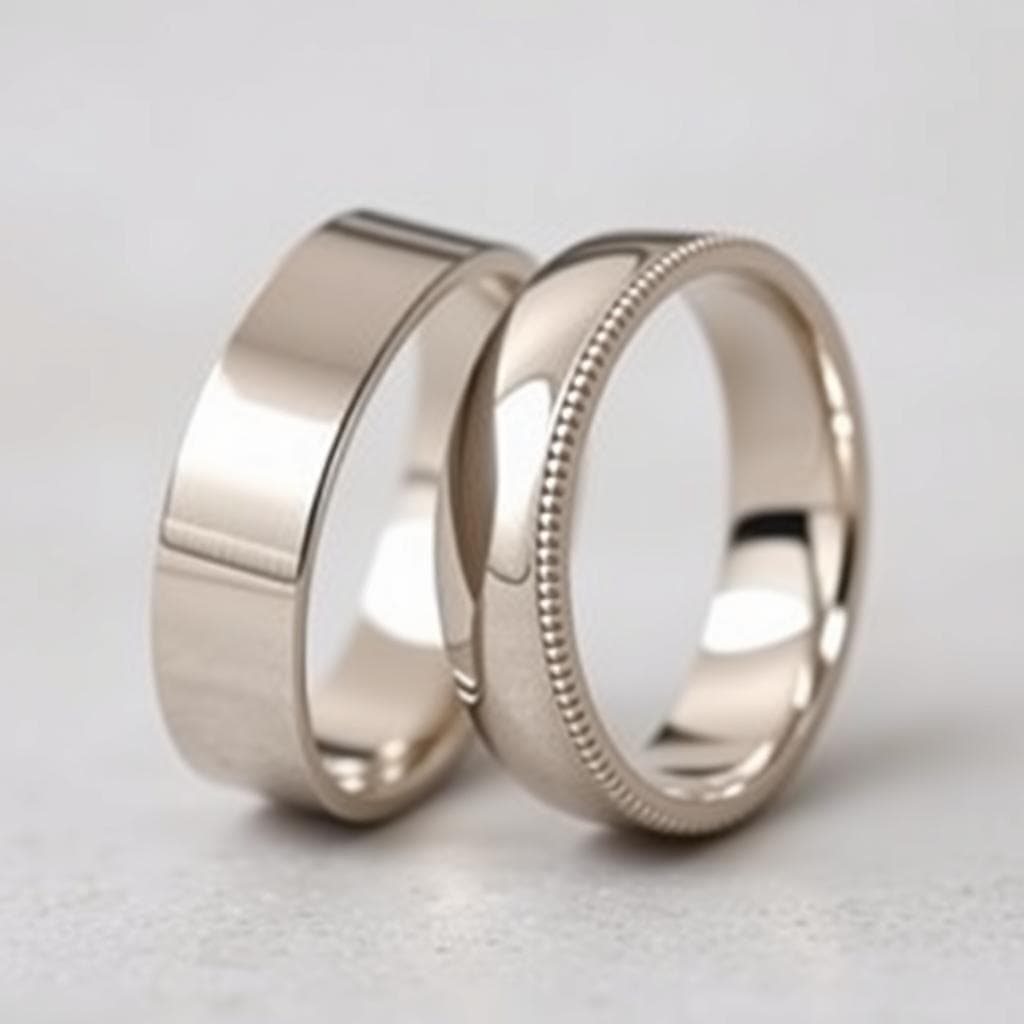
Band profile is another detail that competitors often overlook but that makes a real difference in how pieces sit together. If your engagement ring has a gently domed or court-shaped band, pairing it with a matching court or D-shaped wedding band creates a seamless, comfortable stack. Two flat bands side by side produce a clean, streamlined finish. Mixing a domed engagement ring with a flat wedding band can create an awkward transition that catches the eye for the wrong reasons.
If you are starting from scratch and want guidance on designing the perfect engagement ring, our guide on how to use Tashvi AI to design dream jewelry covers the full process step by step.
Designing Wedding Bands That Complement the Engagement Ring
The wedding band is the most critical pairing decision in any set because it sits directly alongside the engagement ring every day. A great wedding band enhances the engagement ring without competing with it, creating a seamless visual flow when the two are stacked together.
Contour and Nesting Bands
For engagement rings with protruding center stones, contour bands are essential. These bands feature a subtle curve or notch that allows them to sit flush against the engagement ring profile. Tashvi AI can generate contour band designs that match the specific curve of your engagement ring, ensuring a gap-free stack. The most popular contour styles in 2025 and 2026 include the notched band, which cradles the setting with a precise cutout, the wrap band that curves gently around the center stone, and the open band that works especially well with low-set rings.
When generating contour bands, describe the engagement ring profile in your prompt. Mention the stone shape, how far it sits above the band, and whether the setting has side stones that the wedding band needs to accommodate. The more specific your description, the more accurate the contour design will be.
Straight Bands and Spacer Stacks
If your engagement ring has a low profile or a bezel setting, a straight wedding band often works beautifully. Straight bands sit cleanly alongside low-set rings and offer a more streamlined look. For added dimension, consider generating a thin spacer band to sit between the engagement ring and wedding band. This three-ring stack creates visual depth while maintaining a cohesive silhouette. Stacking is one of the strongest trends heading into 2026, with couples building layered looks they can customize day to day. One day you might wear just the wedding band solo, and another day pair it with the engagement ring and an extra eternity band for more flair.
Eternity and Pavé Bands
Eternity bands have surged in popularity, with brides choosing bolder, more statement-oriented wedding bands set with natural or lab-grown diamonds. Instead of a standard row of identical round stones, trending eternity bands feature unique arrangements like east-west oval diamonds, alternating emerald-cut and round stones, or full pavé surfaces that catch light from every angle. Wide bands of 6mm and above are also gaining traction for both men and women who want their wedding band to make an independent visual statement. Gemstone-accented bands featuring ruby, sapphire, or emerald pavé are another major trend for 2026, with couples choosing full-color pavé, ombré gradients, or alternating diamond-and-gem patterns to add personality.
Matching His and Hers Bands
Couples increasingly want wedding bands that look connected without being identical. Tashvi AI excels at generating paired designs where both bands share a common element, whether that is a matching brushed texture, the same engraving pattern, coordinating width proportions, or complementary stone accents. The key is identifying one or two shared features and letting the bands differ in everything else. Scale and proportion matter here. If one partner's band is particularly dainty, pairing it with a chunky band for the other partner can look intentional as long as a shared design thread ties them together, such as identical engraving or the same metal finish.
For a comprehensive look at wedding band styles, profiles, and pairing strategies, explore our wedding bands complete guide.
Building Out the Bridal Accessory Collection
Once the engagement ring and wedding bands are established, the next step is extending the design language into bridal accessories. Earrings, necklaces, and bracelets complete the wedding day look and offer opportunities to reinforce the set's visual identity.
Earrings That Echo the Engagement Ring
Bridal earrings should reference the engagement ring without copying it directly. If your engagement ring features an oval center stone, consider oval drop earrings or oval stud earrings with a similar pavé halo. If your ring has Art Deco geometric lines, geometric earring designs will carry that motif beautifully.
One important balance rule that many brides overlook is that bold earrings call for a minimal necklace, and a statement necklace calls for understated earrings. Trying to wear big, sparkly pieces in every category at once creates visual competition rather than coordination. Your jewelry should feel balanced and intentional, not overwhelming.
When generating earring designs in Tashvi AI, reference the specific design elements from your engagement ring in your prompt. Mention the stone shape, metal color, and any decorative details you want to carry forward. Generate at least five to eight variations and compare them against your ring designs to find the strongest visual connection. For brides wearing an updo, long dangling earrings add sophistication and draw attention to the neck and shoulders. For those with loose hair, studs or small hoops keep things elegant without getting tangled.
Necklaces and Pendants
The right necklace depends largely on your wedding dress neckline. Strapless and sweetheart necklines pair well with delicate pendants at collarbone length. V-neck dresses call for pendants that follow the neckline angle. High necklines and halter styles generally look best without a necklace at all, letting earrings and a bracelet do the work.
When designing a pendant for your set, pull the center stone shape from the engagement ring into the pendant design. A solitaire pendant featuring the same stone cut and metal as the engagement ring creates instant cohesion. Add a subtle pavé bail or a matching halo to tie the pendant even more closely to the ring's design vocabulary.
Bracelets and Bangles
Tennis bracelets and delicate chain bracelets add sparkle to the wrist without competing with the ring stack. For maximum coordination, match the bracelet's metal and stone type to the rest of the set. If your wedding bands feature channel-set princess cut diamonds, a princess cut tennis bracelet creates a powerful visual through-line across the entire collection. Whether you opt for a single exquisite cuff bracelet or a layered look with multiple delicate bangles, this accessory should complement rather than compete with your ring stack.
Pearls as a Bridal Accent
Pearls remain one of the most timeless bridal jewelry options, and they pair beautifully with both diamond and gemstone engagement rings. A strand of freshwater pearls at 16 to 18 inches sits perfectly at the collarbone and works with almost every neckline. Pearl stud earrings or pearl drop earrings offer a softer, more romantic alternative to all-diamond sets. For brides who want a modern twist, mixing pearls with diamonds in the same set creates a textured, layered look that feels fresh without abandoning tradition. Freshwater pearls typically range from $50 to $2,000 per strand depending on size, luster, and surface quality, making them a budget-friendly way to complete a bridal set.
For couples planning summer ceremonies, our summer wedding jewelry trends guide covers the latest seasonal styles and how to incorporate them into a coordinated set.
The Design Iteration Process in Tashvi AI
Designing a matching wedding set is not a linear process. It requires iteration, comparison, and refinement across all pieces simultaneously. Tashvi AI supports this workflow by making it fast and inexpensive to generate dozens of variations.
Generate Widely, Then Narrow Down
Start by generating 10 to 15 variations of each piece in your set. At this stage, explore different interpretations of your design brief rather than trying to perfect a single direction. You might discover that a design element you hadn't considered, like a twisted wire detail or a bezel-set accent stone, ties the collection together more effectively than your original plan.
Spread your variations across a surface, whether digitally on screen or printed as reference sheets, and look for pieces that feel like they belong in the same family. The strongest sets share a subtle visual rhythm that you can feel even before you analyze why it works.
Compare Pieces Side by Side
Once you have narrowed your options to three or four candidates for each piece, compare them directly against the engagement ring anchor. Place the engagement ring design next to each wedding band option and evaluate the stack. Then place the ring next to each earring option and assess whether the design language carries through.
This comparison process often reveals mismatches that are not obvious when viewing pieces in isolation. A wedding band might look perfect on its own but introduce a competing visual weight when stacked with the engagement ring. Earrings might share the right stone shape but feel off because the proportions differ too much from the ring's setting.
Refine With Targeted Adjustments
Tashvi AI lets you request specific revisions to any generated design. If a wedding band is almost perfect but needs a slightly wider profile, you can describe that adjustment and generate a revised version. If earrings share the right design DNA but need smaller stones to balance the proportions, you can request that change directly.
This iterative refinement process is where AI design tools truly outperform traditional workflows. Each revision takes seconds rather than days, and you can explore five different adjustments simultaneously rather than committing to one direction at a time. For more on how the revision process works, see our guide on how Tashvi AI handles revision requests in real time.
Metal and Stone Coordination
Consistent metal and stone choices are the foundation of any cohesive wedding set. Even small inconsistencies in metal tone or stone quality can undermine the coordination you have worked to build.
The safest approach is to use the same metal across every piece in the set. All 14K yellow gold, all platinum, or all rose gold creates automatic cohesion. One frequently overlooked detail is matching the karat weight, not just the metal type. If your engagement ring is 18K yellow gold, your wedding band should also be 18K. Mixing karats creates subtle color differences that become noticeable when rings sit side by side, and the softer metal will wear down faster against the harder one. However, intentional mixed metal designs have become increasingly popular and can add visual interest when done correctly.
The key word is intentional. Accidental metal mixing, where pieces happen to be different metals because they were purchased separately, looks uncoordinated. Intentional mixed metal design, where every piece deliberately combines the same two metals in the same proportions, looks sophisticated and modern. Mixed metals have become one of the defining trends of 2025 and 2026 bridal jewelry, with brides blending white gold, yellow gold, and rose gold for a personalized, fashion-forward style that coordinates beautifully with engagement rings of any tone.
| Coordination Strategy | Best For | Visual Effect | Difficulty Level |
|---|---|---|---|
| Single metal throughout | Classic and minimalist sets | Clean, seamless, timeless | Easy |
| Two-tone intentional mix | Modern and fashion-forward couples | Dynamic, layered, contemporary | Medium |
| Warm metals only (yellow and rose gold) | Romantic and vintage themes | Warm, cohesive, inviting | Easy |
| Cool metals only (white gold and platinum) | Sleek and modern aesthetics | Crisp, polished, refined | Easy |
| Three-metal mix | Bold and eclectic personalities | Statement-making, unique, complex | Advanced |
When multiple pieces in the set feature gemstones, consistency in stone quality matters enormously. Diamonds across different pieces should share similar color grades and clarity ranges so they look like they belong together. A bright white D-color stone in the engagement ring paired with warmer J-color stones in the earrings creates a visible disconnect.
For colored gemstone accents, match the exact hue and saturation across pieces. A sapphire accent in the engagement ring's gallery should match the sapphires in the earrings and necklace. According to the the Gemological Institute of America (GIA, sapphire color varies significantly based on origin and treatment, so sourcing accent stones from the same lot or supplier helps maintain visual consistency.
Lab-grown diamonds and gemstones offer an advantage in set coordination because they can be produced to tighter specifications than mined stones. This makes it easier to match color, clarity, and size across multiple pieces in the set.
Common Wedding Set Configurations
Different couples need different set configurations depending on their lifestyle, budget, and ceremony plans. Here are the most popular configurations and how to approach each one with Tashvi AI.
The Classic Trio
The classic trio consists of an engagement ring, a matching wedding band for one partner, and a coordinating wedding band for the other partner. This is the minimum viable wedding set and the configuration most couples start with.
When designing a classic trio, establish the engagement ring first, then generate the two wedding bands as a pair. The partner wearing the engagement ring needs a band that complements and nests against it. The other partner needs a band that shares design DNA with the engagement ring while standing on its own as an independent piece.
The Full Bridal Set
A full bridal set adds earrings, a necklace, and optionally a bracelet to the classic trio. This five to seven piece collection covers every jewelry need for the wedding day and creates a complete design story.
Design the full bridal set in layers. Start with the engagement ring, add the wedding bands, then work outward to earrings, necklace, and bracelet. Each layer should reference the previous one while adding its own character. The earrings might echo the ring's stone shape. The necklace might repeat its metal texture. The bracelet might mirror the wedding band's pattern.
The Anniversary Expansion Set
Some couples design a wedding set with built-in expansion points, pieces planned for future anniversaries. A five-year anniversary eternity band, a ten-year anniversary pendant, and a twenty-year anniversary bracelet give the collection a growth trajectory that makes each milestone more meaningful.
When planning an expansion set, document your design parameters thoroughly. Record the exact metal alloy, stone specifications, and design motifs so that future pieces can be generated with perfect consistency even years later. Tashvi AI stores your design history, making it straightforward to reference earlier pieces when designing additions.
Budgeting and Timeline for a Complete Wedding Set
Wedding set budgets vary enormously depending on metals, stones, and the number of pieces included. Understanding where your budget creates the most impact helps you allocate resources wisely.
Where to Invest and Where to Save
The engagement ring and wedding bands receive the most daily wear and deserve the highest quality materials. These are pieces that endure decades of constant use and should be built to last. Investing in durable metals, secure settings, and high-quality stones for the ring stack pays dividends over a lifetime.
Bridal accessories like earrings and necklaces can often be produced at a lower price point without sacrificing the visual effect. Because these pieces are not subjected to the same daily wear as rings, they can use lighter constructions, smaller accent stones, and simpler settings while still looking stunning on the wedding day and beyond.
| Set Configuration | Typical Piece Count | Budget Range (excluding engagement ring) | Primary Cost Drivers |
|---|---|---|---|
| Classic Trio | 2 to 3 pieces | $800 to $3,000 | Wedding band metals and diamonds |
| Full Bridal Set | 5 to 7 pieces | $2,000 to $8,000 | Earring and necklace stone sizes |
| Anniversary Expansion | 5 to 10 pieces over time | $3,000 to $15,000+ | Cumulative stone quality matching |
Metal Pricing by Karat and Type
Understanding how metal choice affects your budget helps you make informed tradeoffs. A plain 14K gold wedding band typically costs between $400 and $1,200 depending on weight and design. The same band in 18K gold jumps to $600 to $2,500, while platinum bands generally start at $1,000 and can reach $2,500 or more. Platinum commands a material premium of roughly $600 to $1,200 above similar gold settings, reflecting both the metal's density and its higher raw material cost.
| Metal | Plain Band Range | With Diamonds or Details | Durability Notes |
|---|---|---|---|
| 14K Gold (yellow, white, or rose) | $400 to $1,200 | $800 to $2,500 | Harder than 18K due to higher alloy content, excellent for daily wear |
| 18K Gold (yellow, white, or rose) | $600 to $2,500 | $1,200 to $4,000 | Richer color and higher purity, slightly softer than 14K |
| Platinum | $1,000 to $2,500 | $1,800 to $5,000+ | Heaviest and most durable precious metal, develops a natural patina over time |
For couples on a moderate budget, 14K gold provides exceptional value. It is 20 to 30 percent less expensive than 18K gold while looking nearly identical on the finger. The slightly higher alloy content actually makes 14K gold harder and more scratch-resistant, which is a practical advantage for rings worn every day.
Using AI to Optimize Costs
One of the most practical benefits of designing with Tashvi AI is the ability to explore budget-friendly alternatives without sacrificing design quality. Generate variations using different stone sizes, different metal karats, or alternative gemstones and compare the visual impact against the cost difference.
A 14K gold wedding band looks nearly identical to an 18K gold band when worn but costs significantly less. Lab-grown diamonds are chemically identical to mined stones at 40 to 60 percent lower cost, according to recent industry pricing data. Small adjustments to stone count in pavé settings can reduce material costs without visibly changing the design. AI makes these comparisons instantaneous so you can find the sweet spot between budget and beauty. Timing your purchase around major sales periods can yield additional savings, and buying all set pieces from the same jeweler often unlocks bundle pricing that shaves 10 to 15 percent off the total.
Recommended Timeline
Planning a complete wedding set requires more lead time than buying a single ring. Each piece needs design, review, revision, and production time, and the coordination between pieces adds complexity.
Start the design process six to eight months before your wedding date. Use the first month to explore styles, generate variations, and establish your design direction in Tashvi AI. Spend the second month refining your selections and comparing piece combinations. By month three, you should have finalized designs ready for production quotes from your jeweler.
Production typically takes four to eight weeks depending on complexity, stone sourcing, and the jeweler's schedule. Building in a buffer of two to four weeks for adjustments or resizing keeps the process stress-free. The final fitting, where you try all pieces together for the first time, should happen at least two weeks before the wedding.
When to Start Each Piece
Engagement rings often exist before the wedding planning process begins, but if you are designing one as part of a set, start with it immediately. Wedding bands should be designed within two weeks of finalizing the engagement ring, while the design language is fresh. Bridal accessories can be designed in parallel with the wedding bands or immediately after, depending on your timeline.
For couples with tighter timelines, Tashvi AI compresses the design phase dramatically. What traditionally takes weeks of sketches, consultations, and revisions can happen in a few focused sessions. The platform generates concepts in seconds, so a couple could realistically establish their entire set direction in a single afternoon.
Write Specific and Detailed Prompts
Maximizing the quality of your wedding set designs also comes down to how you communicate with the AI and how you evaluate the results.
Vague prompts produce generic results. Instead of asking for "a matching wedding band," describe exactly what you want. Specify the metal, the width relative to the engagement ring, the type of stone setting, any decorative details, and how the band should sit against the engagement ring profile. The more information you provide, the more targeted and useful the generated designs will be.
Use Consistent Language Across Pieces
When designing multiple pieces for a set, use the same descriptive language across all your prompts. If you describe the engagement ring as having "delicate milgrain borders and a cathedral setting in warm 18K yellow gold," use those same phrases when prompting for the matching earrings and necklace. Consistent language helps maintain consistent design output.
Generate More Than You Think You Need
It is tempting to stop after generating three or four variations that look promising. Resist that impulse. Generate at least ten to fifteen variations of each piece and you will almost always discover unexpected combinations that outperform your early favorites. AI generation is fast and essentially free, so there is no reason to limit your exploration.
Evaluate Designs as a Complete Set
Never evaluate a single piece in isolation when designing a wedding set. Always compare new designs against the existing pieces in your collection. A beautiful earring design that does not harmonize with your ring stack is not the right earring for this set, no matter how stunning it looks alone. Train yourself to see the collection as a single entity rather than a group of separate pieces.
From Digital Designs to Physical Jewelry
Once your Tashvi AI designs are finalized, the next step is turning those digital concepts into physical jewelry. The platform generates detailed concepts and 3D output that a skilled jeweler or CAD designer can develop into a production file.
Sharing Designs With Your Jeweler
Export your finalized designs and share them with your chosen jeweler along with the detailed specifications. A good jeweler will review the designs, confirm material availability, and provide a production quote. Because Tashvi AI generates designs with realistic proportions and standard jewelry measurements, the translation from digital concept to physical piece is straightforward.
Quality Checks During Production
Request progress photos or check-ins at key production stages. For rings, review the wax model or 3D printed prototype before casting. For pieces with multiple stones, confirm the stone layout before final setting. These checkpoints help catch any coordination issues between pieces before they become costly to fix.
Test Your Full Look Before the Wedding Day
Never wait until the wedding day to wear your jewelry for the first time. During one of your final dress fittings, put on your complete look with dress, veil, shoes, and every jewelry piece in the set. Move around, sit down, raise your arms, and check how everything looks in motion and from different angles. This trial run reveals practical issues like a necklace that catches on lace detailing, earrings that tangle with a veil, or a bracelet that slides under a fitted sleeve. Catching these problems weeks before the ceremony gives you time to swap a piece or adjust a clasp without any stress.
The Final Assembly
When all pieces are complete, arrange the entire set together for a final review. Check that metals match in tone and finish. Confirm that stone colors are consistent across pieces. Stack the rings and verify that they sit flush without gaps. Try on earrings, necklace, and bracelet together and evaluate the overall balance. This is the moment where all your design work comes together, and a well-designed set will feel instantly cohesive.
Designing a matching wedding set with Tashvi AI transforms what was once a stressful, fragmented process into a creative and enjoyable experience. By establishing a clear design anchor, iterating across multiple variations, and maintaining consistent design language throughout, you can create a collection that tells your unique love story through every carefully coordinated piece. Start your wedding set today with Tashvi AI and see how quickly a few thoughtful prompts can become the jewelry collection of a lifetime.
Frequently Asked Questions
Quick answers to the questions readers ask most about this guide.
Can Tashvi AI design a complete matching wedding set
Yes. Tashvi AI generates coordinated wedding jewelry concepts including engagement rings, wedding bands for both partners, bridal necklaces, earrings, and accessories. You can specify a unifying theme, metal, or design motif and the AI creates pieces that share visual DNA across the entire set.
How do you ensure wedding bands complement the engagement ring
Start by generating the engagement ring design first, then use it as a reference when designing the wedding band. Tashvi AI can create contour bands that nest against specific ring profiles, matching metal and stone combinations, and complementary design elements that tie the pieces together.
Should matching wedding sets be identical or complementary
Complementary designs tend to look more sophisticated than identical matches. The best wedding sets share common elements such as the same metal finish, similar engraving patterns, or matching stone accents while allowing each piece to have its own character. Subtle coordination outperforms exact replication.
How many design variations should I generate for a wedding set
Generate at least 10 to 15 variations of each piece in the set. This gives you enough options to find combinations that work together as a collection. AI makes this process fast, so explore widely before narrowing down. Compare variations side by side to find the strongest pairings.
Can I design his and hers wedding bands with Tashvi AI
Absolutely. Generate paired wedding band designs that share a common design language while differing in width, proportion, or detail density. Many couples want bands that clearly belong together without being identical. Tashvi AI excels at creating these related-but-distinct pairings.