3D Printed Jewelry: From AI Design to Physical Piece in Hours
3D printed jewelry bridges the gap between digital design and physical reality. Learn how AI-generated jewelry concepts become wearable pieces through SLA, DLP, and direct metal printing, with real cost comparisons and quality expectations.
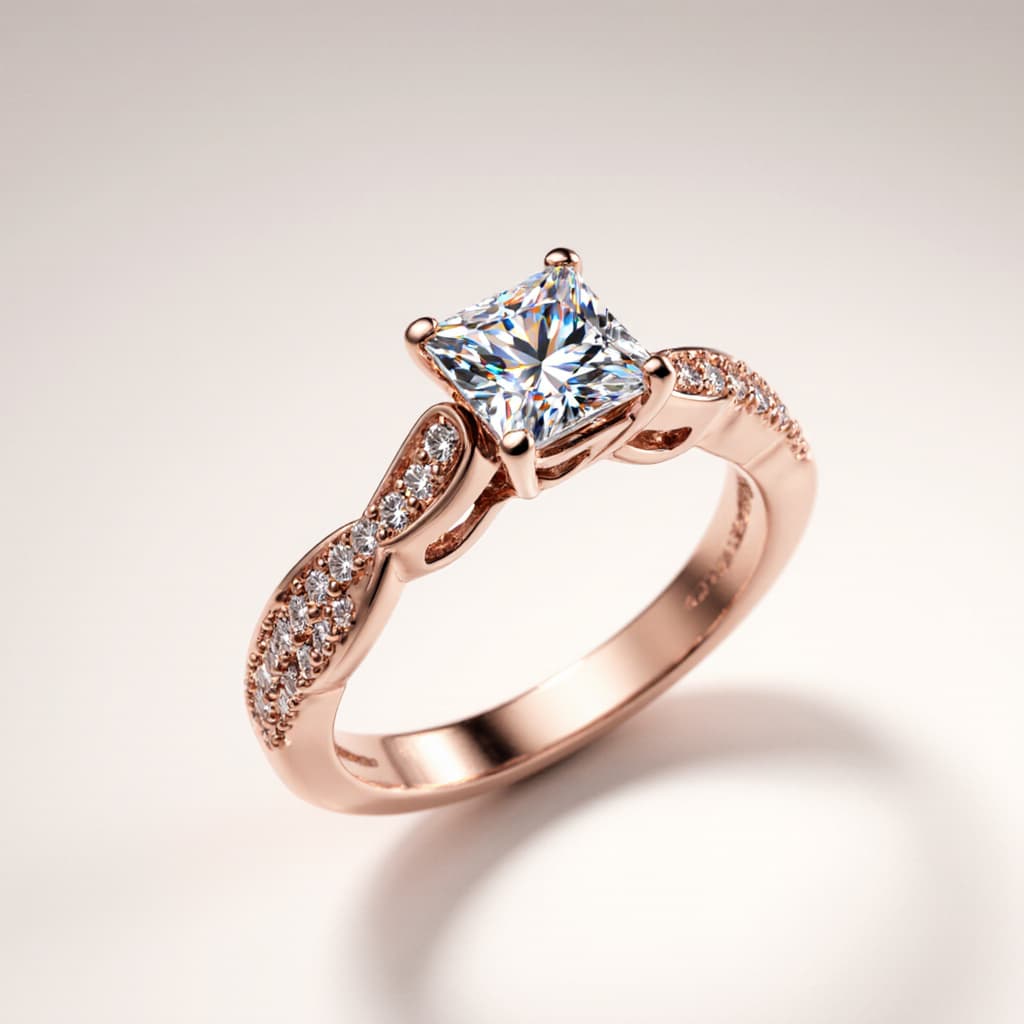
3D printed jewelry is any wearable piece created through additive manufacturing, where a digital 3D model is built layer by layer into a physical object using materials like castable resin, wax, or even precious metals. This technology has compressed what once took weeks of hand carving into a process that delivers detailed, production-ready models in hours.
The convergence of AI design tools and 3D printing technology has created a pipeline that would have seemed impossible a decade ago. You can describe a ring, necklace, or earring concept in plain language, generate a photorealistic visualization with AI, convert that concept into a printable 3D model, and hold a physical prototype in your hands within the same day. This guide explores every step of that pipeline, the technologies involved, and what you need to know about quality, cost, and limitations.
What Is 3D Printed Jewelry
At its simplest, 3D printed jewelry refers to pieces that were manufactured, either partially or fully, using additive manufacturing technology. This differs from traditional jewelry making, which is primarily subtractive (carving, filing, cutting away material) or formative (casting molten metal into molds).
In practice, 3D printing in jewelry takes two primary forms. The first and most common is indirect printing, where a castable model is 3D printed in wax or resin and then used in the traditional lost-wax casting process to produce the final metal piece. The second is direct metal printing, where the jewelry is printed directly in precious metal using laser sintering or similar technologies.
Both approaches offer advantages over fully traditional methods, including faster iteration, geometric complexity that would be impossible to achieve by hand, and the ability to produce exact duplicates of a design.
3D Printing Technologies for Jewelry
Not all 3D printers are created equal, and jewelry demands the highest resolution and surface quality of any 3D printing application. Here are the technologies that matter for jewelry production.
SLA (Stereolithography)
SLA printers use a UV laser to cure liquid photopolymer resin one layer at a time. For jewelry, SLA offers excellent detail resolution, typically 25 to 50 microns per layer, and smooth surface finish. Formlabs is one of the most recognized names in SLA printing for jewelry, with their castable wax resin specifically formulated for clean burnout during the investment casting process.
SLA is ideal for detailed pieces with fine filigree, text, or texture. The relatively slow printing speed is a non-issue for jewelry since pieces are small.
DLP (Digital Light Processing)
DLP printers work similarly to SLA but cure an entire layer at once using a projected light source rather than tracing with a laser. This makes DLP faster than SLA for batches of small items. Companies like EnvisionTEC (now Desktop Health) produce DLP printers specifically designed for the jewelry industry.
DLP excels at batch production. A jeweler can print an entire tray of ring models simultaneously, making it efficient for production runs beyond one-off prototypes.
SLS (Selective Laser Sintering)
SLS uses a laser to fuse powdered material, which can include nylon, metal, or ceramic. For jewelry, SLS is less common than SLA or DLP for castable models but becomes relevant in direct metal printing. The surface finish from SLS tends to be rougher than SLA or DLP, requiring more post-processing for jewelry-grade results.
DMLS and Direct Metal Printing
Direct Metal Laser Sintering (DMLS) and similar technologies print directly in metal powders, including gold, silver, platinum, and steel. The laser fuses metal powder layer by layer to create a solid metal object.
| Technology | Material | Layer Resolution | Best For |
|---|---|---|---|
| SLA | Castable resin and wax | 25 to 50 microns | Detailed single prototypes |
| DLP | Castable resin | 35 to 75 microns | Batch model production |
| SLS | Metal and nylon powder | 60 to 100 microns | Structural components |
| DMLS | Precious metal powder | 20 to 40 microns | Direct metal production |
Direct metal printing eliminates the casting step entirely, but the technology is still maturing for precious metals. Surface quality requires significant post-processing, and the cost of metal powder and machine time is substantial. Most fine jewelers currently prefer casting from printed models for the best surface results.
The AI-to-Print Pipeline
The most exciting development in jewelry manufacturing is the emerging pipeline that connects AI design tools to 3D printers. Here is how the workflow looks in practice.
Step 1 - Concept Generation with AI
The process starts with a concept. Using an AI jewelry design platform, you describe the piece you want to create. Perhaps you envision a ring with an Art Nouveau floral motif, a bypass band in rose gold with diamond accents. The AI generates photorealistic renderings showing the concept from multiple angles.
This step replaces the traditional sketch phase, which could take days of back-and-forth between a client and a designer. With AI, you can generate dozens of variations in minutes, exploring different proportions, stone placements, and decorative details until you find the direction that feels right.
Step 2 - 3D Model Creation
Once the AI-generated concept is approved, the design needs to be translated into a 3D model suitable for printing. Currently, this step typically involves a CAD designer who recreates the concept in software like Rhino with Grasshopper, MatrixGold, or ZBrush. The CAD designer ensures the model has proper wall thicknesses, prong dimensions, and structural integrity for casting.
The industry is rapidly moving toward AI-generated 3D models, and several platforms are developing the ability to convert 2D concept images directly into printable 3D files. Tashvi AI is actively developing 3D model generation capabilities that will streamline this step further.
Step 3 - Print Preparation
The 3D model is exported as an STL file and prepared for printing using slicing software. The slicer divides the model into printable layers and generates supports, thin structures that hold overhanging features in place during printing. Support placement is critical for jewelry because removing supports leaves marks that must be cleaned.
Step 4 - Printing
The prepared file is sent to the printer. A typical ring model prints in one to three hours on an SLA or DLP printer, depending on size and layer height. Complex pieces with many fine details benefit from thinner layers, which increase print time but improve surface quality.
Step 5 - Post-Processing and Casting
After printing, supports are removed and the model is inspected. For castable resin prints, the model is placed in a flask, surrounded by investment plaster, and heated in a kiln to burn out the resin, leaving a perfect negative cavity. Molten metal is then poured or vacuum-cast into this cavity.
After casting, the metal piece undergoes finishing, including cutting sprues, filing, sanding, polishing, and stone setting. These final steps remain handcraft operations that require skilled artisans.
Materials for 3D Printed Jewelry
The material you print with depends on your end goal.
Castable Resins
Castable resins are engineered to burn out cleanly during the investment casting process, leaving no ash residue that could create porosity in the final metal casting. Brands like Formlabs Castable Wax, B9 Core Series, and EnvisionTEC's Easy Cast offer consistent burnout performance.
Key qualities to look for in castable resins include clean burnout with zero ash residue, sufficient rigidity to hold fine details during investment, smooth surface finish that transfers to the casting, and a working temperature range that does not deform during flask heating.
Direct Print Metals
For direct metal printing, available materials include 18K yellow gold, 18K white gold, 950 platinum, sterling silver, and stainless steel. Gold and platinum prints require specialized (and expensive) machines due to the high melting points and reactive nature of precious metals.
Wax
Some 3D printers use actual wax rather than resin. Solidscape printers, for example, print in wax that behaves identically to hand-carved wax in the casting process. Wax printing is the most traditional-friendly approach because it slots directly into existing casting workflows without any material adaptation.
Quality and Finish Expectations
Understanding what 3D printing can and cannot achieve helps you set realistic expectations.
Surface Quality
Straight off the printer, a 3D printed model will show layer lines. At 25-micron layer heights, these lines are nearly invisible to the naked eye but may transfer to the casting if the model is not post-processed. Light sanding or a quick dip in resin smoothing solution eliminates visible layer lines before casting.
After casting and polishing, a ring made from a 3D printed model is virtually indistinguishable from one made from a hand-carved wax model. The final finish depends on the polishing and finishing steps, not the printing method.
Detail Resolution
Modern SLA and DLP printers can resolve features as small as 50 microns, roughly the width of a human hair. This is sufficient for fine prong tips, delicate filigree patterns, and small text engravings. However, extremely thin features like knife-edge prong tips may need to be slightly thickened to survive the casting process, as very thin wax or resin features can break during investment.
Structural Considerations
3D printing allows geometric complexity that traditional methods cannot achieve, but jewelry still needs to be structurally sound. Thin walls, unsupported spans, and sharp internal angles can cause issues during casting or in the finished piece. A knowledgeable designer accounts for these constraints in the CAD model.
Cost Comparison vs Traditional Methods
3D printing's cost advantage is most significant in the design and prototyping phases.
| Process Step | Traditional Method | 3D Print Method | Savings |
|---|---|---|---|
| Design visualization | Hand sketch or painting | AI rendering | 70 to 90% time savings |
| Wax model creation | Hand carving ($50 to $200) | Resin print ($5 to $30) | 60 to 85% cost savings |
| Design revisions | Re-carve from scratch | Modify file and reprint | 80 to 95% cost savings |
| Casting | Same process | Same process | No difference |
| Finishing and setting | Same process | Same process | No difference |
The real savings compound with revisions. In traditional workflows, changing a design means carving a new wax model from scratch. With 3D printing, you modify the digital file and print again in hours. This makes experimentation affordable and encourages design refinement that leads to better final pieces.
For one-off custom pieces, the total savings over traditional methods are typically 20 to 40 percent. For production runs of the same design, the savings increase further because the digital file can be printed unlimited times without additional design cost.
Limitations and Considerations
3D printing is powerful but not without constraints.
Not a Complete Replacement
3D printing replaces the model-making phase of jewelry production, not the entire process. Casting, finishing, stone setting, and quality control still require human hands and traditional skills. The technology augments craftspeople rather than replacing them.
Material Limitations
Not every jewelry material is available for direct printing. While gold, silver, and platinum can be printed directly, alloy options are limited compared to traditional casting. Specific colors of gold, like a particular rose gold alloy, may not be available as print powders.
Equipment Investment
Professional jewelry 3D printers range from $500 for entry-level desktop resin printers to $100,000+ for production-grade DLP and direct metal systems. For independent jewelers, the cost-benefit analysis depends on volume. Many jewelers outsource printing to specialized service bureaus rather than investing in their own equipment.
Learning Curve
Operating a 3D printer and preparing files for jewelry printing requires technical knowledge. Understanding support placement, orientation optimization, and material-specific print settings takes time to learn. However, the growing ecosystem of jewelry-specific printing profiles and community knowledge has significantly lowered this barrier.
The Future of AI Plus 3D Printing in Jewelry
The trajectory of this technology points toward a fully integrated pipeline where the gap between imagining a piece of jewelry and holding it in your hands shrinks to nearly zero.
AI design tools are rapidly improving their understanding of jewelry-specific constraints like structural requirements for different ring settings, proper proportions between stones and bands, and lightweight design optimization. As these tools begin generating manufacturing-ready 3D files directly, the need for manual CAD translation will diminish.
On the printing side, resolution continues to improve while costs decrease. Direct metal printing quality is approaching the point where post-processing requirements will be minimal. And new materials, including ceramic, titanium, and even bio-compatible metals for body jewelry, are expanding the range of what can be printed.
The convergence of these trends means that within the next few years, a person could describe a jewelry concept verbally, see it visualized in photorealistic detail, approve the design, and have a finished piece in precious metal delivered to their door within days, all without any manual design or manufacturing intervention.
Getting Started with Tashvi AI for 3D-Ready Designs
Tashvi AI is the ideal starting point for anyone interested in the AI-to-physical pipeline. The platform generates detailed, photorealistic jewelry concepts that serve as precise visual references for CAD translation and 3D printing. Whether you are a jeweler looking to accelerate your design workflow, a consumer wanting to visualize a custom piece before committing, or a designer exploring concepts that push creative boundaries, the platform provides the foundation that modern 3D printing workflows build upon.
Describe your concept in natural language, refine it through rapid iteration, and walk away with a visualization detailed enough to hand directly to a CAD designer or 3D printing service bureau. The gap between imagination and physical jewelry has never been smaller.
Try designing on Tashvi AI free
Bridging Digital and Physical
3D printed jewelry represents one of the most significant shifts in how jewelry is designed and manufactured. The technology does not replace the artistry and craftsmanship that make fine jewelry special. Instead, it amplifies those qualities by making the design phase faster, more iterative, and more accessible. Combined with AI design tools, 3D printing creates a future where custom, one-of-a-kind jewelry is available to everyone, not just those who can afford weeks of a master jeweler's time.
Whether you are printing your first castable wax model at home or exploring direct metal printing for a production line, the fundamentals remain the same. Start with a great design, choose the right printing technology for your application, and respect the craft of finishing and stone setting that transforms a printed model into a piece of jewelry worth wearing for a lifetime.
Frequently Asked Questions
Quick answers to the questions readers ask most about this guide.
Can you 3D print jewelry in real gold or silver?
Yes. Direct metal 3D printing technologies like DMLS (Direct Metal Laser Sintering) can print in gold, silver, platinum, and other precious metals. However, most fine jewelers prefer to 3D print a wax or castable resin model and then use traditional lost-wax casting to produce the final metal piece, as this method currently yields better surface quality.
How much does 3D printed jewelry cost compared to traditionally made pieces?
3D printing reduces prototyping costs by 40 to 70 percent compared to hand carving wax models. A castable resin print for a ring typically costs 5 to 30 dollars depending on size and complexity, while hand carving the same wax model might cost 50 to 200 dollars in labor. Final casting and finishing costs remain similar regardless of whether the model was printed or hand carved.
Is 3D printed jewelry durable enough for everyday wear?
When 3D printing is used to create a castable model that is then cast in precious metal using lost-wax techniques, the resulting jewelry is identical in durability to traditionally cast pieces. Direct metal printed jewelry in precious metals is also durable, though surface finishing may require more post-processing.
What file format do I need for 3D printing jewelry?
The standard file format is STL (Standard Tessellation Language). Most jewelry CAD software exports STL files. Some printers also accept OBJ or 3MF files. The file should be created at high resolution with a mesh density fine enough to capture jewelry-scale details, typically 0.01mm tolerance or better.
Can I 3D print a ring at home for jewelry purposes?
Consumer-grade resin printers like the Elegoo Mars or Anycubic Photon can print castable jewelry wax patterns at home. The quality has improved dramatically, and many independent jewelers use desktop printers for prototyping. However, the casting process still requires professional equipment including a kiln, vacuum caster, and finishing tools.