How AI Understands Different Jewelry Styles: Victorian to Modern
Discover how artificial intelligence recognizes and generates jewelry designs across historical periods, from Victorian filigree to Art Deco geometry to contemporary minimalism, transforming how designers work with heritage styles.
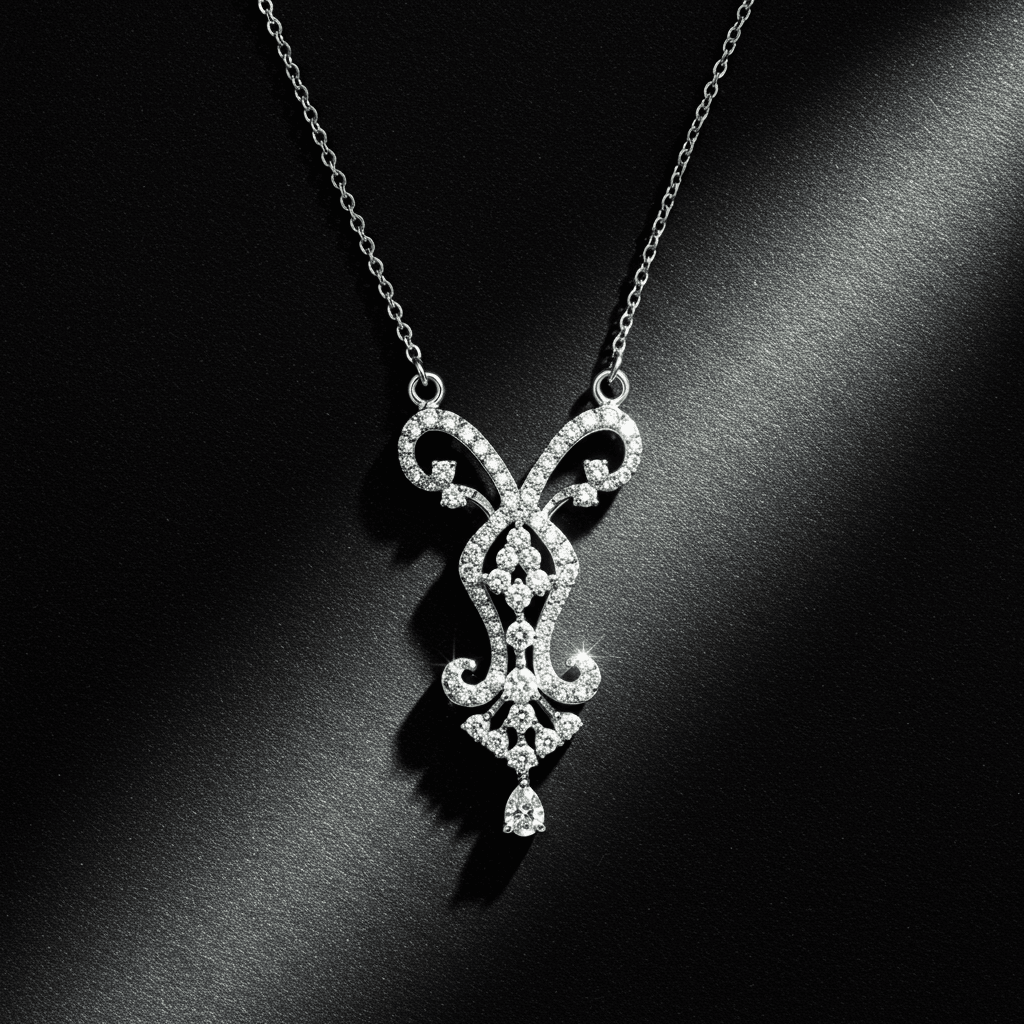
AI jewelry design systems can identify and reproduce styles from every major historical period by analyzing visual patterns, proportions, ornamentation density, and structural features. These systems learn the distinctive hallmarks of each era through training on thousands of categorized images, enabling designers to generate period-accurate pieces or creative cross-era blends in seconds rather than hours.
The journey of jewelry design spans thousands of years, with each era leaving behind a distinctive visual language. From the intricate mourning brooches of the Victorian period to the geometric precision of Art Deco cocktail rings, every style carries a set of identifiable characteristics. Teaching machines to recognize and recreate these styles represents one of the most fascinating applications of artificial intelligence in the creative industries.
How Machine Learning Decodes Visual Style
At its core, AI style recognition relies on deep learning models, specifically convolutional neural networks (CNNs), that process jewelry images through multiple layers of analysis. The first layers detect basic elements like edges, curves, and textures. Deeper layers combine these into higher-level features such as filigree density, gemstone arrangement patterns, and overall silhouette shapes.
Training these models requires large datasets of labeled jewelry images. Each image is tagged with its style period, material composition, and design elements. Over thousands of training cycles, the model learns to associate specific visual patterns with specific eras. A scalloped edge with nature motifs signals Art Nouveau. Symmetrical geometric faceting points to Art Deco. Ornate scrollwork with dark stones suggests Victorian.
What makes this process remarkable is that AI does not simply memorize examples. It extracts abstract rules about what defines each style, allowing it to recognize period characteristics in pieces it has never seen before and even generate entirely new designs that authentically represent a chosen era.
Victorian Era Jewelry and AI Interpretation
The Victorian period (1837 to 1901) produced some of the most emotionally rich jewelry in Western history. AI systems identify Victorian pieces through several key markers, including heavy use of yellow gold, nature-inspired motifs like flowers and serpents, memorial and sentimental symbolism, and layered ornamental complexity.
AI further distinguishes between the three sub-periods of Victorian jewelry. Early Victorian (Romantic) pieces feature lighter designs with pastoral themes. Mid-Victorian (Grand) jewelry tends toward darker stones and mourning symbolism. Late Victorian (Aesthetic) work embraces lighter, more whimsical elements with star and crescent motifs.
| Victorian Sub-Period | Years | Key AI-Detected Features |
|---|---|---|
| Early Romantic | 1837 to 1860 | Nature motifs, light gold, enamel work |
| Grand Period | 1860 to 1885 | Dark stones, heavy gold, mourning symbols |
| Aesthetic Period | 1885 to 1901 | Stars, crescents, lighter designs |
When generating Victorian-style jewelry, AI applies these learned rules to create pieces that feel authentically period-appropriate while incorporating modern wearability considerations. The result is jewelry that honors heritage without sacrificing comfort.
Art Nouveau and Edwardian Recognition
Art Nouveau (1890 to 1910) presents a fascinating challenge for AI because of its organic, flowing forms. Unlike the geometric predictability of later movements, Art Nouveau jewelry features sinuous curves inspired by plants, insects, and the female form. AI identifies this style through asymmetrical compositions, whiplash curves, enamel work, and the use of non-traditional materials like horn and glass.
Edwardian jewelry (1901 to 1915) sits in elegant contrast. AI recognizes Edwardian pieces through their delicate platinum or white gold settings, intricate milgrain borders, garland and bow motifs, and the predominance of diamonds and pearls. The lightness and airiness of Edwardian design create a distinct visual signature that AI models learn to differentiate from the heavier Victorian aesthetic.
The ability to distinguish between these overlapping periods demonstrates the sophistication of modern AI systems. While a novice might confuse late Victorian with early Art Nouveau, well-trained models catch the subtle differences in line quality, material choice, and compositional balance that separate these closely related styles.
Art Deco and the Age of Geometry
Art Deco (1920 to 1940) is perhaps the easiest period for AI to identify, thanks to its bold geometric vocabulary. Strong lines, symmetrical compositions, contrasting colors, and architectural influences create unmistakable visual signatures. AI systems detect stepped patterns, fan shapes, zigzag motifs, and the distinctive color combinations of onyx with diamonds or coral with emeralds.
The precision of Art Deco aligns naturally with computational design. AI models trained on this period produce remarkably accurate reproductions because geometric patterns translate cleanly into mathematical descriptions. This makes Art Deco one of the most popular periods for AI-assisted design, as the style's inherent structure maps well to algorithmic generation.
If you are interested in exploring how AI handles the distinctive motifs of this period, our guide on vintage Art Deco jewelry design with AI covers the topic in depth, including prompt strategies for achieving authentic period details.
Mid-Century Modern Through Contemporary Styles
Post-war jewelry (1940s to 1960s) introduced bolder, more sculptural forms. AI identifies Retro period pieces through their oversized proportions, rose gold prevalence, and Hollywood-inspired glamour. Mid-Century Modern jewelry, influenced by Scandinavian design, features clean lines, organic shapes, and an emphasis on craftsmanship over ornamentation.
Contemporary jewelry (1970s to present) presents the greatest classification challenge because of its diversity. AI handles this by recognizing sub-categories within the modern period. Minimalist pieces are identified by their stripped-down forms and negative space. Statement jewelry is flagged through bold scale and unconventional materials. The ongoing trend toward jewelry design trends in 2026 shows how AI keeps pace with evolving contemporary aesthetics.
| Era | Period | AI Detection Confidence |
|---|---|---|
| Victorian | 1837 to 1901 | 92 percent |
| Art Nouveau | 1890 to 1910 | 88 percent |
| Edwardian | 1901 to 1915 | 90 percent |
| Art Deco | 1920 to 1940 | 95 percent |
| Retro | 1940 to 1960 | 85 percent |
| Mid-Century Modern | 1950 to 1970 | 83 percent |
| Contemporary | 1970 to present | 78 percent |
Style Transfer and Cross-Era Blending
One of the most powerful applications of AI style understanding is style transfer, where elements from one period are applied to the structure of another. Imagine taking the geometric framework of an Art Deco ring and softening it with Victorian floral motifs, or applying Edwardian delicacy to a bold contemporary silhouette.
AI accomplishes this through feature interpolation. The model maintains separate representations of each style's key features and can blend them at adjustable ratios. A designer might request "70 percent Art Deco, 30 percent Art Nouveau," and the AI will generate a piece that emphasizes geometric structure while incorporating subtle organic curves.
This capability opens creative territory that would be extremely time-consuming to explore manually. Traditional designers might spend hours sketching cross-era concepts. AI produces them in seconds, allowing rapid exploration of combinations that might never have been attempted otherwise.
Training Data and Cultural Sensitivity
Building AI models that accurately represent jewelry across cultures and periods requires thoughtful data curation. The best models draw from museum collections, auction house archives, academic publications, and contemporary designer portfolios. Ensuring balanced representation across Western and non-Western traditions prevents the model from defaulting to European-centric interpretations.
Cultural sensitivity is particularly important when working with traditional designs from specific communities. AI systems must be trained to recognize the difference between general aesthetic inspiration and culturally significant symbols that carry deep meaning. For those interested in how AI handles culturally rich traditions, our article on AI and traditional Indian jewelry explores this nuanced territory.
How Tashvi AI Recognizes and Generates Period Styles
Tashvi AI has been trained to recognize and generate designs across all major jewelry periods, from Georgian through contemporary. When you describe a style preference using natural language, Tashvi's AI interprets period-specific terminology and generates designs that authentically reflect your chosen era. You might type "Edwardian-inspired engagement ring with milgrain detailing and a cushion-cut center stone" and receive designs that capture the delicate, platinum-era elegance of the early 1900s.
What sets Tashvi apart is its ability to blend eras seamlessly. You can request combinations like "modern minimalist band with Art Deco accent patterns" and the system produces cohesive designs that honor both influences. This makes Tashvi an invaluable tool for designers who want to offer clients custom engagement rings that draw on historical inspiration while feeling fresh and contemporary. Try designing on Tashvi AI free to explore how different style periods translate into your own unique pieces.
The Future of AI Style Understanding
As training datasets grow and model architectures improve, AI style recognition will become even more granular. Future systems may distinguish between regional variations within periods, such as French versus English Art Nouveau, or identify the specific workshop or designer behind a piece based on subtle stylistic signatures.
The integration of 3D scanning and augmented reality will further enhance how AI works with historical styles. Imagine pointing your phone at an antique brooch and receiving an instant style analysis along with AI-generated suggestions for complementary modern pieces. This convergence of recognition and generation will make historical jewelry knowledge accessible to everyone, not just trained experts.
For designers, the message is clear. Understanding historical styles remains essential, but AI transforms that knowledge from a limiting factor into a launching pad. With the right tools, every era of jewelry history becomes a resource for creating something entirely new.
Frequently Asked Questions
Quick answers to the questions readers ask most about this guide.
How does AI recognize different jewelry style periods?
AI uses convolutional neural networks trained on thousands of labeled jewelry images from each era. It learns distinctive features like Victorian scrollwork, Art Deco geometric patterns, and mid-century organic forms by analyzing shape, symmetry, texture, and ornamentation density.
Can AI blend multiple jewelry style periods into one design?
Yes, AI excels at style blending. You can request a piece that combines Victorian filigree with modern minimalism, and the AI will intelligently merge elements from both eras while maintaining structural integrity and aesthetic cohesion.
Is AI accurate at identifying jewelry from specific historical periods?
Modern AI models achieve over 90 percent accuracy in classifying jewelry into major style periods. They analyze hundreds of visual features simultaneously, often catching subtle period markers that even experienced appraisers might overlook in initial assessments.
What jewelry style periods can AI currently work with?
AI can recognize and generate designs spanning Georgian, Victorian, Edwardian, Art Nouveau, Art Deco, Retro, Mid-Century Modern, and contemporary periods. Some platforms also handle regional styles like Mughal, Japanese, and Celtic designs.
How does AI jewelry style recognition benefit jewelers?
Jewelers can use AI to quickly classify estate pieces, generate period-accurate reproductions, create authenticated style blends for customers, and discover trending historical influences. It speeds up design workflows and helps educate customers about their preferred aesthetic.