Jewelry Stacking and Layering Guide: Rings, Bracelets and Necklaces That Work Together
Jewelry stacking and layering transforms individual pieces into a curated, personal statement. Learn the rules for stacking rings, layering necklaces at the right lengths, and combining bracelets with mixed metals for effortlessly styled looks.
Jewelry stacking and layering is the practice of wearing multiple rings, necklaces, or bracelets together in combinations that create a cohesive, personalized look greater than the sum of its individual pieces. Done well, stacking transforms a few simple accessories into a signature style that feels effortlessly curated.
The art of layering jewelry has moved from a niche styling trick to a mainstream fashion essential. In 2026, the layered look dominates social media feeds, red carpets, and everyday street style alike. But stacking is not about piling on as much jewelry as possible. It follows principles of proportion, contrast, and visual balance that are easy to learn and endlessly rewarding to practice. This guide breaks down the rules and techniques for stacking every jewelry category.
The Art of Stacking and Layering
Before diving into specific categories, understanding a few universal principles will help you build better combinations across rings, necklaces, and bracelets.
The Contrast Principle
Effective stacking relies on contrast between pieces. If every piece looks the same, the stack appears monotonous. If every piece is wildly different, it looks chaotic. The sweet spot is a mix of similarity (shared metal tone or style family) with variation (different widths, textures, or embellishments).
Think of a stacked look like a musical composition. You need rhythm (repeating elements), melody (a standout piece), and harmony (everything working in the same key). A stack of five identical thin gold bands lacks melody. Five completely different statement pieces lack harmony. Combining three thin bands with one textured band and one diamond band creates all three.
The Odd Number Rule
Odd numbers of pieces tend to look more dynamic and intentional than even numbers. Three rings, five stacked bracelets, or three layered necklaces create visual arrangements that feel naturally balanced. This is not a rigid rule, but a reliable starting point when you are unsure how many pieces to include.
The Anchor Piece Strategy
Start every stack with one anchor piece, the most substantial or eye-catching item. Build around it with supporting pieces that complement without competing. Your anchor might be a wide diamond band in a ring stack, a pendant necklace in a layered neck combination, or a chunky cuff in a bracelet arrangement.
Ring Stacking Rules
Ring stacking offers the most precise form of jewelry layering because the canvas, your fingers, is compact and highly visible.
Mixing Widths
Width variation is the single most important factor in a beautiful ring stack. Combining rings of different widths creates visual rhythm and prevents the stack from looking like a single wide band.
| Ring Width | Role in Stack | Examples |
|---|---|---|
| 1 to 1.5mm | Delicate spacers | Plain wire bands, micro pave |
| 2 to 3mm | Foundation pieces | Classic wedding bands, thin stone bands |
| 4 to 6mm | Statement anchors | Wide diamond bands, signet rings |
| 7mm+ | Solo statement | Cocktail rings, wide domed bands |
A proven combination is one 4-6mm anchor ring flanked by two 1-2mm accent bands. This creates a pyramid of visual weight that feels balanced and intentional.
Mixing Metals
Mixed metals in a ring stack create dynamic contrast. The key is distribution. If you are mixing yellow gold and white gold, do not isolate one white gold ring between four yellow gold bands. Instead, alternate or cluster metals so both tones have visual weight.
Popular mixed metal combinations include yellow gold with rose gold for a warm, tonal palette, white gold with yellow gold for high contrast, and a three-metal mix of yellow, white, and rose for maximum visual interest. Adding a platinum or sterling silver piece creates a cooler temperature that can ground an otherwise warm stack.
Mixing Stones
Not every ring in a stack needs gemstones, and too many stone-set rings create visual noise. A balanced approach pairs one or two stone-set rings with plain metal bands that let the stones breathe.
Consider stone color coordination. A sapphire ring stacked with plain gold bands and one small diamond band creates an elegant, focused combination. Mixing too many different colored stones, unless intentionally creating a rainbow effect, can look fragmented.
Distributing Across Fingers
Spread your stack across multiple fingers rather than loading everything onto one. A common approach is a small stack of two to three rings on the ring finger, a single statement ring on the index finger, and optionally a thin band on the middle finger. Leave at least one finger bare to create visual rest.
Consider your hand as a whole composition. Stand back and look at the overall balance. If all your rings are on one hand, the other hand may feel empty. Distributing some pieces to each hand creates symmetry, or you can embrace asymmetry by intentionally loading one hand more heavily for a fashion-forward look.
Necklace Layering
Necklace layering creates depth and visual interest in the neckline area, drawing the eye and adding dimension to any outfit.
Length Combinations
The foundation of successful necklace layering is using pieces at different lengths so each one is fully visible. Spacing necklaces 2 to 3 inches apart prevents tangling and ensures every piece contributes to the overall composition.
| Length Name | Inches | Sits At | Best Paired With |
|---|---|---|---|
| Collar | 14 to 15 | Base of throat | V-neck or open collar tops |
| Choker | 16 | Just below throat | Everything, the most versatile length |
| Princess | 18 to 20 | Collarbone area | Crew necks and mid-necklines |
| Matinee | 22 to 24 | Above the bust | Lower necklines and layering |
| Opera | 28 to 36 | Mid-chest | Dramatic layering or solo wear |
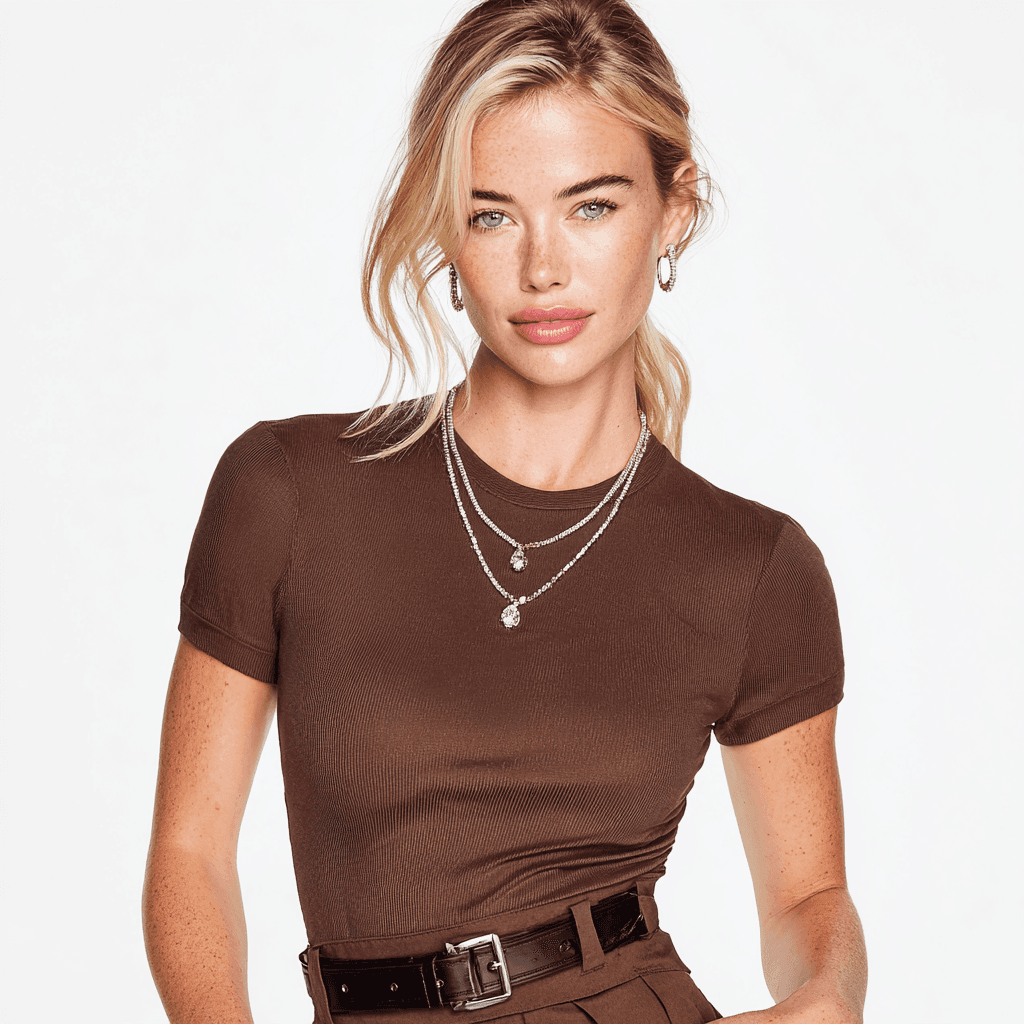
A three-necklace layer at 16, 20, and 24 inches creates a cascading effect that works with most necklines. For a more minimal look, two necklaces at 16 and 20 inches provide elegant simplicity.
Pendant Mixing
When layering necklaces with pendants, vary the pendant sizes and shapes. A small round charm at the choker length, a medium-sized pendant at the princess length, and a longer chain without a pendant at the matinee length creates a composition with clear hierarchy.
Avoid layering two pendants of similar size and shape at adjacent lengths, as they compete visually. If both necklaces have pendants, ensure they differ in at least two characteristics, whether that is size, shape, color, or texture.
Chain Weight Balance
Chain thickness matters as much as length. A general principle is that shorter necklaces can be thinner and longer necklaces can be thicker, following the natural visual logic that pieces closer to the face are more delicate. However, reversing this, with a chunky choker and a delicate long chain, creates intentional contrast that reads as confident and stylish.
Mixing chain types adds textural variety. A cable chain, a box chain, and a rope chain layered together create far more visual interest than three identical chain types at different lengths. Different link patterns catch light differently and move independently, creating a dynamic, living composition.
Avoiding Tangles
Tangling is the practical enemy of necklace layering. Several strategies help.
Choose chains with different weights, since heavy and light chains tend to separate naturally. Use a layering clasp that connects all necklaces at a single point behind the neck, keeping them evenly distributed. Opt for different chain types that slide past each other rather than interlocking. Store layered necklaces hanging rather than coiled together.
Bracelet Stacking
Bracelet stacking is the most casual and experimental form of jewelry layering, with fewer rigid rules than rings or necklaces.
Cuffs with Chains
Combining a solid cuff or bangle with one or two delicate chain bracelets creates a satisfying contrast between structure and fluidity. The cuff serves as the anchor piece while the chains add movement and lightness. Position the cuff in the center of the wrist with chains above and below it for balanced distribution.
Watch Pairing
Stacking bracelets alongside a watch is an art in itself. The watch serves as a built-in anchor piece. Add bracelets to the same wrist, choosing pieces that complement the watch's metal tone and thickness. A thin bangle and a beaded stretch bracelet alongside a watch create a three-piece stack with excellent variety.
For a cohesive look, keep the stacked bracelets slightly thinner than the watch band. Oversized bracelets next to a delicate watch, or vice versa, create a proportion imbalance.
Texture Mixing
The most interesting bracelet stacks combine different materials and textures. A polished metal bangle, a woven leather wrap, and a beaded stretch bracelet create a stack with three distinct textures that play off each other beautifully. The variety suggests a collection gathered over time rather than purchased as a set, which often reads as more authentic and personal.
Wrist Distribution
Unlike ring stacking where you have ten fingers, bracelet stacking concentrates on two wrists. Heavy stacking on one wrist with the other bare creates asymmetric drama. Lighter stacking on both wrists creates balance. Consider your outfit and the occasion when deciding on distribution.
For more bracelet stacking inspiration and specific combination ideas, explore our collection of 50 bracelet concepts covering every style from beaded to AI-generated designs.
Mixing Metals Guide
The old rule about never mixing metals is thoroughly retired. In 2026, mixed metal jewelry is not just acceptable but actively preferred by stylists and fashion-forward wearers.
Making Mixed Metals Look Intentional
The difference between a mixed metal look that reads as intentional versus one that seems accidental comes down to repetition. If you wear one silver piece among five gold pieces, the silver looks like an oversight. If you wear two silver pieces among three gold pieces, it becomes a deliberate choice.
Metal Pairing Guidelines
| Combination | Vibe | Best Season |
|---|---|---|
| Yellow gold + rose gold | Warm, romantic | Autumn, summer |
| Yellow gold + silver or white gold | Classic contrast | All year |
| Rose gold + silver | Soft, contemporary | Spring, winter |
| Three-metal mix | Bold, eclectic | All year |
Bridging Pieces
Pieces that incorporate multiple metals naturally bridge different metal tones in your stack. A ring with a yellow gold band and white gold setting, or a necklace with mixed metal links, serves as a visual connector that makes the transition between metals feel seamless.
Capsule Jewelry Wardrobe for Layering
Building a capsule jewelry wardrobe, a small collection of versatile pieces designed to mix and match, is the most efficient approach to achieving layered looks without accumulating excess.
The Essential 12-Piece Collection
Rings (4 pieces). One wide textured or stone-set band as an anchor. One medium-width plain band. Two thin stackable bands, ideally one in a contrasting metal.
Necklaces (3 pieces). One 16-inch chain with a small pendant or charm. One 18-20 inch plain chain or pendant necklace. One 24-inch chain, either plain or with a larger pendant.
Bracelets (3 pieces). One structured cuff or bangle. One delicate chain bracelet. One textured or beaded piece.
Earrings (2 pieces). One pair of everyday studs or small hoops. One pair of slightly more dramatic hoops or drops for layered looks.
This twelve-piece collection creates hundreds of possible combinations. Start here and add pieces strategically as you identify gaps in your layering options.
Common Stacking Mistakes
Even experienced jewelry lovers make these errors. Avoiding them immediately elevates your stacking game.
Too much uniformity. A stack of five identical rings looks like you bought a bulk pack. Vary at least one characteristic, whether width, texture, stone presence, or metal, between adjacent pieces.
Ignoring comfort. Wide ring stacks can prevent finger bending. Heavy necklace layers can cause neck fatigue. Multiple bangles can be noisy in professional settings. Always consider the practical experience of wearing your stack throughout the day.
Competing focal points. If every piece in your stack is a statement piece, nothing stands out. Designate one piece as the star and let the others play supporting roles.
Forgetting the outfit. Your jewelry layers should complement your clothing, not compete with it. A dramatic necklace stack pairs best with a simple neckline. Elaborate ring stacking shines most when your hands are visible, such as with shorter sleeves or hand-forward activities.
Scale mismatch. Petite frames generally look best with thinner, more delicate stacking. Larger frames can support chunkier, bolder combinations. This is not a rigid rule, but proportion between your body and your jewelry affects the overall impression.
Designing Stackable Sets with Tashvi AI
One of the most powerful applications of AI jewelry design is creating coordinated stackable sets. Rather than searching for individual pieces that happen to work together, you can design an entire stack as a unified collection from the start.
With Tashvi AI, describe the overall stack concept you envision, including the number of pieces, the mix of metals and textures, and the general aesthetic. The platform generates visualizations of the complete set, showing how pieces interact when worn together. You can adjust individual elements, swap a plain band for a diamond band or change a necklace length, while seeing the impact on the overall composition in real time.
This approach is especially valuable for designing matching sets as gifts, creating a bridal jewelry collection where multiple pieces need to coordinate, or developing a product line of stackable pieces for a jewelry business.
Try designing on Tashvi AI free
Building Your Signature Stack
The most compelling stacked and layered jewelry looks tell a story about the wearer. They include pieces collected over time, gifts from loved ones, and intentional additions chosen to fill gaps in the composition. The beauty of stacking is that your collection evolves with you.
Start with the fundamentals covered in this guide. Vary widths, space lengths properly, mix textures with intention, and anchor every stack with one standout piece. As you become more confident, break the rules strategically. Stack rings on unconventional fingers. Layer necklaces in unexpected length combinations. Pair a fine diamond bracelet with a woven friendship band. The rules are a foundation, not a ceiling, and the most memorable stacking looks are the ones that reflect a real person's taste rather than a textbook formula.
Frequently Asked Questions
Quick answers to the questions readers ask most about this guide.
How many rings should you stack on one finger?
A balanced stack typically includes two to four rings on a single finger. More than four can look crowded and feel uncomfortable. The key is varying the widths, with one wider statement ring paired with thinner accent bands. Distribute additional rings across multiple fingers rather than overloading one.
What necklace lengths work best for layering?
The most effective layering uses necklaces spaced 2 to 3 inches apart in length. A classic three-layer combination is 16 inches (choker), 18 to 20 inches (princess), and 24 to 26 inches (matinee). This spacing prevents tangling and ensures each piece is visible and distinct.
Can you mix gold and silver jewelry when stacking?
Absolutely. Mixed metal jewelry is one of the strongest trends in 2026. The key to making it look intentional rather than accidental is to include at least two pieces in each metal so neither appears like an afterthought. A two-gold-one-silver ratio or vice versa creates balanced visual contrast.
How do I keep layered necklaces from tangling?
Use necklaces with different chain weights, as heavier chains move differently than lighter ones and resist tangling. Layering clasps and necklace detanglers connect multiple chains at a single clasp point. You can also choose necklaces with different chain types, pairing a cable chain with a snake chain, since different link styles slide past each other more easily.
What is a capsule jewelry wardrobe for layering?
A capsule jewelry wardrobe is a curated collection of 10 to 15 versatile pieces designed to mix and match for maximum outfit combinations. For layering, this typically includes 3 to 4 rings of varying widths, 3 necklaces at different lengths, 2 to 3 bracelets in complementary styles, and a pair of everyday earrings that anchor the look.