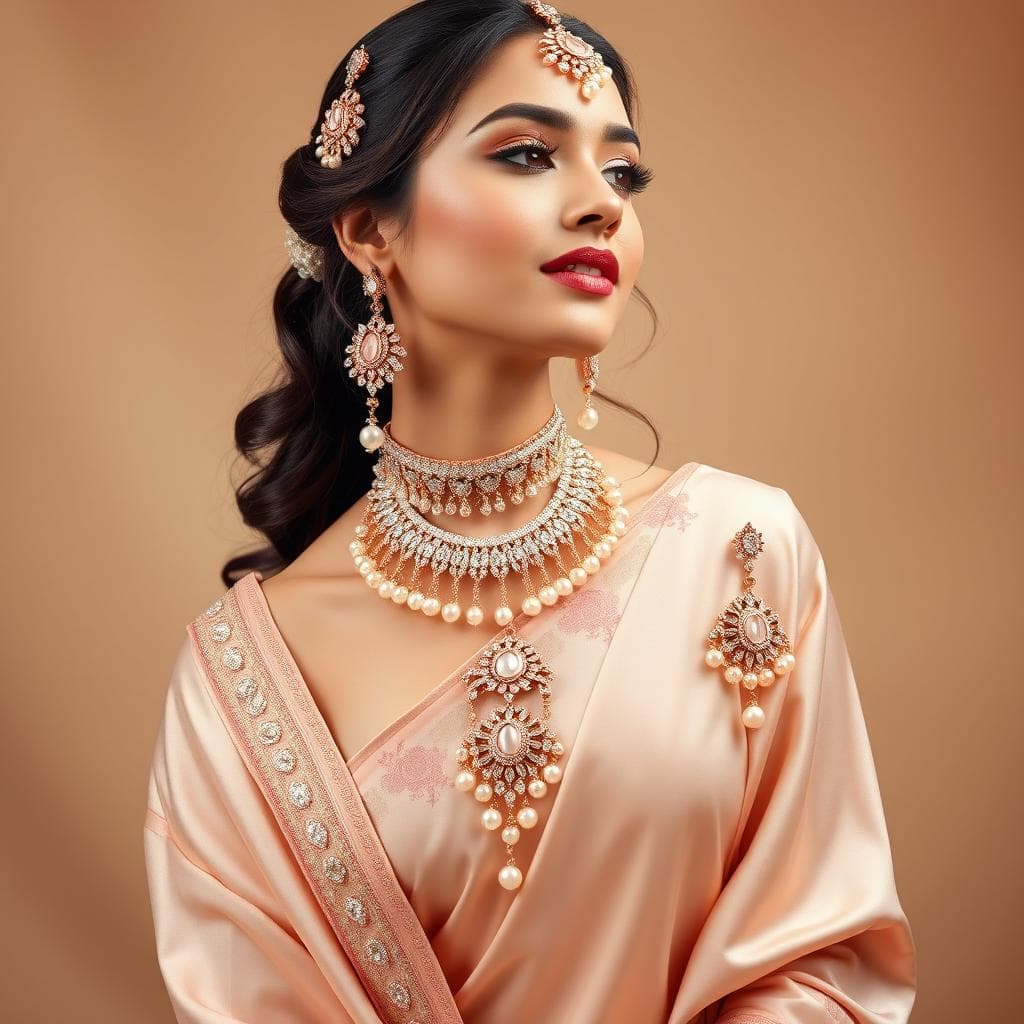
How to Write Product Descriptions That Sell Jewelry Online
Write jewelry product descriptions that convert browsers into buyers using sensory language, benefit-driven copy, and SEO-optimized structure.
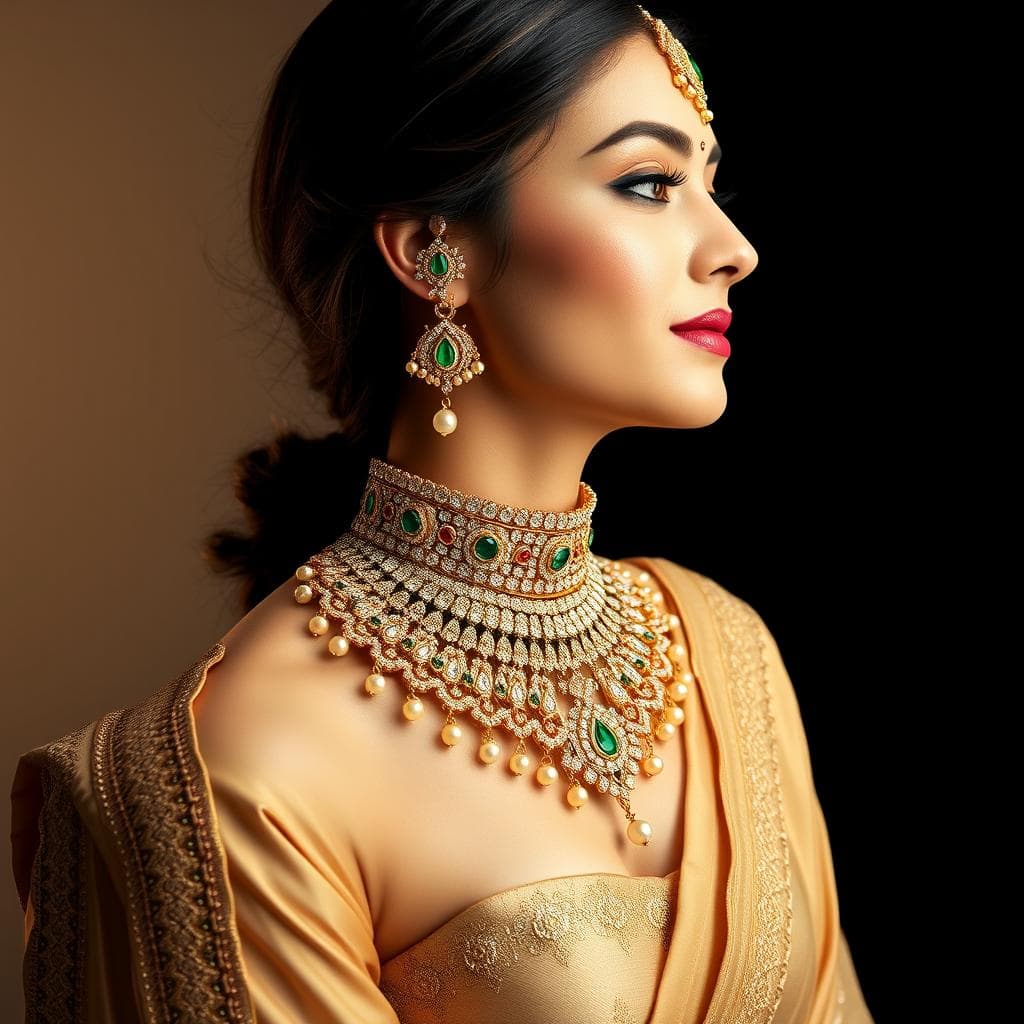
Jewelry product descriptions that sell do far more than list metal type and gemstone weight. They paint a vivid picture, stir emotion, and guide the buyer toward clicking "Add to Cart" by combining sensory language with precise technical details.
Online jewelry shoppers cannot hold your pieces, try them on, or feel the weight of the metal against their skin. Your product description must bridge that sensory gap. Every word on your product page carries the responsibility of replacing the in-store experience with something equally compelling. The brands that master this skill consistently outperform competitors who rely on generic, copy-paste descriptions across their entire catalog. The jewelry and luxury ecommerce category averages a conversion rate of just 1.0% to 1.7%, according to Dynamic Yield benchmark data, making it the lowest-converting product category online. Well-crafted descriptions can lift that number by up to 30%, according to Shopify's product description research, which means even small copy improvements translate directly into revenue.
Whether you sell on Etsy, Shopify, your own website, or a combination of platforms, this guide will walk you through the principles, structures, and techniques that turn product pages into revenue generators.
Why Most Jewelry Descriptions Fail
The majority of online jewelry listings fall into one of two traps. They either read like dry specification sheets or overflow with vague adjectives that could describe any piece on the planet. Neither approach gives the buyer a reason to choose your ring, necklace, or bracelet over the hundreds of similar options available with a single search.
Generic descriptions like "beautiful handmade gold necklace" tell the shopper nothing about what makes your piece special. They do not evoke a feeling, they do not paint a picture, and they certainly do not justify a premium price. When every competitor uses the same tired phrases, your listing blends into the noise.
The opposite extreme is equally problematic. Descriptions that list nothing but "14K yellow gold, 18-inch chain, 2.5g weight" satisfy the detail-oriented buyer but completely miss the emotional triggers that drive most jewelry purchases. People buy jewelry to celebrate milestones, express identity, and feel something when they look in the mirror. Your description needs to honor both the practical and the emotional sides of that decision.
The Anatomy of a High-Converting Jewelry Description
Every effective jewelry product description follows a structure that captures attention, builds desire, and removes objections. Think of it as a layered system where each section serves a distinct purpose in the buyer's decision-making process.
The Opening Hook
Your first sentence must stop the scroll. Lead with the emotional benefit or the most striking visual detail of the piece. Instead of "This is a 14K gold ring with a sapphire," try "A deep blue sapphire catches the light with every movement, set in a warm 14K gold band that feels like it was made for your hand." The opening hook is your one chance to earn the reader's attention for the rest of the description.
The Story or Inspiration
Every piece has a story, whether it is the inspiration behind the design, the tradition it honors, or the feeling it was created to evoke. This section is where your brand story comes alive at the product level. A sentence or two about why this piece exists gives the buyer an emotional anchor that generic descriptions completely lack.
Technical Specifications
After you have captured the imagination, deliver the facts. Metal type and purity, gemstone details, dimensions, chain length, clasp type, and total weight all belong here. Organized as a clean list or formatted into scannable bullet points, these details satisfy the analytical buyer and build credibility.
For any piece containing diamonds or gemstones, use the 4Cs framework that buyers already understand. Carat refers to the stone's weight, where one metric carat equals 200 milligrams. Cut determines how well the stone reflects light and directly controls its sparkle. Clarity grades the visibility of internal inclusions, with "eye-clean" meaning no flaws are visible without magnification from about 10 inches away. Color measures the absence of hue in diamonds, while colored gemstones are graded by their distinctive hue, tone, and saturation. Spelling out these four details in every gemstone listing eliminates guesswork and positions your brand as knowledgeable and transparent.
Do not forget material safety details that influence buying decisions. Specify whether the piece is nickel-free, hypoallergenic, or safe for sensitive skin. Mention the metal purity clearly, distinguishing between solid 14K gold, gold-filled, gold vermeil, and gold-plated, since each has different longevity and price expectations. Buyers who have experienced allergic reactions or premature tarnishing on past purchases will actively search for these reassurances.
The Occasion or Lifestyle Connection
Help the buyer picture when and where they will wear this piece. Is it an everyday staple that transitions from office to evening? A milestone gift for an anniversary or birthday? A statement piece for weddings and galas? Connecting the jewelry to a moment in the buyer's life makes the purchase feel necessary rather than indulgent.
Care Instructions and Assurance
A brief note on how to care for the piece signals quality and longevity. It also subtly reassures the buyer that this is an investment worth protecting, not a disposable accessory. Mention any warranty, return policy, or certification to remove the last barrier between browsing and buying.
Sensory Language That Sells
Jewelry is a sensory experience. The shimmer of light across a polished surface, the cool weight of silver on a collarbone, the delicate click of a clasp closing. Your description must activate the reader's senses because their screen cannot.
Visual Language
Go beyond "shiny" and "sparkly." Describe how light interacts with the piece. Does the gemstone glow with an inner fire? Does the brushed metal finish absorb light into a soft, matte warmth? Does the polished surface create mirror-like reflections? Specific visual language helps the buyer see the piece in their mind before they ever see it on their hand.
Tactile Language
Weight, texture, and temperature matter. Phrases like "substantial without feeling heavy," "silky-smooth finish," and "cool metal warming against the skin" help the buyer imagine the physical sensation of wearing your jewelry. This is especially powerful for rings and bracelets that are constantly felt throughout the day.
Emotional Language
Jewelry purchases are almost always emotional at their core. Words like "timeless," "heirloom," "celebrate," "cherish," and "unforgettable" tap into the deeper reasons people buy jewelry. Pair emotional words with specific scenarios. "A ring she will reach for every morning" is far more powerful than "a beautiful ring."
| Generic Phrase | Sensory Alternative |
|---|---|
| Beautiful gold necklace | Warm 18K gold chain that rests like liquid light against the skin |
| Sparkly diamond ring | Brilliant-cut diamond that fractures sunlight into prismatic flashes |
| Nice silver bracelet | Hand-polished sterling silver cuff with a satisfying weight on the wrist |
| Pretty gemstone earrings | Vivid emerald drops that sway gently, catching every flicker of candlelight |
| Delicate pendant | Featherlight pendant that floats just below the collarbone |
Power Words by Jewelry Style
Different aesthetics call for different vocabulary. Reusing the same descriptors across your entire catalog makes every piece sound identical. The table below gives you a starting vocabulary organized by style, so you can match your language to the design intent of each piece.
| Jewelry Style | Power Words to Use |
|---|---|
| Vintage and antique | Heirloom-quality, timeless, art deco, estate-inspired, old-world, lustrous, patina, filigree, hand-engraved |
| Minimalist and modern | Clean-lined, understated, sculptural, architectural, sleek, refined, effortless, pared-back |
| Bohemian and artisan | Free-spirited, handcrafted, earthy, organic, textured, one-of-a-kind, rustic, nature-inspired |
| Luxury and statement | Opulent, show-stopping, lavish, commanding, resplendent, couture-inspired, bold, dramatic |
| Bridal and romantic | Ethereal, luminous, forever, promise, devotion, radiant, classic, graceful, enchanting |
Avoid cycling through "beautiful," "pretty," "lovely," and "gorgeous" in every listing. Research from Jewelry Making Journal shows that these four words appear in over 80% of independent jewelry listings, which means they do nothing to differentiate your piece from the competition.
Writing for SEO Without Sacrificing Readability
Search engine optimization is not optional for online jewelry sales. When a potential customer types "14K gold minimalist engagement ring" into Google or Etsy search, your product needs to appear. But keyword-stuffed descriptions that read like a robot wrote them will tank your conversion rate even if they rank well.
Natural Keyword Placement
The most important keyword placement is your product title. After that, work your primary keywords into the first paragraph of the description, one or two subheadings if your platform supports them, and the body copy where they fit naturally. If you have to force a keyword phrase into a sentence, rewrite the sentence until it flows.
Long-Tail Keywords for Jewelry
Long-tail keywords are specific phrases that match how real people search. Instead of targeting "gold ring" alone, incorporate phrases like "14K solid gold stackable ring for everyday wear" or "handmade rose gold engagement ring with oval moissanite." These longer phrases face less competition and attract buyers who are closer to making a purchase.
Platform-Specific SEO Considerations
Etsy, Shopify, Amazon Handmade, and Google Shopping each have different algorithms and different best practices. Etsy weighs your title tags, categories, and attributes heavily. Shopify stores benefit from meta descriptions, alt text on product images, and structured data markup. Regardless of platform, the fundamental principle stays the same. Write for people first, then optimize for search engines.
| SEO Element | Etsy | Shopify | Amazon Handmade |
|---|---|---|---|
| Title length | Up to 140 characters, front-load keywords | 60 to 70 characters for search display | Up to 200 characters with brand name |
| Description keywords | Repeat key phrases naturally 2 to 3 times | Use in first paragraph and subheadings | Include in bullet points and description |
| Tags and attributes | All 13 tag slots filled with varied phrases | Meta description under 160 characters | Backend search terms fully used |
| Image optimization | All 10 image slots with keyword-rich alt text | Alt text on every product image | At least 5 images with infographic style |
Structuring Descriptions for Different Platforms
Each selling platform has its own format, character limits, and buyer expectations. Writing one master description and copying it everywhere is a missed opportunity. Adapt your core message to fit the strengths of each channel.
Etsy Listings
Etsy shoppers expect personality and story. They are often looking for handmade, unique, or customizable pieces and want to connect with the maker behind the product. Your Etsy descriptions should lead with the emotional hook and story, follow with detailed specifications, and close with customization options, shipping details, and care instructions. The Etsy Seller Handbook recommends using all available character space because longer, keyword-rich descriptions tend to rank better in Etsy search results.
Etsy gives you 13 tag slots per listing, with each tag allowing up to 20 characters. That is 260 total characters of keyword real estate, and leaving any slot empty directly reduces your visibility. A proven split is 3 to 4 broad tags for high-traffic visibility, such as "gold ring" or "gemstone earrings," and 8 to 9 specific long-tail tags for higher-intent buyers, such as "14K stacking ring" or "sapphire drop earrings." Avoid repeating words that already appear in your title, since Etsy's algorithm already associates those terms with your listing. Your title itself can be up to 140 characters, and data from Etsy SEO studies shows that titles between 120 and 140 characters consistently outperform shorter ones. Front-load the first 40 to 60 characters with your most important keywords, because that is all mobile shoppers see before the title truncates.
Shopify Product Pages
Shopify gives you full control over layout, so take advantage of it. Use a short, punchy paragraph above the fold that captures attention immediately, followed by expandable sections or tabs for specifications, sizing, and care. Bullet points work exceptionally well on Shopify because they are scannable on mobile devices, where the majority of jewelry browsing happens.
Social Commerce Listings
Instagram Shop, Facebook Marketplace, and Pinterest product listings have strict character limits. Distill your description down to the most compelling emotional hook and the most critical specifications. Every word must earn its place. Link back to your full product page for buyers who want more detail. Your social media strategy and your product copy should work together as a seamless system.
Building a Product Description Template
Creating a repeatable template saves time without sacrificing quality. Once you have a proven structure, you can write descriptions faster while maintaining consistency across your entire catalog.
Template for Rings
Start with the emotional hook tied to how the ring looks on the hand. Follow with metal and stone details, ring width and profile, available sizes, and care notes. Mention whether resizing is possible and how the ring looks when stacked with other bands.
Template for Necklaces and Pendants
Lead with how the piece sits on the neck and what it pairs well with. Cover chain length options, pendant dimensions, clasp type, and total weight. Describe the movement of the pendant and how light interacts with it at different angles.
Template for Earrings
Describe the earrings from the perspective of the wearer and the observer. Cover dimensions, drop length, weight per earring, backing type, and whether they are suitable for sensitive ears. Mention comfort for all-day wear if applicable.
Template for Bracelets and Bangles
Focus on fit, weight, and how the bracelet moves on the wrist. Cover inner diameter, width, clasp mechanism, and whether it is adjustable. Describe the sound it makes, if any, and how it layers with watches or other bracelets.
Here is a simplified template structure you can adapt for any jewelry category.
| Section | Purpose | Ideal Length |
|---|---|---|
| Opening hook | Capture attention with emotion or visual detail | 1 to 2 sentences |
| Story or inspiration | Connect the piece to meaning or craftsmanship | 2 to 3 sentences |
| Key features | Highlight what makes this piece special | 3 to 4 bullet points |
| Specifications | Deliver all technical details | 5 to 8 bullet points |
| Occasion connection | Help the buyer picture wearing it | 1 to 2 sentences |
| Care and assurance | Build confidence in the purchase | 2 to 3 sentences |
Fill-in-the-Blank Starter Formula
If staring at a blank screen feels paralyzing, use this fill-in-the-blank formula to draft your first version, then polish it into natural prose.
Sentence 1 (Hook). "This [metal type + jewelry category] features [most striking visual detail], creating [sensory impression] that [emotional benefit]."
Sentence 2 (Story). "Inspired by [design origin, tradition, or emotion], this piece was [crafted/designed/handmade] to [purpose or feeling it evokes]."
Sentence 3 (Specs). "Crafted from [metal purity and type], it measures [dimensions] and weighs [weight], with a [closure or setting type] for [comfort or security benefit]."
Sentence 4 (Occasion). "Wear it [everyday scenario] or save it for [special occasion], and pair it with [complementary piece or style suggestion]."
Sentence 5 (Assurance). "Arrives in [packaging detail], and [care instruction or guarantee]."
This five-sentence framework lands you right in the 150 to 200 word sweet spot that balances SEO value with readability. Expand to 250 to 300 words for platforms like Etsy where longer copy ranks better, or trim to 75 to 100 words for social commerce listings where brevity wins.
Before and After Description Examples
Theory is useful, but seeing the transformation in action makes the principles concrete. Below are two full before-and-after rewrites that apply everything covered so far.
Example One, Gold Pendant Necklace
Before. "Beautiful 14K gold pendant necklace. Features a round pendant on an 18-inch chain. Lobster clasp. Makes a great gift."
After. "A warm 14K solid gold disc catches the light as it rests just below the collarbone, creating a soft glow against the skin. Inspired by the minimalist jewelry traditions of Scandinavian goldsmiths, this pendant balances simplicity with substance. The 15mm round pendant hangs from an 18-inch cable chain secured by a sturdy lobster clasp, with a total weight of 3.2 grams. Whether you wear it alone for an understated everyday look or layer it with longer chains for evening, this necklace transitions effortlessly between settings. Arrives in a linen gift box, ready for birthdays, anniversaries, or a well-deserved treat for yourself. Wipe gently with a soft cloth after wearing to maintain its mirror finish."
The rewrite adds sensory detail, a design story, exact dimensions, occasion suggestions, and care guidance, turning 24 generic words into a 120-word description that answers every question a buyer might have.
Example Two, Sterling Silver Hoop Earrings
Before. "Sterling silver hoop earrings. Lightweight and comfortable. Hypoallergenic. Comes in small and medium sizes."
After. "These hand-polished sterling silver hoops catch a clean line of light along their curved surface, adding quiet confidence to any outfit. Each hoop weighs just 2.8 grams, so they feel featherlight even after a full day of wear. The 925 sterling silver is nickel-free and safe for sensitive ears. Available in two sizes, the 20mm small hoop sits close to the earlobe for a subtle accent, while the 30mm medium hoop offers a bolder silhouette. A secure hinged-snap closure keeps them firmly in place without pinching. Pair them with a simple chain necklace for weekend brunch or let them stand alone beneath an updo at a formal event."
Notice how the rewrite specifies exact weights, dimensions in millimeters, closure type, and lifestyle scenarios while keeping the copy under 130 words.
Leveraging Customer Reviews in Your Copy
Customer reviews are a goldmine for product description language. Real buyers describe your jewelry in ways you might never think of, and their words carry authenticity that polished marketing copy cannot replicate.
Mining Reviews for Language
Read through your customer reviews and highlight phrases that describe the look, feel, or experience of wearing your pieces. If multiple customers call a bracelet "surprisingly lightweight" or describe a necklace as "the perfect everyday piece," those phrases belong in your product description. This language has been validated by real buyers and resonates with prospective customers.
Incorporating Social Proof
Adding a brief customer quote to your product description adds instant credibility. A line like "Customers describe this ring as 'the one piece I never take off'" is more persuasive than any adjective you could choose yourself. It transforms your description from a sales pitch into a shared experience.
Updating Descriptions Based on Feedback
Product descriptions should evolve. If customers frequently ask about sizing, add more sizing detail. If reviews mention that a piece makes a great gift, add gift-related language and occasion suggestions. Every question and comment is an opportunity to improve your copy and preemptively address concerns.
Pairing Descriptions with the Right Visuals
Even the most compelling copy cannot do its job alone. Your product description and your product photography need to reinforce each other, with each element covering what the other cannot.
Matching Copy to Image Sequence
If your description opens with how light plays across a polished surface, your first product image should show exactly that. When the copy mentions how a bracelet layers with a watch, include a lifestyle photo showing that pairing. Misalignment between what buyers read and what they see creates doubt. Alignment builds trust.
Why 360-Degree Views and Video Matter
Research from Picup Media indicates that 360-degree product views can increase jewelry conversion rates by up to 30%. Video content showing a piece in motion, catching light from different angles, delivers sensory information that static images and text simply cannot replicate. If you offer 360-degree views or short product videos, reference them in your description with language like "rotate the image above to see how the facets catch light from every angle." This directs the buyer to engage with your visual content rather than scrolling past it.
Image Alt Text as Hidden SEO
Every product image should carry descriptive alt text that includes your primary keywords. Instead of "IMG_4392.jpg" or "product photo," write "14K rose gold oval moissanite engagement ring on hand." This helps your images appear in Google Image Search, which drives a meaningful share of jewelry discovery traffic. Shopify, Etsy, and most ecommerce platforms all provide fields for alt text on every uploaded image.
Common Mistakes That Kill Conversions
Even well-intentioned jewelry descriptions can sabotage sales through a handful of avoidable errors. Recognizing these patterns in your own listings is the first step toward fixing them.
Overusing Superlatives
When every piece in your shop is "stunning," "breathtaking," and "one-of-a-kind," none of them are. Superlatives lose their impact through repetition. Replace them with specific, concrete descriptions that show rather than tell. Instead of calling a ring "the most beautiful ring you will ever own," describe the way the stones are set, the finish on the band, and the silhouette it creates on the finger.
Ignoring Mobile Readability
According to Dynamic Yield ecommerce benchmarks, mobile devices account for roughly 76% of all jewelry and luxury site traffic, yet desktop still converts at a higher rate because product pages are often designed for larger screens first. Long, dense paragraphs become walls of text on a phone. Break your descriptions into short paragraphs of two to three sentences maximum, use bullet points for specifications, and front-load the most important information so mobile shoppers get the essentials without scrolling endlessly. Test your product pages on a phone screen before publishing, because a description that looks clean on desktop may require five or six swipes on mobile.
Forgetting the Call to Action
Every product description should guide the buyer toward the next step. Whether it is "Add to Cart," "Select Your Size," or "Customize This Piece," make the action clear and easy. A description that ends without direction leaves the buyer in limbo.
Neglecting to Address Objections
Online buyers worry about things that in-store customers can resolve instantly. Will this ring fit? What if the color looks different in person? Is this brand trustworthy? Address these concerns directly in your description. Mention your return policy, link to a sizing guide, describe colors accurately, and reference any certifications or guarantees.
Pricing Psychology in Product Descriptions
How you frame the price within your description influences whether the buyer perceives your piece as a worthwhile investment or an unjustified expense. Strategic language around value, craftsmanship, and longevity shifts the conversation away from cost and toward worth.
Anchoring Value Through Craftsmanship
When you describe the hours of hand-finishing, the quality of ethically sourced materials, or the generations of technique behind a design, you give the price context. The buyer is no longer comparing your ring to a mass-produced alternative. They are evaluating a piece of art against the experience it delivers.
Framing as Investment
Language that positions jewelry as an investment, a future heirloom, or a piece that appreciates in meaning over time helps justify higher price points. Phrases like "designed to be passed down" and "built to last a lifetime" reframe the purchase from spending money to preserving value.
Bundling and Upsell Language
If you offer matching pieces or complementary items, mention them in the description. "Pairs beautifully with our matching band" or "Complete the set with the coordinating studs" encourages larger orders without feeling pushy. This technique also helps buyers envision a curated collection rather than a single impulse purchase.
Email and Marketing Copy Connection
Your product descriptions do not exist in isolation. They feed into every other channel where you talk about your jewelry, from email campaigns to social ads to press pitches for bridal magazine features.
Repurposing Description Copy
The emotional hook from your product description makes an excellent email subject line. The story section can anchor a social media caption. The specification details serve as the backbone of comparison guides and buying articles on your blog. Writing strong product descriptions once gives you a content library that fuels marketing across every channel.
Maintaining Voice Across Channels
Your brand voice should feel consistent whether a customer reads your Etsy listing, your Instagram caption, or your email newsletter. If your product descriptions are warm and storytelling-driven, your emails should not suddenly turn cold and transactional. Define your brand voice clearly and use your product descriptions as the reference point for all other copy.
Measuring and Improving Your Descriptions
Writing great descriptions is an ongoing process, not a one-time task. The best jewelry sellers continuously test, measure, and refine their copy based on real performance data.
Key Metrics to Track
Conversion rate per product page is the single most important metric. The average ecommerce conversion rate across all industries sits between 2% and 3%, but jewelry and luxury typically converts at just 1.0% to 1.7%, according to industry benchmarks from Dynamic Yield and Smart Insights. The average add-to-cart rate for jewelry is approximately 2.3%, and cart abandonment in the luxury category hovers near 80%. If a product gets high traffic but low sales, the description may be the weak link. Time on page tells you whether buyers are reading or bouncing. Add-to-cart rate reveals whether the description builds enough desire to move the buyer forward. Even lifting your conversion rate from 1% to 1.4% through better copy, a shift documented in multiple ecommerce case studies, can represent a 40% increase in revenue from the same traffic.
A/B Testing Your Copy
Change one element at a time and measure the impact. Test a new opening hook against the original. Swap emotional language for technical language and see which converts better. Try bullet points versus paragraphs. Small, methodical tests compound into significant improvements over time.
Seasonal Updates
Jewelry buying patterns shift with seasons and occasions. Update your descriptions to reflect upcoming holidays, wedding season, graduation, and gift-giving periods. A necklace described as "the perfect anniversary gift" in February might convert better as "a thoughtful graduation present" in May. The piece has not changed, but the buyer's motivation has.
Putting It All Together
Writing product descriptions that sell jewelry online is equal parts art and strategy. Every description should make the buyer feel something, answer their practical questions, and remove the friction between desire and purchase. Start by auditing your current listings against the principles in this guide. Identify the descriptions that read like specification sheets and rewrite them with sensory hooks and emotional connections. Find the ones drowning in vague adjectives and ground them with concrete details and social proof.
Build your templates, train your voice, and commit to treating every product page as a sales conversation with a real person on the other side of the screen. The brands that invest in exceptional product copy do not just sell more jewelry. They build the kind of customer loyalty that turns first-time buyers into lifelong collectors.
Create Stunning Jewelry Visuals with Tashvi AI
Great product descriptions need great visuals to match. Tashvi AI generates photorealistic jewelry renders that make your product listings shine. Use AI-designed images for your online store, social media, and marketing materials alongside your written descriptions.
Frequently Asked Questions
Quick answers to the questions readers ask most about this guide.
How long should a jewelry product description be
Aim for 150 to 300 words per product description. This length provides enough space to cover materials, dimensions, design inspiration, and care instructions while remaining scannable. Shorter descriptions miss SEO opportunities, while longer ones risk losing the reader's attention before they reach the buy button.
Should I use technical or emotional language in jewelry descriptions
Use both. Lead with emotional and sensory language that helps buyers imagine wearing the piece. Follow with technical specifications including metal type, gemstone details, dimensions, and weight. This combination satisfies both emotional buyers and detail-oriented researchers.
What keywords should I include in jewelry product descriptions
Include the metal type, gemstone name, jewelry category, style descriptors, occasion keywords, and size specifications. Phrases like '14K gold diamond ring' and 'minimalist engagement ring' capture search intent. Research what your target customers actually type when searching for pieces like yours.
How do I make my jewelry descriptions stand out from competitors
Tell the story behind each piece. Describe the design inspiration, the craftsmanship involved, and the feeling the piece creates. Avoid generic phrases like 'beautiful necklace' and replace them with specific sensory details that help the buyer visualize wearing and touching the jewelry.
Should I write different descriptions for different platforms
Yes. Etsy rewards longer, keyword-rich descriptions. Shopify product pages benefit from scannable bullet points above the fold. Instagram shop listings need concise, punchy copy. Adapt your core description to each platform's format while maintaining consistent brand voice and key selling points.