3D Printing in Jewelry: A Complete 2026 Guide
3D printing has revolutionized jewelry manufacturing by enabling faster prototyping, intricate designs, and cost-effective production. This complete 2026 guide covers every technology, material, and workflow jewelers need to know.
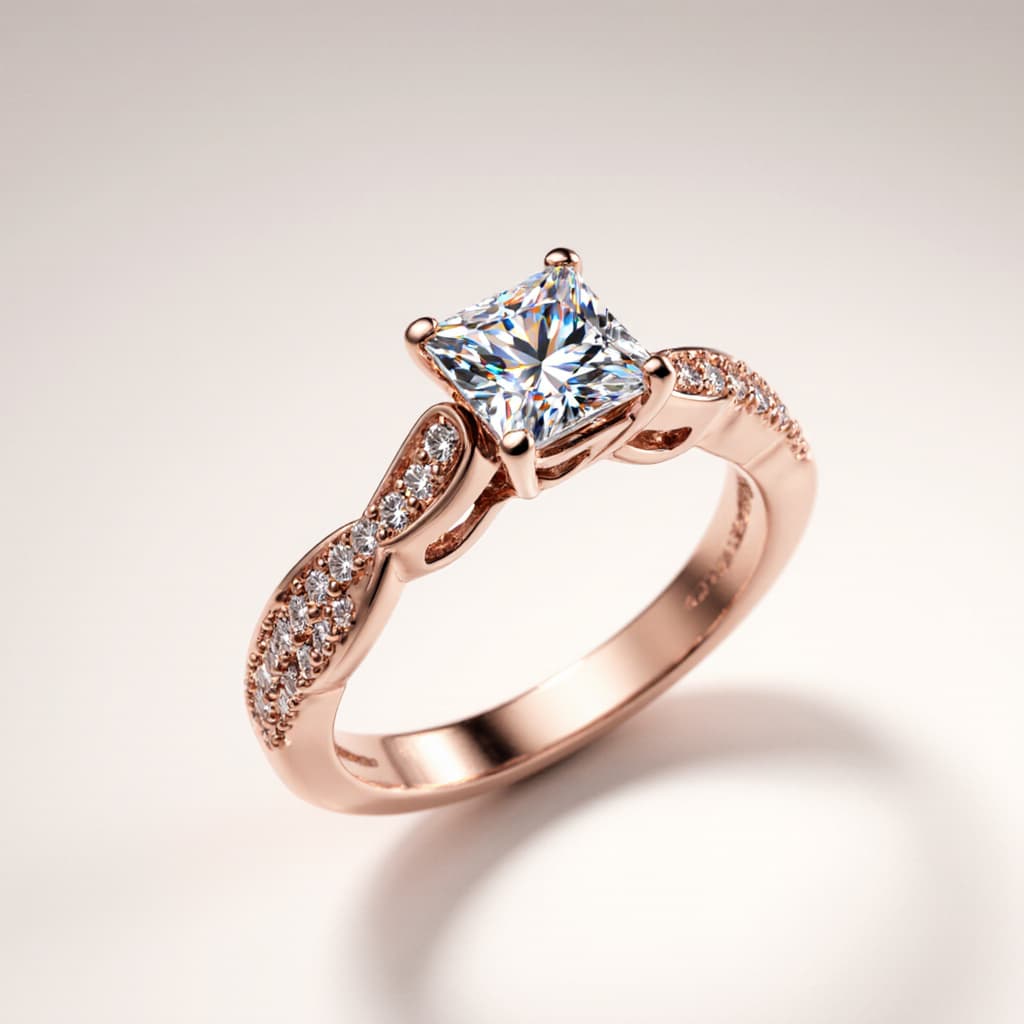
3D printing in jewelry refers to the use of additive manufacturing technologies to produce wearable pieces or production-ready models, either by printing castable wax and resin patterns for lost-wax casting or by printing directly in precious metals. In 2026, this technology has matured into an essential part of nearly every professional jeweler's toolkit, enabling designs that push the boundaries of what was once considered manufacturable.
The jewelry industry has always been slow to adopt new manufacturing methods, but the past three years have accelerated adoption at an unprecedented pace. The combination of affordable desktop resin printers, improved castable materials, and the emergence of AI-powered design tools has created a pipeline where a concept can go from idea to physical prototype within a single day. Whether you are a solo artisan exploring new possibilities or a production house looking to optimize operations, understanding 3D printing technology is no longer optional.
Why 3D Printing Matters for Jewelry in 2026
The jewelry industry crossed a significant milestone in 2025 when industry surveys showed that over 60 percent of professional jewelers used 3D printing in some capacity. This number is expected to climb past 75 percent by the end of 2026. Several factors are driving this growth.
First, customer expectations have changed. Today's jewelry buyers want customization, and they want it fast. They expect to see realistic previews of their custom pieces before committing to production, and they expect reasonable turnaround times. 3D printing makes this possible by eliminating the slow, manual prototyping steps that once bottlenecked custom jewelry workflows.
Second, design complexity has exploded. With AI design platforms generating increasingly intricate concepts, traditional hand fabrication simply cannot keep up. Lattice structures, organic textures, and mathematically precise geometries that would take a master jeweler weeks to hand carve can be 3D printed in hours with perfect accuracy.
Third, economics have shifted. Desktop resin printers capable of jewelry-grade resolution now cost less than 1,000 dollars, while castable resin materials have dropped below 100 dollars per liter. The barrier to entry has never been lower.
The Four Core Technologies
Not every 3D printer is suited for jewelry. The industry has settled on four primary technologies, each with distinct advantages.
SLA (Stereolithography)
SLA printers use a UV laser to selectively cure liquid photopolymer resin layer by layer. They deliver the finest surface finish of any resin-based technology, with layer heights as low as 25 microns. For jewelry, this means smooth surfaces that require minimal post-processing before casting.
Formlabs remains the dominant SLA brand in jewelry studios, with their Form 4 printer offering improved speed without sacrificing the detail that jewelers demand. Their Castable Wax 40 resin burns out cleanly during investment casting, leaving no ash residue that could create porosity in the final metal piece.
DLP (Digital Light Processing)
DLP printers cure entire layers simultaneously using a projected light source, making them faster than SLA for batch production. When you need to print a tray of 20 ring models overnight, DLP is the technology of choice.
EnvisionTEC (now Desktop Health) and Asiga dominate the jewelry DLP market. These machines are engineered specifically for the precision that jewelry demands, with pixel sizes as small as 35 microns.
LCD (Masked SLA)
LCD printers represent the most affordable entry point into jewelry 3D printing. They work similarly to DLP but use an LCD screen to mask UV light rather than a projector. While early LCD printers lacked the resolution for fine jewelry, the current generation of monochrome 8K LCD panels has closed the gap significantly.
Printers from Elegoo, Anycubic, and Phrozen offer jewelry-capable resolution at prices under 500 dollars, making them popular among independent jewelers and students.
Direct Metal Printing
DMLS (Direct Metal Laser Sintering) and similar technologies print directly in precious metal powders. A high-powered laser fuses gold, silver, or platinum powder layer by layer to create solid metal objects. While this eliminates the casting step, it introduces significant post-processing requirements and operates at a much higher cost point.
| Technology | Typical Layer Height | Speed | Cost Range | Best Application |
|---|---|---|---|---|
| SLA | 25 to 50 microns | Moderate | 2,000 to 10,000 dollars | High-detail single prototypes |
| DLP | 35 to 75 microns | Fast | 5,000 to 30,000 dollars | Batch production runs |
| LCD | 35 to 50 microns | Fast | 200 to 2,000 dollars | Budget prototyping |
| DMLS | 20 to 40 microns | Slow | 100,000 dollars plus | Direct metal production |
Materials That Matter
The material you print with is just as important as the printer itself. Jewelry 3D printing materials fall into three categories.
Castable Resins
These are the workhorses of jewelry 3D printing. Castable resins are formulated to burn out completely during the investment casting process, leaving behind a clean mold cavity. Leading options include Formlabs Castable Wax 40, B9Creations Cast, and EnvisionTEC Easy Cast 2.0. The key quality metric for castable resin is ash content after burnout, and the best formulations leave zero measurable residue.
Castable Wax
Some printers, particularly those from Solidscape and 3D Systems, print in actual wax rather than resin. Wax models behave identically to traditionally hand-carved wax models during the casting process, making them the gold standard for casting compatibility. The tradeoff is that wax is more fragile to handle and wax-based printers tend to be more expensive.
Precious Metal Powders
For direct metal printing, specialized powders of gold, silver, platinum, and their alloys are available from companies like Legor Group and Cookson Precious Metals. These powders are atomized to precise particle sizes, typically 15 to 45 microns, for optimal sintering behavior.
The Complete Jewelry 3D Printing Workflow
Understanding the end-to-end workflow helps you see where 3D printing fits into the broader jewelry manufacturing process.
Design and Modeling
Every 3D print starts with a digital 3D model. In jewelry, this model is typically created in specialized CAD software like RhinoGold, MatrixGold, or JewelCAD. The model must account for material shrinkage during casting, stone seat tolerances, and structural integrity at jewelry scale.
For those without CAD skills, the AI-to-production pipeline offers an alternative starting point. AI platforms generate concept images that CAD professionals can reference while building the 3D model, dramatically speeding up the design phase.
File Preparation
The 3D model is exported as an STL file, which represents the surface geometry as a mesh of triangles. For jewelry, the mesh density must be high enough to capture fine details without creating files so large that they overwhelm the printer's processing capability. A typical jewelry STL file is 5 to 50 megabytes.
The STL file is then loaded into slicing software, which divides the model into layers and generates the instructions that control the printer. Key slicing parameters include layer height, exposure time, and support placement.
Printing
Actual print time for a typical ring or pendant model is 2 to 6 hours on most resin printers. Larger pieces or batches of multiple items may take 8 to 12 hours. Most jewelers start prints in the evening and collect finished models in the morning.
Post-Processing
After printing, the model is washed in isopropyl alcohol to remove uncured resin, then UV post-cured to reach final material properties. Support structures are carefully removed with flush cutters. For castable models, minimal sanding is preferred since over-handling can damage fine details.
Casting and Finishing
The printed model is invested in plaster, placed in a kiln for burnout (where the resin or wax is vaporized), and then cast in precious metal using vacuum or centrifugal casting. After casting, the metal piece goes through traditional finishing steps including filing, sanding, polishing, stone setting, and final quality inspection.
Common Pitfalls and How to Avoid Them
Even experienced jewelers encounter challenges with 3D printing. Here are the most frequent problems and their solutions.
Incomplete burnout is the most common issue for jewelers new to 3D printing. If the castable resin does not burn out completely, it leaves ash that causes porosity and surface defects in the cast metal. The solution is to follow the resin manufacturer's burnout schedule precisely, avoid rushing the process, and ensure your kiln reaches the specified peak temperature.
Shrinkage miscalculation causes sizing errors in the final cast piece. Both the printed model and the casting process introduce shrinkage, typically 2 to 4 percent total. Experienced jewelers compensate by scaling the 3D model up by the appropriate percentage before printing.
Insufficient support structures cause print failures and deformed models. Jewelry pieces often have delicate overhanging elements that require careful support placement. Learning where to place supports without marring visible surfaces takes practice.
Cost Analysis for a Jewelry Business
Understanding the economics of 3D printing helps justify the investment. Here is a realistic cost breakdown for a small jewelry business.
A quality desktop resin printer suitable for jewelry costs 500 to 5,000 dollars depending on the brand and technology. Castable resin costs 80 to 200 dollars per liter. A typical ring model uses approximately 5 to 15 milliliters of resin, which means a single liter of resin can produce 60 to 200 ring models.
When you compare the cost of 3D printing a wax model (roughly 5 to 15 dollars including machine time, resin, and post-processing labor) to hand carving that same model (50 to 200 dollars in skilled labor), the economics are compelling. A jeweler producing just 10 custom rings per month can recover the cost of a quality printer within two to four months.
How Tashvi AI Fits Into the 3D Printing Workflow
The starting point for any 3D printed jewelry piece is the design itself, and this is where Tashvi AI transforms the process. Rather than spending hours sketching concepts or struggling to describe your vision to a CAD designer, you can use Tashvi AI to generate detailed, photorealistic jewelry visualizations that serve as precise reference images for 3D modeling.
This AI-first approach means you can explore dozens of design directions before committing any time to CAD work or printing. You might visualize a custom engagement ring from multiple angles, experiment with different stone settings and metal choices, and arrive at a finalized concept that is ready to hand off to a CAD professional. The result is fewer wasted prints, shorter design cycles, and better alignment between what you imagine and what you ultimately produce.
Try designing on Tashvi AI free
What the Future Holds
The trajectory of 3D printing in jewelry points toward even tighter integration between design and manufacturing. Multi-material printing, which allows combining metals with ceramics or colored resins in a single build, is already emerging in research labs. Resolution continues to improve, with next-generation printers targeting sub-10-micron layers that would make printed surfaces indistinguishable from polished metal.
The convergence of AI design, automated CAD conversion, and 3D printing is moving the industry toward a future where a customer can describe a piece of jewelry in natural language and hold the finished product in their hands within days, not weeks. For jewelers who embrace these tools now, the competitive advantage is significant and growing.
The most successful jewelry businesses in 2026 are those that have integrated AI-driven design workflows with modern manufacturing technologies. 3D printing is not replacing traditional craftsmanship. It is amplifying it, giving skilled artisans better tools to execute their vision with greater speed, precision, and creative freedom than ever before.
Frequently Asked Questions
Quick answers to the questions readers ask most about this guide.
Is 3D printing good for jewelry making?
Yes, 3D printing is excellent for jewelry making. It allows designers to create intricate geometries that are impossible by hand, reduces prototyping costs by 40 to 70 percent, and compresses timelines from weeks to hours. Most professional jewelers now use some form of 3D printing in their workflow.
What is the best 3D printer for jewelry in 2026?
The best 3D printer depends on your needs. For castable resin models, the Formlabs Form 4 and Asiga MAX offer excellent jewelry-grade resolution. For batch production, DLP printers like the EnvisionTEC D4K Pro are industry standards. Budget-conscious jewelers can start with the Elegoo Saturn series.
How much does it cost to 3D print a ring?
A single ring printed in castable resin typically costs 5 to 30 dollars in material, depending on size and complexity. Machine time adds another 2 to 10 dollars. By comparison, hand carving the same wax model might cost 50 to 200 dollars in labor, making 3D printing significantly more affordable for prototyping.
Can 3D printed jewelry be cast in real gold?
Absolutely. The most common jewelry 3D printing workflow involves printing a castable wax or resin model, then using the traditional lost-wax casting process to produce the final piece in gold, silver, platinum, or any other precious metal. The result is identical in quality to traditionally cast jewelry.
Do I need CAD skills to 3D print jewelry?
While CAD skills are valuable, they are not strictly necessary in 2026. AI design tools can generate concept images that CAD professionals can convert into printable files. Some platforms also offer guided design interfaces that simplify the CAD process for beginners.