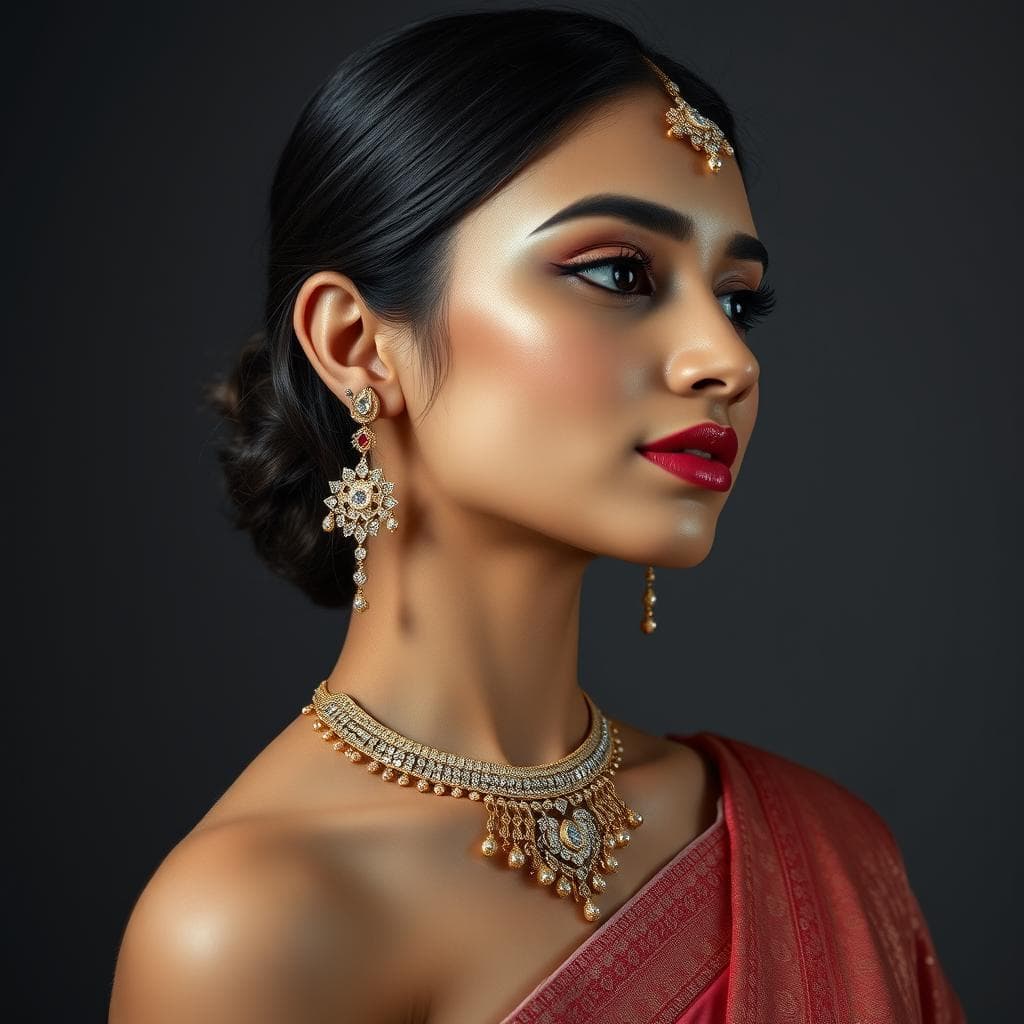
How AI Handles Complex Multi-Stone Jewelry Compositions
Multi-stone jewelry designs present unique challenges for AI, from balancing visual weight across dozens of gemstones to ensuring structural feasibility. Discover how AI systems manage stone placement, size graduation, color harmony, and setting compatibility in complex compositions.
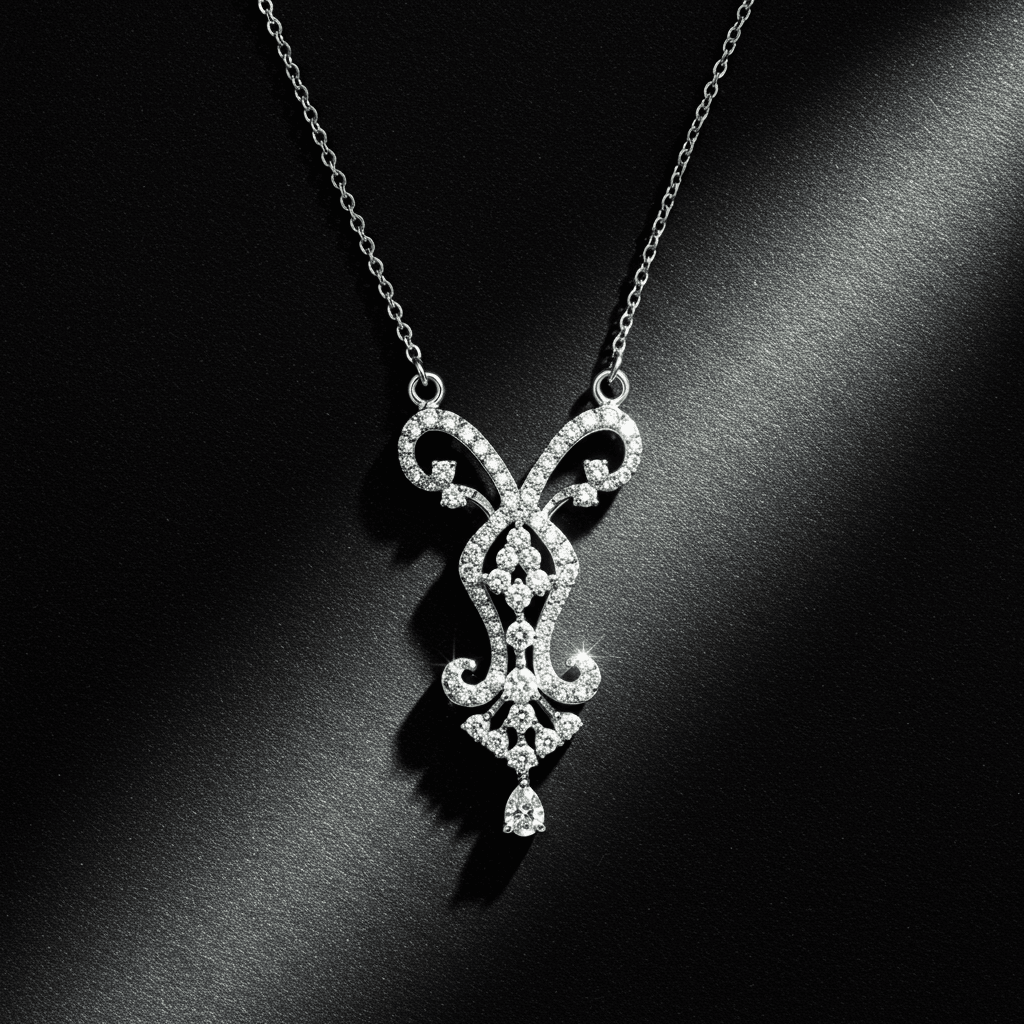
AI handles complex multi-stone jewelry compositions by analyzing the relationships between gemstones, including size graduation, color harmony, setting compatibility, and visual weight distribution, to generate balanced, aesthetically cohesive designs. Modern AI systems can manage compositions with dozens of stones, producing layouts that respect both design principles and the structural requirements of physical jewelry manufacturing.
Multi-stone jewelry represents one of the most challenging categories in design. A single solitaire ring requires balancing two elements, the stone and the setting. A multi-stone piece might involve coordinating 5, 20, or even 200 individual gemstones, each with its own size, color, setting type, and spatial relationship to its neighbors. The complexity grows exponentially with each added stone, making multi-stone design a domain where AI's ability to process multiple variables simultaneously offers genuine advantages.
The Complexity Challenge
To appreciate what AI contributes to multi-stone design, consider the variables involved in a seemingly simple three-stone engagement ring.
The center stone and two side stones must maintain specific proportional relationships. Side stones that are too large overpower the center. Too small, and they look like afterthoughts. The taper from center to sides must follow an aesthetically pleasing ratio. All three stones must sit at the same height relative to the band, or the ring will look uneven. The settings must accommodate different stone sizes while maintaining visual continuity. The metal framework connecting the three settings must be structurally sound while remaining as visually unobtrusive as possible.
Now multiply this complexity by a factor of ten for a vintage-inspired cluster ring, or by fifty for a fully pave-set eternity band. The number of design decisions and spatial relationships that must be resolved simultaneously becomes staggering. Understanding the differences between various ring settings like solitaire, halo, and cluster is foundational to grasping how multi-stone complexity scales.
How AI Processes Multi-Stone Relationships
AI approaches multi-stone composition differently from human designers, processing all spatial relationships simultaneously rather than building up from individual elements.
Global Composition Analysis
Rather than placing stones one at a time, AI models evaluate the entire composition holistically. The network considers the visual center of gravity, the directional flow of the arrangement, and the overall balance of filled and empty space. This global perspective allows the AI to optimize the entire layout in ways that account for how each stone affects every other stone's visual impact.
Proportional Intelligence
AI models trained on successful multi-stone designs learn proportional relationships that may not be explicitly codified in design textbooks but are consistent across thousands of well-designed pieces. The ratio of a center stone to its halo diamonds, the spacing between pave stones as a function of their diameter, and the graduation rate in a riviere necklace all follow patterns that the AI absorbs from training data.
| Composition Type | Key Proportional Relationship | AI Handling |
|---|---|---|
| Three-Stone Ring | Side stones 60 to 75% of center stone width | Maintains proportional harmony |
| Halo Setting | Halo stones 1.0 to 1.5mm, uniform spacing | Consistent sizing and gap control |
| Pave Band | Stone diameter to gap ratio approximately 4 to 1 | Even distribution and alignment |
| Graduated Necklace | 10 to 20% size increase per position | Smooth visual progression |
| Cluster Arrangement | Organic grouping with varying sizes | Balanced visual weight |
| Tennis Bracelet | Uniform stone size, consistent spacing | Repetitive precision |
Color and Material Coordination
For multi-stone pieces that combine different gemstone types or colors, AI models apply color theory principles to suggest harmonious arrangements. A ring featuring sapphires, diamonds, and emeralds requires careful color placement to avoid visual chaos. The AI can generate options that alternate colors rhythmically, create gradient transitions, or concentrate complementary colors in balanced groupings.
This capability is particularly valuable for designs that combine different diamond shapes or mix colored gemstones with diamonds, where the visual interaction between shapes and colors adds another layer of complexity.
Specific Multi-Stone Categories and AI Capabilities
Halo Settings
Halo designs surround a center stone with a ring of smaller accent stones. The AI must ensure uniform stone size in the halo, consistent spacing between halo stones, proper proportion between the halo diameter and center stone size, and appropriate setting structure that secures each small stone without excessive visible metal.
AI-generated halo designs consistently produce visually appealing proportions because the model has learned from thousands of successful halo implementations. The system naturally avoids common halo design errors like disproportionate stone sizing or uneven spacing.
Pave and Micro-Pave Settings
Pave settings cover a metal surface with small diamonds held by tiny prongs or beads. Micro-pave uses even smaller stones. Both require extraordinary precision in stone placement, with each stone positioned to maximize sparkle while maintaining structural integrity.
AI handles pave composition by learning the optimal stone density, bead placement patterns, and edge finishing techniques from training data. The generated designs show realistic pave layouts that account for the curvature of ring bands, the tapering of prong structures, and the practical limits of stone size at different positions.
Multi-Gemstone Fashion Jewelry
Fashion and cocktail pieces that combine multiple gemstone types, sizes, and shapes in a single design represent the most complex multi-stone challenge. A chandelier earring with sapphires, diamonds, and pearls at varying sizes requires the AI to balance color, visual weight, physical weight (for wearability), and spatial arrangement simultaneously.
AI's advantage in this category is its ability to evaluate hundreds of possible arrangements and select those with the best overall balance. A human designer might explore five or six layout options for a complex piece. The AI evaluates many more, surfacing compositions that the designer might not have considered.
Challenges AI Still Faces
Despite impressive capabilities, AI multi-stone design has limitations that designers should understand.
Structural Feasibility
AI-generated images represent visual concepts, not engineering specifications. A composition that looks beautiful in a 2D image might present structural challenges in physical manufacturing. Stones placed too close together may not leave enough metal for secure settings. Complex overlapping arrangements might be impossible to cast as a single piece. Experienced jewelers serve as essential quality checks between AI concept and manufacturing reality.
Weight and Wearability
Multi-stone pieces can become heavy, and wearability is a critical design constraint. A stunning chandelier earring design is impractical if it weighs so much that it causes discomfort. AI models are improving at estimating physical weight from visual designs, but the wearability judgment still requires human expertise, particularly for complex pieces like necklaces and layered designs.
Exact Carat Weight Specifications
Clients often have specific carat weight targets for center stones or total carat weight requirements. AI-generated images suggest approximate stone sizes visually but cannot guarantee exact carat weight specifications. The transition from AI concept to CAD model is where precise stone sizing occurs.
The Design Workflow for Complex Multi-Stone Pieces
The most effective workflow for multi-stone jewelry combines AI creativity with human expertise in a structured pipeline.
Step 1. The designer or client defines the composition parameters, including stone types, approximate sizes, desired arrangement style, and budget constraints.
Step 2. AI generates multiple composition options, exploring different layouts, proportional relationships, and color arrangements.
Step 3. The designer reviews AI concepts with their manufacturing knowledge, selecting the most promising options and noting any structural concerns.
Step 4. Selected concepts move to CAD modeling, where exact stone sizes, setting specifications, and structural details are finalized.
Step 5. A prototype is produced to verify fit, visual impact, and structural integrity before full production.
This workflow leverages AI's speed and breadth in the conceptual phase while preserving human expertise where it matters most, in the translation from concept to physical object.
How Tashvi AI Manages Multi-Stone Complexity
Tashvi AI's reference-based design system is particularly well suited for multi-stone compositions because visual references communicate complex stone arrangements far more effectively than text descriptions. Uploading a photo of a five-stone ring or a pave halo setting gives the AI a complete spatial template that text prompts could never adequately describe.
The platform allows jewelers to show clients multiple multi-stone composition options within minutes, dramatically speeding up the design exploration phase for these complex pieces. Whether you are working on a custom engagement ring with specific setting styles or a fashion piece with an elaborate gemstone arrangement, Tashvi AI generates photorealistic concepts that help clients visualize and compare options before committing to detailed CAD work. Try designing on Tashvi AI free to explore multi-stone composition possibilities for your next project.
The Evolving Frontier
As AI models continue to train on larger datasets of manufactured multi-stone jewelry, their understanding of structural feasibility will improve alongside their aesthetic capabilities. Future systems may flag potential manufacturing issues directly in the concept phase, suggest alternative stone arrangements that reduce production difficulty, or automatically optimize layouts for maximum brilliance based on the physics of light interaction between adjacent stones.
The collaboration between AI's compositional intelligence and human design expertise is producing multi-stone jewelry that is more creative, more balanced, and more accessible to designers at every skill level. The complexity that once required years of specialized experience can now be explored by any jeweler with access to the right tools.
Frequently Asked Questions
Quick answers to the questions readers ask most about this guide.
Can AI design jewelry with more than 20 stones?
Yes, AI design systems can handle compositions with dozens or even hundreds of stones, including pave-set pieces that may contain 50 to 200 melee diamonds. The AI manages the overall visual composition while understanding that each stone requires proper setting structure, spacing, and alignment.
How does AI ensure multi-stone designs are structurally feasible?
AI models trained on manufactured jewelry learn the structural requirements for different setting types. They understand minimum metal thickness between stones, proper prong and bead placement, and the relationship between stone size and setting security. While AI concepts are not manufacturing specifications, well-trained models produce designs that experienced jewelers recognize as buildable.
Can AI balance different colored gemstones in a single design?
AI excels at color harmony in multi-stone designs. Models trained on color theory and existing multi-color jewelry can suggest arrangements that create visual balance, complementary contrast, or graduated color transitions. This applies to both natural gemstone colors and the interplay between different gemstone types.
Does AI handle graduated stone sizes accurately?
AI models understand stone graduation patterns common in jewelry design, such as the graduated size increase in a riviere necklace or the tapered side stones on a three-stone ring. The AI produces visually proportionate graduation that follows established design principles, though exact millimeter sizing requires CAD specification.
What types of multi-stone compositions can AI generate?
AI can generate a wide range of multi-stone compositions including halo settings, three-stone and five-stone rings, pave bands, cluster arrangements, riviere necklaces, tennis bracelets, chandelier earrings, and custom multi-gemstone layouts. The output quality depends on the AI model's training data and the specificity of the input.