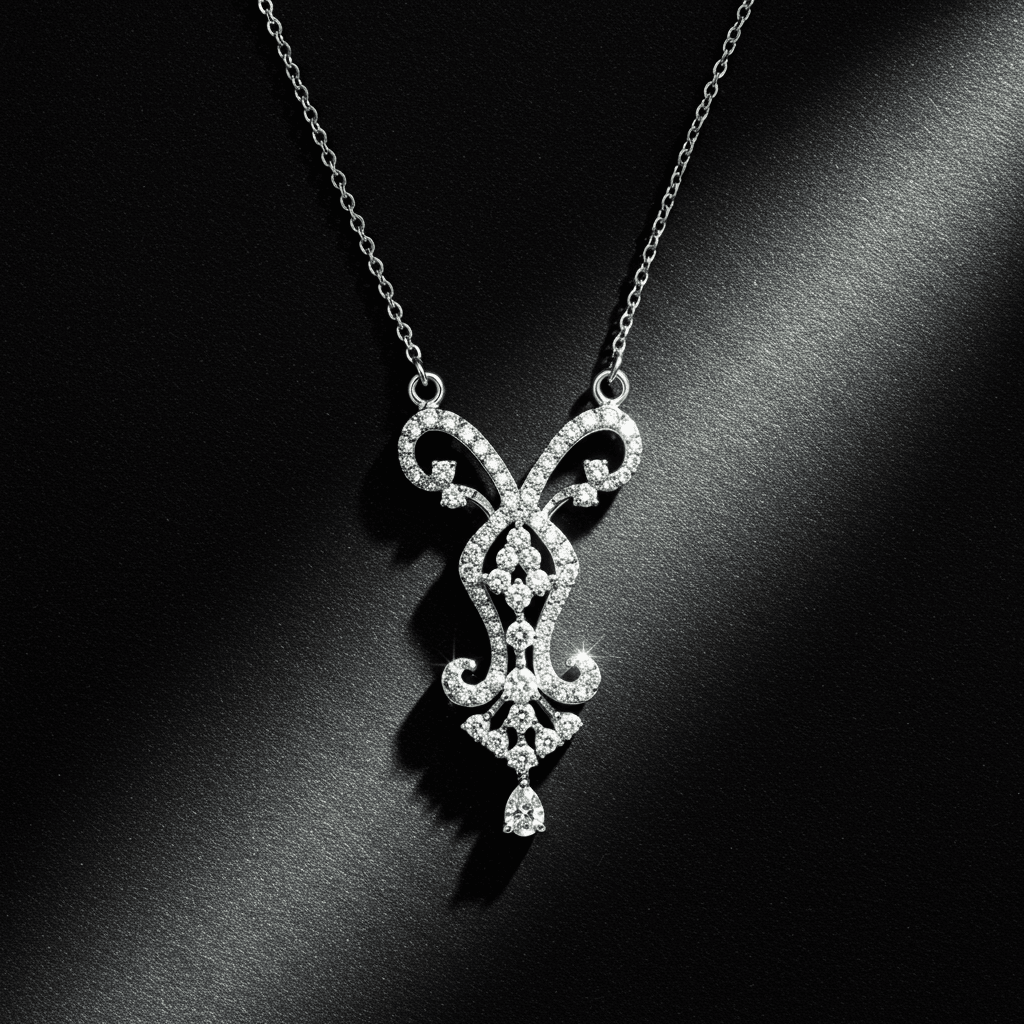
How AI Personalizes Jewelry Recommendations Online
Learn how AI recommendation engines analyze browsing behavior, purchase history, and style preferences to deliver personalized jewelry suggestions that increase engagement, conversion rates, and customer lifetime value.
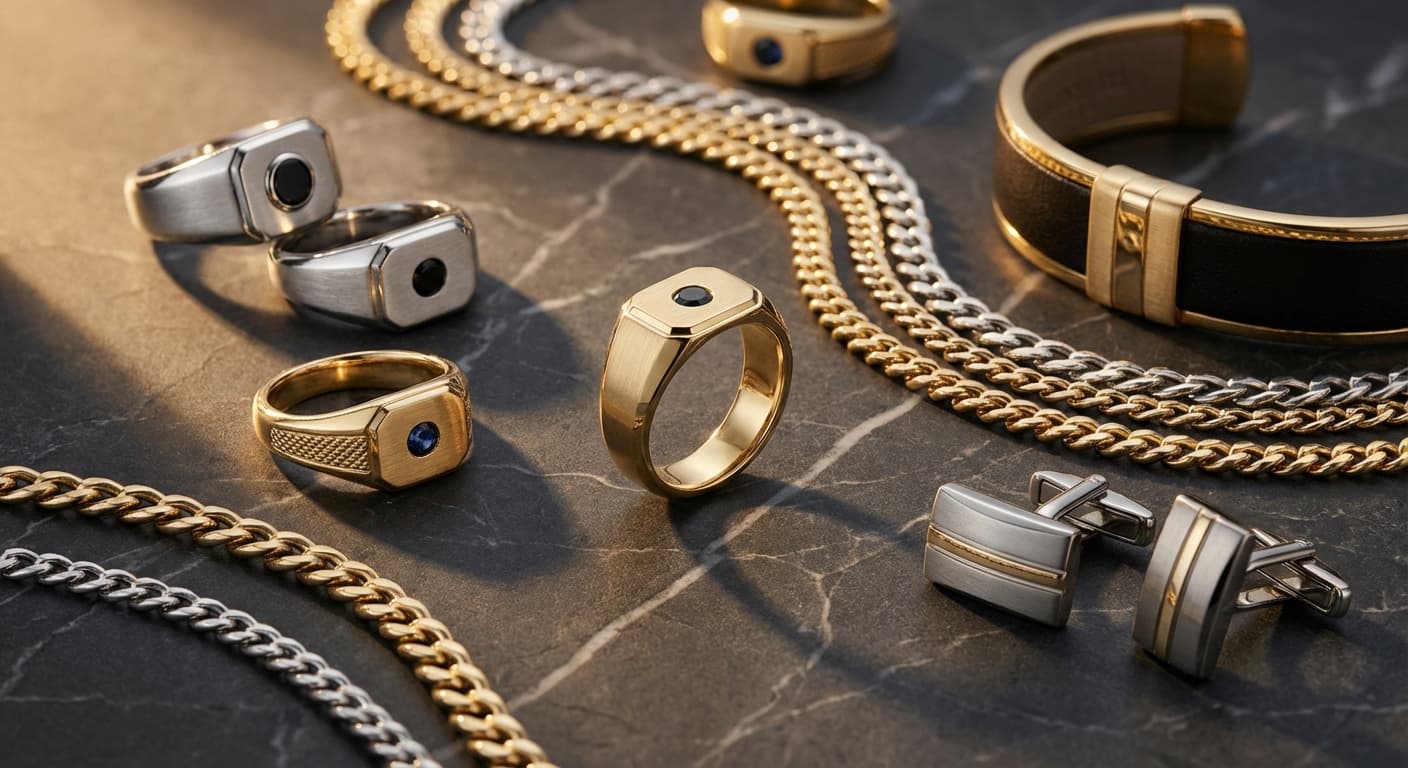
AI-powered jewelry recommendation engines analyze browsing patterns, style preferences, purchase history, and demographic signals to deliver personalized product suggestions that match individual taste with remarkable accuracy. These systems increase online conversion rates by 20 to 35 percent and average order values by 10 to 25 percent by showing each customer the pieces most likely to resonate with their unique aesthetic sensibility.
Shopping for jewelry online presents a paradox. Customers want vast selection, but they do not want to scroll through thousands of pieces to find what they love. A physical jewelry store solves this through a knowledgeable sales associate who reads customer preferences and curates a selection. AI recommendation engines replicate this curation at digital scale, processing millions of data points to present each visitor with a personalized jewelry experience.
The Science Behind Jewelry Recommendations
AI recommendation systems for jewelry employ three primary approaches, each contributing different strengths to the overall experience.
Collaborative Filtering
Collaborative filtering identifies patterns across customer behavior. If customers who bought a specific solitaire engagement ring also frequently purchased a particular style of wedding band, the system learns this association and recommends the band to future solitaire buyers. This approach excels at discovering non-obvious connections between products and customer segments.
In jewelry, collaborative filtering reveals interesting taste clusters. Customers who prefer art deco styles often also appreciate geometric modern designs. Buyers of colored gemstones frequently browse both sapphire and emerald categories. These associations help the system make recommendations that feel intuitive and sometimes pleasantly surprising.
Content-Based Filtering
Content-based filtering analyzes the attributes of items a customer has shown interest in and recommends products with similar characteristics. If you have browsed several rose gold rings with oval stones, the system identifies "rose gold," "ring," and "oval" as your preferred attributes and surfaces other items matching this profile.
For jewelry, content attributes include metal type and color, gemstone species and cut, setting style, design era inspiration, price range, and occasion suitability. The system weights these attributes based on how consistently they appear in your browsing and purchase history.
Hybrid Approaches
The most effective jewelry recommendation systems combine both approaches with additional contextual signals. A hybrid system might start with content-based filtering for new visitors, transition to collaborative filtering as behavior data accumulates, and layer in contextual factors like season, trending styles, and the customer's location.
| Recommendation Approach | Best For | Accuracy After 10 Interactions | Accuracy After 50 Interactions |
|---|---|---|---|
| Collaborative Filtering | Returning customers | 72 percent | 88 percent |
| Content-Based Filtering | New visitors | 65 percent | 78 percent |
| Hybrid System | All customers | 75 percent | 92 percent |
Understanding Jewelry Style Profiles
AI builds a multi-dimensional style profile for each customer, encoding preferences across numerous taste axes. These profiles become more refined with each interaction, eventually capturing subtle preferences that the customer themselves might not consciously recognize.
A style profile might reveal that a customer consistently gravitates toward pieces with organic, flowing lines rather than geometric shapes. Or that they prefer warm-toned metals across all jewelry categories. Or that they favor understated pieces for everyday wear but choose bold statement items for gifts.
These profiles extend beyond individual attributes to capture aesthetic combinations. A customer might like both minimalist and vintage styles but specifically prefer minimalist rings paired with vintage necklaces. Understanding these nuanced preferences allows the recommendation engine to suggest combinations that feel naturally cohesive.
Our guide on jewelry stacking and layering explores the aesthetic principles that AI recommendation systems use to suggest complementary pieces that work together as coordinated sets.
Contextual Personalization
Beyond individual style preferences, AI recommendation systems incorporate contextual signals that influence what a customer is looking for right now. Time-based context is particularly important in jewelry.
A customer browsing in February is likely considering Valentine's Day gifts. Someone searching engagement ring styles in the summer might be planning a fall proposal. The system adjusts its recommendations to match these temporal intentions, surfacing occasion-appropriate pieces alongside style-matched suggestions.
Other contextual signals include the customer's entry point (arriving from a "wedding band" search produces different recommendations than arriving from a "birthday gift" search), the device they are using (mobile browsing suggests different engagement patterns than desktop), and their geographic location (which may influence preferred styles and metal types).
Visual Similarity Recommendations
One of the most powerful tools in jewelry recommendation is visual similarity search. When a customer lingers on a particular piece, the system can identify visually similar items across the catalog that share the aesthetic qualities of the favored design.
This goes beyond attribute matching to actual visual analysis. Two rings might have different metal types and stone shapes but share the same overall aesthetic, such as a delicate, nature-inspired silhouette. Visual similarity algorithms detect these shared visual qualities and surface alternatives that match the aesthetic rather than the specifications.
Visual recommendation is especially valuable when customers are browsing for inspiration rather than searching for specific features. It creates a discovery experience similar to wandering through a well-curated jewelry store, where your eye catches pieces that share an intangible quality with what initially attracted your attention.
For those interested in exploring diverse design aesthetics, our collection of AI jewelry design ideas showcases the range of styles that modern AI systems can both recognize and generate.
Solving the Cold-Start Problem
Every recommendation system faces the cold-start challenge. How do you personalize the experience for a brand-new visitor with no behavioral history? Jewelry retailers have developed several effective strategies.
Style quizzes offer the most direct solution. A brief, visually engaging quiz asking the customer to choose between pairs of jewelry images quickly establishes baseline preferences. Five to ten image comparisons provide enough signal to generate meaningfully personalized recommendations.
Trend-based defaults use current popularity data to show new visitors the pieces most likely to resonate with a broad audience. These suggestions update in real time as trends shift, ensuring that the default experience stays relevant.
Social signal integration connects the customer's social media aesthetic preferences to jewelry recommendations. A customer whose social profiles feature minimalist design imagery receives different initial suggestions than one whose feeds feature ornate, maximalist content.
Personalization Across the Customer Journey
Effective jewelry recommendation is not limited to product listing pages. AI personalization touches every stage of the customer journey.
During discovery, the homepage showcases pieces aligned with the visitor's emerging style profile. During consideration, product pages highlight specific features that the recommendation system has identified as important to this customer. During decision-making, comparison tools surface the most relevant alternatives based on what the customer has been evaluating.
Post-purchase personalization is equally important. After buying an engagement ring, the system recognizes the likely upcoming need for a wedding band and begins featuring complementary options. After a gift purchase, it suggests pieces the customer might want for themselves. Understanding the complete guide to ring settings helps these systems make informed suggestions about which styles complement what a customer already owns.
| Journey Stage | Personalization Type | Impact on Conversion |
|---|---|---|
| Homepage | Curated collections | 15 to 25 percent higher engagement |
| Category Browsing | Sorted by relevance | 20 to 30 percent more clicks |
| Product Page | "You might also like" | 12 to 18 percent add-to-cart lift |
| Cart | Complementary items | 8 to 15 percent upsell rate |
| Post-Purchase | Follow-up suggestions | 25 to 40 percent repeat purchase |
Privacy and Transparency in Jewelry Recommendations
Jewelry customers expect personalization but also value privacy. The most trusted retailers are transparent about how their recommendation systems work, what data they collect, and how customers can control their preferences.
Giving customers explicit control over their style profile, the ability to reset recommendations, and clear opt-out options builds trust. Many customers actually enjoy fine-tuning their preferences when given the tools to do so, as it improves the quality of their shopping experience.
Data minimization practices ensure that recommendation systems only collect and retain the information necessary for personalization. Browsing patterns and style preferences are sufficient for effective recommendations without needing sensitive personal information.
How Tashvi AI Delivers Personalized Design Experiences
Tashvi AI takes jewelry personalization beyond product recommendations into personalized design generation. Rather than matching customers with existing products from a catalog, Tashvi creates entirely new designs tailored to each customer's expressed preferences. When you describe your ideal piece or answer guided design questions, Tashvi generates unique jewelry concepts that exist nowhere else, personalized at the deepest possible level.
This represents the ultimate form of jewelry personalization. Instead of finding the closest match in a fixed inventory, customers receive designs created specifically for them. The AI learns from each interaction, refining its understanding of your aesthetic to deliver increasingly resonant options over time. Whether you prefer modern minimalism or vintage elegance, Tashvi adapts to your taste and creates accordingly. Try designing on Tashvi AI free to experience personalization that goes beyond recommendations into true custom design.
The Future of Personalized Jewelry Discovery
AI recommendation technology continues advancing rapidly. Emerging capabilities include emotion-aware recommendations that adjust based on the customer's detected mood, augmented reality integration that shows recommended pieces in context before they are selected, and generative AI that creates new designs in real time based on a customer's evolving style profile.
The line between recommendation and creation is blurring. As AI becomes better at understanding individual taste and generating custom designs, the concept of browsing a fixed catalog will give way to discovering jewelry that did not exist until the moment you needed it. This shift represents the future of truly personalized jewelry retail, where every customer experience is as unique as the pieces themselves.
Frequently Asked Questions
Quick answers to the questions readers ask most about this guide.
How does AI know what jewelry I will like?
AI recommendation engines analyze multiple signals including your browsing history, items you have clicked on or saved, purchase history, stated preferences, and behavior patterns similar to other customers with matching tastes. These signals combine to build a style profile that improves with each interaction.
Is AI jewelry recommendation better than human sales associates?
AI and human associates excel at different aspects. AI processes vast product catalogs and customer data instantly, catching patterns that humans miss. Human associates understand emotional context, read body language, and build personal relationships. The best experiences combine both approaches.
Does personalized jewelry recommendation work for first-time visitors?
Yes, through techniques called cold-start solutions. AI uses general popularity data, seasonal trends, and initial browsing behavior to make relevant suggestions within the first few clicks. A brief style quiz can accelerate personalization by establishing preferences explicitly.
How do AI recommendations avoid showing me the same jewelry repeatedly?
Well-designed recommendation systems balance relevance with diversity. They track which items you have already seen and introduce new options alongside familiar styles. Exploration algorithms intentionally present some unexpected choices to help you discover styles you might not have found otherwise.
Can AI recommendations be biased toward expensive jewelry?
Ethical recommendation systems optimize for customer satisfaction, not just revenue. While some systems do prioritize higher-margin items, the best implementations balance business goals with genuine customer value. Transparent filtering by budget range gives customers control over price-based recommendations.