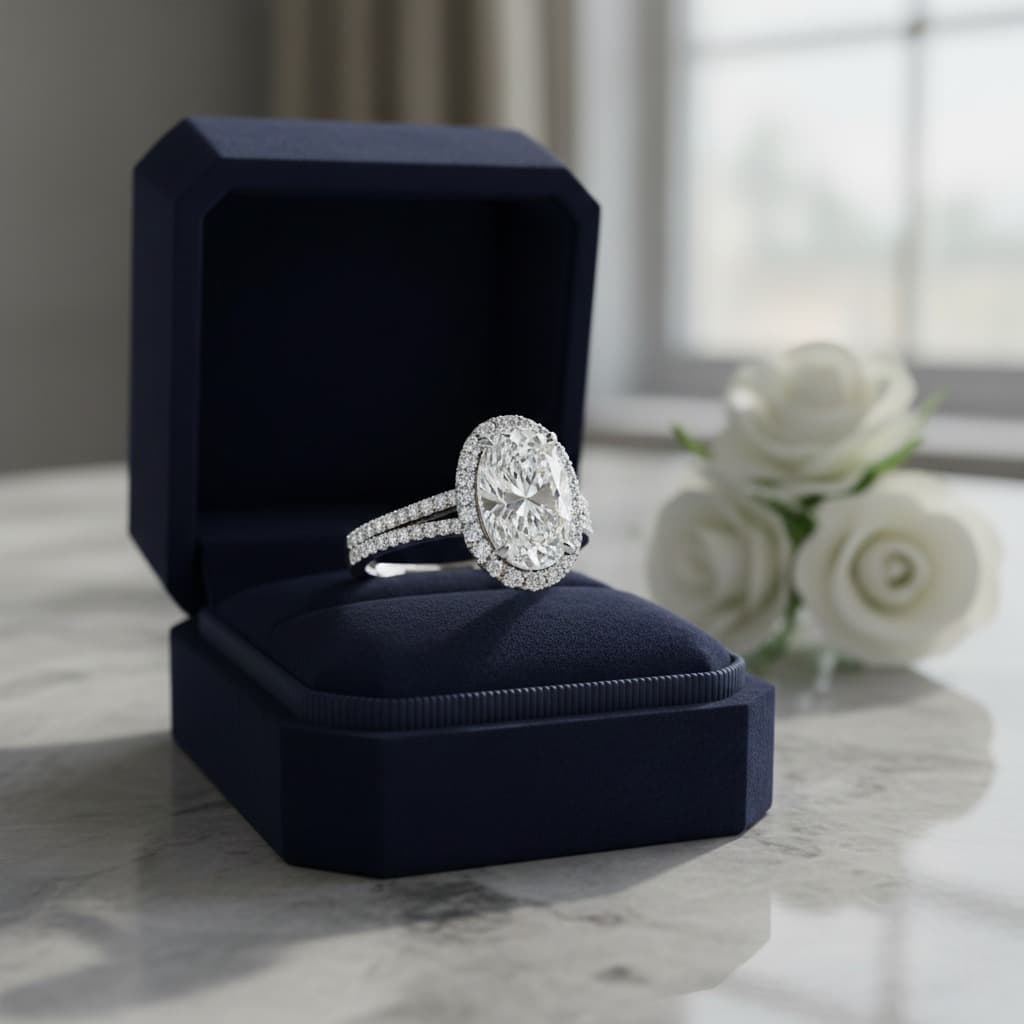
Floral Jewelry Patterns: From Realistic to Abstract
Floral jewelry patterns range from botanically accurate renderings to bold abstract interpretations. Learn how to design flower-inspired rings, earrings, and pendants across the realism spectrum, with techniques for petals, leaves, and organic forms.
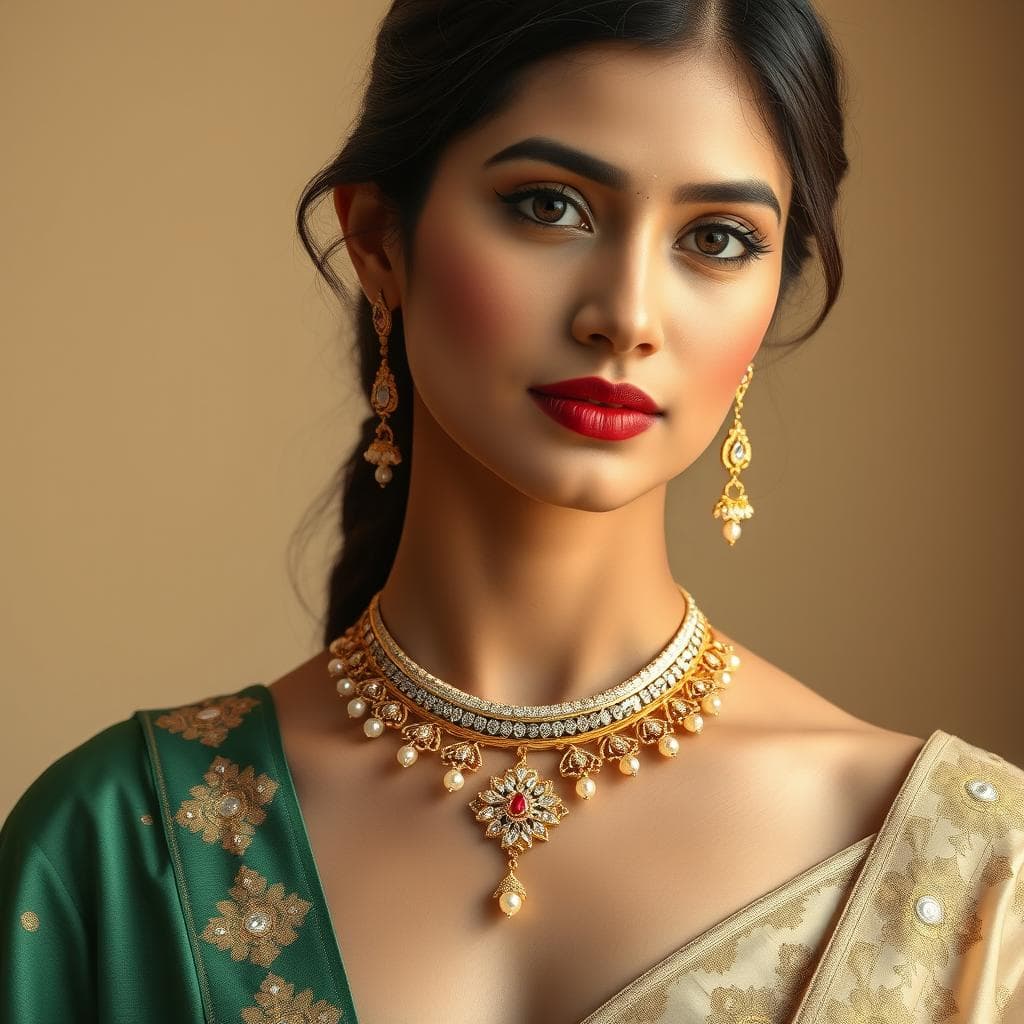
Floral jewelry patterns encompass everything from hyper-realistic botanical renderings cast in gold to bold, geometric abstractions that capture the essence of a flower in a single curved line. Designing with flowers means choosing your position on this spectrum of realism, understanding which flowers translate best into metal and stone, and mastering the techniques that bring petals, stems, and leaves to life at jewelry scale.
Flowers have appeared in jewelry since ancient civilizations first learned to work metal. Egyptian lotus motifs, Greek laurel wreaths, Art Nouveau orchids, and contemporary abstract rose forms each represent a different era's interpretation of the same inexhaustible inspiration. The challenge for today's designer is not finding floral inspiration but deciding how to express it in a way that feels fresh, personal, and appropriate for the intended wearer.
The Realism Spectrum
Highly Realistic Botanical Jewelry
At the realistic end of the spectrum, jewelry attempts to reproduce the actual appearance of specific flowers with botanical accuracy. Petal count, leaf shape, stem structure, and even the arrangement of stamens follow nature as closely as metalworking allows.
Realistic floral jewelry often uses techniques like lost-wax casting from actual flower specimens, where a real flower is coated in investment material and burned away, leaving a cavity that captures every vein and curve. The result is a metal reproduction that preserves the flower's exact form, sometimes down to individual pollen grains.
This approach creates stunning, one-of-a-kind pieces, but it comes with practical challenges. Real flower forms often include thin, fragile elements that do not survive well in metal at jewelry scale. Delicate petals may bend or break. Thin stems may not support pendant weight. The designer must decide which realistic details to preserve and which to strengthen for durability.
Stylized Naturalism
The middle ground between realism and abstraction is where most successful floral jewelry lives. Stylized naturalism captures the recognizable character of a specific flower while simplifying and strengthening its form for jewelry construction.
A stylized rose might reduce the dozens of petals in a real bloom to five or seven overlapping forms, each slightly thicker than nature but arranged to capture the spiral unfolding that makes a rose instantly recognizable. A stylized daisy might feature smooth, perfectly even petals radiating from a textured center, more precise than any real daisy but unmistakably the same flower.
This approach gives the designer control over structural integrity, visual balance, and manufacturing feasibility while maintaining the emotional connection to a specific flower. It is the approach used by most fine jewelry houses for their floral collections.
Geometric Abstraction
At the abstract end, floral jewelry reduces flowers to their essential geometric elements. A circle surrounded by radiating lines suggests a daisy. A spiral suggests a rosebud. A series of overlapping curves suggests layered petals. The viewer recognizes the floral reference without seeing a literal flower.
Geometric floral abstraction works particularly well for modern, minimalist jewelry. A ring with a subtly scalloped edge that echoes petal shapes, or earrings featuring overlapping disc forms that suggest a bloom, carry floral energy in a contemporary package. This approach also translates well to various design principles that prioritize clean lines and purposeful simplicity.
Designing With Specific Flowers
Roses
The rose is the most popular flower in jewelry design, and for good reason. Its layered spiral structure creates visual complexity at any scale, and its cultural associations with love, beauty, and passion give it built-in emotional resonance.
For realistic rose jewelry, focus on the spiral arrangement of petals as seen from above. This top-down view creates a natural composition for ring faces, earring fronts, and pendant centers. The challenge is managing the depth of overlapping petals. Each layer must be thick enough to cast cleanly but thin enough to suggest the delicacy of real petals.
Rose gold is an obvious but effective metal choice for rose jewelry. The warm pink tone reinforces the floral identity and creates a monochromatic elegance. Setting a ruby or pink sapphire at the center of a rose form adds a focal point that draws the eye into the spiral.
Lotus
The lotus holds profound symbolic significance in Eastern cultures, representing purity, enlightenment, and rebirth. Its symmetrical structure, with petals radiating evenly from a central seed pod, makes it geometrically satisfying in jewelry.
Lotus jewelry often works best in profile view (from the side) rather than top-down, as the upward-opening cup shape is the lotus's most distinctive feature. A pendant showing a lotus in profile, with petals opening upward, creates an elegant vertical composition. From above, the radial symmetry of lotus petals creates mandala-like patterns perfect for brooches and large pendants.
Cherry Blossoms
Cherry blossoms (sakura) bring a sense of delicate, transient beauty. Each individual blossom is simple, five petals with a notch at each tip, but their power comes from clustering. A single cherry blossom is charming. A branch bearing multiple blossoms is breathtaking.
For jewelry, cherry blossom branches make beautiful curved elements that follow the shapes of cuffs, ear cuffs, and statement necklaces. The small, simple blossom form works well even at tiny scales, making cherry blossom designs suitable for delicate stud earrings and thin chain pendants.
| Flower | Key Visual Feature | Best Jewelry Type | Recommended Scale |
|---|---|---|---|
| Rose | Spiral petal layers | Rings, pendants | Medium to large |
| Lotus | Radial symmetry, cup shape | Pendants, brooches | Medium to large |
| Cherry blossom | Clustered simple blooms on branch | Cuffs, ear cuffs, necklaces | Small to medium |
| Daisy | Radiating petals, round center | Studs, simple pendants | Small |
| Lily | Trumpet form, curved petals | Drop earrings, brooches | Medium to large |
| Sunflower | Large face, textured center | Statement rings, pendants | Large |
| Orchid | Complex asymmetric form | Drop earrings, brooches | Medium |
Sunflowers
Sunflowers translate into bold, dramatic jewelry. Their large face with its textured spiral center (following Fibonacci sequences) and broad radiating petals creates a natural focal point. A sunflower ring face or pendant is unmistakable.
The textured center of a sunflower is an opportunity to showcase metalworking skill. Granulation (tiny metal balls), engraving, or small pavé-set gemstones can all represent the sunflower's characteristic seed pattern.
Technical Approaches to Floral Metalwork
Casting Techniques
Lost-wax casting remains the primary method for producing three-dimensional floral jewelry. The designer carves or sculpts a flower form in wax, creates a mold, and casts it in precious metal. Digital sculpting followed by 3D printing in castable resin has modernized this process, offering greater precision and repeatability.
For highly realistic pieces, casting directly from real flowers (a technique sometimes called natural casting or electroforming) captures organic detail that would be impossible to achieve by hand. However, the results are unpredictable and each cast is unique, which may or may not suit your design intentions.
Fabrication and Forming
Sheet metal fabrication allows for lightweight floral jewelry that might be too heavy if solid cast. Individual petals can be cut from sheet metal, shaped using dapping tools (to create concave curves), and soldered together to build up a flower form layer by layer.
This petal-by-petal approach gives maximum control over the shape and proportions of each element. It also allows for mixed metals within one flower, perhaps rose gold petals with a yellow gold center, creating color variation that mimics nature's palette.
Surface Treatments
Texture transforms flat or simple floral forms into pieces that feel alive. Hammer texturing on petals creates light-catching facets that mimic the way light plays across real flower surfaces. Engraving adds vein lines to leaves and petals. Sandblasting creates matte backgrounds that make polished floral elements stand out.
Enamel adds color to floral jewelry without gemstones. Cloisonne (where wire outlines separate color areas) and plique-a-jour (translucent enamel in open framework) both have long histories in floral jewelry. A translucent enamel petal that glows when backlit captures the quality of real flower petals held up to sunlight.
Building Floral Collections
Floral themes naturally support collection development. A single flower type can unify a collection of rings, earrings, necklaces, and bracelets while each piece explores a different aspect of the flower.
For example, a rose collection might include a full bloom ring face, a rosebud pendant, thorn-textured band rings, a petal-shaped ear climber, and a vine bracelet. Each piece is different, but the rose vocabulary, spirals, thorns, layered petals, pointed leaves, creates immediate visual cohesion.
Alternatively, a garden collection might feature different flowers in consistent metalwork style. A rose ring, lotus pendant, cherry blossom earrings, and sunflower brooch, all in the same gauge of yellow gold with the same level of stylization, hang together as a unified group despite depicting different species.
How Tashvi AI Supports Floral Jewelry Design
Floral jewelry design involves navigating a vast space of possibilities, from flower species and abstraction levels to metal choices and gemstone placement. Testing all these variables through traditional sketching or CAD modeling is time-consuming.
Tashvi AI accelerates the exploration process by generating photorealistic floral jewelry concepts from text descriptions. You can request a "realistic rose ring in rose gold with ruby center" and then compare it with an "abstract rose ring with geometric petal forms in white gold" to see which direction serves your vision better. The platform lets you rapidly iterate on abstraction levels, testing where your specific design falls on the realism spectrum before committing to detailed development.
This is particularly valuable when designing floral collections, where maintaining consistent style across multiple flower types and jewelry forms requires seeing all the pieces together. Try designing on Tashvi AI free and discover how flowers from your garden can become the foundation of your next jewelry line.
The Timeless Appeal of Flowers in Jewelry
Floral jewelry endures because flowers themselves are universal symbols of beauty, growth, and the passage of seasons. Whether you choose to render a rose with photographic precision or reduce a daisy to its geometric essence, you are working with forms that humans have found beautiful for thousands of years. The design challenge is not whether floral jewelry will resonate with wearers, because it will, but how to express your unique perspective on these timeless natural forms through the language of metal, stone, and light.
Frequently Asked Questions
Quick answers to the questions readers ask most about this guide.
What flowers translate best into jewelry designs?
Roses, lotus flowers, daisies, cherry blossoms, and lilies are the most popular flowers in jewelry because they have distinctive, recognizable silhouettes. Roses offer layered petal complexity. Lotus flowers provide symmetrical elegance. Daisies give cheerful simplicity. Cherry blossoms bring delicate grace. Lilies offer dramatic trumpet forms.
How do I move from realistic to abstract in floral jewelry?
Start with a detailed botanical reference and progressively simplify. First remove minor details like vein lines and stamen. Then reduce petal count or merge adjacent petals. Next, smooth curves into geometric shapes. Finally, keep only the essence, perhaps just the spiral of a rosebud or the radial symmetry of a daisy, suggesting the flower without depicting it.
What metals and finishes work best for floral jewelry?
Rose gold naturally complements floral themes with its warm, pinkish tone. Yellow gold suits sunflowers and tropical flowers. White gold or silver works for modern, minimalist floral abstractions. Mixed finishes, such as polished petals against matte leaves, add dimension. Textured surfaces create more realistic botanical effects.
Can floral jewelry be masculine or gender-neutral?
Absolutely. Abstract floral forms, geometric flower patterns, and bold botanical elements in dark metals or with strong angular lines create gender-neutral appeal. Japanese mon (family crest) designs often feature stylized flowers in bold graphic forms. Skulls with roses and thorny stem motifs also bridge floral into traditionally masculine territory.
How do gemstones enhance floral jewelry designs?
Gemstones can represent flower centers, dewdrops on petals, or the flowers themselves. Round brilliant cuts suggest flower centers. Marquise-cut stones arranged in a circle create petal formations. Colored stones like rubies for roses, sapphires for forget-me-nots, and citrines for sunflowers add naturalistic color.