How to Incorporate Family Heirloom Jewelry Into Your Wedding
Learn creative ways to incorporate family heirloom jewelry into your wedding day. From wearing inherited pieces to redesigning vintage treasures, honor your family history while maintaining your personal style.
Incorporating family heirloom jewelry into your wedding creates a deeply personal connection between your celebration and the loved ones who came before you, transforming your bridal accessories from beautiful decorations into vessels of family history, love, and continuity. Every inherited piece carries a story that becomes part of your own wedding narrative.
Family heirloom jewelry is one of the most emotionally significant elements of any wedding. A grandmother's ring on your finger, a mother's necklace at your throat, or a great-aunt's brooch pinned to your bouquet brings the presence of family into your ceremony in a tangible, visible way. This guide explores every creative method for weaving family pieces into your wedding day.
Assessing Your Heirloom Pieces
Condition and Wearability
Before planning how to wear a family piece, have it professionally assessed by a reputable jeweler. Antique and vintage jewelry may have structural weaknesses that are not visible to the untrained eye. Loose stones, thin metal, weakened clasps, and worn prongs all pose risks during an active wedding day.
A professional assessment typically costs between $25 and $75 and provides peace of mind that the piece is secure enough for all-day wear. If repairs are needed, allow at least six to eight weeks for the work, especially if the piece requires parts or techniques specific to its era.
Style Compatibility
Heirloom pieces may not immediately match your planned wedding aesthetic. A heavily ornate Victorian brooch may feel out of place with a minimalist modern gown. An art deco ring may clash with a bohemian outdoor ceremony. Rather than forcing a visible style clash, consider creative incorporation methods that honor the piece without compromising your overall look.
The beauty of heirloom incorporation is its flexibility. You do not have to wear every inherited piece prominently. Some heirlooms work best as hidden treasures, tucked into a bouquet, sewn into a hem, or carried in a pocket.
Methods of Incorporation
Wearing the Piece as Intended
The most straightforward approach is wearing the heirloom in its original form. A grandmother's pearl necklace becomes your bridal necklace. A mother's diamond studs become your wedding earrings. An aunt's tennis bracelet adorns your wrist.
This method works best when the piece genuinely complements your dress and overall aesthetic. If a family ring fits your right hand comfortably, wearing it alongside your engagement ring and wedding band on different hands creates a beautiful multi-generational display.
Bouquet Incorporation
Attaching heirloom jewelry to your wedding bouquet is one of the most popular and versatile methods. A brooch can be pinned directly to the bouquet wrap or ribbon. A locket containing a photo can dangle from the stems. A charm bracelet can be wound around the handle.
| Bouquet Method | Best For | Attachment |
|---|---|---|
| Pinned to ribbon wrap | Brooches, pins | Push pin through ribbon |
| Dangling from stems | Lockets, charms, pendants | Tied with ribbon or wire |
| Wrapped around handle | Bracelets, chains | Wound and secured |
| Nestled among flowers | Rings, small pieces | Wired to a stem |
| Photo charm | Remembering absent loved ones | Lobster clasp to ribbon |
Bouquet pieces appear prominently in ceremony photographs as you carry your flowers down the aisle. This visibility honors the piece while keeping it separate from your body jewelry, avoiding any style conflicts.
Hidden and Symbolic Placement
Some brides prefer to carry heirloom pieces privately. Sewing a grandmother's ring into the hem of your dress, pinning a brooch inside your bodice, or tucking a piece into your shoe are all ways to keep a loved one close without altering your external appearance.
These hidden placements carry powerful emotional weight. Knowing that your grandmother's ring is sewn into your dress means she is walking with you down the aisle, even if no one else can see it. The secrecy can make the gesture feel even more intimate and personal.
Redesigning for Modern Wear
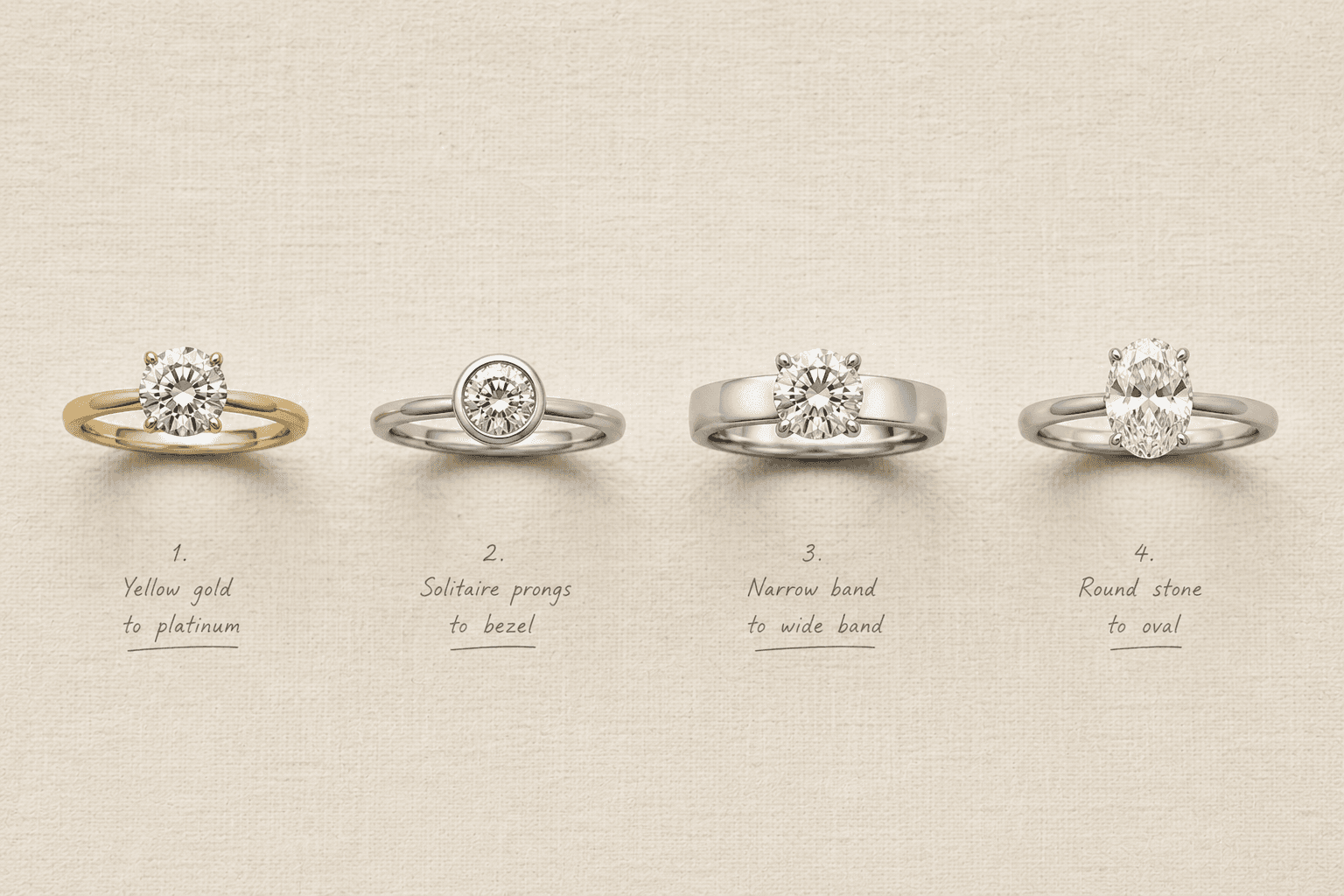
If an heirloom piece contains beautiful gemstones in an outdated setting, redesigning it preserves the meaningful stones while creating something you will love wearing. This is covered in greater depth in our posts on redesigning family rings and updating inherited pieces.
Common redesign approaches include resetting a center stone into a new ring, converting a brooch into a pendant, and transforming a ring into earrings. Each approach preserves the original material while creating a piece suited to contemporary style.
Navigating Family Dynamics
When Multiple Family Members Offer Pieces
Receiving heirloom offers from multiple family members is a wonderful problem to have, but it requires diplomatic handling. Accept every offer graciously and find a way to incorporate each piece, even if some are more prominent than others.
Create a hierarchy of visibility based on your relationship and the piece's wedding-day suitability. Wear the most wearable piece as your primary bridal accessory. Attach the next to your bouquet. Carry another in your clutch or pocket. Photograph all pieces together in a family jewelry flat-lay that honors every contributor.
Receiving a Piece You Do Not Love
Not every heirloom aligns with your taste, and that is perfectly normal. If a family member offers a piece that does not suit your style, focus on the love behind the gesture rather than the aesthetics of the object. Find a creative, respectful way to include it that does not compromise your vision.
Hidden placements work beautifully for pieces that carry sentimental value without matching your aesthetic. Pinning a brooch inside your dress, carrying a piece in a hidden pocket, or wearing it during the getting-ready photos (then removing it before the ceremony) all honor the gift without affecting your planned look.
Having the Conversation About Alterations
If you want to redesign an heirloom, approach the conversation with sensitivity. Frame your request positively by emphasizing how much you love the piece and want to wear it regularly. Explain that updating the setting will allow you to enjoy it daily rather than leaving it stored away.
Many family members are delighted to see their jewelry transformed and worn. Others may prefer the piece remain untouched. Respect these wishes and find alternative incorporation methods if redesign is not welcomed.
Preserving History Through Documentation
Before the Wedding
Photograph every heirloom piece before your wedding, capturing details, markings, and any damage. Record the piece's provenance by interviewing family members about its history. Who bought it? When? For what occasion? Who has worn it since? This oral history is as precious as the jewelry itself and may be lost if not captured.
Wedding Day Documentation
Brief your photographer about the significance of each heirloom piece. Request specific shots that capture the pieces individually, together, and being worn. A photo of your grandmother's ring on your hand while clasping your grandfather's arm is the kind of multi-generational image that becomes a family treasure.
After the Wedding
Consider creating a jewelry provenance document that travels with each piece through future generations. Include photographs, ownership history, the story of its inclusion in your wedding, and care instructions. This document ensures that when your piece becomes someone else's "something old," its full story accompanies it.
Caring for Antique and Vintage Pieces
Heirloom jewelry requires gentler care than modern pieces. Antique settings may use older soldering techniques that are less resistant to chemicals. Vintage gemstones may have been treated with methods that are vulnerable to modern cleaning solutions.
Have your heirloom pieces cleaned professionally by a jeweler experienced with antique jewelry. Avoid ultrasonic cleaners for very old pieces, as the vibrations can loosen ancient settings. Instead, use gentle soap and water with a very soft brush. Store heirloom pieces separately from modern jewelry to prevent harder stones from scratching softer antique metals.
Visualizing Heirloom Redesigns With Tashvi AI
If you are considering redesigning a family heirloom, Tashvi AI lets you explore how inherited gemstones and materials might look in new settings before committing to any changes. Upload a description of your heirloom's center stone and generate concepts showing it in modern ring settings, pendant designs, or earring styles. This visual exploration helps you make confident decisions and gives you images to share with family members when discussing potential redesigns.
Tashvi AI can also help you design complementary new pieces that coordinate with the heirloom you plan to wear unchanged. If your grandmother's pearl necklace will be your primary bridal piece, generate earring and bracelet concepts on Tashvi AI that match its style and era. Try designing on Tashvi AI free
The Legacy Continues
Every time you incorporate family jewelry into a milestone moment, you add another chapter to its story. Your wedding day becomes part of the piece's history, joining the stories of everyone who wore it before you. Someday, this piece may travel to another wedding, carrying your love story along with all the others woven into its metal and stone.
Frequently Asked Questions
Quick answers to the questions readers ask most about this guide.
How do I incorporate an heirloom that does not match my style?
You do not have to wear the piece visibly. Pin a grandmother's brooch inside your dress bodice, wrap it around your bouquet stem, or attach it to a charm on your bouquet. You can also have a jeweler extract a gemstone from the heirloom and set it into a new piece that matches your aesthetic.
Should I have heirloom jewelry repaired before my wedding?
Yes, have any heirloom piece professionally inspected and repaired at least two months before your wedding. Check for loose stones, weak clasps, and worn prongs. A jeweler can reinforce settings and polish the piece without altering its character. This prevents any embarrassing losses during your celebration.
Can I alter a family heirloom without offending family?
Communication is key. Discuss your plans with the family member who gave you the piece before making any changes. Many families appreciate seeing heirloom jewelry updated and worn rather than sitting unworn in a box. Frame your redesign as honoring the piece by giving it new life.
What if multiple family members offer heirloom jewelry?
Graciously accept all offers and find a way to incorporate each piece. Wear one as your primary bridal piece, pin another to your bouquet, carry one in your clutch, and photograph them all together for detail shots. Each family member will feel honored, and your jewelry tells a multi-generational story.
How do I honor a deceased family member through jewelry?
Wearing a loved one's jewelry on your wedding day is one of the most powerful tributes possible. Attach their piece to your bouquet where you can glance at it during the ceremony. Frame the piece with a photo in your getting-ready suite. Mention the piece and its origin in your ceremony program.