Custom Engagement Rings: Complete Guide to Designing Your Dream Ring
Custom engagement rings let you create a one-of-a-kind symbol of your love. This complete guide walks through the custom ring design process, from initial concept and center stone selection to CAD modeling, production timelines, and budget planning.
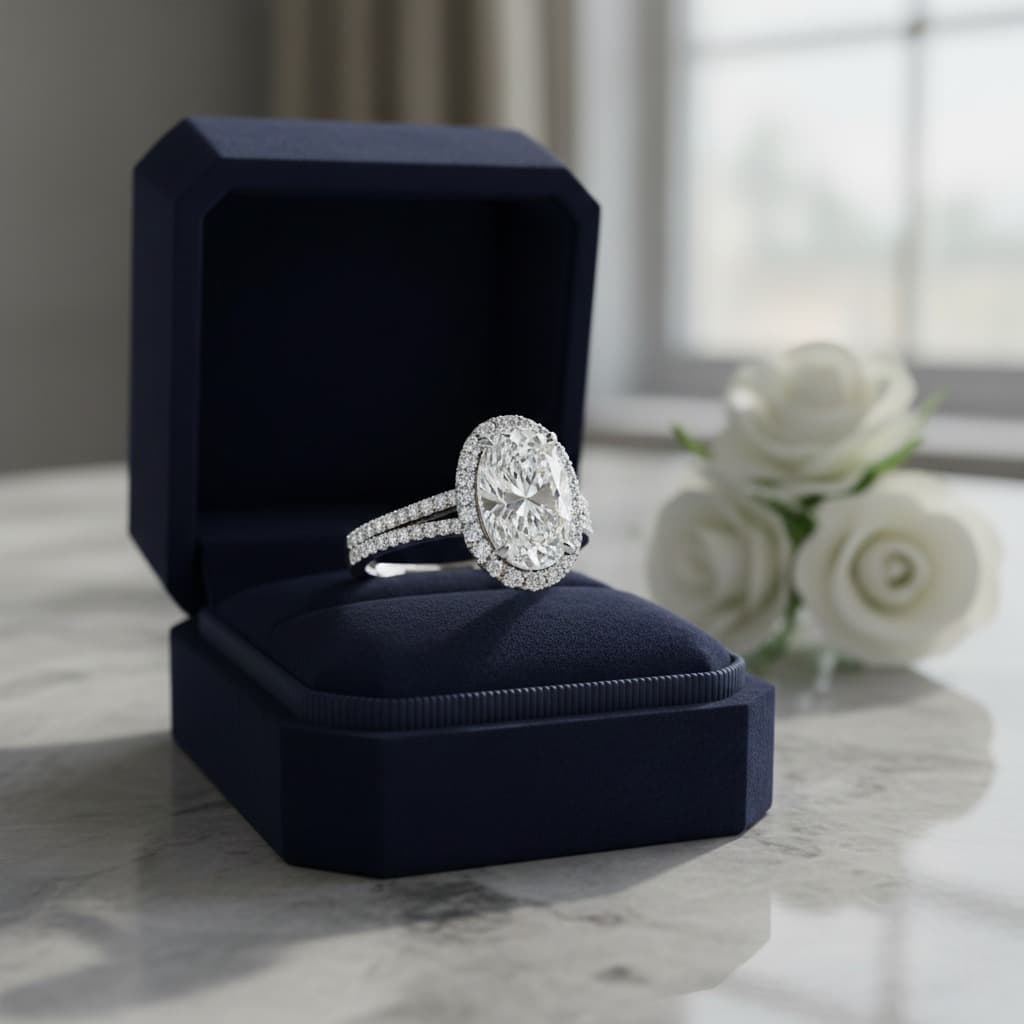
A custom engagement ring is a piece of jewelry designed from scratch to match your exact vision, reflecting your partner's unique style and the story of your relationship. Unlike choosing from pre-made inventory, the custom process gives you complete control over every element, from the center stone shape and setting style to the metal color and hidden details only the wearer will know.
The idea of designing a custom engagement ring can feel both thrilling and overwhelming. Where do you start? How much will it cost? How long does it take? This guide answers every question, walking you through the complete custom ring journey so you can approach the process with confidence and clarity.
Why Choose a Custom Engagement Ring
Choosing custom over ready-made is about more than aesthetics. It is about creating something that cannot be found in any display case.
Uniqueness and Personal Meaning
A custom ring can incorporate details that carry personal significance. Perhaps you want to set your grandmother's diamond in a modern halo design, include a hidden sapphire on the inner band representing your partner's birthstone, or recreate the silhouette of a ring from a favorite vintage era. These details transform a ring from beautiful jewelry into a meaningful artifact of your relationship.
Perfect Fit for Personal Style
Everyone's taste is different. Your partner might love vintage Edwardian aesthetics but prefer a pear-shaped stone, a combination that may not exist in ready-made collections. Custom design eliminates compromise. You get exactly the combination of setting style, stone shape, and metal that matches your vision.
Quality Control
With a custom ring, you select every component. You choose the specific diamond or gemstone rather than accepting whatever stone a manufacturer paired with a setting. You specify the metal purity, the prong style, and the finishing. This level of control ensures the final piece meets your standards in every dimension.
The Custom Design Process
Understanding the stages of custom ring creation helps you plan your timeline and set realistic expectations.
Stage 1 - Consultation and Concept
The process begins with a conversation. Whether you meet with a jeweler in person, fill out an online design brief, or describe your vision to an AI design platform, this initial stage captures your preferences.
Come prepared with the following information if possible. Your budget range. Your partner's ring size, or at least an approximation. Style preferences, including any photos or screenshots of rings your partner has admired. Metal preference, whether yellow gold, white gold, rose gold, or platinum. Center stone preferences, including diamond versus gemstone, and any preferred shapes.
Do not worry if you lack strong opinions on every detail. A good jeweler or design tool will guide you through the options. The consultation stage is about establishing direction, not making final decisions.
Stage 2 - Design and Sketching
Based on the consultation, the designer creates initial concepts. This might be hand sketches, digital illustrations, or AI-generated renderings depending on the jeweler's process.
Expect to see two or three initial concepts that interpret your brief in different ways. One might emphasize the vintage element you mentioned while another prioritizes the modern minimalism you also expressed interest in. This stage is where the design takes shape, and feedback is essential. Be honest about what you like and what misses the mark.
Stage 3 - CAD Modeling
Once you approve a design direction, the jeweler creates a detailed 3D CAD (Computer-Aided Design) model. This digital model shows the ring from every angle with precise measurements and proportions.
The CAD stage is your most important review opportunity. You can see exactly how the ring will look, including band width, prong placement, stone height above the finger, and overall proportions. Request changes now, because modifications after this point become expensive.
| CAD Review Checkpoint | What to Look For |
|---|---|
| Profile View | Band height, stone elevation, comfort fit |
| Top View | Setting symmetry, accent stone placement |
| Side View | Gallery design, hidden details |
| Proportions | Band width relative to stone size |
| Finger Fit | How the ring sits on the finger profile |
Stage 4 - Wax Model or 3D Print (Optional)
Some jewelers offer a wax model or resin 3D print of the ring before casting in metal. This physical prototype lets you see the ring's size and proportions in real life, which can reveal things a screen cannot. If your design is complex or you want extra assurance, request this step.
Stage 5 - Production
After final approval, the ring enters production. The jeweler casts the ring in the chosen metal, sets the stones, and finishes the piece through polishing, engraving, and quality inspection.
Production typically takes two to four weeks depending on complexity. Pave settings with many small diamonds take longer than simple solitaire designs. Platinum requires different techniques than gold and may add a few days.
Stage 6 - Final Inspection and Delivery
Before delivery, the jeweler performs a final quality check. Stones should be secure, the surface should be free of scratches or pitting, and the ring should match the approved CAD model. Many jewelers provide a certificate of the stones and an appraisal document for insurance purposes.
Timeline Expectations
Planning backward from your proposal date is the safest approach. Here is a realistic timeline breakdown.
| Phase | Duration |
|---|---|
| Research and inspiration gathering | 2 to 4 weeks |
| Consultation and concept | 1 to 2 weeks |
| Design and CAD modeling | 1 to 2 weeks |
| Revisions and approval | 1 to 2 weeks |
| Production and stone setting | 2 to 4 weeks |
| Quality check and delivery | 3 to 5 days |
| Total | 7 to 14 weeks |
Starting three to four months before your intended proposal date gives you comfortable room for revisions without rushing. If you are working within a tighter window, discuss rush options with your jeweler during the initial consultation.
Budget Planning for Custom Rings
Custom does not automatically mean expensive, but it does require thoughtful budgeting.
Where the Money Goes
The center stone accounts for the largest portion of most custom ring budgets, typically 50 to 70 percent of the total cost. The setting, including metal, labor, and accent stones, makes up the remaining 30 to 50 percent.
| Budget Component | Approximate Percentage |
|---|---|
| Center stone | 50 to 70% |
| Metal and casting | 10 to 15% |
| Design and CAD fee | 5 to 10% |
| Accent stones | 5 to 15% |
| Labor and finishing | 5 to 10% |
Strategies to Manage Cost
Choose your stone wisely. A lab-grown diamond costs 60 to 80 percent less than a comparable natural diamond. Moissanite offers diamond-like brilliance at a fraction of the price. Colored gemstones like sapphires provide beauty and meaning at varying price points.
Consider 14K gold over 18K. The difference in appearance is minimal, but 14K gold is more durable and less expensive. For white metal, palladium offers a similar look to platinum at a lower cost.
Simplify strategically. A beautifully executed solitaire or three-stone ring can be more striking than an overly complex design. Channel your budget toward stone quality and metal weight rather than intricate details that may go unnoticed.
Choosing Your Center Stone
The center stone defines the character of the ring. This decision involves balancing beauty, durability, budget, and personal meaning.
Diamond Selection
If choosing a diamond, focus on the qualities that matter most visually. Cut quality has the greatest impact on a diamond's beauty. A well-cut diamond with slightly lower color or clarity will typically look better than a poorly cut diamond with perfect grades.
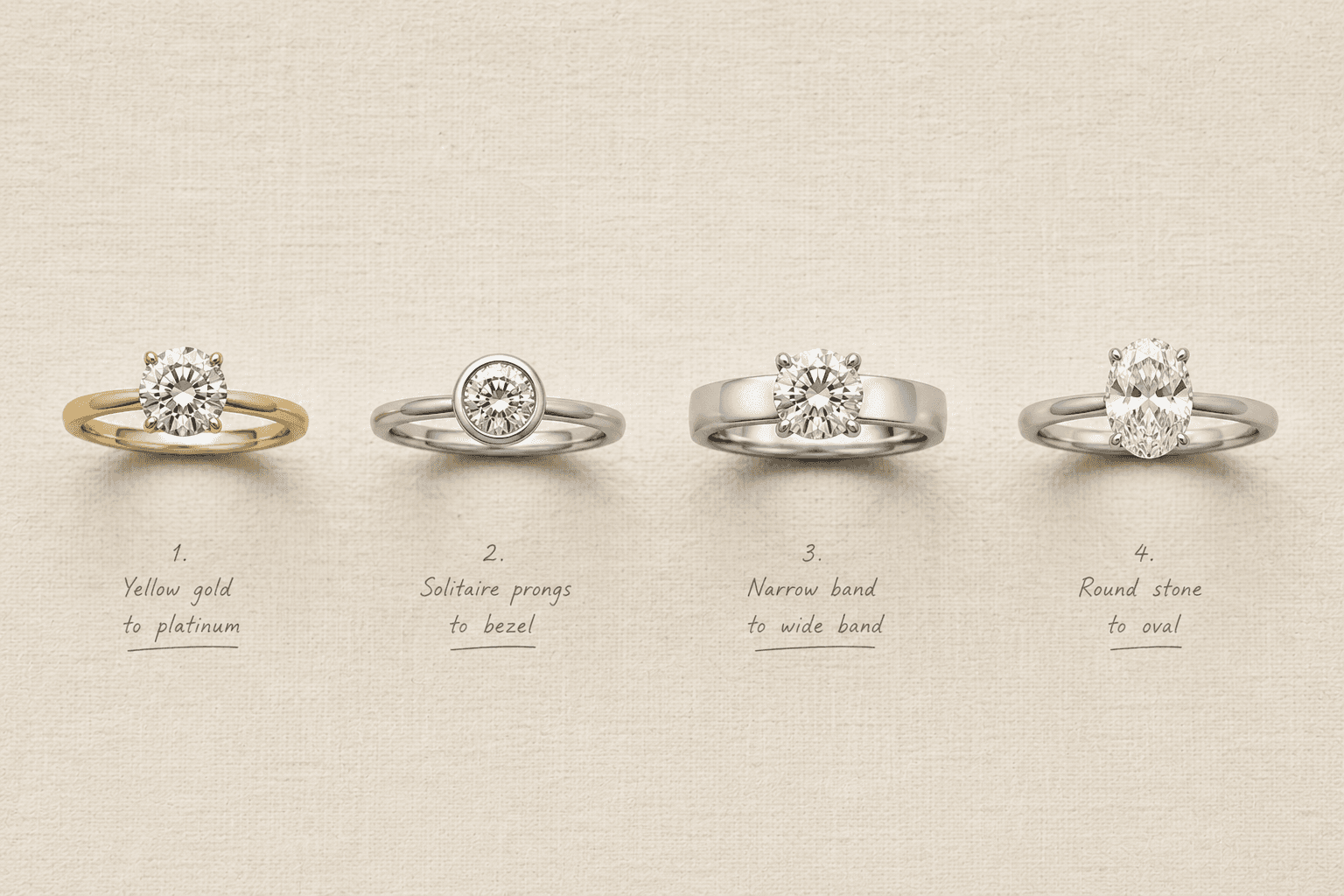
For custom rings, consider fancy shapes like oval, pear, or emerald cuts. These shapes often appear larger per carat than round brilliants and can offer better value. An oval diamond also elongates the finger, a quality many people find flattering.
Gemstone Alternatives
Colored gemstones bring personality and meaning to custom rings. Sapphires rate 9 on the Mohs hardness scale, making them durable enough for daily wear. Emeralds and rubies offer vivid color but require more careful setting to protect them.
If you choose a softer gemstone, discuss protective setting options with your jeweler. Bezel settings surround the stone with metal, offering more protection than prong settings.
Setting Style Options
The setting determines how the stone is held and how the ring looks on the hand. Your choice of setting dramatically affects the ring's overall aesthetic.
A solitaire setting keeps all attention on the center stone. A halo adds a ring of smaller diamonds that makes the center stone appear larger and adds sparkle. A bypass or twist setting creates a flowing, organic feel. A toi et moi setting features two stones side by side, symbolizing the joining of two lives.
Consider how the setting will pair with a wedding band. Some settings, particularly high-profile halos and cathedral solitaires, may require a contoured wedding band that curves around the engagement ring. Discuss this during the design phase so both rings work together as a set.
Working with a Jeweler vs AI Design Tools
The traditional path involves finding a skilled custom jeweler, which remains an excellent option for the production phase. But the design and visualization phase has been transformed by technology.
The Traditional Jeweler Approach
Working directly with a jeweler offers hands-on experience. You can see stones in person, try on similar rings for comfort and proportion references, and build a personal relationship with the artisan crafting your ring. The challenge is that the design conversation happens through verbal description and reference photos, which can lead to miscommunication.
The AI-Assisted Approach
AI jewelry design tools bridge the communication gap. Instead of describing "a vintage-style ring with an oval diamond and milgrain detail" and hoping the jeweler interprets your vision correctly, you can generate photorealistic visualizations of your concept in seconds. This lets you refine proportions, test different stone shapes, compare setting styles, and arrive at the design conversation with a clear visual reference.
Many couples in 2026 use a combined approach. They use AI visualization to develop and refine their design concept, then bring those renderings to a trusted jeweler for production. This hybrid workflow saves time, reduces miscommunication, and often results in a more satisfying final piece.
Common Mistakes to Avoid
Learning from others' experiences helps you navigate the custom process smoothly.
Skipping the CAD approval. Never approve production without reviewing a detailed CAD rendering or 3D model. Changes are easy and inexpensive at the digital stage but costly and sometimes impossible after casting.
Ignoring the profile view. Many people focus on how the ring looks from above but forget to check the side profile. A ring that sits too high can snag on clothing and feel uncomfortable. A ring that sits too low may not allow light to enter the stone properly.
Forgetting about the wedding band. Design your engagement ring with the wedding band in mind. Ensure there is enough space for a band to sit flush alongside the engagement ring, or plan for a contoured band from the start.
Choosing aesthetics over comfort. A ring that looks perfect in a rendering but feels uncomfortable on the finger will not be worn happily. Ask about comfort-fit shanks, smooth interior edges, and appropriate band widths for your partner's finger size.
Rushing the process. Custom work takes time. Starting too late leads to compromises in design revisions or quality. Begin the process at least three months before you need the ring.
Designing with Tashvi AI
Tashvi AI transforms the early stages of custom ring design by letting you visualize your dream ring before you ever step into a jeweler's workshop. Describe any combination of stone shape, setting style, metal color, and design details, and see a photorealistic rendering in moments. Test an oval solitaire in yellow gold, then compare it to the same stone in a rose gold halo. Experiment with vintage details, modern minimalism, or anything in between.
The platform is especially valuable for couples designing together, as it eliminates the guesswork and lets both partners contribute to the creative process in real time. Once you have refined your concept, you can download the visualization to share with a jeweler for production.
Try designing on Tashvi AI free
Your Ring, Your Story
A custom engagement ring is one of the few possessions that carries genuine emotional weight for a lifetime. The process of designing it, from the first spark of an idea to the moment the finished ring catches the light, adds a layer of meaning that no off-the-shelf purchase can replicate.
Whether you start with a clear vision or a vague feeling, the tools and guidance available in 2026 make custom ring design more accessible than ever. Take your time, trust the process, and remember that the best custom ring is one that tells your unique story.
Frequently Asked Questions
Quick answers to the questions readers ask most about this guide.
How much more does a custom engagement ring cost compared to a ready-made ring?
Custom engagement rings typically cost 10 to 30 percent more than comparable ready-made designs due to the design consultation, CAD modeling, and individual craftsmanship involved. However, you control the budget by choosing the stone, metal, and complexity. Some custom rings actually cost less than designer brand equivalents because you avoid brand markup.
How long does it take to make a custom engagement ring?
The full custom engagement ring process typically takes 4 to 8 weeks from initial consultation to finished ring. This includes 1 to 2 weeks for design and CAD modeling, 1 to 2 weeks for revisions and approval, and 2 to 4 weeks for production. Rush orders may be possible in 2 to 3 weeks for an additional fee.
Can I bring my own diamond or gemstone for a custom ring?
Yes, most custom jewelers welcome customer-supplied stones. This is common when using a family heirloom diamond or a stone you purchased independently. The jeweler will evaluate the stone to ensure it is suitable for your chosen setting and may charge a setting fee rather than a full ring price.
What if I do not like the final custom ring?
Reputable custom jewelers include multiple review stages to prevent disappointment. You approve the design sketch or CAD rendering before production begins. Most jewelers allow minor adjustments after casting, such as polishing changes or small sizing corrections. Major design changes after production typically incur additional costs, which is why the approval stages are so important.
Is it better to work with a local jeweler or an online custom ring service?
Both options have advantages. Local jewelers offer in-person consultations, the ability to see stones in person, and hands-on adjustments. Online services often provide wider stone inventories, competitive pricing, and advanced visualization tools like AI rendering. Many people use a hybrid approach, designing online with AI tools and then working with a local jeweler for production.