How Predictive Analytics Optimizes Jewelry Inventory
Discover how predictive analytics and machine learning help jewelry retailers forecast demand, reduce overstock, minimize stockouts, and optimize inventory investment across seasonal cycles and changing consumer trends.
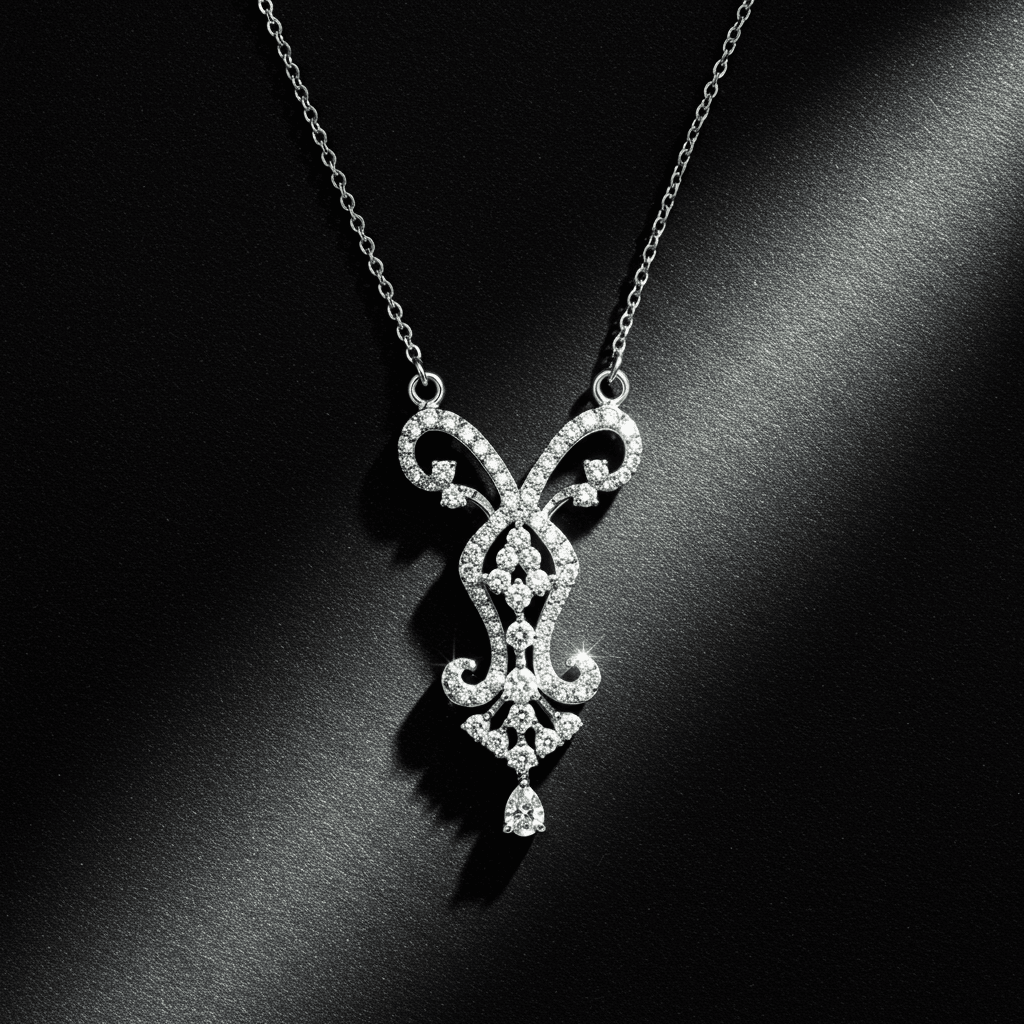
Predictive analytics transforms jewelry inventory management by using machine learning to forecast demand patterns, seasonal fluctuations, and trend shifts with up to 85 percent accuracy. Retailers using these tools reduce carrying costs by 15 to 30 percent and stockouts by 40 to 60 percent, ensuring the right pieces are available when customers are ready to buy while minimizing capital tied up in slow-moving stock.
Jewelry inventory presents unique challenges that set it apart from general retail. High unit values mean that overstock ties up significant capital. Long production lead times for custom and fine pieces make reactive restocking impractical. Seasonal demand swings driven by holidays, engagements, and wedding seasons create predictable but sharp spikes. And fashion trends can shift the desirability of entire product categories in a matter of weeks.
Predictive analytics addresses all of these challenges by replacing intuition-based ordering with data-driven forecasting.
The Cost of Getting Jewelry Inventory Wrong
Before examining how predictive analytics works, it is worth understanding what poor inventory management costs the jewelry industry. The numbers are staggering.
The average independent jeweler carries 12 to 18 months of inventory, compared to 2 to 4 months for general retail. This means a jeweler with 500,000 dollars in annual revenue might have 750,000 dollars or more tied up in inventory at any given time. Industry estimates suggest that 20 to 30 percent of this inventory qualifies as "dead stock," pieces that have not sold in over a year.
| Inventory Problem | Industry Average Impact | Annual Cost for Mid-Size Jeweler |
|---|---|---|
| Dead Stock | 20 to 30 percent of inventory | 150,000 to 225,000 dollars |
| Stockouts on Popular Items | 8 to 15 percent lost sales | 40,000 to 75,000 dollars |
| Carrying Costs | 25 to 35 percent of inventory value | 187,000 to 262,000 dollars |
| Markdown Losses | 10 to 20 percent on clearance | 50,000 to 100,000 dollars |
| Trend Misses | Variable | 30,000 to 80,000 dollars |
These costs compound silently. Dead stock does not generate revenue but still incurs insurance, storage, and opportunity costs. Meanwhile, stockouts on trending items represent permanently lost sales that competitors capture.
How Predictive Models Work for Jewelry
Jewelry demand prediction models combine multiple data streams to generate forecasts at various granularity levels, from overall category trends down to specific SKU performance.
Time Series Analysis
The foundation of jewelry demand forecasting is time series analysis, which identifies recurring patterns in historical sales data. These models capture annual seasonality (Valentine's Day, Mother's Day, holiday season), day-of-week patterns (weekends typically see higher engagement ring sales), and long-term growth or decline trends for specific categories.
Advanced time series models like Prophet and ARIMA variants handle the irregular seasonality common in jewelry retail, where a spike might last two weeks for Valentine's Day but six weeks for the December holiday season.
External Signal Integration
Pure historical analysis misses emerging trends. To capture these, predictive models incorporate external data signals including social media engagement metrics for specific jewelry styles, search volume trends for keywords like "tennis bracelet" or "layered necklaces," fashion week and celebrity influence tracking, economic indicators that correlate with luxury spending, and engagement and wedding rate projections.
These external signals help retailers anticipate demand shifts before they appear in sales data. When a celebrity is photographed wearing a distinctive jewelry style, the resulting demand spike can be predicted weeks before orders materialize.
Customer Segmentation Forecasting
Not all customers buy the same way. Predictive analytics segments the customer base and forecasts demand for each segment independently. First-time engagement ring buyers have different seasonal patterns than repeat gift purchasers. High-value customers respond differently to trends than price-sensitive shoppers.
Segment-level forecasting produces more accurate predictions than aggregate models because it accounts for the different motivations and behaviors within the customer base.
Seasonal Planning With AI
Jewelry demand follows predictable seasonal patterns that predictive analytics can optimize around. The key is not just knowing that demand spikes in December but understanding exactly which categories spike, by how much, and when the ramp-up begins.
| Season | Peak Period | Top Categories | Optimal Stocking Window |
|---|---|---|---|
| Valentine's Day | Feb 1 to 14 | Hearts, pendants, rings | Stock by Jan 15 |
| Mother's Day | 2 weeks before | Birthstone, personalized | Stock by Apr 1 |
| Wedding Season | May to September | Bands, bridal sets | Stock by April |
| Holiday Season | Nov 15 to Dec 24 | All categories | Stock by Nov 1 |
| Graduation | May to June | Starter luxury, pearls | Stock by April |
Predictive models go beyond this basic calendar by adjusting forecasts based on current-year signals. If Valentine's Day falls on a Saturday, expect higher sales than a Tuesday. If economic sentiment is strong, upgrade the forecast for higher price points. If social media is trending toward a specific style, increase allocation for matching inventory.
Understanding broader jewelry design trends for 2026 helps retailers contextualize what their predictive models are forecasting and make informed decisions about which trend signals to weight more heavily.
Real-Time Inventory Optimization
Static forecasts generated once per quarter are not sufficient for modern jewelry retail. Predictive analytics systems continuously update their models as new data arrives, enabling real-time inventory optimization.
When a particular pendant style sells three times faster than predicted during the first week of a promotion, the system automatically adjusts its forecast upward, triggers reorder recommendations, and alerts the merchandising team. Conversely, when a category underperforms expectations, the system recommends markdown timing and depth to minimize losses.
This continuous feedback loop keeps inventory aligned with actual demand rather than outdated predictions. The best systems learn from their own forecast errors, improving accuracy with each cycle.
Demand Forecasting for Custom and Made-to-Order Pieces
Custom jewelry introduces additional forecasting complexity because each piece is unique. However, predictive analytics still provides value by forecasting demand for custom services at the category level.
Models can predict how many custom engagement ring consultations to expect each month, the likely distribution of preferred metals and center stones, average price points for custom orders, and production capacity requirements based on projected order volumes.
This information helps workshops plan staffing, material procurement, and equipment scheduling. A surge in custom orders that catches a workshop unprepared leads to extended lead times and customer disappointment. Predictive planning prevents this.
For jewelers building design-to-order capabilities, understanding the AI-powered design workflow helps frame how predictive demand forecasting connects to production capacity planning.
Trend Detection and Early Response
One of the most valuable applications of predictive analytics is early trend detection. By monitoring social media, search engines, and fashion media, AI systems identify emerging jewelry trends 4 to 8 weeks before they peak in retail demand.
This early warning gives retailers time to adjust inventory, create marketing content, and position themselves to capture trend-driven demand from the start rather than scrambling to restock after the trend is already mainstream.
The system tracks signals at multiple levels. A macro trend like "quiet luxury" influences broad category performance. A micro trend like "tennis bracelet stacking" affects specific product types. Predictive models combine these signals to produce actionable recommendations at the SKU level.
Markdown Optimization
When inventory does not sell as expected, the timing and depth of markdowns significantly impact total recovery. Predictive analytics optimizes markdown strategy by analyzing historical clearance performance, competitive pricing, remaining demand potential, and holding costs.
Rather than applying blanket 30 percent discounts at the end of a season, AI-driven markdown optimization might recommend 15 percent off for pieces with strong remaining demand potential, 35 percent for pieces in declining categories, and immediate clearance for styles that data suggests will not recover.
This precision approach typically recovers 10 to 20 percent more revenue compared to manual markdown decisions.
How Tashvi AI Connects Design Trends to Inventory Intelligence
While Tashvi AI focuses primarily on the design side of the jewelry business, its data on design preferences generates valuable inventory intelligence. When thousands of users create designs on Tashvi's platform, the aggregate preferences reveal emerging style trends in real time. If users are suddenly requesting more vintage-inspired designs or if demand for specific gemstone types shifts, this data provides early signals that retailers can use to inform inventory decisions.
Tashvi AI also helps retailers reduce inventory risk by enabling made-to-order business models. Instead of stocking finished pieces, retailers can use Tashvi to show customers AI-generated designs, take orders, and produce only what has been sold. This approach dramatically reduces inventory carrying costs while widening the range of pieces you can offer. Try designing on Tashvi AI free and discover how AI-powered design can support a leaner, more responsive inventory strategy.
Building Your Predictive Analytics Capability
Starting with predictive inventory analytics does not require massive technology investments. Begin by consolidating your sales data into a clean, structured format. Even two years of transaction history provides enough foundation for basic seasonal forecasting.
Cloud-based analytics platforms offer jewelry-specific forecasting modules that connect to popular point-of-sale systems. These platforms handle the complex modeling while presenting results as straightforward reorder recommendations and dashboard visualizations.
The most important step is committing to data-driven decision making. Even imperfect predictions outperform gut feelings when applied consistently. As your data grows and your models learn, forecast accuracy improves steadily, creating a competitive advantage that compounds over time.
Jewelry retailers who embrace predictive analytics today are not just optimizing their current operations. They are building the data infrastructure and analytical capabilities that will define success in an increasingly data-driven retail landscape.
Frequently Asked Questions
Quick answers to the questions readers ask most about this guide.
What is predictive analytics in jewelry inventory management?
Predictive analytics uses historical sales data, market trends, seasonal patterns, and external signals to forecast future jewelry demand. Machine learning models analyze these inputs to recommend optimal stock levels for each product category, reducing both overstock and stockout situations.
How much can predictive analytics reduce jewelry inventory costs?
Jewelry retailers implementing predictive analytics typically see 15 to 30 percent reductions in carrying costs, 40 to 60 percent fewer stockouts, and 20 to 35 percent less dead stock. Combined, these improvements can increase overall profitability by 8 to 15 percent on inventory investment.
What data does jewelry inventory prediction require?
Effective prediction requires at least two years of historical sales data, seasonal trend information, pricing history, promotional calendar data, and ideally external signals like economic indicators, social media trends, and competitor activity. More data generally produces more accurate forecasts.
Can small jewelry businesses benefit from predictive analytics?
Yes, cloud-based analytics platforms have made predictive tools accessible to businesses of all sizes. Small jewelers can start with basic demand forecasting using their point-of-sale data and scale to more sophisticated models as their data volumes grow.
How does predictive analytics handle jewelry fashion trends?
Advanced models incorporate social media sentiment analysis, fashion runway data, celebrity influence tracking, and search trend monitoring to detect emerging style preferences. This allows retailers to adjust inventory before trends peak, capturing demand early rather than scrambling to restock.