Round vs. Oval vs. Emerald Cut: Which Diamond Shape Is Right for You?
Comparing the three most popular engagement ring diamond shapes. Learn how round, oval, and emerald cut diamonds differ in sparkle, size appearance, price, and which hand shapes they complement best.
Round brilliant, oval, and emerald cut are the three most popular diamond shapes for engagement rings in 2026, and choosing between them is often the most debated decision couples face. Each shape produces a distinctly different look, from the explosive sparkle of a round to the elegant geometry of an emerald cut. This guide breaks down every meaningful difference so you can confidently choose the shape that suits your style and hand.
The Fundamental Difference
These three shapes represent two completely different faceting philosophies. Round brilliant and oval diamonds use brilliant-style faceting, with dozens of triangular and kite-shaped facets designed to bounce light back to your eye in intense bursts of sparkle. Emerald cuts use step-cut faceting, with long, parallel facets that create broad, mirror-like flashes.
This distinction in faceting affects everything from sparkle to how forgiving the shape is of imperfections. Understanding this difference is the key to knowing which shape will make you happiest.
Round Brilliant in Detail
The round brilliant has been the gold standard of engagement ring diamonds for over a century. Its 57 to 58 facet pattern was mathematically developed to maximize light return, and no other shape matches its combination of brilliance, fire, and scintillation.
Strengths of Round Diamonds
Round diamonds are the most forgiving of all shapes. Their intense sparkle masks slight color tints and small inclusions, allowing you to save money on color and clarity without visible compromise. A G color, VS2 clarity round diamond looks essentially identical to a D, IF stone to the naked eye.
Rounds are also the most versatile for settings. Every setting style, from classic solitaire to vintage halo to modern bezel, looks exceptional with a round diamond. This versatility means you can focus entirely on personal preference without worrying about compatibility.
Considerations for Round Diamonds
The primary disadvantage is price. Round diamonds cost 20 to 40 percent more per carat than fancy shapes because the cutting process wastes approximately 50 percent of the rough diamond. A one-carat round will cost noticeably more than a one-carat oval or emerald of similar quality.
Round diamonds also have the smallest face-up size per carat of the three shapes. They appear compact and symmetrical rather than elongated, which means they do not create the same finger-lengthening effect.
Oval in Detail
Oval diamonds combine brilliant-style faceting with an elongated silhouette, offering excellent sparkle alongside a flattering visual effect. They have become the most popular alternative to round brilliants.
Strengths of Oval Diamonds
The elongated shape makes ovals appear 10 to 15 percent larger than rounds of the same carat weight. This means a 1.0 carat oval provides similar finger coverage to a 1.15 to 1.25 carat round, delivering better perceived value.
Ovals create an elegant, finger-lengthening effect that is universally flattering. They work beautifully in solitaire settings, where the shape can speak for itself, and equally well in halos that amplify their size advantage. For a deep exploration, see our oval engagement rings guide.
Considerations for Oval Diamonds
The bow-tie effect is the primary concern. Most ovals show some degree of a dark shadow across the center, visible when the diamond is viewed face-up. Well-proportioned ovals minimize this effect, but it requires careful selection. Always view an oval diamond through video or in person rather than relying on a certificate alone.
Ovals also lack standardized cut grading on GIA certificates. Unlike rounds, where Excellent cut is clearly defined, ovals require more personal judgment when assessing proportions and light performance.
Emerald Cut in Detail
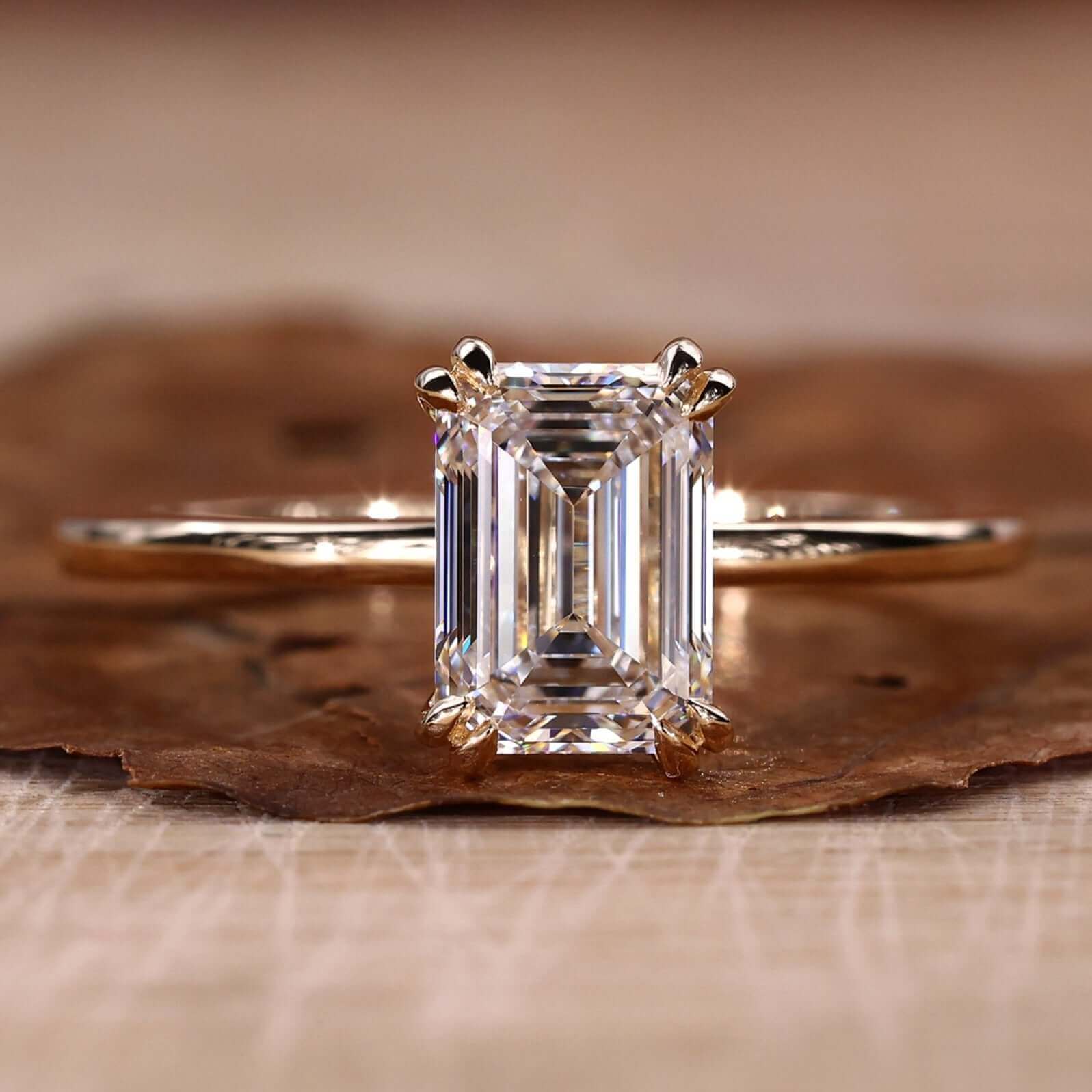
Emerald cuts are rectangular with cropped corners and step-cut faceting. They produce a distinctly different aesthetic that appeals to those who prefer sophistication over sparkle.
Strengths of Emerald Cut Diamonds
The hall-of-mirrors effect is the defining feature. Long, dramatic flashes of light create an architectural quality that feels refined and elegant. Emerald cuts appeal to those who favor clean lines and geometric beauty.
The rectangular shape provides good finger coverage, and the cropped corners add a touch of Art Deco sophistication. Emerald cuts pair exceptionally well with baguette side stones in three-stone settings and look stunning in both solitaire and bezel configurations. Our emerald cut engagement rings guide covers this in depth.
Considerations for Emerald Cut Diamonds
The open, window-like facets make inclusions and color more visible. Higher clarity (VS2 or better) and color (D to G) grades are recommended for emerald cuts compared to brilliant shapes. This can offset some of the per-carat savings.
Emerald cuts will not produce the fiery sparkle that many people expect from a diamond. If intense brilliance is your priority, a round or oval will be more satisfying.
Head-to-Head Comparison
| Feature | Round Brilliant | Oval | Emerald Cut |
|---|---|---|---|
| Sparkle type | Intense brilliance and fire | Strong brilliance with elongated flash | Broad, dramatic flashes |
| Face-up size per carat | Baseline | 10 to 15% larger | 5 to 10% larger |
| Price per carat | Highest | Moderate | Moderate |
| Clarity tolerance | Very forgiving | Forgiving | Less forgiving |
| Color tolerance | Very forgiving | Forgiving | Less forgiving |
| Finger elongation | Minimal | Strong | Moderate |
| Best for | Maximum sparkle lovers | Sparkle plus finger flattery | Sophistication seekers |
Which Shape Suits Your Hand
Short or wide fingers benefit most from oval diamonds, whose elongated shape creates visual length. Round diamonds sit compactly and work best on longer, slender fingers where they appear proportional. Emerald cuts suit medium to long fingers, where their rectangular geometry complements the finger's natural lines.
Of course, personal preference overrides any guideline. Many people with shorter fingers love round diamonds, and many with longer fingers prefer ovals. The "rules" are starting points, not requirements.
Which Shape Fits Your Budget Best
If maximizing visual impact per dollar is your priority, oval diamonds win this comparison. You get brilliant-style sparkle with a larger face-up appearance at a lower cost per carat than round. Emerald cuts offer good value but may require spending more on clarity and color to maintain their clean, transparent aesthetic.
Round diamonds are the premium option. If sparkle is your non-negotiable priority and budget allows, nothing compares. But if you are willing to explore alternatives, both oval and emerald cuts deliver exceptional beauty at lower prices.
Visualize All Three With Tashvi AI
Reading about differences in sparkle and shape is helpful, but seeing them in your preferred setting is transformative. Tashvi AI lets you generate realistic images of round, oval, and emerald cut diamonds in any setting and metal combination. Compare a round solitaire in platinum next to an oval in yellow gold and an emerald cut in rose gold, all in minutes.
This side-by-side visualization helps you move beyond theoretical comparisons and discover which shape genuinely resonates with you. Many buyers are surprised to find that their initial preference changes after seeing realistic renders.
Try designing on Tashvi AI free
Making Your Decision
If you want maximum sparkle and the most versatile shape for any setting, choose round. If you want a flattering, modern look with excellent perceived size and value, choose oval. If you want sophisticated elegance with geometric beauty, choose emerald cut. All three are exceptional choices, and none will disappoint.
For further reading on diamond shapes beyond these three, explore our comprehensive diamond shapes guide.
Frequently Asked Questions
Quick answers to the questions readers ask most about this guide.
Which is more expensive, round, oval, or emerald cut?
Round brilliant diamonds are the most expensive per carat, typically costing 20 to 40 percent more than oval or emerald cuts of similar quality. Oval and emerald cuts are comparably priced, with emerald cuts sometimes slightly less expensive.
Which diamond shape looks biggest on the finger?
Oval diamonds generally look the largest on the finger because their elongated shape spreads weight across a bigger surface area. A one-carat oval can appear similar to a 1.25 to 1.30 carat round diamond when viewed from above.
Do oval diamonds have a bow-tie effect?
Many oval diamonds show some degree of bow-tie, a dark shadow across the center caused by light leaking through the pavilion. Well-cut ovals minimize this effect. Always view the diamond in person or through detailed video before purchasing.
Are emerald cut diamonds less sparkly?
Emerald cuts produce a different type of light performance. Instead of the fiery sparkle of brilliant cuts, they create broad, dramatic flashes called the hall-of-mirrors effect. Many people prefer this sophisticated, understated elegance over intense sparkle.
Can I set all three shapes in the same types of settings?
Yes, all three shapes work in solitaire, halo, and three-stone settings. However, each shape creates a different aesthetic in the same setting. Round and oval look romantic in halos, while emerald cuts create a more geometric, architectural effect.