The Ultimate Engagement Ring Buying Guide for 2026
Everything you need to know before buying an engagement ring in 2026. From diamond shapes and settings to metals and budgets, this comprehensive guide walks you through every decision with confidence.
Buying an engagement ring is one of the most meaningful purchases you will ever make, and in 2026 the process involves choosing between more diamond shapes, settings, metals, and sourcing options than ever before. This guide covers every step from setting your budget to selecting the perfect stone and design so you can shop with confidence and find a ring your partner will treasure.
Why 2026 Is a Great Time to Buy an Engagement Ring
The engagement ring market has shifted dramatically in the last few years. Lab-grown diamonds now offer exceptional quality at a fraction of the cost of mined stones. Online retailers and AI design tools have made customization accessible to everyone. And trends in 2026 favor personal expression over rigid tradition, which means there is no wrong answer as long as the ring reflects your relationship.
Whether you are planning a surprise proposal or shopping together as a couple, the options available today let you create something truly special without overspending.
Step 1. Set Your Budget First
Before browsing any diamonds or settings, decide what you are comfortable spending. The old guideline suggesting two to three months' salary is outdated and was originally invented by a diamond marketing campaign. In 2026, the average American spends between $5,000 and $7,000 on an engagement ring, but beautiful rings exist at every price point.
Consider your overall financial picture, including any savings goals, debt, or upcoming expenses. A ring that puts you in financial stress is not a loving gesture. Many couples today prefer allocating funds toward experiences or a home purchase and opting for a stunning ring at a more modest budget.
For detailed strategies at specific price levels, see our guides on buying at different budgets.
Step 2. Learn the 4Cs of Diamond Quality
Understanding the four quality factors helps you get the best value for your money.
Cut
Cut is the single most important factor for a diamond's beauty. It determines how well light reflects through the stone, creating brilliance and sparkle. Always prioritize Excellent or Ideal cut grades. A well-cut diamond will look larger and more brilliant than a poorly cut stone of the same carat weight.
Color
Diamond color is graded on a D (colorless) to Z (light yellow) scale. For the best value, look at the G to I range. These diamonds appear white to the naked eye, especially once set in a ring, but cost significantly less than D to F grades.
Clarity
Clarity measures internal inclusions and surface blemishes. VS1 to VS2 grades offer excellent value because inclusions are invisible without magnification. SI1 can also be a smart choice if you verify the inclusions are not visible from the top view.
Carat Weight
Carat refers to a diamond's weight, not its size. A well-cut one-carat diamond can appear larger than a poorly cut 1.2-carat stone. Shopping just below popular weight thresholds, like 0.9 instead of 1.0 carat, can save 10 to 20 percent with minimal visual difference.
| Factor | Best Value Range | Why It Matters |
|---|---|---|
| Cut | Excellent or Ideal | Controls sparkle and brilliance |
| Color | G to I | Appears white, significant savings |
| Clarity | VS1 to VS2 | Eye-clean at lower cost |
| Carat | Just below thresholds | Same look, better price |
Step 3. Choose Your Diamond Shape
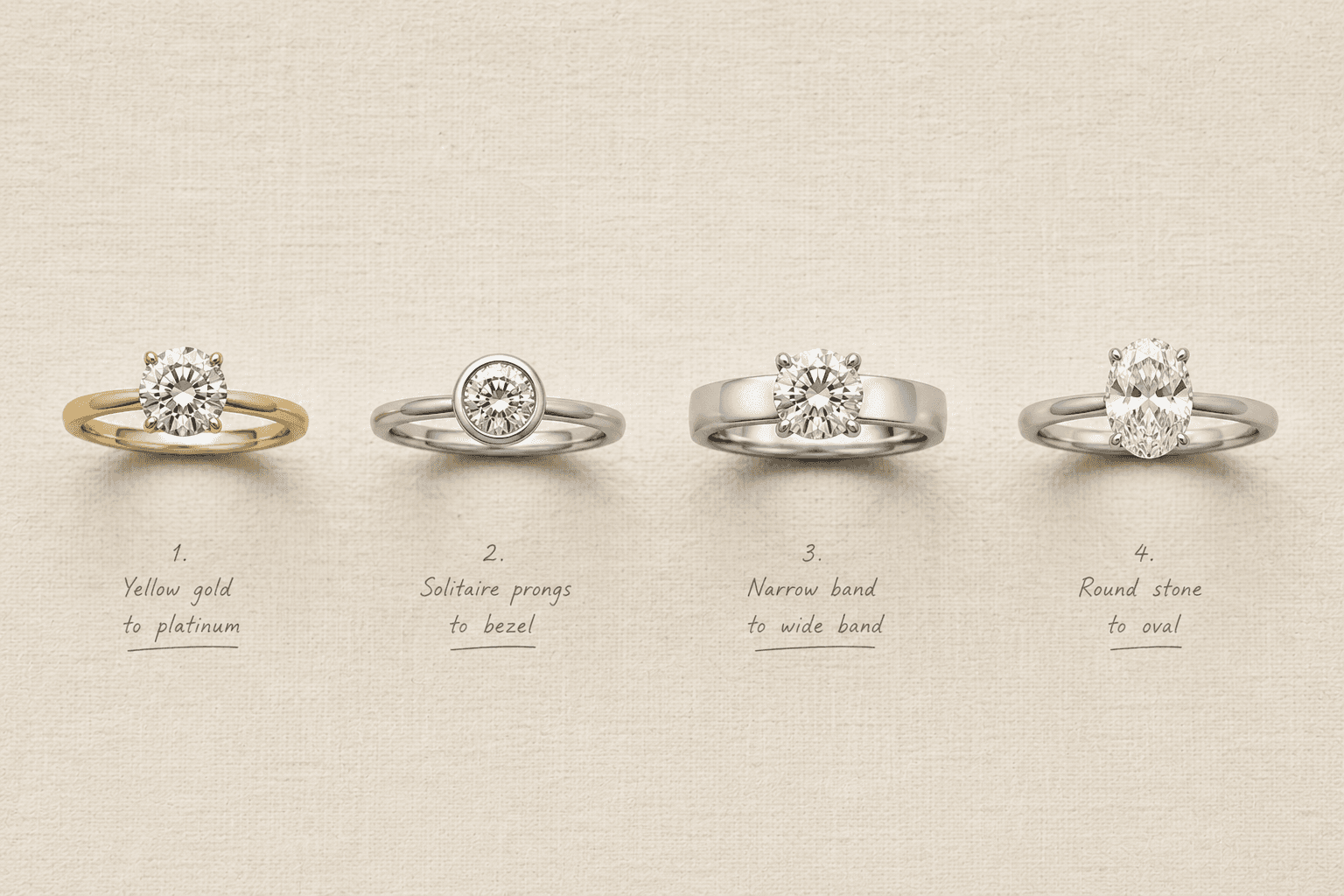
The shape of the diamond defines the ring's personality. Round brilliant remains the most popular for its unmatched sparkle, while fancy shapes like oval, emerald, and cushion offer distinctive character.
Oval diamonds elongate the finger and appear larger per carat than rounds. Emerald cuts deliver an elegant hall-of-mirrors effect. Pear and marquise shapes offer vintage charm with modern appeal. Each shape interacts differently with settings, so consider the full combination.
For a detailed comparison of all major shapes, explore our diamond shapes guide.
Step 4. Select the Right Setting
The setting holds the diamond in place and defines the ring's overall look. Here are the most popular options in 2026.
Solitaire
A single stone on a plain or simple band. Timeless, elegant, and perfect for showcasing the diamond. Solitaires work with every diamond shape and are the easiest to maintain.
Halo
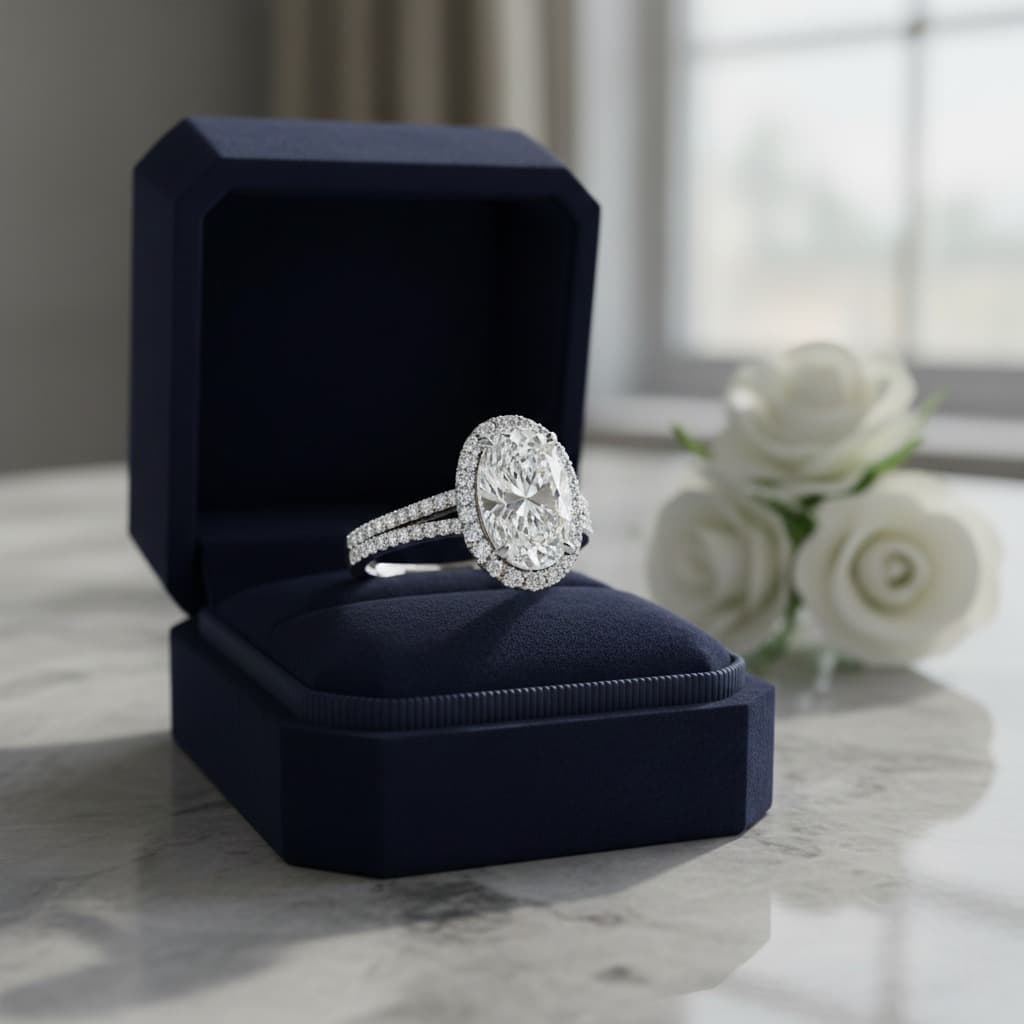
A ring of smaller diamonds surrounds the center stone, adding sparkle and making it appear larger. Halos suit round, oval, cushion, and pear shapes particularly well.
Three-Stone
Three diamonds represent your past, present, and future together. The center stone is usually flanked by two smaller stones that can be the same or different shapes.
Bezel
A metal rim wraps completely around the diamond, providing excellent protection. Bezel settings are sleek, modern, and ideal for active lifestyles.
Pave and Channel
Tiny diamonds line the band, adding continuous sparkle. Pave features small prongs holding each stone, while channel settings tuck stones between two metal walls for a smoother profile.
For a complete breakdown, visit our ring settings guide.
Step 5. Pick Your Metal
The metal choice affects both appearance and durability.
| Metal | Color | Durability | Price Range | Best For |
|---|---|---|---|---|
| Platinum | Cool white | Highest | $$$ | Lifetime wear, sensitive skin |
| 14K White Gold | Cool white | High | $$ | Budget-friendly white metal |
| 18K Yellow Gold | Warm gold | Medium-high | $$ | Warm skin tones, vintage style |
| 14K Yellow Gold | Warm gold | High | $ | Classic look, great value |
| Rose Gold | Pink-warm | High | $$ | Romantic aesthetic, unique look |
Platinum is the most durable precious metal and naturally hypoallergenic. White gold offers a similar look at lower cost but requires rhodium replating every few years. Yellow gold has surged in popularity in 2026, adding warmth and vintage appeal. Rose gold provides a romantic blush tone that flatters many skin tones.
Step 6. Natural vs. Lab-Grown Diamonds
This is one of the biggest decisions in 2026 ring buying. Lab-grown diamonds are chemically, physically, and optically identical to natural diamonds. They are graded on the same 4C scale and certified by the same laboratories.
The primary differences are cost and rarity. Lab-grown diamonds typically cost 60 to 80 percent less than natural diamonds of equivalent quality. This means you can get a significantly larger or higher-quality stone within the same budget. Natural diamonds carry the appeal of geological rarity and tend to hold resale value better.
Neither choice is right or wrong. It depends on your values and priorities. For a thorough comparison, read our lab-grown vs. natural diamonds guide.
Step 7. Get the Ring Size Right
An incorrect ring size can spoil a surprise proposal. Here are reliable ways to find your partner's size without asking directly. Borrow a ring they currently wear on their ring finger and trace its inner circle on paper, or press it into a bar of soap. You can also ask their close friend or family member for help.
If all else fails, size 6 is the most common women's ring size. Most rings can be resized up or down one to two sizes, so being close is more important than being exact. Bezel settings and channel-set bands can be more difficult to resize, so keep that in mind when choosing your setting.
Step 8. Understand Certification and Documentation
Always purchase a diamond that comes with certification from a reputable laboratory. GIA (Gemological Institute of America and IGI (International Gemological Institute are the two most trusted organizations. A certificate provides an objective assessment of the 4Cs and confirms the diamond's identity.
For lab-grown diamonds, IGI certification is the industry standard. For natural diamonds, GIA is generally considered the gold standard. Never purchase an uncertified diamond, as you have no independent verification of its quality.
Common Mistakes to Avoid
Many first-time buyers fall into predictable traps. Overspending because of social pressure is the most common mistake. Prioritizing carat weight over cut quality is another, since a large diamond with poor cut will look dull and lifeless. Buying without certification leaves you vulnerable to overpaying. Ignoring your partner's style preferences means the ring might not match their taste.
Take time to observe what jewelry your partner already wears. Do they favor silver or gold tones? Minimalist or statement pieces? Classic or contemporary? These clues will guide every decision you make.
How Tashvi AI Helps You Shop Smarter
One of the most powerful tools available to 2026 ring shoppers is AI-powered design visualization. Tashvi AI lets you generate photorealistic images of engagement ring designs before you spend a single dollar. You can experiment with different diamond shapes in various settings and metals, compare options side by side, and narrow down your preferences without the pressure of a jewelry store.
This is especially valuable if you are custom designing a ring or trying to decide between several styles. Instead of imagining what an oval diamond in a rose gold bezel setting might look like, you can see it rendered in detail. You can also share designs with trusted friends or family members to get feedback before committing.
Try designing on Tashvi AI free
Your Engagement Ring Buying Checklist
Before you purchase, confirm each of these items. Set a realistic budget that does not cause financial strain. Research your partner's style preferences and ring size. Prioritize diamond cut quality above all other factors. Choose a certified diamond from GIA or IGI. Select a setting that matches your partner's lifestyle and aesthetic. Compare prices across multiple retailers, both online and in store. Ask about warranties, return policies, and resizing options.
An engagement ring is a symbol of your commitment and love. By educating yourself on the options and taking a thoughtful approach, you will find a ring that is beautiful, meaningful, and perfectly suited to your partner.
Frequently Asked Questions
Quick answers to the questions readers ask most about this guide.
How far in advance should I buy an engagement ring?
Plan to start shopping at least two to three months before you intend to propose. Custom designs can take four to eight weeks for production, and you may need time for sizing adjustments after delivery.
What is the most popular engagement ring style in 2026?
Oval solitaires and elongated cushion cuts on thin gold bands dominate 2026 trends. However, personal preference always matters most. Unique settings like bezels and three-stone designs are also gaining popularity.
Do I need to buy a certified diamond?
Yes, always purchase a diamond with certification from GIA or IGI. Certification provides an unbiased assessment of the diamond's cut, color, clarity, and carat weight, protecting your investment and ensuring transparency.
Should I choose a natural or lab-grown diamond?
Both options are chemically identical diamonds. Lab-grown diamonds cost 60 to 80 percent less, making them ideal for maximizing size on a budget. Natural diamonds hold resale value better. Your choice depends on priorities and budget.
What ring size should I buy if I don't know my partner's size?
Size 6 is the most common women's ring size and a safe starting point. You can also borrow a ring your partner wears on that finger and have a jeweler measure it. Most rings can be resized within one to two sizes.