How to Choose the Perfect Diamond Shape for Your Engagement Ring
Choosing the right diamond shape is the most important design decision for your engagement ring. Learn how each shape affects brilliance, finger appearance, cost per carat, and overall style.
The diamond shape you choose will define the character and personality of your engagement ring more than any other single decision. Shape determines how the diamond catches light, how large it appears on the finger, what settings complement it best, and even how much you pay per carat. Understanding the unique qualities of each shape ensures you select one that perfectly matches your style and priorities.
Why Diamond Shape Matters So Much
Shape and cut are technically different things. Shape refers to the geometric outline of the diamond when viewed from above, such as round, oval, or rectangular. Cut refers to how well the diamond's facets are angled and proportioned to reflect light. However, each shape has its own faceting style that produces a distinct type of sparkle.
Some shapes maximize brilliance with explosive fire and scintillation. Others emphasize clarity and clean geometric lines. Your choice of shape influences the setting options available, the optimal metal pairing, and how the ring looks on your hand every day.
Round Brilliant
The round brilliant is the most popular diamond shape, accounting for roughly half of all engagement ring diamonds sold. Its 57 to 58 facets are mathematically optimized for maximum light return, producing unmatched sparkle and fire.
Round diamonds are the most versatile shape for settings, working beautifully in solitaires, halos, three-stone designs, and pavé bands. They are also the most forgiving of slight color or clarity imperfections because their intense brilliance masks inclusions and faint color. The tradeoff is cost, as round diamonds command a premium of 20 to 40 percent over fancy shapes due to the significant rough diamond loss during cutting.
Oval
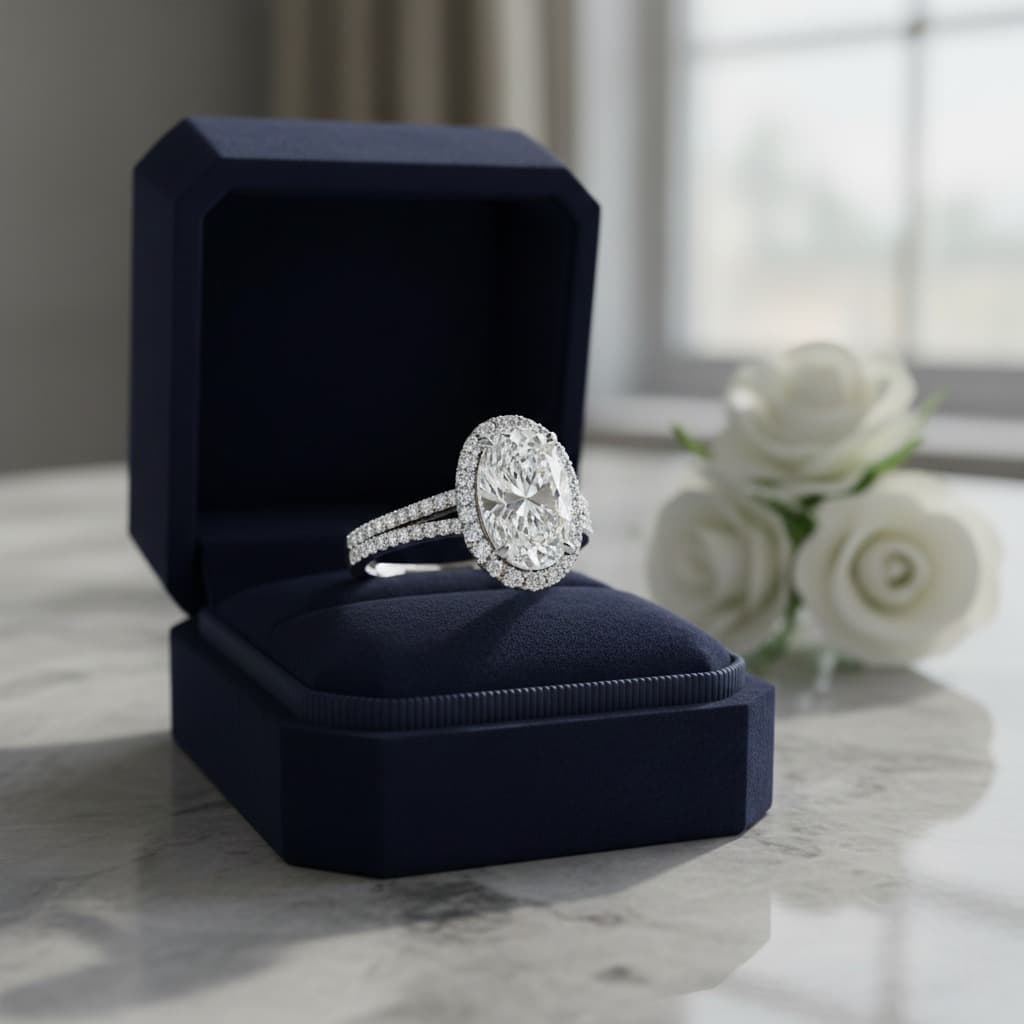
Oval diamonds have surged in popularity and are now the second most requested shape. Their elongated silhouette creates a flattering effect on the finger, making it appear longer and more slender. Ovals face up approximately 10 to 15 percent larger than rounds of the same carat weight.
The brilliant faceting pattern gives ovals excellent sparkle, though they can sometimes display a "bow-tie" effect, a dark shadow across the center. Choosing a well-cut oval minimizes this issue. Ovals pair beautifully with solitaire, halo, and three-stone settings. Learn more in our oval engagement rings guide.
Emerald Cut
Emerald cuts feature step-cut faceting that produces broad, mirror-like flashes of light rather than the sparkle of brilliant cuts. The rectangular shape with cropped corners creates a sophisticated, Art Deco aesthetic that appeals to those who favor understated elegance.
Because the large, open facets act like windows into the diamond, clarity becomes more important with emerald cuts. VS2 or higher clarity is recommended. Color is also more visible, so staying in the D to G range is wise. The elongated shape looks stunning in solitaire and three-stone settings. For more details, visit our emerald cut engagement rings guide.
Cushion Cut
Cushion cuts combine a square or rectangular outline with rounded corners, creating a pillow-like shape that exudes romantic warmth. They come in two main faceting styles. Brilliant cushions offer intense sparkle, while modified cushions display broader light patterns.
Elongated cushion cuts, with a length-to-width ratio of 1.15 to 1.30, have become one of the hottest shapes of 2026. They offer the soft aesthetics of a cushion with the finger-flattering elongation of an oval. Cushion cuts retain more rough diamond weight, making them more affordable per carat than rounds.
Princess Cut
The princess cut is a square shape with pointed corners and brilliant-style faceting. It offers excellent sparkle that rivals round brilliants while presenting a more geometric, modern aesthetic. Princess cuts are among the most affordable shapes because cutting them produces minimal waste from the rough diamond.
The pointed corners are vulnerable to chipping, so V-prong settings or bezel settings that protect the corners are recommended. Princess cuts look particularly striking in channel-set bands and modern solitaire settings.
Pear Shape
Pear-shaped diamonds combine a round end with a pointed tip, creating a teardrop silhouette that is both dramatic and elegant. They offer excellent finger coverage and appear larger per carat than rounds. The pointed tip can be worn facing toward or away from the fingertip, with most people preferring the point facing outward.
Symmetry is critical with pear shapes. The two halves should mirror each other perfectly, and the point should align with the center of the rounded end. Pear shapes work beautifully as center stones and as side stones in three-stone designs. Explore our pear-shaped engagement rings guide for more.
Marquise Cut
The marquise cut features two pointed ends and a boat-shaped outline that maximizes carat weight. Of all diamond shapes, marquise has the largest face-up surface area per carat, making it an excellent choice for those who want maximum visual impact.
Marquise diamonds create a dramatic, elongating effect on the finger. They pair beautifully with side stones and vintage-inspired settings. The pointed ends require protective prong settings. Once considered old-fashioned, marquise cuts are experiencing a strong revival in 2026. Read more in our marquise engagement rings guide.
Radiant Cut
Radiant cuts combine the elegant rectangular outline of an emerald cut with brilliant-style faceting, delivering the best of both worlds. They sparkle intensely like brilliant cuts while maintaining the clean geometric lines of step cuts.
Radiants are excellent for hiding inclusions and slight color, similar to round brilliants. Their trimmed corners make them durable and easy to set. They work well in solitaire, halo, and three-stone configurations and offer strong value per carat.
Comparing Shapes Side by Side
| Shape | Sparkle Level | Face-Up Size | Value per Carat | Best Settings |
|---|---|---|---|---|
| Round | Highest | Baseline | Premium price | All settings |
| Oval | High | 10 to 15% larger | Good value | Solitaire, halo |
| Emerald | Moderate (flashes) | 5 to 10% larger | Good value | Solitaire, three-stone |
| Cushion | High | Similar to round | Strong value | Halo, solitaire |
| Princess | High | 5% smaller face | Best value | Solitaire, channel |
| Pear | High | 10 to 15% larger | Good value | Solitaire, three-stone |
| Marquise | High | 15 to 20% larger | Strong value | Vintage, side stones |
| Radiant | High | 5 to 10% larger | Strong value | Solitaire, halo |
How to Match Shape to Your Hand
Different hand shapes and finger lengths pair naturally with certain diamond shapes. If you have shorter fingers, elongated shapes like oval, marquise, and pear create the illusion of length. If you have longer, slender fingers, wider shapes like round, princess, and cushion sit beautifully without appearing disproportionate.
Wide fingers benefit from elongated shapes or larger stones that provide visual balance. Small hands generally look best with delicate shapes that do not overwhelm the finger. The most reliable way to determine what works is to try different shapes on your hand or use visualization tools.
Use Tashvi AI to Compare Diamond Shapes
Choosing between diamond shapes can feel overwhelming when you are imagining each one in isolation. Tashvi AI solves this by letting you generate realistic images of different diamond shapes in your preferred setting and metal. See how an oval looks in yellow gold, then switch to an emerald cut in platinum, all without leaving your screen.
This visual comparison is far more effective than reading descriptions or viewing generic stock photos. You can experiment with shape, size, and setting combinations until you find the one that feels exactly right. Many couples use Tashvi AI to create a shortlist of two or three favorites before visiting a jeweler.
Try designing on Tashvi AI free
Making Your Final Decision
The perfect diamond shape is the one that makes your heart skip when you see it. There is no objectively best shape, only the shape that resonates with your personal aesthetic and lifestyle. Consider how each shape looks on your hand, how it pairs with your preferred setting, and how it fits your budget. Trust your instincts, and you will find the shape that feels like it was made for you.
Frequently Asked Questions
Quick answers to the questions readers ask most about this guide.
What diamond shape looks the biggest for its carat weight?
Marquise and pear shapes have the largest surface area per carat, making them appear significantly bigger than round diamonds of the same weight. Oval diamonds also face up larger than rounds, typically by 10 to 15 percent.
What is the most affordable diamond shape?
Princess and cushion cuts are generally the most affordable per carat among popular shapes. Their cutting process retains more of the rough diamond, reducing waste and cost. Elongated cushions and radiants also offer excellent value.
Which diamond shape has the most sparkle?
Round brilliant diamonds have the most sparkle due to their 57 to 58 facet pattern, which is mathematically optimized for light return. Radiant and cushion brilliant cuts come close with their modified brilliant faceting.
Does diamond shape affect the appearance of my finger?
Yes, significantly. Elongated shapes like oval, marquise, and pear create a slenderizing effect that makes fingers appear longer and thinner. Round and princess shapes sit more compactly and work best on longer fingers.
Can I change the diamond shape after buying an engagement ring?
You cannot reshape a diamond after it has been cut. However, you can reset a diamond into a new setting. If you want a different shape entirely, you would need to purchase a new diamond and potentially sell or repurpose the original.