The Real Cost of Making a Gold Ring: Breaking Down Every Expense
Discover every cost that goes into making a gold ring, from raw metal and gemstones to casting, labor, finishing, and packaging. This transparent breakdown helps jewelers and consumers understand true production economics.
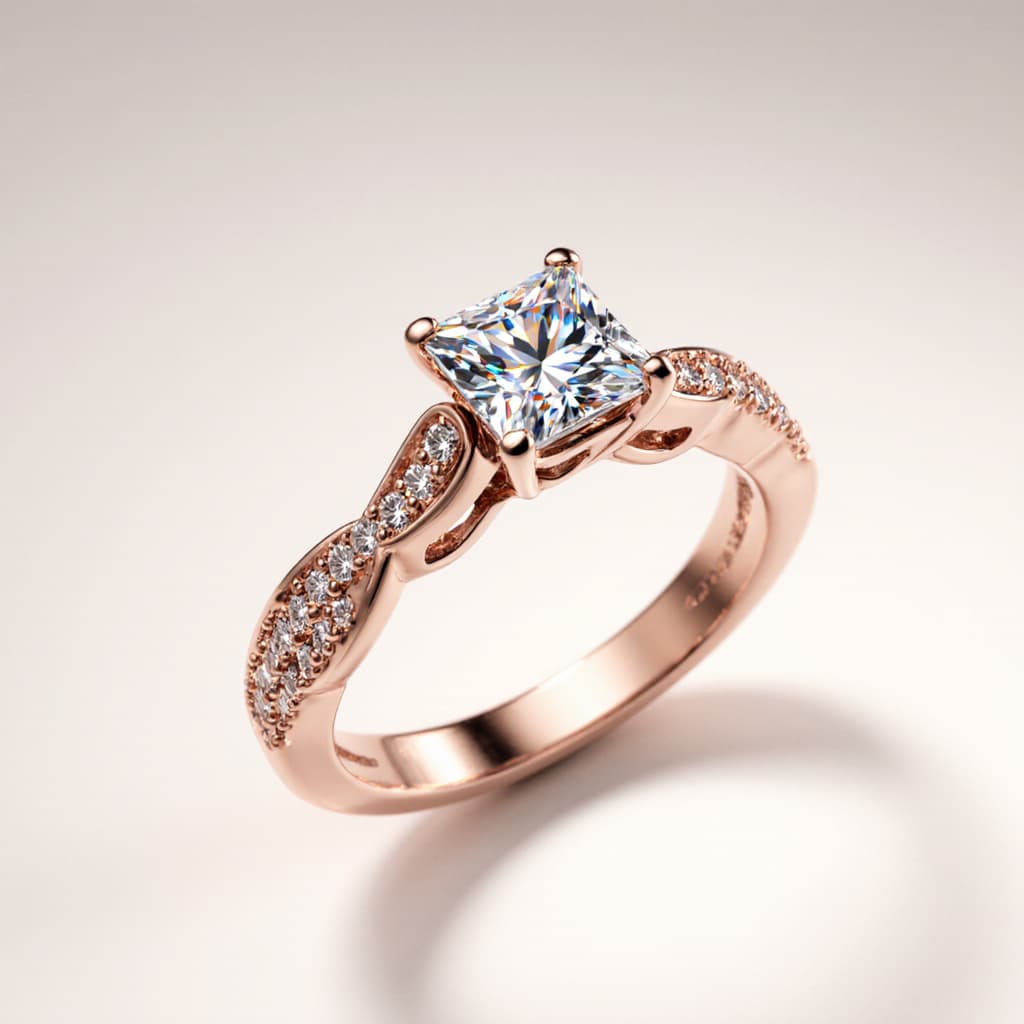
The real cost of making a gold ring includes far more than just the price of gold. Raw materials, casting, labor, stone setting, finishing, quality control, and packaging all contribute to a total production cost that typically ranges from $300 to $2,500 depending on complexity, before any retail markup is applied. Understanding every line item in this cost breakdown helps jewelers price accurately and helps consumers appreciate the craftsmanship behind every piece. For context on gold types, see the guide to 10K, 14K, 18K, and 24K gold, and for broader pricing strategy, explore our complete jewelry pricing formula.
Starting With Raw Materials
The most visible cost in any gold ring is the metal itself. Gold is traded globally as a commodity, and its price fluctuates daily. In early 2026, the spot price of pure 24K gold hovers around $68 to $75 per gram.
However, most jewelry is not made from pure gold. Alloys improve durability and create different colors. Here is what each karat actually costs in gold content.
| Karat | Gold Purity | Gold Content Per Gram | Approximate Alloy Cost Per Gram |
|---|---|---|---|
| 10K | 41.7% | $28 to $31 | $30 to $34 |
| 14K | 58.3% | $40 to $44 | $42 to $47 |
| 18K | 75.0% | $51 to $56 | $53 to $60 |
| 22K | 91.7% | $62 to $69 | $64 to $72 |
The alloy cost per gram is slightly higher than the pure gold content because the alloying metals (copper, silver, zinc, palladium) add their own cost, plus the refiner's fee for producing the alloy.
A typical women's solitaire engagement ring uses 4 to 6 grams of 14K gold. A men's wedding band might use 6 to 10 grams. These weights include some allowance for manufacturing loss.
Metal Cost Example
For a women's 14K gold engagement ring requiring 5.5 grams of cast-ready alloy at $45 per gram, the metal cost is approximately $247.50.
Tashvi AI
Estimate your ring's gold weight from a design — before casting
Describe your ring, see it photorealistically in seconds, and use Tashvi's material analysis to gauge gold weight and cost before you talk to a caster. Free, no CAD skills.
The Gemstone Component
Gemstones can represent anywhere from zero percent of total cost (for a plain band) to 80 percent or more (for a ring with a large, high-quality natural diamond).
| Stone Type | Typical Cost Range | Notes |
|---|---|---|
| 1-carat natural diamond (VS1, G) | $4,000 to $7,000 | Varies widely by cut quality |
| 1-carat lab-grown diamond (VS1, G) | $400 to $800 | 80 to 90 percent less than natural |
| 0.50-carat sapphire (heated) | $200 to $600 | Origin affects price significantly |
| Melee diamonds (1mm to 2mm) | $15 to $40 per carat | Used for pave and accent settings |
| Moissanite (1-carat equivalent) | $50 to $150 | Popular diamond alternative |
The choice between lab-grown and natural diamonds has a massive impact on total ring cost. A customer choosing a lab-grown diamond can redirect thousands of dollars toward a more elaborate setting or higher gold karat.
Design and CAD Modeling Costs
Before any metal is touched, the ring needs to be designed. This phase involves consultation with the client, concept development, and technical modeling.
Hand sketching and concept development typically takes one to three hours. Some jewelers include this in their design fee, while others absorb it as a marketing cost for winning the commission.
CAD modeling is where the technical design is created. A skilled CAD designer charges $75 to $200 per hour, and a moderately complex engagement ring takes three to eight hours to model. That puts CAD costs at $225 to $1,600 per ring.
Revisions add to the design cost. Each revision cycle might take 30 minutes to two hours depending on the scope of changes. Most jewelers include one to two revision rounds in their base fee and charge for additional rounds.
For a solitaire engagement ring with moderate complexity, budget $300 to $600 for design and CAD work.
Casting and Manufacturing
The most common manufacturing method for gold rings is lost-wax casting. Here is what each step costs.
Wax Model or 3D Print
The CAD file is used to produce a wax model, either through traditional hand carving or modern 3D printing. Resin printing for casting models costs $5 to $25 per piece depending on the printing service and complexity. Hand-carved wax models are more expensive, typically $50 to $200, but some artisans prefer the control they offer.
Investment and Casting
The wax model is encased in a plaster-like investment material, burned out in a kiln, and then filled with molten gold. Casting a single ring through a professional casting service costs $30 to $80. In-house casting has lower per-piece costs but requires significant equipment investment.
Cleanup and Assembly
After casting, the ring requires removal from the sprue tree, rough filing, and initial shaping. This takes 30 minutes to one hour of bench time. At a bench jeweler's rate of $60 to $100 per hour, cleanup costs $30 to $100.
Stone Setting
Stone setting is one of the most skilled and time-intensive steps in ring production. The cost depends entirely on the setting style and number of stones.
| Setting Type | Typical Labor Time | Approximate Cost |
|---|---|---|
| Simple prong setting (single stone) | 30 to 60 minutes | $40 to $100 |
| Bezel setting | 45 to 90 minutes | $60 to $130 |
| Pave setting (20 to 30 stones) | 2 to 4 hours | $150 to $350 |
| Channel setting (10 to 15 stones) | 1.5 to 3 hours | $120 to $250 |
| Invisible setting | 3 to 6 hours | $250 to $500+ |
A standard four-prong solitaire setting is the most affordable, while intricate pave or invisible settings can add hundreds of dollars in labor alone. For more on ring settings, see our dedicated guide.
Finishing and Polishing
Finishing transforms a rough casting into a gleaming piece of jewelry. This step includes several sub-processes.
Filing and sanding removes casting imperfections and refines the shape. This takes 20 to 40 minutes for a simple ring.
Polishing brings the metal to its final surface quality. High-polish finishes require multiple stages with progressively finer compounds. Matte or brushed finishes require different techniques but similar time investment. Budget 20 to 45 minutes.
Rhodium plating is standard for white gold rings to enhance whiteness and durability. Plating costs $20 to $50 per ring through a plating service.
Engraving adds $30 to $100 per ring for simple inscriptions. Complex custom engraving costs more.
Total finishing costs for a typical ring run $60 to $180 in labor plus materials.
Quality Control
Every ring should pass through quality control before delivery. This includes checking stone security, verifying dimensions against the original design, inspecting for surface defects, testing for proper hallmark stamps, and photographing the finished piece for records.
QC takes 15 to 30 minutes per piece, adding $15 to $50 to the production cost.
Packaging and Presentation
The ring box, cleaning cloth, care card, and any branded packaging materials add $10 to $100 to the per-piece cost. Luxury brands invest heavily in packaging because the unboxing experience influences perceived value. Budget brands can use quality packaging for $10 to $25 per piece.
The Complete Cost Breakdown
Here is the full picture for a custom 14K gold solitaire engagement ring with a 1-carat lab-grown diamond.
| Cost Category | Amount |
|---|---|
| 14K gold (5.5 grams) | $247 |
| Lab-grown diamond (1 carat, VS1, G) | $600 |
| Findings and solder | $15 |
| Design and CAD | $400 |
| 3D printing of wax model | $15 |
| Casting | $50 |
| Cleanup and assembly | $65 |
| Stone setting (4-prong) | $70 |
| Finishing and polishing | $90 |
| Rhodium plating | $30 |
| Quality control | $25 |
| Packaging | $25 |
| Total production cost | $1,632 |
At a standard 3x retail markup, this ring would sell for approximately $4,896. At 2.5x, it would be $4,080.
Where the Money Really Goes
Looking at the breakdown, labor and skill account for the largest share of production cost, not raw materials. The gold and diamond together represent roughly 52 percent of production cost, while human expertise in design, casting, setting, and finishing accounts for about 40 percent. Overhead and packaging make up the remaining 8 percent.
This is why handmade and custom jewelry costs more than mass-produced pieces. You are paying primarily for human skill and individual attention.
How Tashvi AI Reduces Production Costs
The design and CAD phase represents nearly 25 percent of the production cost in our example. Tashvi AI cuts pre-CAD design time by 80 percent, reducing costly revision cycles that typically add hours of billable time to every project. Instead of spending four hours on initial concept development and presentations, a jeweler can generate photorealistic design options in minutes.
AI material estimation from Tashvi converts 2D designs to accurate gold weight calculations, letting you quote material costs precisely before investing in full CAD modeling. This accuracy reduces the risk of underquoting and protects your margins from the very first client conversation.
Try designing on Tashvi AI free
Understanding the Gap Between Cost and Price
The difference between production cost and retail price is not simply profit. That gap covers business overhead (rent, insurance, utilities, marketing, website, equipment), the time spent on business operations that are not directly billable (accounting, ordering supplies, client communication), taxes and regulatory compliance, and reinvestment in the business.
A healthy jewelry business needs margins that sustain all these invisible costs while still providing a reasonable income for the maker. When consumers understand the real cost of making a gold ring, they appreciate that custom jewelry pricing reflects genuine value at every stage of the process.
Frequently Asked Questions
Quick answers to the questions readers ask most about this guide.
How much does it cost to make a simple gold band?
A simple 14K gold band weighing approximately 4 to 5 grams costs between $180 and $280 in raw materials and $150 to $300 in labor, bringing the total production cost to roughly $330 to $580. This excludes overhead, marketing, and profit margin, which typically double or triple the retail price.
What percentage of a gold ring's price is the actual gold?
The raw gold typically accounts for 20 to 35 percent of a custom gold ring's retail price. The remaining 65 to 80 percent covers gemstones, labor, overhead, marketing, and profit margin. For mass-produced rings sold through retail chains, material costs may represent an even smaller percentage.
Why are custom gold rings more expensive than mass-produced ones?
Custom gold rings cost more because every step requires individual attention. Design consultation, one-off CAD modeling, single-piece casting, hand finishing, and personalized stone setting all add labor hours that mass production eliminates through economies of scale and automated processes.
How much gold is wasted during ring manufacturing?
Ring manufacturing typically wastes 10 to 20 percent of the starting gold weight through filing, polishing, and spruing during the casting process. Responsible workshops reclaim this waste through refining, recovering roughly 90 to 95 percent of the lost metal, though refining itself carries costs.
Does the cost of making a platinum ring differ from gold?
Yes. Platinum rings cost more to produce because platinum is denser, requiring more metal by weight for the same design. Platinum also has a higher melting point, which increases casting costs, and it requires specialized tools and techniques for finishing. Total production cost for platinum is typically 30 to 50 percent higher than 14K gold.