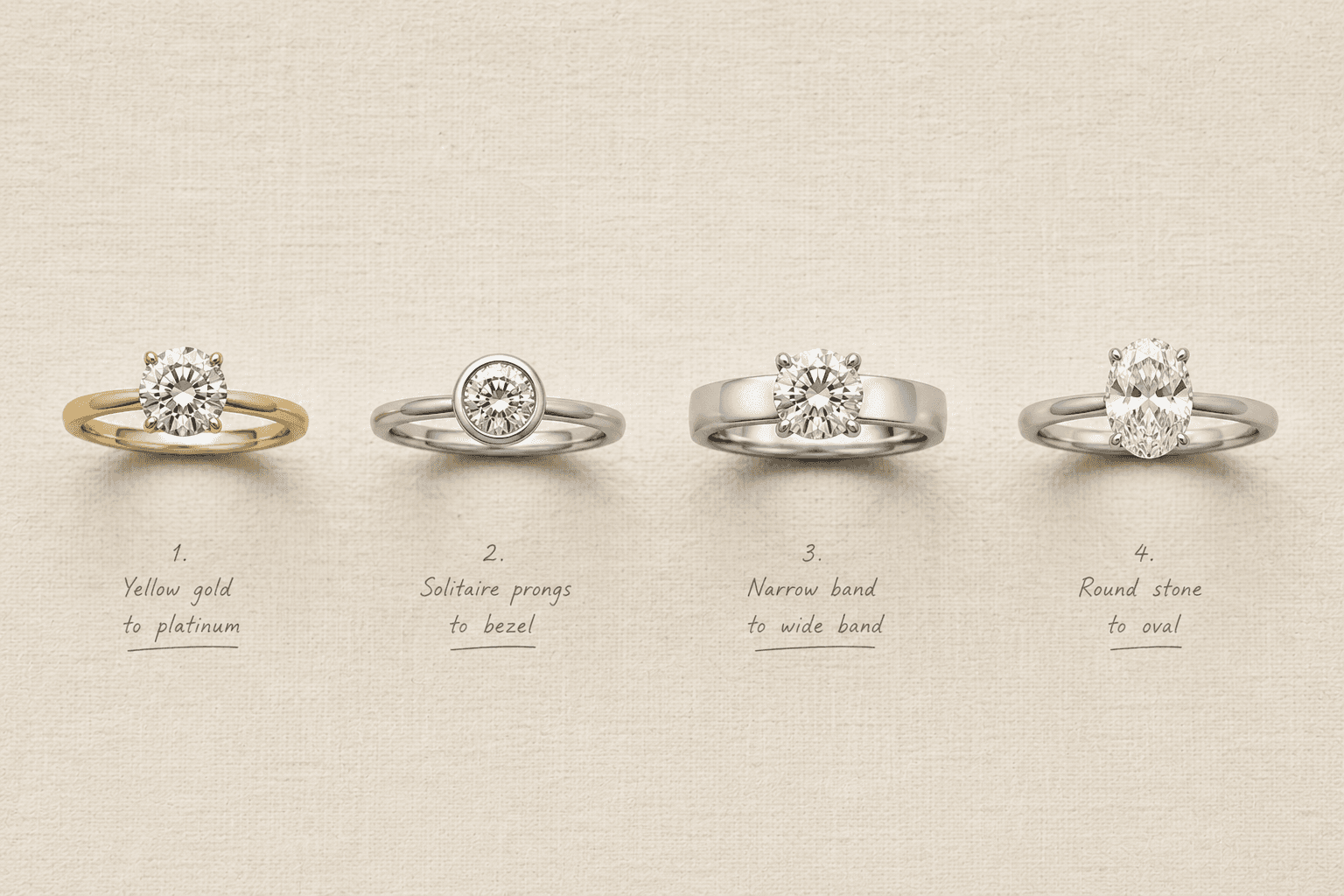
Redesigning a Family Ring for Your Engagement
Learn how to transform a family heirloom ring into a modern engagement ring. Discover the process of redesigning inherited jewelry while preserving sentimental value and family history.
Redesigning a family ring for your engagement transforms a cherished heirloom into a piece that honors your family's past while reflecting your personal love story and contemporary style. This process preserves the sentimental gemstone or metal from an inherited ring and places it into a modern setting that you will proudly wear every day for decades.
Many couples receive family rings that carry tremendous emotional value but may not suit their aesthetic preferences. Perhaps the diamond is beautiful but the setting feels dated. Maybe the band width is not to your taste, or the overall design does not match your daily style. Redesigning bridges this gap between sentiment and personal expression, creating something entirely new from something deeply old.
When Redesigning Makes Sense
The Stone Is Valuable but the Setting Is Not
Many family rings feature quality gemstones in settings that reflect the fashion of their era. A gorgeous round brilliant diamond might be sitting in a thick, yellow gold cathedral setting from the 1970s. A stunning sapphire might be trapped in a cluster setting that obscures its beauty. In these cases, the stone deserves a setting that showcases its full potential.
The Ring Does Not Fit Your Lifestyle
Older ring designs often feature raised settings with tall prongs that catch on clothing, high-profile bezels that bump against surfaces, and delicate filigree that traps dirt. If you work with your hands, exercise regularly, or simply prefer low-profile jewelry, redesigning the ring into a more practical setting style makes it wearable for daily life.
Multiple Stones From Different Sources
Some couples inherit stones from both families and want to combine them into a single ring. A diamond from one grandmother and sapphire accents from another can be unified in one design that represents both family lineages. This creative combination produces a truly one-of-a-kind engagement ring with deep personal meaning.
The Redesign Process Step by Step
Step 1 Assessment and Consultation
The first step is bringing the original ring to a reputable jeweler who specializes in custom work. The jeweler will assess the existing gemstone's condition, noting its cut, clarity, color, and carat weight. They will check for any chips, fractures, or treatments that might affect the redesign options.
This assessment determines what is possible. A stone in excellent condition can be placed in virtually any modern setting. A stone with edge chips might benefit from a protective bezel setting. A stone with older cutting styles might be recut for modern brilliance, though this reduces carat weight.
Step 2 Design Exploration
With the stone's specifications known, you can begin exploring new designs. Discuss your style preferences, daily activities, and budget with your jeweler. Consider whether you want to preserve any elements of the original design as a nod to its history, or prefer a completely fresh start.
| Design Element | Preserve or Change | Consideration |
|---|---|---|
| Center stone | Always preserve | Core of the heirloom's value |
| Metal type | Often change | Match your preference and skin tone |
| Setting style | Usually change | Update to modern aesthetics |
| Band width | Personal choice | Affects daily comfort |
| Accent stones | Can add or change | Enhance without replacing originals |
| Engraving | Preserve if meaningful | Can add new alongside old |
Many couples choose to engrave the new ring's interior with the original ring's date or the previous owner's initials. This hidden tribute maintains the family connection even when the exterior design is completely new.
Step 3 CAD Design and Approval
Modern jewelers use Computer-Aided Design to create detailed 3D models of your redesigned ring. CAD allows you to see exactly how the finished piece will look from every angle before any metal is cut or cast. You can adjust proportions, try different accent stone placements, and confirm that the design suits your hand.
This stage typically involves two to three revision rounds as you refine the design. Take your time here, as changes are easy and free at the digital stage but costly once casting begins.
Step 4 Wax Model
After approving the digital design, the jeweler creates a wax model of the ring. This physical prototype lets you try the ring on your finger and evaluate its size, weight, and proportion in real life. The wax model is your final opportunity to request changes before the piece moves to casting.
Step 5 Casting and Setting
The approved wax model is used to create a mold for metal casting. Your chosen metal, whether platinum, gold, or another option, is cast into the ring shape. After cooling and cleaning, the jeweler carefully sets the family gemstone and any accent stones into the new mounting.
This is the most critical step and should only be performed by an experienced setter. Historic gemstones may have different proportions than modern cuts, requiring custom prong placement. The setter must also account for any fragility in older stones, using appropriate pressure and technique.
Step 6 Finishing and Quality Check
The final ring is polished, inspected, and tested for stone security. The jeweler will check that all prongs grip firmly, all accent stones are level, and the ring sits correctly on your finger. A final cleaning reveals the redesigned piece in its full glory.
Preserving Sentimental Value
Keeping the Original Metal
If the original ring's metal carries sentimental value, some jewelers can incorporate it into the new design. Original gold can be melted and blended into the new ring's alloy, ensuring that molecules of the family ring literally become part of your new piece. Not all jewelers offer this service, and it has limitations, but it provides a meaningful physical connection to the original.
Documenting the Transformation
Photograph the original ring from multiple angles before any work begins. Record measurements, weight, and any inscriptions. Take photos at each stage of the redesign process. This visual journey from original to redesigned creates a powerful narrative that you can share with family members and future generations.
Communicating With Family
Before beginning any redesign, have an honest conversation with the family member who offered the ring. Share your vision for the redesign, explain why you want to update it, and emphasize that you are honoring their gift by making it something you will wear and love daily. Most family members are thrilled to see their jewelry transformed and given new life.
If the family member prefers the ring remain unaltered, respect their wishes entirely. You can still draw design inspiration from the family piece when creating a new custom engagement ring, incorporating similar design elements, gemstone shapes, or metal tones as a tribute.
Common Redesign Scenarios
Grandmother's Solitaire to Modern Halo
One of the most popular redesigns takes a classic solitaire diamond from a plain band and surrounds it with a halo of smaller diamonds in a modern setting. The halo makes the center stone appear larger and adds contemporary sparkle, while the original diamond remains the heart of the piece.
Multiple Small Stones to One Statement Ring
Older jewelry sometimes features several small gemstones rather than one large center stone. A jeweler can create a cluster or multi-stone design that transforms these smaller pieces into a cohesive, modern ring. Alternatively, the smaller stones can become accents alongside a newly purchased center stone.
Converting a Ring to Another Piece
If the family ring's stones do not suit a ring setting, consider transforming them into a pendant, a pair of earrings, or bracelet accents. A diamond that does not work as an engagement ring center stone might make a stunning pendant that you wear every day. This flexibility ensures no family stone goes unworn.
Visualizing Your Redesign With Tashvi AI
Before committing to a redesign direction, use Tashvi AI to explore how your family stone might look in different modern settings. Describe your inherited gemstone's shape, size, and color, then generate concept images showing it in halo settings, bezel settings, three-stone designs, and more. This visual exploration helps you narrow down your preferences before your first jeweler consultation and gives you reference images to share with your designer.
Tashvi AI can also help you see how the redesigned ring will coordinate with potential wedding bands, ensuring your complete bridal ring set works together harmoniously. Try designing on Tashvi AI free
The Finished Piece
When your redesigned family ring is complete, you hold something extraordinary. The gemstone carries decades or generations of family love. The setting reflects your personal style and modern life. Together, they create a piece that is both brand new and deeply ancient, a perfect symbol for the marriage you are about to build on the foundation of family love.
Frequently Asked Questions
Quick answers to the questions readers ask most about this guide.
How much does it cost to redesign a family ring?
Redesigning a family ring typically costs between $500 and $5,000, depending on the new setting complexity, metal choice, and any additional stones needed. Using the existing gemstone saves significant money compared to buying a new stone. Custom design fees, casting, and finishing are the primary costs.
Can any family ring be redesigned?
Most family rings can be redesigned, though very fragile antique stones or extremely thin bands may limit options. A jeweler will assess the existing gemstone's condition, noting any chips, inclusions, or treatments that affect what new settings are possible. Even damaged stones can often be recut for a smaller but flawless result.
Will the family stone look the same in a new setting?
A new setting can dramatically change how a gemstone appears. Modern settings that allow more light to pass through the stone can make an older diamond appear more brilliant and lively. Different prong configurations, halo designs, and band widths all affect the stone's visual presence and perceived size.
How long does the redesign process take?
A complete redesign typically takes four to eight weeks from initial consultation to finished ring. Custom CAD design takes one to two weeks. Wax model approval adds another week. Casting, setting, and finishing require two to four weeks. Rush orders are possible but may cost more.
What if the family member does not want the ring altered?
Respect their wishes completely. If the ring cannot be redesigned, consider extracting just one stone with permission, wearing the original ring on a different finger, or designing a new engagement ring that draws design inspiration from the family piece without physically altering it.