How to Start a Jewelry Business From Home in 2026
Learn how to start a profitable jewelry business from home in 2026 with low startup costs, AI design tools, and smart marketing strategies that turn your passion for jewelry into a thriving enterprise.
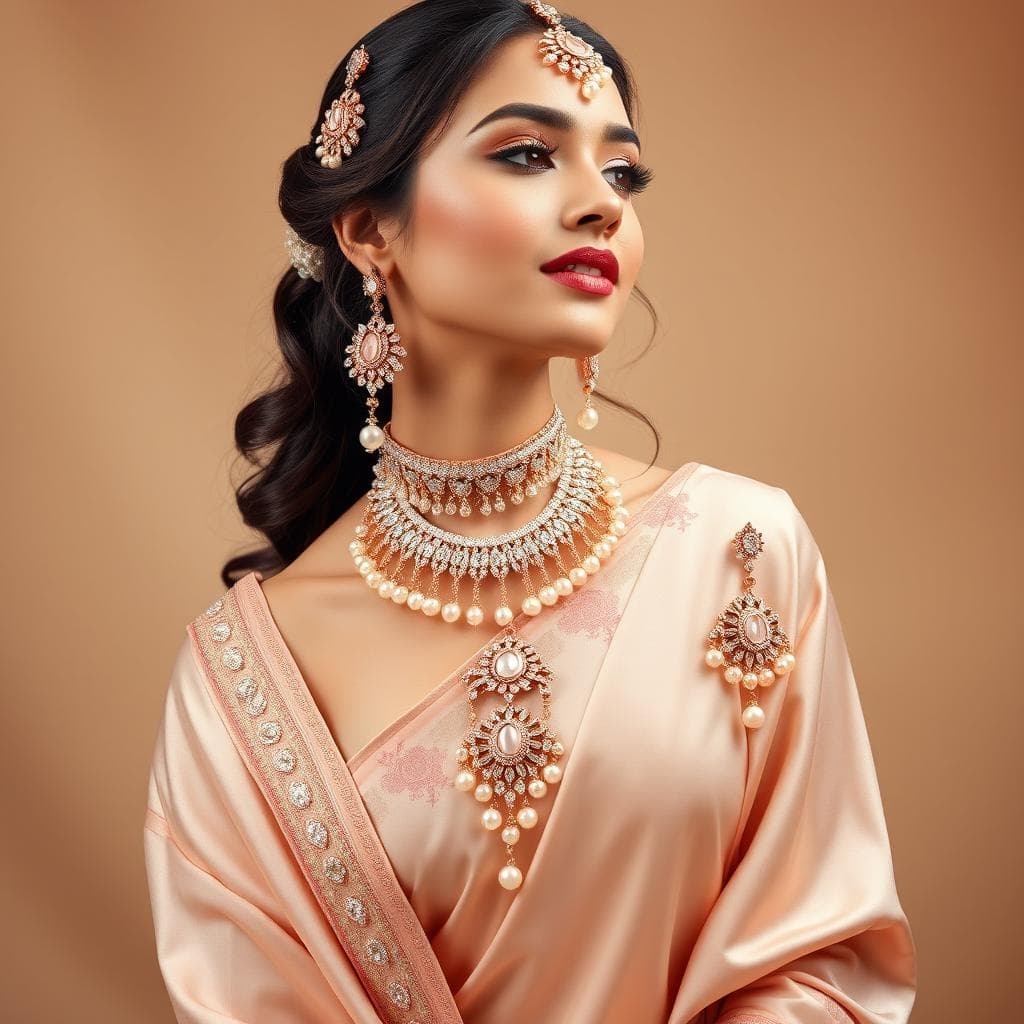
Starting a jewelry business from home in 2026 is more accessible and affordable than ever before, thanks to AI design tools, on-demand manufacturing, and powerful e-commerce platforms that let you reach customers worldwide without leaving your living room. Whether you dream of designing custom engagement rings or curating a line of everyday fine jewelry, this guide walks you through every step from concept to first sale. If you are exploring the broader landscape of AI tools for jewelry businesses, you will find that the technology available today removes nearly every traditional barrier to entry.
Why 2026 Is the Best Year to Start a Home Jewelry Business
The jewelry industry is experiencing a fundamental shift that favors independent entrepreneurs over established brands. Three converging trends make this the ideal moment to launch from your home.
First, AI design tools have eliminated the need for expensive CAD designers. Platforms like Tashvi AI let you create photorealistic jewelry renders in minutes, not weeks. You no longer need to spend $3,000 per collection on freelance designers or invest months learning complex software.
Second, on-demand manufacturing has removed the requirement for large minimum orders. Services that produce jewelry pieces one at a time mean you never carry unsold inventory. You can offer dozens of designs without manufacturing a single piece until someone places an order.
Third, social media and marketplace platforms have made it possible to reach millions of potential customers without a physical storefront. The global custom jewelry market is projected to reach over $76 billion by 2030, and a growing share of that spending happens online.
Step 1 - Choose Your Jewelry Niche
The biggest mistake new jewelry entrepreneurs make is trying to sell everything to everyone. A focused niche makes your brand memorable, your marketing more effective, and your design process more efficient.
Finding Your Sweet Spot
Consider the intersection of three factors when choosing your niche. What styles excite you? What does the market demand? Where is competition manageable?
Popular niches for home-based jewelry businesses in 2026 include minimalist everyday fine jewelry, custom engagement and wedding rings, birthstone and personalized pieces, nature-inspired organic designs, and culturally significant heritage jewelry. Each of these niches has proven demand and allows for creative differentiation.
Research your chosen niche thoroughly before committing. Browse Etsy bestsellers, study Pinterest trends, and use Google Trends to validate that people are actively searching for the styles you want to create. Look at the latest jewelry design trends for 2026 to spot emerging opportunities that established brands have not yet saturated.
Define Your Price Range
Your price point determines your materials, target customer, and profit margins. Home-based jewelry businesses typically succeed in one of three tiers.
| Price Tier | Range | Materials | Target Customer |
|---|---|---|---|
| Fashion Jewelry | $25-$100 | Plated metals, fashion stones | Trend-conscious shoppers |
| Demi-Fine | $100-$500 | Sterling silver, vermeil, semi-precious | Quality-seeking millennials |
| Fine Jewelry | $500+ | Solid gold, diamonds, precious gems | Investment buyers, brides |
Pick one tier to start. You can expand later once your brand is established and your operations are running smoothly.
Step 2 - Set Up Your Legal Foundation
Treating your jewelry business as a real business from day one protects you and builds credibility with customers.
Business Structure
Most home-based jewelry businesses start as either a sole proprietorship or a limited liability company. An LLC costs between $50 and $500 to form depending on your state and provides personal liability protection that a sole proprietorship does not. For a detailed comparison, research the differences between LLC and corporation structures to find what works best for your situation.
Essential Registrations
Register for an Employer Identification Number through the IRS website at no cost. This number serves as your business identity for tax purposes and is required to open a business bank account. Apply for a sales tax permit through your state's department of revenue. Most states require you to collect sales tax on jewelry sales, even when selling online from home.
Check whether your city or county requires a home occupation permit. Some jurisdictions have specific rules about running businesses from residential properties, including restrictions on signage, customer visits, and shipping volume.
Business Banking
Open a separate business bank account immediately. Mixing personal and business finances creates accounting headaches and weakens your liability protection. Many online banks offer free business checking accounts with no minimum balance requirements.
Step 3 - Design Your First Collection With AI
This is where modern technology transforms the home jewelry business equation. Traditional collection development required months of sketching, CAD modeling, and sample production. AI design tools compress that timeline from months to days.
Using Tashvi AI for Rapid Design
Tashvi AI lets you start a jewelry business with minimal upfront investment by eliminating expensive prototyping. The platform works as one conversational design agent for designers at any skill level.
Guided Design walks you through decisions step by step when you switch it on. Choose your jewelry type, select stones, pick settings, and specify metals. The AI generates photorealistic renders that look indistinguishable from photographs of real pieces. It is perfect if you are a first-time jewelry designer with no formal training.
You can also just describe your vision in natural language and receive multiple design variations. Experienced designers use this to explore creative directions quickly before committing to production.
Building a Cohesive Collection
Aim for 8 to 12 pieces in your first collection. Include a mix of statement pieces that attract attention and everyday pieces that drive consistent sales. Every piece should share visual DNA through recurring design elements, consistent metal choices, or a unified aesthetic theme.
Use Tashvi AI to generate variations on your best designs. A single ring concept can become a family of pieces by adjusting stone shapes, metal colors, and detail elements. This approach creates a collection that feels intentional and curated rather than random.
Try designing on Tashvi AI free
Step 4 - Create Professional Product Images
Product photography makes or breaks online jewelry sales. Customers cannot touch or try on your pieces, so images must do all the selling. Traditional jewelry photography requires specialized equipment, lighting setups, and editing skills that cost $2,000 or more per shoot.
Use Tashvi AI to create professional product images for your Etsy or Shopify store without a photography studio. AI-generated renders provide the consistent lighting, angles, and backgrounds that professional photographers achieve, at a fraction of the cost. Learn more about AI jewelry photography techniques to create images that convert browsers into buyers.
For each piece in your collection, create at least four images. Include a hero shot on a clean white or neutral background, a lifestyle shot showing the piece being worn, a detail shot highlighting craftsmanship and stone quality, and a scale reference shot that helps customers understand size.
Step 5 - Set Up Your Home Studio
You do not need a dedicated room to start. Many successful jewelry entrepreneurs began with a corner of their dining table. However, having an organized workspace improves productivity and helps maintain quality.
Essential Equipment for Getting Started
Your initial home studio needs are modest. A sturdy table with good lighting serves as your primary workspace. A ring light or two adjustable LED panels provide consistent lighting for any photography or video you want to shoot yourself. Storage containers keep supplies organized and protect finished pieces. A postal scale ensures accurate shipping weights.
If you plan to do any assembly, repairs, or finishing work at home, add basic bench tools gradually as your business grows. Many home-based jewelry entrepreneurs focus purely on design and marketing, outsourcing all production to manufacturing partners.
Shipping Station
Set up a dedicated area for packing and shipping orders. Stock jewelry boxes in your standard sizes, tissue paper, branded stickers or cards, and padded mailers. A thermal label printer saves significant time once orders increase beyond a few per week.
Step 6 - Build Your Online Presence
Your digital storefront is your primary sales channel as a home-based business. Invest time in building it right from the start.
Choose Your Sales Platform
Start with Etsy if you want built-in traffic from jewelry buyers who are already searching for what you sell. Etsy charges listing fees and transaction fees, but the exposure to millions of active shoppers often justifies the cost for new sellers.
Build a Shopify store simultaneously if you want full control over your brand experience. Shopify gives you a custom domain, complete design control, and lower per-transaction fees. The tradeoff is that you must drive all your own traffic through marketing efforts.
Social Media Strategy
Instagram and Pinterest are the two most important platforms for jewelry businesses. Both are visual platforms where jewelry naturally performs well.
Post consistently with a mix of product shots, behind-the-scenes content, styling inspiration, and customer testimonials. Use relevant hashtags and engage genuinely with potential customers. The goal is building a community around your brand, not just broadcasting sales messages.
Create short-form video content for Instagram Reels and TikTok. Show your design process, unbox new pieces, or share the story behind each collection. Video content consistently outperforms static images for engagement and reach.
Step 7 - Price Your Jewelry for Profit
Pricing is where many home-based jewelry businesses fail. Underpricing to compete with mass-market retailers guarantees burnout and eventual closure. Your pricing must cover materials, labor, overhead, and profit while reflecting the value you provide to customers.
The Pricing Formula
Start with a cost-plus approach. Calculate your total cost per piece, including materials, manufacturing, packaging, shipping supplies, and a reasonable hourly rate for your time. Multiply that total by 2.5 to 3 for retail pricing. This multiplier ensures you can cover marketing costs, platform fees, returns, and still maintain healthy profit margins.
For custom and one-of-a-kind pieces, consider value-based pricing that reflects the unique experience you provide rather than just the cost of materials and labor. Custom engagement rings, for example, command premium prices because of the emotional significance and personalized service involved.
Know Your Numbers
Track every expense from day one. Use simple accounting software to monitor costs, revenue, and profit margins by product. This data tells you which designs are most profitable and where to focus your energy as you grow.
Step 8 - Launch and Iterate
Perfectionism kills more jewelry businesses than competition does. Launch with your initial collection even if it feels imperfect. Real customer feedback is infinitely more valuable than endless tweaking in isolation.
Your Launch Checklist
Before going live, ensure you have completed these essentials. Your online store is set up with professional images and compelling descriptions. Your pricing covers all costs and provides healthy margins. Your legal registrations and permits are in place. Your packaging and shipping process is tested. Your social media profiles are active with at least two weeks of content posted.
Growing After Launch
Listen to customers obsessively. Their questions, compliments, and complaints tell you exactly what to design next. Use Tashvi AI to rapidly prototype new pieces based on customer feedback. This speed of iteration is your competitive advantage over larger brands that take months to develop new designs.
Scale your custom jewelry business by generating client concepts in minutes instead of days. When a customer requests a custom piece, use AI to create multiple design options during the same conversation. This level of responsiveness delights customers and commands premium pricing.
How Tashvi AI Accelerates Your Home Jewelry Business
Tashvi AI was built specifically for jewelry entrepreneurs who want to compete with established brands without the traditional overhead. The platform handles design visualization, product photography, and client presentations in one place.
New jewelry businesses using Tashvi AI report cutting their time from concept to listing by up to 80%. Instead of spending weeks on each new design, you can go from idea to professional product image in under an hour. That speed advantage compounds over time, letting you test more designs, respond faster to trends, and serve custom clients more efficiently.
Try designing on Tashvi AI free
Common Mistakes to Avoid
The most frequent pitfalls for home-based jewelry businesses are avoidable with awareness. Trying to appeal to everyone instead of owning a niche dilutes your brand and marketing effectiveness. Underpricing your work to match mass-market competitors guarantees unsustainable margins. Neglecting the business side while focusing only on design leads to cash flow problems and legal vulnerabilities. Waiting too long to launch while perfecting your first collection means missing the market opportunity that exists right now.
Learn from those who have successfully launched jewelry brands with AI design tools and apply their strategies to your own home-based business from the start.
Your Next Steps
Starting a jewelry business from home in 2026 requires less money, less time, and less technical expertise than at any point in history. The tools available today put professional-quality design, manufacturing, and marketing within reach of anyone with creativity and determination. Begin by choosing your niche, setting up your legal foundation, and designing your first collection with AI. The sooner you start, the sooner you learn what your customers truly want.
Frequently Asked Questions
Quick answers to the questions readers ask most about this guide.
How much does it cost to start a jewelry business from home?
Starting a home-based jewelry business in 2026 can cost as little as $500 to $2,000 when you use AI design tools like Tashvi AI. Traditional startup costs ranged from $10,000 to $50,000, but AI eliminates expensive prototyping, photography, and CAD design fees.
Do I need a license to sell jewelry from home?
Most locations require a general business license and sales tax permit to sell jewelry from home. Some states also require a home occupation permit. Check with your local city clerk or small business administration for specific requirements in your area.
Can I start a jewelry business with no experience?
Yes. AI design tools like Tashvi AI make it possible to create professional jewelry designs without formal training. Guided design modes walk you through every decision. Many successful jewelry entrepreneurs started with zero design experience and learned as they grew.
What is the best platform to sell jewelry from home?
Etsy is the best starting platform for home-based jewelry sellers due to its built-in audience of jewelry buyers. Shopify offers more control for building your own brand. Many successful sellers use both platforms simultaneously to maximize reach.
How profitable is a home-based jewelry business?
Home-based jewelry businesses can achieve profit margins of 40% to 70% depending on materials and pricing strategy. Fine jewelry and custom pieces tend to command higher margins. Low overhead from working at home significantly increases profitability compared to retail storefronts.