How Tashvi AI Handles Cultural Jewelry Styles Across Markets
Discover how Tashvi AI generates authentic cultural jewelry designs spanning Indian, Middle Eastern, East Asian, African, and Western traditions. Learn how the platform respects cultural nuances while enabling cross-cultural design exploration.

Tashvi AI handles cultural jewelry styles by recognizing traditional design vocabularies from Indian, Middle Eastern, East Asian, African, and Western traditions. The platform generates authentic cultural designs by understanding region-specific terminology, traditional construction methods, and symbolic design elements, enabling designers to work across global markets with confidence and cultural sensitivity.
Jewelry is one of the most culturally significant art forms in human history. Every region, every tradition, and every community has developed its own distinctive jewelry language, from the elaborate gold work of South India to the geometric precision of Art Deco to the symbolic richness of West African adornment. For jewelry designers serving global markets, understanding and authentically representing these cultural traditions is both an opportunity and a responsibility.
Tashvi AI was built with this cultural complexity in mind. Rather than offering a one-size-fits-all approach to jewelry design, the platform recognizes and respects the distinct characteristics that define jewelry traditions around the world.
South Asian Jewelry Traditions
The Indian subcontinent represents one of the world's richest and most diverse jewelry traditions. From the temple jewelry of Tamil Nadu to the Kundan work of Rajasthan, each region has developed distinctive techniques and aesthetics over centuries.
Indian Bridal and Traditional Jewelry
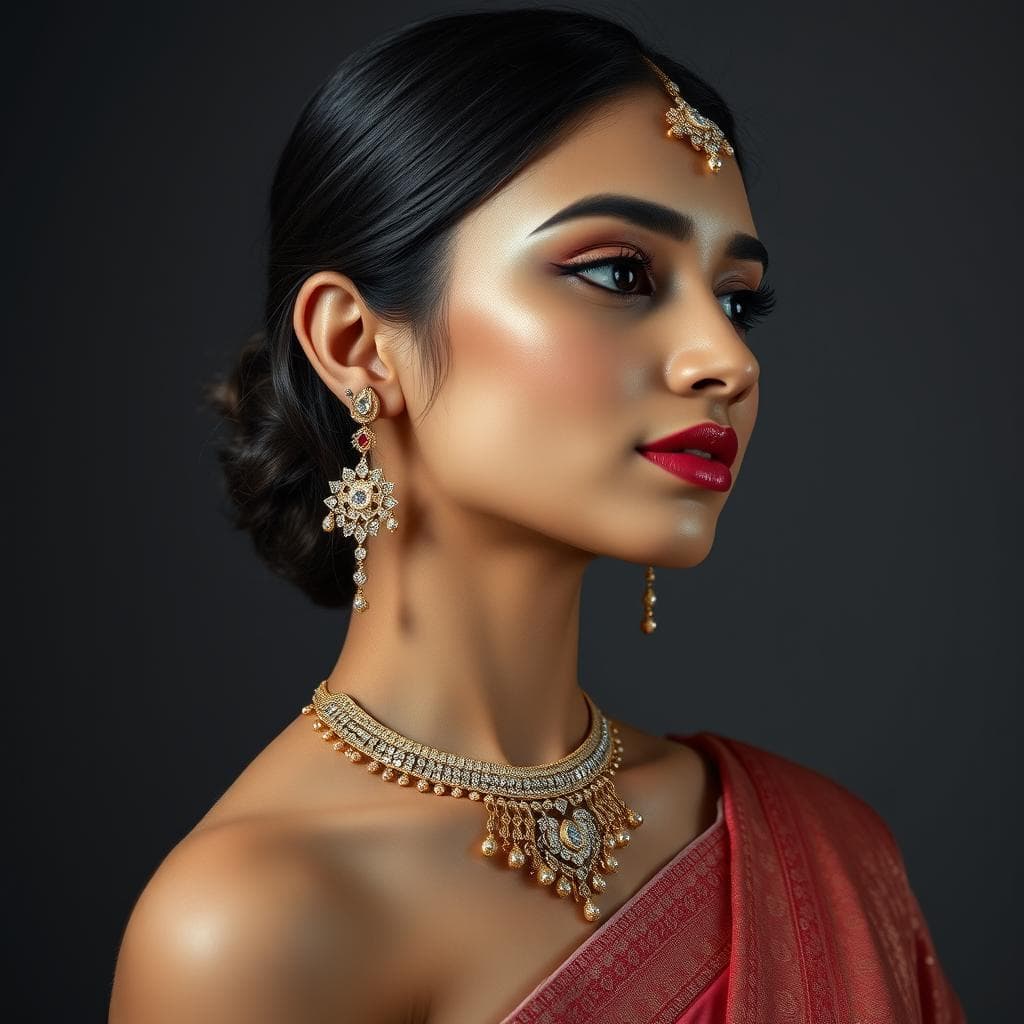
When you prompt Tashvi AI with descriptions of traditional Indian jewelry forms, the platform demonstrates deep understanding of these cultural specifics. Describing a "Rajasthani Kundan bridal set with meenakari work" produces results that accurately represent the enameling technique, the flat-backed gem setting style, and the elaborate multi-piece composition typical of Kundan sets.
The platform handles the full range of Indian jewelry categories, including temple jewelry with deity motifs and lakshmi coins, polki pieces with uncut diamonds in traditional settings, Navratna arrangements following the astrological gem placement, and contemporary Indian fusion designs that honor traditional motifs while incorporating modern sensibilities.
South Asian Bridal Market
The bridal jewelry market in South Asia involves extensive multi-piece sets that must coordinate across necklaces, earrings, tikkas, nosepins, bangles, and more. Tashvi AI understands the concept of coordinated bridal sets and can generate individual pieces that feel cohesive within a larger ensemble.
Middle Eastern and North African Styles
Gold jewelry holds particular cultural significance across the Middle East and North Africa. The styles are distinctive, often featuring bold gold work, intricate geometric patterns, and specific regional preferences.
Gulf Jewelry Traditions
The Gulf states have a strong tradition of substantial gold jewelry. Tashvi AI recognizes the characteristics of Gulf jewelry including heavy 21-karat and 22-karat gold construction, geometric and arabesque patterns, elaborate wedding sets designed for layering, and modern interpretations that blend traditional motifs with contemporary fashion.
When you describe "a Saudi-style gold choker with geometric arabesque patterns," Tashvi AI generates designs that reflect the specific proportions, pattern complexity, and gold tone associated with Gulf jewelry, rather than producing generic gold necklaces.
North African Influences
The jewelry traditions of Morocco, Tunisia, and Algeria bring different influences, including Berber symbolism, Andalusian-era filigree work, and distinctive use of enamel and coral. These traditions are represented in Tashvi AI's design vocabulary, allowing designers to explore North African aesthetics with cultural accuracy.
East Asian Aesthetics
East Asian jewelry traditions emphasize different values than Western or South Asian approaches, often prioritizing balance, symbolism, and material purity.
Chinese Jewelry Traditions
Chinese jewelry design encompasses jade work spanning thousands of years, gold pieces designed around symbolic motifs like dragons, phoenixes, and lotus flowers, and modern minimalist designs that reflect contemporary Chinese aesthetic preferences. Tashvi AI recognizes these distinctions and generates designs appropriate to each tradition.
Japanese Design Sensibility
Japanese jewelry design often emphasizes wabi-sabi aesthetics, asymmetry, and organic forms inspired by nature. When designers prompt Tashvi AI with Japanese-influenced directions, the platform produces results that reflect these philosophical underpinnings rather than simply applying surface-level Japanese motifs.
African Jewelry Heritage
Africa's jewelry traditions are extraordinarily diverse, spanning the beadwork of the Maasai, the gold weights of the Ashanti, the elaborate silver work of Tuareg craftspeople, and the modern design movements emerging from studios in Lagos, Nairobi, and Johannesburg.
Tashvi AI's understanding of African jewelry traditions continues to grow as we expand our training data and consult with African jewelry designers. The platform currently handles requests for West African gold-inspired designs, beadwork-influenced contemporary pieces, and designs drawing from the continent's rich symbolic vocabulary.
Western and Contemporary Styles
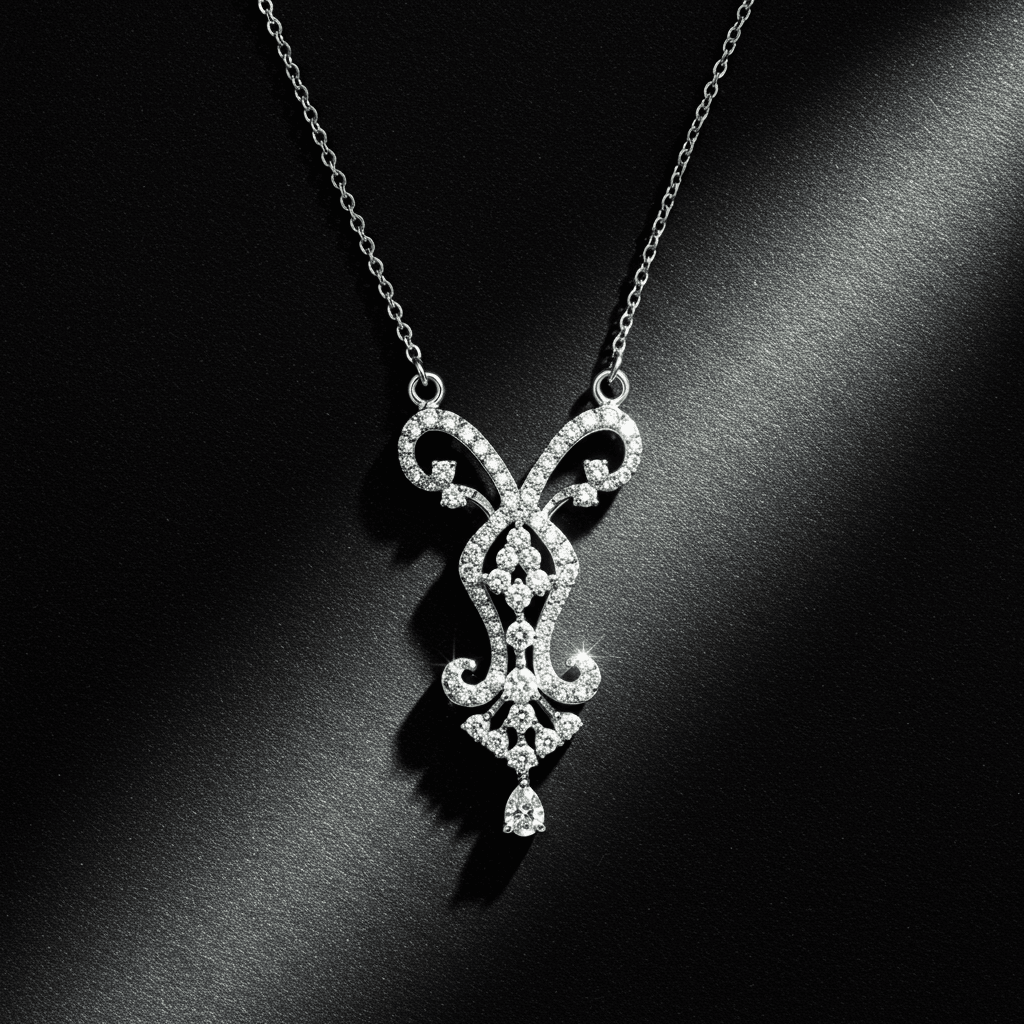
Of course, Tashvi AI also excels at Western jewelry styles, from Art Deco and vintage aesthetics to contemporary minimalism and avant-garde statement pieces. The platform handles engagement ring traditions, fashion jewelry trends, and the full range of Western fine jewelry with particular depth.
What makes Tashvi AI special is not just its understanding of any single tradition but its ability to work across traditions, helping designers create cross-cultural fusion pieces that blend influences thoughtfully.
Cross-Cultural Design Exploration
One of Tashvi AI's most powerful capabilities is enabling cross-cultural design exploration. Designers can blend influences from multiple traditions, creating fusion pieces that respect their source cultures while producing something genuinely new.
Fusion Design Strategies
Effective cross-cultural fusion requires understanding which elements from different traditions complement each other. Some successful fusion approaches include combining South Indian temple motifs with minimalist Scandinavian settings, blending Art Deco geometric precision with Mughal-inspired gemstone arrangements, integrating Japanese organic forms with West African symbolic elements, and merging Chinese jade traditions with contemporary European design language.
Tashvi AI handles these fusion prompts intelligently, finding harmonious intersections between cultural influences rather than simply layering disparate elements.
Market Entry Through Cultural Understanding
For jewelry brands looking to enter new geographic markets, Tashvi AI provides a low-risk way to explore unfamiliar cultural aesthetics. A European brand considering the Indian market can generate hundreds of concepts reflecting Indian design preferences, test them with local audiences, and refine their approach before committing to production.
This cultural exploration capability is invaluable for brands serving diverse, multicultural customer bases. A jeweler in London, Dubai, or Toronto serves clients from dozens of cultural backgrounds. With Tashvi AI, they can quickly generate concepts that resonate with each client's cultural heritage.
Responsible Cultural Design
With the power to generate cultural designs comes the responsibility to do so respectfully. Tashvi AI approaches cultural design with several principles.
Understanding Versus Appropriation
There is an important distinction between appreciating cultural jewelry traditions and appropriating them. Tashvi AI helps designers navigate this distinction by generating designs that reflect genuine understanding of cultural context rather than superficial borrowing of visual elements.
When cultural elements carry specific sacred or ceremonial significance, designers should research these meanings and ensure their use is appropriate. Tashvi AI provides the visual exploration, but cultural sensitivity requires human judgment and, ideally, consultation with members of the relevant community.
Continuous Learning
Our cultural design capabilities are continuously expanding. We work with designers from diverse backgrounds to improve the platform's understanding of their traditions. If you find that a particular cultural style is not well represented, we encourage you to share feedback. Your input directly shapes how the platform evolves.
Practical Tips for Cultural Design on Tashvi AI
To get the best results when designing for specific cultural traditions, use culturally specific terminology rather than generic descriptions. Describe not just the visual appearance but the intended occasion and cultural context. Reference specific regional traditions rather than broad cultural categories. Specify the intended market or audience for the design. And explore the guided design mode for structured cultural design exploration.
For example, instead of prompting for "Indian jewelry," specify "contemporary interpretation of Chettinad temple jewelry from Tamil Nadu with antique gold finish and ruby accents, designed for a young professional woman attending a family wedding." The more specific your cultural references, the more authentic the results.
Expanding Global Reach With Tashvi AI
The global jewelry market is increasingly interconnected. Designers who can work fluently across cultural traditions have a significant competitive advantage. Tashvi AI provides the cultural design vocabulary and visual generation capability to serve customers across markets, whether you are an established brand expanding globally or an independent designer serving a diverse local community.
Try designing on Tashvi AI free and explore the rich world of cultural jewelry design. From traditional masterpieces to contemporary fusion, the platform is ready to help you create jewelry that resonates across cultures and markets.
Frequently Asked Questions
Quick answers to the questions readers ask most about this guide.
Can Tashvi AI generate traditional Indian jewelry designs like jhumkas and mangalsutras?
Yes. Tashvi AI has been trained to understand traditional Indian jewelry forms including jhumkas, temple jewelry, mangalsutras, polki sets, and kundan work. The platform captures the distinctive characteristics of each style, from the specific draping of a haar to the intricate filigree of Rajasthani designs.
How does Tashvi AI ensure cultural authenticity in its designs?
Tashvi AI has been developed with input from designers across multiple cultural traditions. The platform recognizes culturally specific terminology, understands traditional proportions and construction techniques, and respects the symbolic significance of different design elements. Users can also provide reference descriptions to guide cultural accuracy.
Can I create fusion designs that blend multiple cultural influences?
Absolutely. One of Tashvi AI's strengths is blending cultural influences thoughtfully. You can describe combinations like South Indian temple motifs with modern minimalist settings, and the platform generates designs that honor both traditions while creating something genuinely new.
Does Tashvi AI support Arabic and Middle Eastern jewelry styles?
Yes. The platform generates designs reflecting Gulf jewelry traditions including elaborate gold sets, Arabic calligraphy-inspired pieces, and the distinctive styles popular across Saudi Arabia, UAE, and other Middle Eastern markets. You can specify regional preferences for more targeted results.
How can jewelry brands use Tashvi AI to enter new cultural markets?
Tashvi AI allows brands to explore unfamiliar cultural aesthetics without the risk of commissioning full collections. Generate concept designs for a new market, test them with local focus groups, and refine based on feedback, all before investing in production. This approach minimizes cultural missteps while accelerating market entry.