How Technology Is Democratizing Bespoke Jewelry Design
Technology is breaking down the barriers that once made custom jewelry exclusive to the wealthy. From AI design tools to online configurators and 3D printing, discover how modern innovations are making bespoke jewelry accessible to everyone regardless of budget or location.
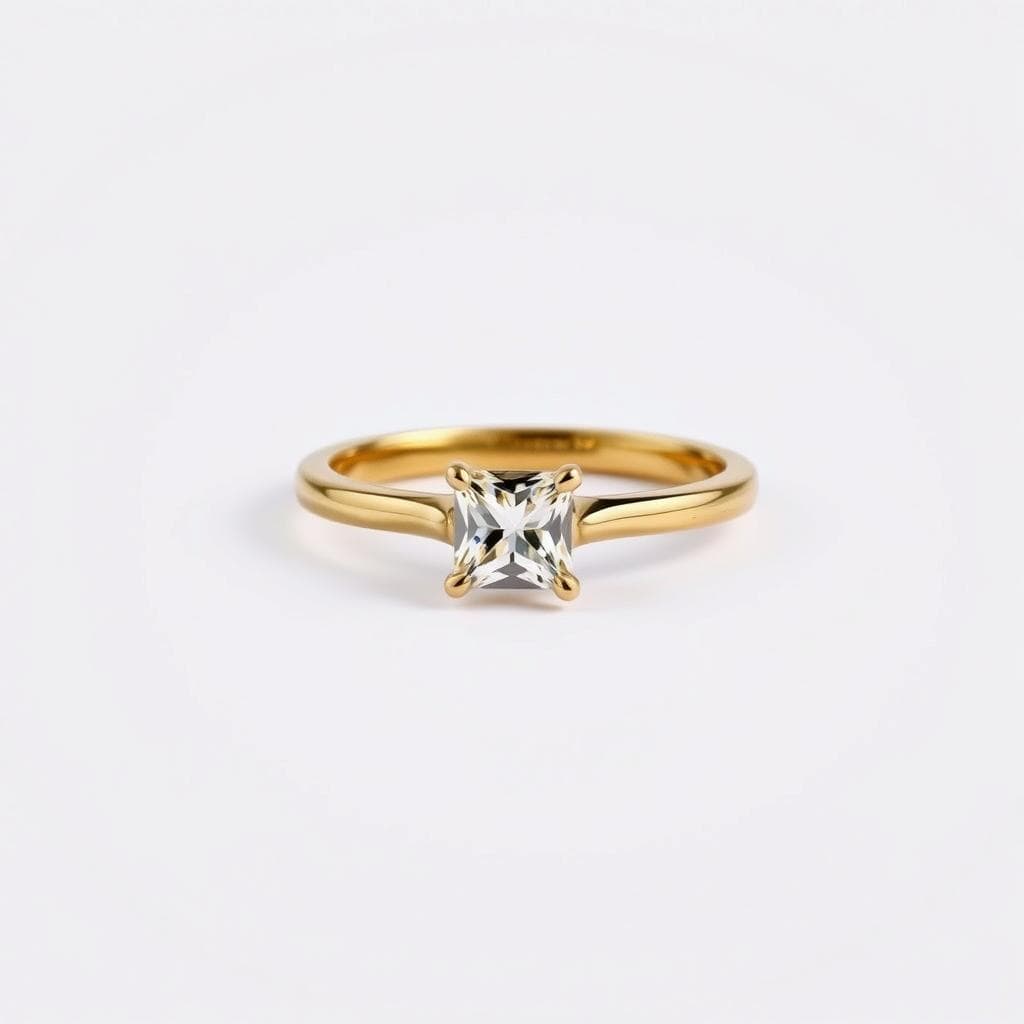
Technology is democratizing bespoke jewelry design by replacing expensive manual processes with AI visualization, online configurators, and 3D printing. Custom jewelry that once required weeks of artisan consultation and thousands in design fees is now accessible through digital platforms where anyone can create personalized pieces in minutes, regardless of budget, location, or design expertise.
Bespoke jewelry has always carried an air of exclusivity. The word itself comes from the English tailoring tradition, meaning "spoken for" or made to individual specification. For centuries, commissioning a custom piece required access to a skilled artisan, significant financial resources, and the patience to navigate a lengthy, often opaque design process. A customer in a small town with limited disposable income simply could not participate in the world of custom jewelry creation.
That paradigm is shifting rapidly. A convergence of technologies, from artificial intelligence and cloud computing to 3D printing and digital communication platforms, is dismantling the barriers that kept bespoke jewelry exclusive. Today, a first-time buyer in any city can design a truly personalized engagement ring, necklace, or bracelet using tools that would have seemed like science fiction a decade ago.
The Barriers That Technology Is Breaking Down
Understanding the democratization of bespoke jewelry requires examining the specific barriers that historically excluded most people from the custom design experience.
The Cost Barrier
Traditional custom jewelry design involved hours of a skilled designer's time for consultations, sketching, and revision. Each iteration meant more billable hours. Physical wax carving for prototypes added material and labor costs. A simple custom ring design could easily accumulate $500 to $2,000 in design fees alone, before any metal or gemstones were purchased.
Technology has compressed these costs dramatically. AI design tools generate concept visualizations in seconds rather than hours. Digital prototyping eliminates the need for physical wax carving until the final approved design. Online platforms reduce overhead costs that traditional jewelry ateliers pass to customers.
The Access Barrier
Bespoke jewelry historically required proximity to a skilled artisan or a luxury retail establishment. If you lived outside a major metropolitan area, your options were limited to whatever local jewelers offered, often standard catalog designs with minor modifications rather than true bespoke creation.
Digital platforms and remote design consultations have erased geographic limitations. A customer in a rural community now has access to the same design tools and manufacturing capabilities as someone in New York or London. Video consultations, shared digital design files, and nationwide shipping networks ensure that location is no longer a determining factor in access to custom jewelry.
The Knowledge Barrier
Communicating a design vision has always been challenging for customers without formal design training. Describing the exact proportions of a ring setting, the specific shade of gold, or the relationship between a center stone and its accent diamonds requires vocabulary and visual literacy that most consumers do not possess.
Modern technology translates intent into design without requiring technical knowledge. Visual reference systems, guided questionnaires, and AI interpretation of natural language descriptions allow customers to communicate what they want through images, emotions, and simple preferences rather than technical specifications.
Key Technologies Driving Democratization
Several technologies are working in concert to make bespoke jewelry accessible to a broader audience.
AI-Powered Design Visualization
AI design tools have perhaps the most transformative impact on accessibility. These systems allow anyone to see their ideas rendered as photorealistic jewelry images within minutes, bypassing the traditional sketch and revision cycle entirely. A customer who says "I want something like my grandmother's ring but more modern" can upload a photo and see AI-generated variations that honor the original while incorporating contemporary elements.
This capability, explored in depth in our guide to AI jewelry design tools, transforms the customer from a passive recipient of a designer's interpretation into an active participant in the creative process.
Online Configurators and Parametric Design
Web-based jewelry configurators let customers build custom pieces by selecting from curated options for metal type, gemstone shape, setting style, band width, and finishing details. Each selection updates a real-time 3D preview, giving the customer immediate visual feedback on their choices.
More advanced parametric design systems allow deeper customization. Instead of choosing from preset options, customers can adjust continuous parameters like band curvature, prong height, or gallery openwork density using sliders and seeing the results rendered in real time. These tools make the design process accessible to first-time creators while still producing truly unique results.
3D Printing and Digital Manufacturing
The advent of jewelry-grade 3D printing, particularly lost-wax casting from 3D-printed resin patterns, has dramatically reduced the minimum order quantities and setup costs that made custom manufacturing prohibitively expensive. A single custom ring can be 3D printed and cast with the same efficiency as a production run of hundreds, eliminating the economic penalty that once made one-off pieces so costly.
| Technology | Barrier Addressed | Impact on Customer |
|---|---|---|
| AI Design Visualization | Knowledge and cost | See ideas as images without design skills |
| Online Configurators | Knowledge and access | Build custom designs from anywhere |
| 3D Printing | Cost and speed | Affordable one-off production |
| Video Consultation | Access and geography | Expert guidance regardless of location |
| Cloud Rendering | Cost | Professional visuals without expensive software |
Blockchain and Transparent Pricing
Emerging blockchain-based supply chain platforms are adding price transparency to the custom jewelry process. Customers can trace the cost of their materials, see competitive pricing for manufacturing, and understand exactly what they are paying for at each step. This transparency builds trust and eliminates the information asymmetry that historically allowed opaque pricing in bespoke jewelry.
The New Custom Jewelry Experience
What does the democratized bespoke jewelry journey actually look like for a modern customer?
Discovery. A customer browses social media or searches online and finds inspiration. They save images of jewelry they like, noting specific elements that appeal to them, perhaps the vintage-inspired halo setting on one ring and the rose gold color of another.
Concept. Using an AI design platform, they upload their inspiration images and receive personalized concept visualizations that combine their preferred elements into new designs. Within minutes, they have a visual starting point that would have taken a traditional designer days to produce.
Refinement. Through a digital interface or video consultation, the customer refines their concept. They adjust gemstone choices, try different metal colors, and experiment with proportions. Each change is visualized in real time, creating a collaborative, iterative experience.
Confirmation. Once the design is finalized, the customer receives a detailed rendering, material specification, and transparent price quote. Some platforms offer 3D printed resin mockups shipped to the customer for fit and visual confirmation before committing to precious metal production.
Production. The approved digital design goes directly to manufacturing, either through 3D printed wax casting, CNC machining, or a combination of digital and hand-finishing techniques. The finished piece is quality-checked and shipped.
This entire process can happen in under two weeks and at a price point that competes with mass-produced jewelry from major retail chains. The difference is that the customer receives a piece that is genuinely one-of-a-kind, designed to their exact specifications.
How Tashvi AI Champions Design Democratization
Tashvi AI embodies the democratization ethos at its core. The platform was built on the premise that everyone deserves access to professional jewelry design visualization, regardless of their technical background or budget.
Tashvi AI's reference-based design system is specifically engineered for the way real customers communicate. Rather than requiring text prompts with technical jewelry terminology, the platform lets users upload inspiration images and receive AI-generated designs that capture the essence of their vision. A customer who cannot articulate the difference between a cathedral setting and a trellis setting can simply share a photo of what they like and let the AI interpret the visual language.
The platform's free tier ensures that the first barrier, cost, is eliminated entirely for the concept phase. Any customer can explore design possibilities, experiment with styles, and develop their vision at no cost before committing to production. This guided approach to design removes the intimidation factor that prevents many potential customers from even beginning the bespoke journey. Try designing on Tashvi AI free to experience the future of accessible, personalized jewelry design.
What Democratization Does Not Change
While technology is expanding access to bespoke jewelry, certain aspects of the craft remain unchanged and valuable. Master artisans bring irreplaceable skills in hand-finishing, stone setting, and quality assessment. The emotional significance of receiving a thoughtfully designed piece of jewelry transcends the technology used to create it. And the relationship between a jeweler and their client, built on trust, expertise, and shared creative vision, remains the heart of the bespoke experience.
Technology is not replacing the art and soul of custom jewelry. It is removing the artificial barriers that prevented most people from experiencing it. The result is a larger, more diverse, and more vibrant custom jewelry market where creativity, not wealth or geography, determines who gets to participate in the deeply personal act of creating something beautiful.
Frequently Asked Questions
Quick answers to the questions readers ask most about this guide.
What does 'democratizing bespoke jewelry' mean?
Democratizing bespoke jewelry means using technology to make custom, personalized jewelry design accessible to a broader audience, not just the wealthy or those with access to high-end artisans. It involves reducing costs, simplifying the design process, and removing geographic barriers so anyone can create a one-of-a-kind piece.
How has AI made custom jewelry more affordable?
AI reduces the cost of custom jewelry by automating design iteration, eliminating the need for multiple physical prototypes, and streamlining the communication between customer and manufacturer. What once required hours of a designer's time for concept sketches can now be accomplished in minutes with AI visualization tools.
Can I design custom jewelry without any design experience?
Absolutely. Modern platforms use guided interfaces, visual references, and AI assistance to help anyone express their design preferences. You can upload inspiration images, select from curated options, or describe what you want in plain language. The technology translates your preferences into professional design concepts.
Is technology-enabled custom jewelry lower quality than traditionally handcrafted pieces?
Not at all. Technology-enabled custom jewelry often achieves equal or superior precision compared to fully handcrafted work. CAD modeling allows for exact dimensions, 3D printing produces flawless wax patterns, and CNC machining delivers consistent quality. Many bespoke jewelers combine technological precision with hand-finishing for the best of both worlds.
How long does the modern custom jewelry design process take?
The timeline has compressed significantly. Traditional bespoke design could take 4 to 12 weeks from concept to finished piece. With modern technology, concept visualization happens in minutes, design refinement in days, and production in 1 to 3 weeks. Some pieces can go from idea to finished product in under two weeks.