The Ultimate Guide to Art Deco Jewelry Design
Master Art Deco jewelry design with this complete guide covering geometric patterns, symmetry, signature gemstones, and period-accurate motifs. Learn to create stunning Art Deco pieces using modern tools.
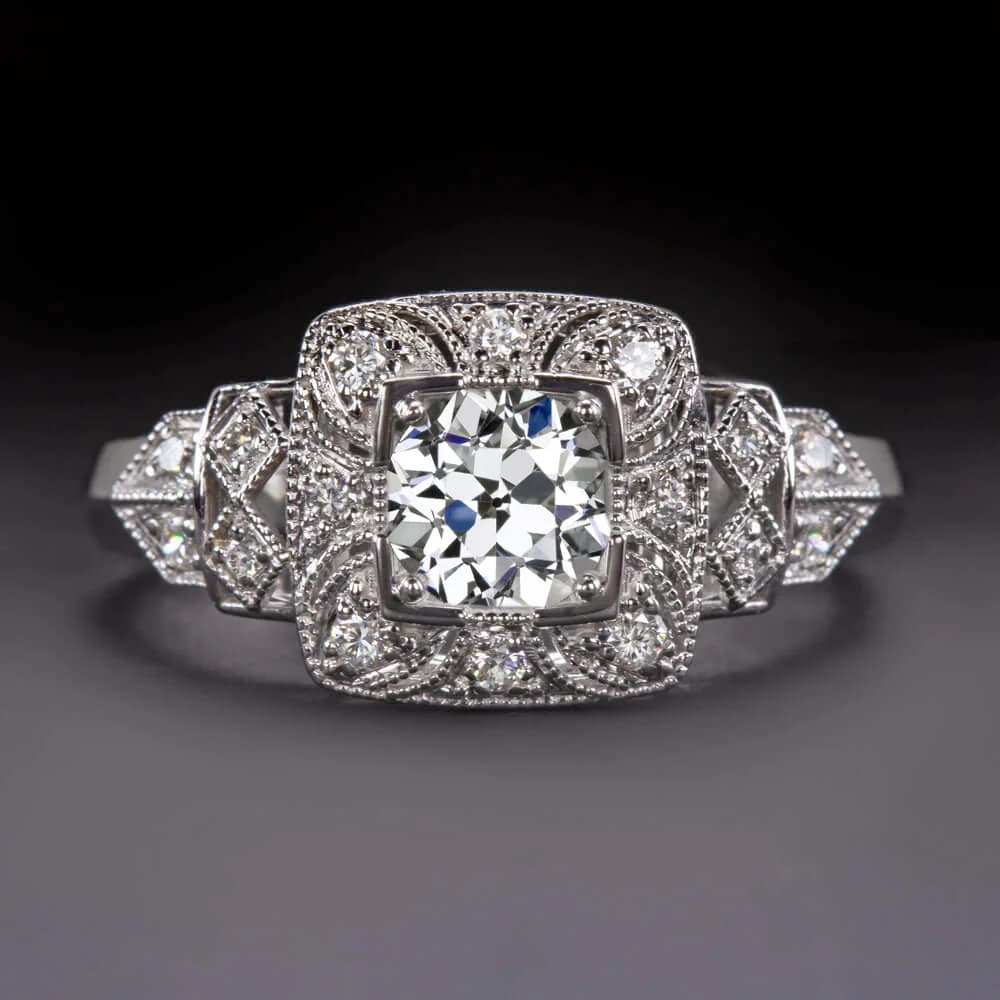
Art Deco jewelry design is characterized by bold geometric patterns, strong bilateral symmetry, stepped and tiered architectural forms, high-contrast color combinations, and the innovative use of platinum with diamonds and colored gemstones. Originating in the 1920s and 1930s, Art Deco remains one of the most influential and sought-after jewelry styles nearly a century later.
The Origins of Art Deco
The Art Deco movement emerged in Paris around 1920, reaching its peak at the 1925 Exposition Internationale des Arts Décoratifs et Industriels Modernes. The name itself comes from this exhibition. The style was a deliberate rejection of the flowing, organic forms of Art Nouveau that had dominated the previous decades.
Art Deco drew from an extraordinary range of sources. Ancient Egyptian art, following the 1922 discovery of Tutankhamun's tomb, contributed bold geometric shapes and vivid color palettes. African and Aztec art introduced angular patterns and stepped pyramidal forms. The machine age contributed precision, repetition, and a celebration of modern materials and engineering.
In jewelry, these influences merged into something entirely new. Pieces became architectural, precise, and visually striking in ways that still feel modern today.
The Core Design Principles
Geometric Foundation
Every Art Deco piece starts with geometry. Rectangles, triangles, circles, hexagons, and fan shapes serve as the structural building blocks. These shapes are not softened or disguised. They are celebrated as the primary visual language.
The geometric approach extends to how stones are arranged. Rather than organic scattering, gemstones in Art Deco designs follow strict grids, radiating lines, or concentric patterns. A classic Art Deco brooch might feature a central diamond surrounded by concentric rings of calibré-cut sapphires and onyx, each ring perfectly geometric.
Symmetry and Balance
Bilateral symmetry is perhaps the defining characteristic of Art Deco jewelry. Almost every piece is perfectly symmetrical along at least one axis. This creates a sense of order, elegance, and architectural solidity that distinguishes Art Deco from other vintage styles.
For a broader understanding of symmetry in jewelry, our guide to balance in jewelry design explores how symmetrical and asymmetrical approaches create different effects.
Stepped and Tiered Forms
The "ziggurat" or stepped pyramid motif appears throughout Art Deco design. Rings feature stepped settings that rise toward the center stone. Brooches and clips use tiered levels that create depth and shadow. Necklaces incorporate graduated elements that build from small to large and back again.
This stepped quality gives Art Deco jewelry a three-dimensional architectural presence that flat designs cannot achieve. It also creates interesting light play as different levels catch illumination at different angles.
High-Contrast Color
Art Deco designers used color with surgical precision. The most iconic combinations pair complementary or high-contrast tones.
| Color Combination | Stones Used | Effect |
|---|---|---|
| Black and white | Diamonds with onyx | Maximum contrast, graphic impact |
| Green and white | Emeralds with diamonds | Lush elegance |
| Red, white, and blue | Rubies, diamonds, sapphires | Patriotic glamour |
| Blue and white | Sapphires with diamonds | Cool sophistication |
| Coral and turquoise | Coral with turquoise | Exotic warmth |
The key principle is that colors in Art Deco jewelry are never blended or graduated. They sit in sharp juxtaposition, each stone clearly defined against its neighbors.
Signature Art Deco Elements
Milgrain Detailing
Tiny beaded borders, called milgrain, outline edges and transitions in Art Deco jewelry. This technique adds delicacy to otherwise bold geometric forms and was a hallmark of the platinum work that defined the era.
Filigree and Piercing
Art Deco filigree differs from earlier styles. Instead of flowing scrollwork, Art Deco filigree features geometric cutouts, straight-line piercing, and lattice patterns. This openwork lightens pieces visually and physically while adding complexity.
Calibré-Cut Stones
The Art Deco era pioneered the use of calibré-cut gemstones. These are colored stones custom-cut to fit precise geometric outlines within a design. A channel of sapphires might be cut to fit a curved border exactly, with each stone shaped individually to maintain the geometric line.
The Emerald Cut
While the emerald cut existed before Art Deco, the style made it iconic. The rectangular step-cut stone with cropped corners embodies Art Deco's love of geometry, clarity, and architectural form. To this day, emerald cuts are synonymous with Art Deco elegance. Our diamond shapes guide covers the full range of cuts and their visual effects.
Art Deco by Jewelry Category
Rings
Art Deco rings typically feature a prominent center stone, often emerald-cut or asscher-cut, surrounded by a geometric halo or stepped setting. Side stones are arranged in symmetrical patterns. The gallery (underside of the setting) is often as detailed as the top, with pierced geometric patterns visible from the side.
Necklaces and Pendants
Art Deco necklaces range from delicate geometric pendants on fine chains to elaborate sautoirs (long necklaces) with tassels of seed pearls and gemstone beads. Collar necklaces with rigid geometric panels were popular for formal occasions. The tassel motif, combining a geometric top with flowing strands, perfectly captured the era's blend of structure and movement.
Bracelets
Line bracelets, now commonly called tennis bracelets, originated in the Art Deco period. Wide cuff bracelets with geometric piercing were also prominent. The articulated panel bracelet, featuring linked geometric sections that flex at the wrist, remains one of the most recognizable Art Deco forms.
Brooches and Clips
Art Deco brooches are perhaps the era's most creative category. Double-clip brooches that could be worn together or separated, jabot pins, and large geometric dress clips showcase the era's engineering innovation. These pieces often served as the centerpiece of an outfit, pinned at the shoulder or collar.
Materials and Techniques
Platinum's Dominance
Platinum became the metal of choice for Art Deco jewelry because its strength allowed for incredibly delicate settings that were impossible in gold. Thin prongs, narrow bezels, and lacy filigree work in platinum held large stones securely while minimizing visible metal. This created the illusion that gemstones were floating in place.
White Gold as Alternative
As platinum supplies fluctuated, white gold emerged as an alternative that maintained the cool, silvery tone essential to Art Deco's aesthetic. The style's preference for white metals was both aesthetic and practical, as white settings made diamonds appear larger and more brilliant. For more on metal choices, see our metal selection guide.
Innovative Stone Setting
Art Deco jewelers pioneered several setting techniques. Invisible settings, where stones are held by grooves cut into their sides rather than prongs, created unbroken surfaces of color. Pavé setting was refined to cover surfaces with diamonds so closely set that no metal was visible between them.
Designing Art Deco Jewelry Today
Period-Accurate vs. Art Deco-Inspired
Modern designers choose between strict period accuracy and contemporary interpretation. Period-accurate pieces replicate the exact techniques, proportions, and materials of the 1920s and 1930s. Art Deco-inspired designs borrow the geometric vocabulary but update materials, proportions, or construction techniques for modern sensibilities.
Both approaches are valid. Period-accurate designs appeal to vintage collectors and history enthusiasts. Contemporary interpretations reach buyers who love the aesthetic but want something that feels fresh. For inspiration on blending vintage and modern elements, explore our vintage Art Deco jewelry post.
Common Design Mistakes
The most frequent mistake in Art Deco design is breaking symmetry unintentionally. Because the style demands geometric precision, even small asymmetries look like errors rather than artistic choices. Every line, every stone placement, and every proportion must be deliberate.
Another common error is using too many competing geometric patterns. Great Art Deco design typically establishes one primary geometric motif and uses supporting patterns that complement rather than compete. A fan-shaped brooch with a stepped border and milgrain edges reads as harmonious. Adding a zigzag pattern, concentric circles, and triangular elements to the same piece creates visual confusion.
How Tashvi AI Brings Art Deco to Life
Art Deco's mathematical precision makes it an ideal style for AI-assisted design. Tashvi AI can generate dozens of Art Deco variations from a single description, exploring different geometric patterns, gemstone arrangements, and proportional relationships rapidly. Describe "Art Deco emerald ring with stepped halo and baguette side stones" and the platform produces multiple interpretations that maintain the style's essential symmetry and geometric clarity.
The AI's understanding of Art Deco conventions means it respects the style's rules, using appropriate stone cuts, maintaining bilateral symmetry, and incorporating period-accurate details like milgrain and filigree. This makes it an excellent starting point for both period-accurate recreations and contemporary reinterpretations.
Try designing on Tashvi AI free
The Enduring Appeal of Art Deco
Art Deco jewelry endures because its design principles are timeless. Geometric clarity, balanced proportions, and bold contrasts never go out of style. Whether you are designing a period-accurate engagement ring, a contemporary pendant inspired by 1920s motifs, or an entirely new piece that speaks the Art Deco language, the style offers a rich vocabulary that rewards both study and experimentation.
Frequently Asked Questions
Quick answers to the questions readers ask most about this guide.
What defines Art Deco jewelry design?
Art Deco jewelry is defined by bold geometric shapes, strong symmetry, stepped and tiered forms, contrasting colors, and the use of platinum or white gold with diamonds and colored gemstones. The style emerged in the 1920s and draws from Egyptian, African, and machine-age influences.
What gemstones are most associated with Art Deco jewelry?
Diamonds, emeralds, sapphires, rubies, and onyx are the classic Art Deco gemstones. The style favors high-contrast combinations like diamonds with onyx, emeralds with diamonds, or rubies with sapphires. Emerald cuts and baguettes are the signature stone shapes.
How is Art Deco different from Art Nouveau jewelry?
Art Nouveau features flowing organic curves, nature motifs like flowers and insects, and muted colors. Art Deco is the opposite in spirit, favoring sharp geometric lines, symmetrical patterns, bold color contrasts, and machine-age precision. Art Nouveau preceded Art Deco by roughly 20 years.
Can you create Art Deco jewelry with modern tools?
Yes. Modern CAD software and AI design platforms make Art Deco's geometric precision easier to achieve than ever. AI tools like Tashvi can generate Art Deco variations rapidly, and CAD programs ensure the mathematical symmetry that defines the style.
Are Art Deco engagement rings still popular?
Art Deco engagement rings remain among the most sought-after vintage-inspired styles. Their geometric elegance, emphasis on center stones, and sophisticated detailing appeal to buyers who want something distinctive yet timeless. They are especially popular with emerald-cut and asscher-cut diamonds.