Why AI Jewelry Design Needs More Than Prompts
Prompts are great for exploration, but professional jewelry design also requires control. Here is how Design Blueprint, Model Selection, Ask, and Imagine are moving Tashvi AI from prompt-to-image toward a real design workflow.
AI has made it much faster to turn an idea into a jewelry design.
Describe a ring, bracelet, necklace, or pair of earrings, and within seconds you can generate a visual direction that once might have taken hours or days to explore.
But as we have worked with more jewelers, one limitation has become increasingly clear:
A prompt alone is not enough.
Prompts are great for exploration. They are flexible, fast, and often surprisingly creative.
But professional jewelry design requires something else too: control.
The problem with prompt-only design
Consider a simple request:
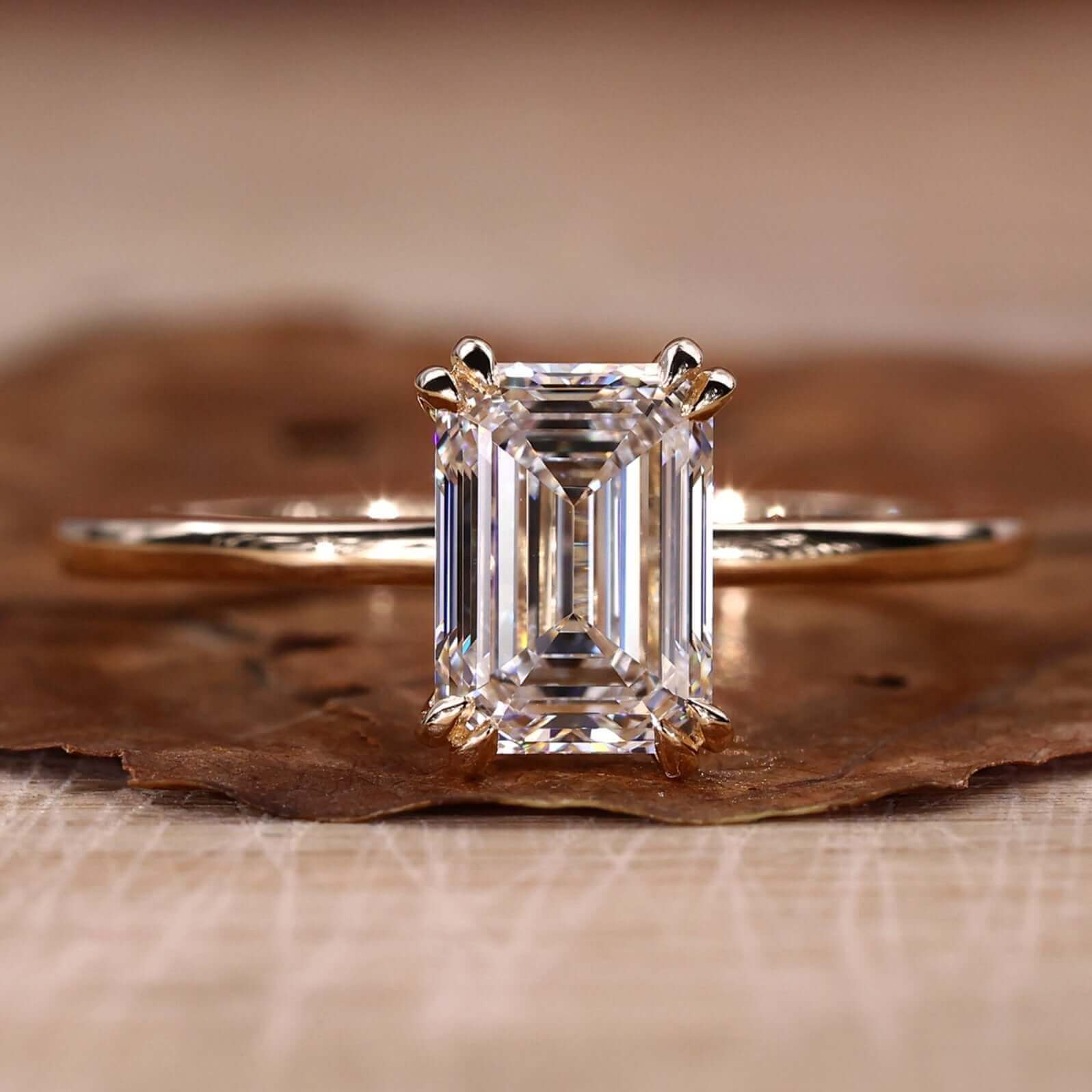
"Create an emerald cut engagement ring in yellow gold with a hidden halo."
That sounds specific.
But there are still dozens of unanswered questions.
- How wide should the band be?
- How high should the center stone sit?
- What type of prongs should be used?
- What should the proportions of the halo look like?
- Should the band taper toward the center?
- What finish should the metal have?
- Should the design feel minimal, vintage, architectural, or traditional?
A generative model has to make assumptions about all of these details.
Sometimes those assumptions are exactly what you wanted.
Sometimes they are not.
And the more specific the design becomes, the harder it is to communicate every decision through one long paragraph.
This is where we think AI jewelry design needs to evolve.
From prompting to directing
We do not believe the future of AI design is eliminating prompts.
We believe it is giving designers more ways to communicate intent.
That is why we created Design Blueprint in Tashvi AI.
Instead of relying entirely on natural language, a jeweler can define important parts of a design through a structured workflow.
Things like:
- Jewelry type
- Metal
- Center stone
- Setting
- Accent stones
- Dimensions
- Finish
- Design details
The Blueprint then becomes part of the instruction given to the AI.
The goal is simple: reduce ambiguity without reducing creativity.
You can read the full Design Blueprint documentation for how each field works.
Structure should not kill creativity
There is a tradeoff with many traditional design systems.
The more structured they become, the more restrictive they can feel.
We do not want that.
A jeweler should still be able to start with something as loose as:
"I want something inspired by ocean waves."
Or:
"Make this feel more Art Deco."
The structure is there when precision matters.
The prompt is there when exploration matters.
A good AI design workflow should support both.
No single AI model is best at everything
Control also goes beyond the prompt itself.
Different AI models behave differently.
One may be better at following references.
Another may produce stronger creative variations.
Another may be better at detail or composition.
That is why we also introduced Model Selection in Tashvi AI.
Instead of restricting users to one model or one fixed mode, we want jewelers to be able to choose from leading AI models in the same platform.
The objective is not to make the user think about AI infrastructure.
It is to give them access to the right creative tool for the task.
And if they do not want to choose, Auto can handle it for them.
Design is also a conversation
Another limitation of prompt-to-image workflows is that every interaction tends to produce another image.
But that is not how design actually works.
Sometimes you do not need another image.
You need an answer.
You might want to know whether a setting suits the stone.
You may want feedback on the balance of a design.
You might want ideas for simplifying a piece for everyday wear.
That led us to build Ask.
Ask lets a jeweler have a written conversation with Tashvi inside the same design thread.
It can see the design being worked on, so the conversation has visual context.
The idea is to make AI useful not only for generating a design, but also for thinking through it.
Exploration should be fast
The early stage of design is rarely about finding one answer immediately.
It is about exploring possibilities.
A single concept can lead to dozens of directions.
Different settings.
Different proportions.
Different stone layouts.
Different styles.
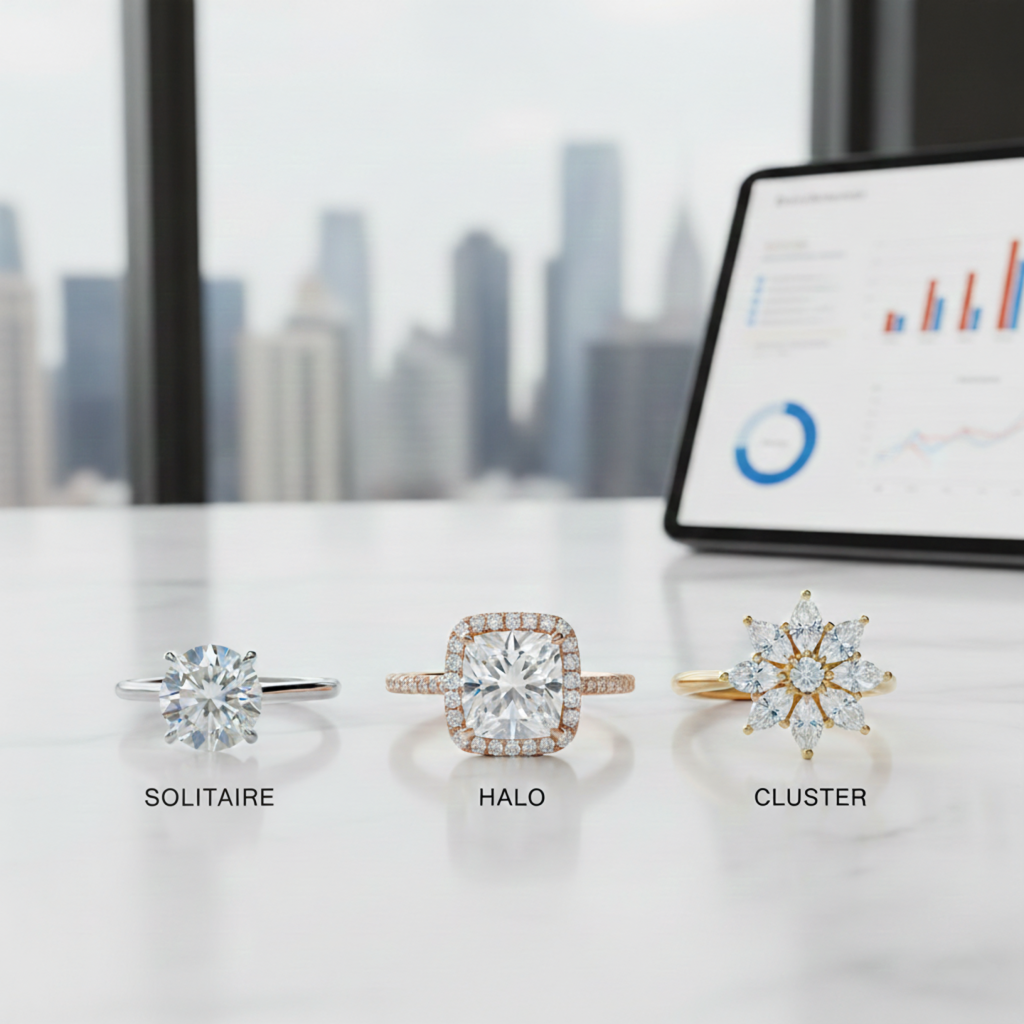
That is the idea behind Imagine.
Instead of creating each concept individually, jewelers can generate multiple design directions in bulk and compare them before deciding which ones are worth refining.
AI becomes much more useful when the cost of exploring an idea approaches zero.
Refinement matters as much as generation
Generating the first image is only the beginning.
A professional workflow needs to make it easy to continue working on that idea.
That is why we have also been connecting the different parts of Tashvi more closely.
A design in the Gallery can be moved directly into Canvas for editing and refinement.
A finished concept can be shared with a client.
A static design can be turned into a short video.
Each of these may look like a small feature individually.
Together, they represent a larger shift.
We are moving away from thinking about AI jewelry design as:
Prompt → Image
And toward something closer to:
Idea → Explore → Direct → Discuss → Refine → Present
Where we think this is going
The first generation of AI design tools proved that machines could generate impressive images from text.
The next generation has to prove that those systems can fit into real professional workflows.
For jewelry, that means understanding that creativity is only part of the job.
Jewelers also care about control, consistency, revisions, communication, technical constraints, and eventually manufacturability.
We still have a long way to go.
But our direction with Tashvi AI is becoming increasingly clear:
We are not trying to build a prompt box for jewelry.
We are trying to build an AI design environment where jewelers can move from an idea toward something they can actually work with.