How Deep Learning Models Create Photorealistic Jewelry Renders
Understand the deep learning technology behind photorealistic jewelry rendering, from neural networks that simulate light behavior on precious metals to AI models trained on millions of jewelry images for lifelike results.
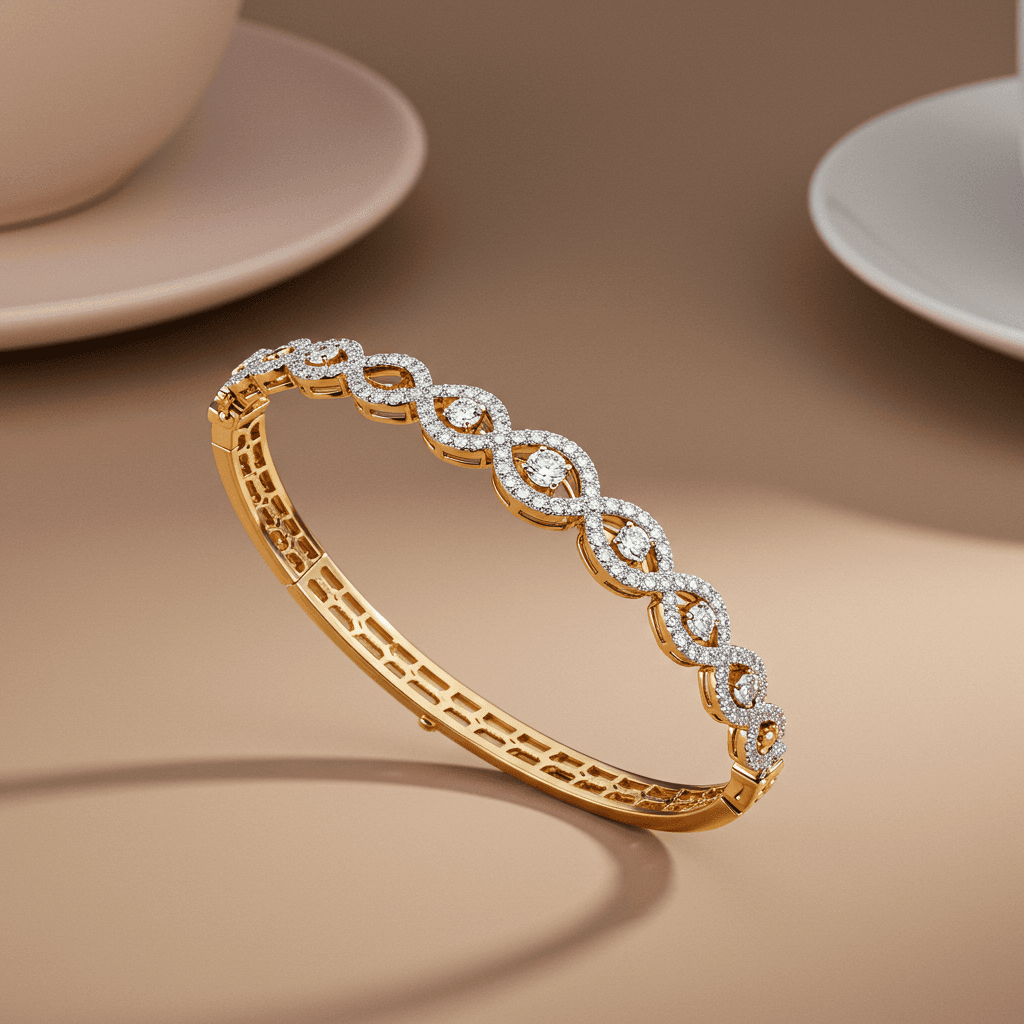
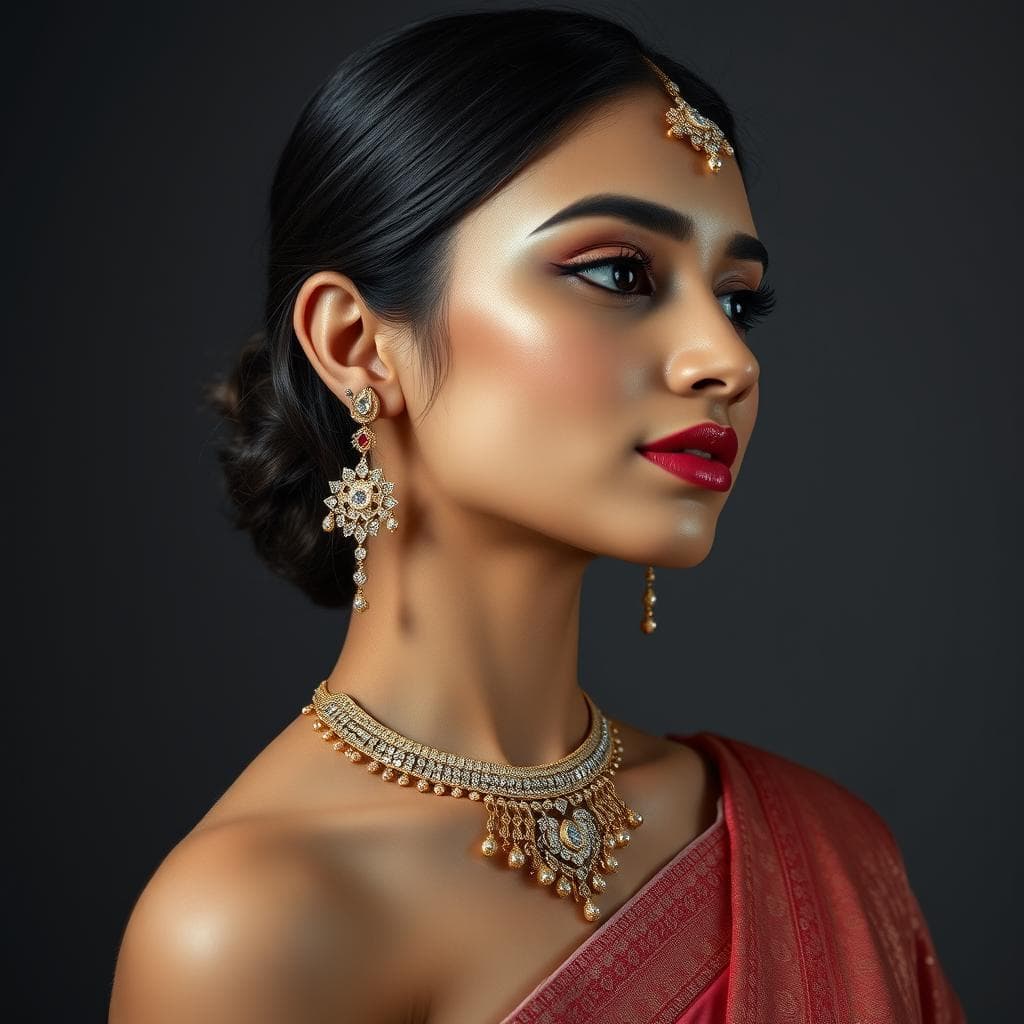
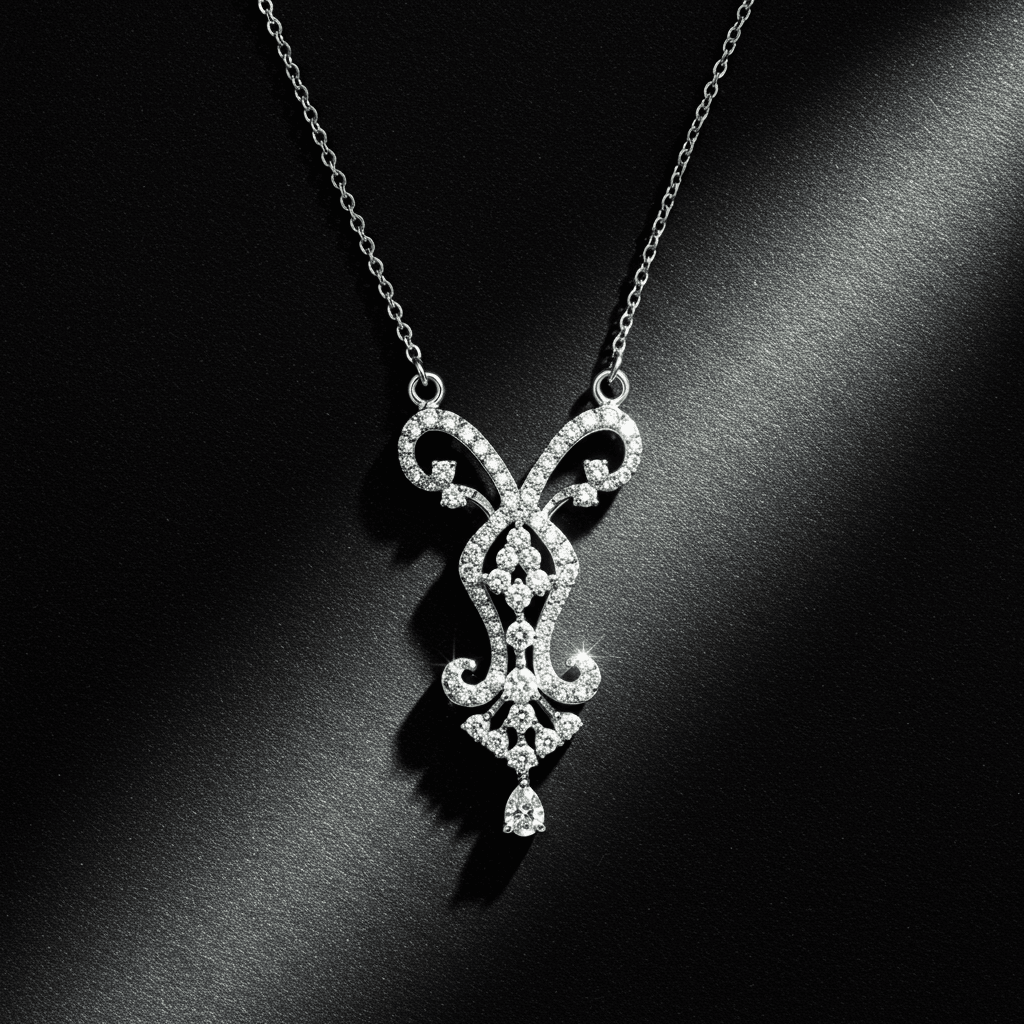
Deep learning models create photorealistic jewelry renders by training neural networks on millions of professional jewelry photographs, teaching AI to accurately simulate how light interacts with precious metals, gemstones, and surface finishes to produce images that are virtually indistinguishable from traditional photography in seconds rather than hours.
The Science Behind AI Jewelry Rendering
Traditional photorealistic rendering uses physics-based calculations to simulate light behavior. Ray tracing follows individual light paths as they bounce, refract, and scatter through a virtual scene. While accurate, this approach requires substantial computing power and time, often taking hours for a single high-quality jewelry render.
Deep learning takes a fundamentally different approach. Rather than calculating physics from first principles, neural networks learn patterns from real-world examples. A model trained on millions of jewelry photographs develops an internal understanding of how 18K yellow gold reflects light differently from 14K white gold, how a round brilliant diamond creates fire patterns distinct from an emerald cut, and how environmental lighting affects the overall mood of a jewelry image.
This learned understanding enables the AI to generate new, original images that exhibit photorealistic qualities without performing the intensive physics calculations that traditional rendering requires.
How Neural Networks Understand Jewelry Materials
Metal Rendering
Metals present unique challenges for rendering due to their highly reflective and specular properties. Deep learning models learn several critical aspects of metal appearance.
Surface reflectivity varies dramatically between polished, brushed, hammered, and matte finishes. The AI learns these variations not as abstract physical properties but as visual patterns associated with each finish type. Different gold karats display subtly different color temperatures and reflective behaviors that trained models reproduce accurately.
Environmental reflections on metal surfaces provide critical depth cues that make renders look real. The AI generates contextually appropriate reflections based on the implied lighting setup, creating the soft window reflections and studio light patterns that characterize professional jewelry photography.
Gemstone Rendering
Gemstones are arguably the most challenging elements to render realistically. Light enters a faceted stone, bounces internally between facets, separates into spectral components, and exits at various angles creating the fire, brilliance, and scintillation that make gemstones captivating.
Deep learning models handle this complexity by learning the visual outcomes rather than simulating the optical physics. The AI understands that a well-cut round brilliant diamond displays a specific pattern of bright and dark areas when viewed face-up, that a sapphire shows color zoning in characteristic ways, and that an opal displays play-of-color that shifts with viewing angle.
| Material | Key Visual Properties | AI Learning Challenge |
|---|---|---|
| Yellow gold | Warm reflections, color temperature shifts | Distinguishing karat colors |
| White gold | Cool reflections, rhodium plating effects | Differentiating from platinum |
| Platinum | Dense, cool reflections with slight warmth | Subtle weight and density cues |
| Diamonds | Fire, brilliance, scintillation patterns | Cut-dependent light behavior |
| Colored gems | Hue saturation, color zoning, phenomena | Variety across gem species |
| Pearls | Luster, orient, surface nacre quality | Organic surface irregularity |
Surface Detail
Beyond overall material appearance, deep learning models capture micro-level surface detail that contributes to realism. The tiny scratches on a worn ring, the crystalline structure visible in a hammered finish, the subtle variation in a hand-polished surface, all these details emerge from AI models that have learned them from photographic examples.
Architecture of Jewelry Rendering Models
Modern jewelry rendering typically uses diffusion models, a class of deep learning architectures that generate images by gradually refining random noise into coherent visuals. These models are trained through a two-phase process.
During training, the model learns to add noise to real jewelry photographs and then reverse the process. Through millions of iterations, it develops an understanding of jewelry visual patterns at every scale, from overall composition to pixel-level detail.
During generation, the model starts with random noise and iteratively removes it, guided by the user's input, whether text descriptions, reference images, or design parameters. Each refinement step brings the image closer to a photorealistic result.
Speed and Quality Advantages
The speed advantage of deep learning rendering over traditional methods is transformative for jewelry workflows. Comparing AI to traditional design processes reveals time savings of 95 percent or more for visualization tasks.
This speed enables workflows that were previously impractical. Generating 20 design variations in a single client meeting. Producing complete product catalogs in hours rather than weeks. Testing marketing imagery concepts in real time rather than committing to expensive photo shoots.
Quality continues improving as models train on larger datasets and more sophisticated architectures emerge. The gap between AI-generated jewelry images and professional photography narrows with each generation of models, and for many applications, it has already closed.
Limitations and Ongoing Challenges
Despite remarkable progress, deep learning jewelry rendering faces several ongoing challenges.
Consistency across multiple views of the same piece remains imperfect. A ring rendered from the front may not precisely match the same ring rendered from the side, since each generation is independent. This matters less for marketing and concept work but remains significant for technical applications.
Physically impossible elements occasionally appear. A reflection that does not match the lighting, a stone that seems to float slightly above its setting, or a chain that defies gravity. These artifacts are becoming rarer but have not been eliminated entirely.
How Tashvi AI Leverages Deep Learning
Tashvi AI uses deep learning models specifically optimized for jewelry rendering, trained on extensive datasets of professional jewelry photography spanning every major style, metal, and gemstone category. This specialization produces consistently superior results compared to general-purpose AI image generators.
The platform's models understand jewelry-specific concepts at a deep level, rendering accurate diamond shapes, proper setting proportions, and realistic material interactions without requiring users to specify technical optical properties. Describe what you want in plain language, and the deep learning engine produces photorealistic results that communicate your design intent with professional clarity.
Try designing on Tashvi AI free
The Road Ahead
Deep learning jewelry rendering will continue advancing along several trajectories. Higher resolution outputs will capture finer detail. Improved consistency between multiple views will enable virtual try-on experiences. Better understanding of physical scale will produce more dimensionally accurate representations.
For jewelry professionals, the future of AI in jewelry design depends on these deep learning advances, making photorealistic visualization an everyday tool rather than a specialized service.
Frequently Asked Questions
Quick answers to the questions readers ask most about this guide.
What makes deep learning jewelry renders look photorealistic?
Deep learning models trained on millions of jewelry photographs learn how light interacts with different metals, gemstones, and surfaces. They accurately simulate reflections, refractions, caustics, and environmental lighting that create the lifelike appearance of real jewelry photography.
How are deep learning models trained for jewelry rendering?
Models are trained on large datasets of professional jewelry photographs paired with design parameters. The AI learns relationships between metal types, surface finishes, gemstone properties, and their visual appearance under various lighting conditions.
Can deep learning renders replace traditional 3D rendering for jewelry?
For marketing and visualization purposes, deep learning renders often match or exceed traditional 3D rendering quality while being significantly faster. However, traditional rendering remains important for precise technical visualization where exact dimensional accuracy is critical.
How long does AI take to generate a photorealistic jewelry render?
Modern deep learning systems generate photorealistic jewelry renders in seconds, compared to 30 minutes to several hours for traditional ray-traced 3D renders. This speed enables real-time design exploration and instant client presentations.
What hardware is needed to run deep learning jewelry rendering?
Cloud-based platforms like Tashvi AI handle all processing on remote servers, requiring only an internet-connected device. Local rendering with deep learning models benefits from GPUs, but most jewelry professionals use cloud solutions that eliminate hardware requirements.