How to Design Matching Jewelry for Couples
Designing matching couple jewelry involves balancing shared symbolism with individual style preferences. Learn how to create coordinated rings, necklaces, and bracelets that celebrate your bond while honoring each partner's unique taste.
Matching couples jewelry celebrates the connection between two people through coordinated or complementary pieces that share visual and symbolic elements. Designing these pieces requires a thoughtful balance between creating unity and respecting each partner's individual style, ensuring that both people feel excited to wear their piece every day.
Whether you are designing promise rings, matching pendants, coordinated bracelets, or complementary wedding bands, the process involves understanding design principles that make two separate pieces feel like they belong together.
The Spectrum of "Matching"
Matching does not mean identical. Couples jewelry exists on a spectrum from perfectly identical pieces to subtly linked designs that only the two wearers recognize as connected. Understanding where on this spectrum you want to land is the first decision to make.
Identical Matching
Both partners wear the exact same piece, differing only in size. This approach works best for simple designs like plain bands, chain bracelets, or pendant necklaces where one size fits all aesthetics. The strength of identical matching is its simplicity and the undeniable visual connection when the pieces are seen together.
Proportional Matching
Both pieces share the same design but are scaled to suit each wearer. His ring might be 6mm wide with a brushed finish while hers is 3mm with the same brushed texture. The design language is identical, but the proportions honor different hand sizes and style preferences. This is the most common approach for wedding bands.
Complementary Matching
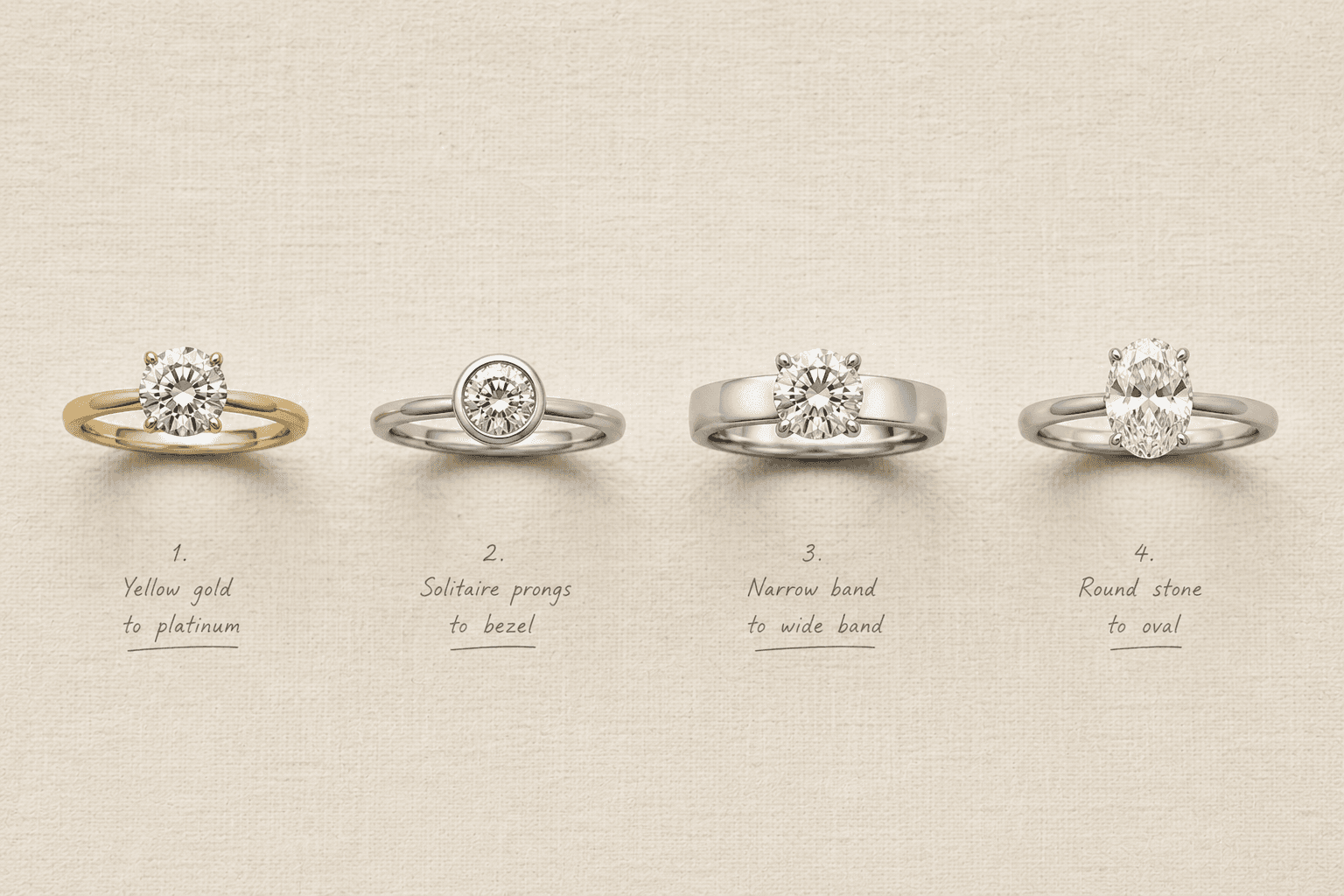
The pieces share a design theme or element but differ in execution. One might be a minimalist interpretation while the other is more detailed. One might feature a yellow gold setting while the other uses white gold. A shared gemstone, engraving, or motif ties them together visually without requiring identical aesthetics.
Symbolic Matching
The pieces look completely different individually but connect through a hidden or symbolic element. Interior engravings that complete each other's sentences, puzzle-piece shapes that interlock, or complementary symbols like a sun and moon all create connection through meaning rather than visual similarity.
Design Elements to Coordinate
Metal Selection
Choosing the same metal for both pieces is the simplest way to create visual cohesion. Gold is the most popular choice for couples jewelry, with 14k yellow gold offering the best balance of durability and warmth. However, if one partner prefers white metals and the other prefers yellow, consider a two-tone design that incorporates both, or agree on a neutral like rose gold that often appeals to varied tastes.
Gemstone Pairing
Shared gemstones create a subtle but powerful connection between matching pieces. Options include using both partners' birthstones in each piece, choosing a single meaningful stone like a sapphire for fidelity, or incorporating diamonds or moissanite for universal sparkle. Even if the overall designs differ, a shared stone unites the pieces.
Engraving Coordination
Coordinated engravings add a hidden layer of connection that only the couple knows about. Popular approaches include splitting a phrase across two pieces, engraving the same date or coordinates on both, writing each other's initials on the interior, or including fingerprints from each partner on the other's piece.
Texture and Finish
Matching textures create visual harmony even when designs differ in other ways. A hammered finish, satin brushing, high polish, or matte coating applied consistently across both pieces ties them together. Texture is a particularly effective matching element for couples who want subtle coordination rather than obvious matching.
Designing Matching Rings
Rings are the most popular category for couples jewelry, encompassing promise rings, engagement rings, wedding bands, and everyday statement rings.
Promise Ring Pairs
Promise ring sets benefit from clear matching elements because they serve as a public declaration of the couple's connection. Consider thin bands with a shared interior engraving, matching gemstone settings at different scales, or complementary designs that interlock when placed side by side. The designs should be distinct from eventual engagement and wedding rings.
Wedding Band Coordination
Matching wedding bands do not need to be identical, but they should feel like they belong to the same design family. Many jewelers offer band collections designed specifically for pairing, with masculine and feminine versions of the same aesthetic. Shared metal, matching engravings, or coordinated stone settings create unity while allowing each band to suit its wearer.
Everyday Ring Sets
Beyond ceremonial rings, many couples enjoy wearing coordinated rings daily. Stackable bands, signet rings with complementary engravings, or gemstone rings featuring partner birthstones all work as everyday matching pieces that do not carry the weight of promise or wedding symbolism.
Designing Matching Necklaces
Split and Interlocking Pendants
Split pendants that form a complete shape when joined are classic couples necklace designs. Hearts, puzzle pieces, yin-yang symbols, and custom shapes can all be divided into two wearable halves. The reunion of the halves becomes a meaningful ritual whenever the couple is together.
Coordinate Necklaces
Matching coordinate necklaces feature the latitude and longitude of a shared meaningful location. The pieces can be identical or use different pendant styles while displaying the same numbers. Bar pendants, disc pendants, and charm designs all accommodate coordinate engravings effectively.
Initial and Name Pairs
Each partner wears a necklace featuring the other person's initial or name. This simple swap creates a sweet connection where each person carries a piece of their partner. Name necklaces in matching fonts and metals make the pairing visually cohesive.
Designing Matching Bracelets
Bracelets offer more design surface area than rings and sit at a visible location that makes matching elements easy to spot. Leather and metal combinations work well for mixed-gender pairs, while chain bracelets in matching metals suit couples with similar aesthetics.
Bar Bracelets
Matching bar bracelets with coordinated engravings are among the most popular couples bracelet designs. Each bar can feature a date, coordinates, name, or half of a shared phrase. The clean lines of bar designs translate well across masculine and feminine styling.
Beaded Bracelets
Matching beaded bracelets allow for color coordination and gemstone incorporation in a casual, everyday format. Using the same bead palette with different arrangement patterns creates pieces that are clearly connected without being identical.
Cuff Bracelets
Matching cuffs in different widths offer a bold matching option. A wide cuff for one partner and a slender version of the same design for the other creates proportional matching that suits different wrist sizes and style preferences.
The Design Process for Custom Pieces
When designing custom matching jewelry, follow a structured process that ensures both partners are satisfied with the result.
Start by discussing what "matching" means to both of you. Some couples want unmistakable visual matching, while others prefer subtle symbolic connections. Aligning on this early prevents disagreements later in the design process.
Next, identify the elements that must match and the elements where individual preference takes priority. Perhaps you agree on the same metal and engraving but want different widths and finishes. Defining these boundaries gives the designer clear parameters.
Gather inspiration together. Browse jewelry collections, save images that appeal to each partner, and look for common themes in what you both gravitate toward. The overlap in your inspiration collections reveals the design language that will satisfy both parties.
Finally, work with a jeweler or design tool that can produce visual mockups before production. Seeing the pieces rendered side by side helps you evaluate whether they feel sufficiently connected while remaining individually appealing.
Designing Your Matching Pieces With Tashvi AI
Tashvi AI is a powerful tool for couples designing matching jewelry because it lets both partners participate in the creative process from anywhere. Generate design concepts together by describing your shared aesthetic, specifying matching elements, and seeing multiple variations instantly. Experiment with different metal combinations, gemstone pairings, and engraving styles until both partners feel excited about the direction.
The platform excels at producing side-by-side comparisons of his and hers versions, making it easy to evaluate whether the matching elements create the right level of visual connection. You can iterate rapidly through dozens of concepts, refining details until every aspect feels right for both people.
Try designing on Tashvi AI free
Wearing Your Connection
The beauty of matching couples jewelry lies in its dual nature. Each piece works as a standalone accessory that suits its wearer's style and wardrobe. But when seen together, or when only the two of you know about the hidden connection, the pieces become something greater than the sum of their parts. They become a private language, a visible thread connecting two people who chose each other and want the world, or just each other, to know it.
Frequently Asked Questions
Quick answers to the questions readers ask most about this guide.
Does matching couples jewelry have to be identical?
No, the best matching couples jewelry is often complementary rather than identical. Shared design elements like the same metal, a matching gemstone, a coordinated engraving, or a linked motif create connection without forcing both partners into the same style. Complementary designs honor individual taste while maintaining visual unity.
What metals work best for matching couples jewelry?
Gold in 14k or 18k is the most popular choice because it offers durability and a warm, timeless look. However, mixed-metal pairs work beautifully when one partner prefers yellow gold and the other favors white gold or platinum. The matching element can be a shared design rather than an identical metal.
How do you size matching rings for two different people?
Each partner should be sized individually by a professional jeweler, as finger sizes and preferences differ significantly between people. Width preferences also vary, with many men preferring wider bands and women preferring thinner ones. A good jeweler can maintain design harmony across different widths and sizes.
What are popular engraving ideas for couples jewelry?
Popular couples engravings include matching halves of a phrase (one ring says 'I love you' and the other says 'I know'), shared dates like anniversaries or first meetings, coordinates of a meaningful location, complementary symbols like a sun and moon, and each partner's initials or fingerprints engraved on the other's piece.
Can couples design matching jewelry using AI tools?
Yes, AI jewelry design platforms like Tashvi AI let couples experiment with matching designs together. You can generate his and hers ring concepts, matching pendant variations, and coordinated bracelet designs. The visual output helps both partners agree on a shared aesthetic before investing in custom production.