How Digital Prototyping Saves Thousands in Jewelry Development
Discover how digital prototyping through AI visualization, 3D modeling, and virtual testing eliminates the need for expensive physical samples, saving jewelry businesses $2,000 to $10,000 per collection in development costs.
Digital prototyping through AI visualization, 3D modeling, and virtual evaluation reduces jewelry development costs by $2,000 to $10,000 per collection by eliminating 60 to 80 percent of the physical samples traditionally required during the design refinement process.
The Cost of Physical Prototyping
Traditional jewelry development relies heavily on physical prototypes. A designer creates a concept, commissions a wax model, casts it in metal, evaluates the result, identifies changes, and repeats the cycle. Each iteration consumes materials, labor, and time.
For a typical engagement ring development project, the physical prototyping cycle might include three to five wax models at $50 to $100 each, two to three metal castings at $200 to $500 each, and finishing work on each prototype at $100 to $300. The total prototyping cost for a single ring design easily reaches $1,000 to $3,000 before production begins.
Multiply this across a collection of 10 to 20 new designs, and prototyping costs consume $10,000 to $60,000 before any sellable inventory is produced.
How Digital Prototyping Works
AI Visual Prototyping
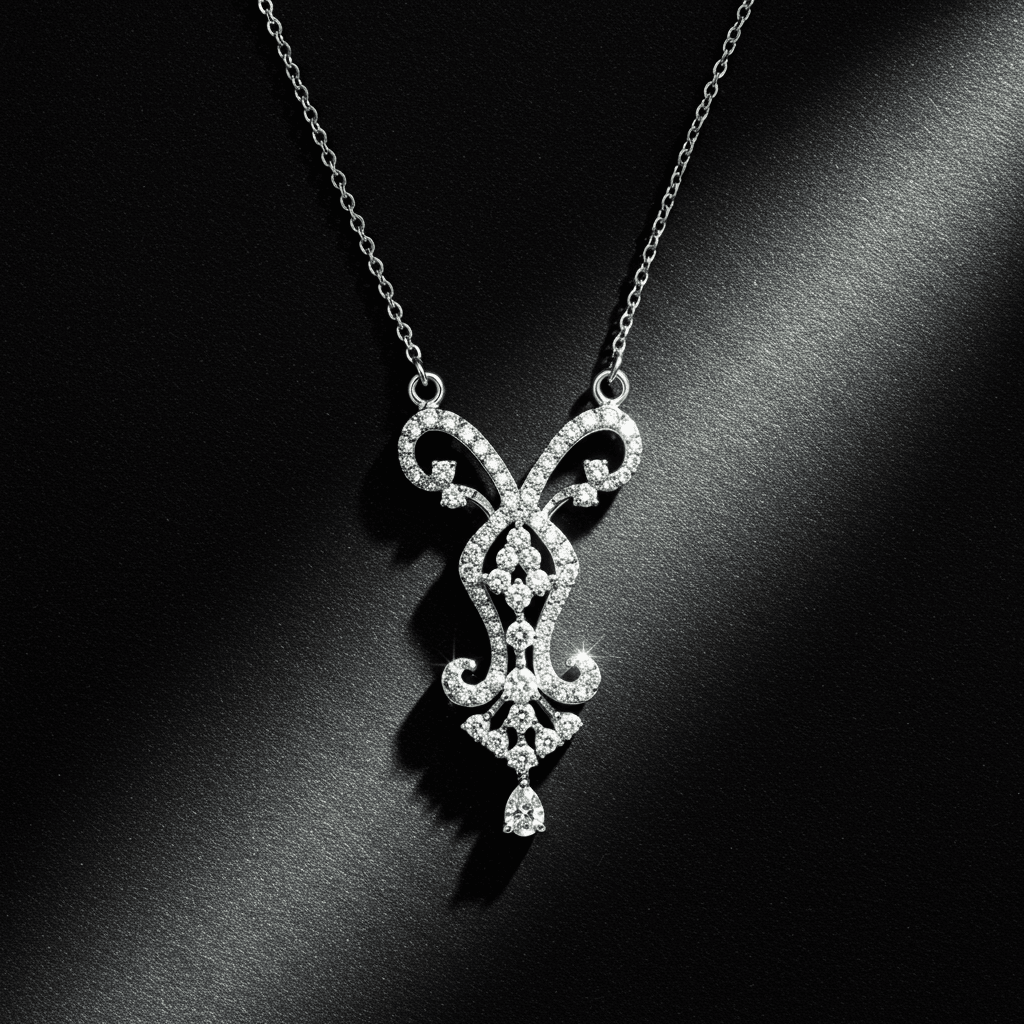
The first stage of digital prototyping uses AI to generate photorealistic visualizations of design concepts. AI design tools produce images showing accurate metal behavior, gemstone properties, and overall aesthetic from multiple angles in minutes rather than the days required for physical prototyping.
These visual prototypes enable rapid evaluation and refinement. Does the band width look proportional? Does the stone size balance the setting? Does the metal color achieve the desired mood? These questions are answered digitally before any material is consumed.
3D Model Validation
Once visual concepts are approved, 3D CAD models add dimensional precision. Wall thicknesses can be measured, structural integrity assessed, and manufacturing feasibility verified, all digitally. 3D printing preparation benefits from this thorough digital validation.
Virtual Testing
Digital prototypes can be evaluated against multiple criteria simultaneously.
| Evaluation Criteria | Physical Prototype | Digital Prototype |
|---|---|---|
| Visual appearance | Requires physical creation | Instant AI rendering |
| Proportional balance | Must see physical piece | Measurable in 3D model |
| Structural integrity | Destructive or wear testing | Finite element analysis |
| Manufacturing feasibility | Expert review of physical sample | Automated analysis tools |
| Material cost | Calculate from physical weight | Estimate from 3D model volume |
| Client approval | Mail or present physical piece | Share digital images instantly |
The Revised Development Workflow
Concept Phase (Digital Only)
Generate 10 to 20 AI concept variations. Review and select the strongest 3 to 5 directions. Share with clients or buying team for initial feedback. Refine based on digital feedback. Total cost for materials at this stage is zero.
Development Phase (Mostly Digital)
Create detailed CAD models of approved concepts. Generate photorealistic renders from multiple angles. Validate proportions, structural integrity, and manufacturing feasibility digitally. Conduct client approval reviews using digital presentations. Total physical material cost remains zero.
Validation Phase (Minimal Physical)
Produce one physical prototype of each finalized design for tactile evaluation and final approval. This single prototype confirms wearing comfort, weight feel, and real-world appearance. Total physical prototyping cost is reduced to one round per design.
Production Phase
Move directly from validated digital files and confirmed physical prototype to production tooling.
Savings Breakdown
For a 15-piece collection development, the comparison is dramatic.
Traditional approach. 3 to 5 physical prototypes per design times 15 designs equals 45 to 75 physical samples. At $200 to $500 average per sample, total prototyping cost reaches $9,000 to $37,500.
Digital-first approach. Unlimited AI concepts at minimal cost plus one final physical prototype per design equals 15 physical samples. At $200 to $500 per sample, total prototyping cost is $3,000 to $7,500 plus AI platform subscription.
The savings of $6,000 to $30,000 per collection exceed the annual cost of most AI design platforms many times over.
Client Communication Benefits
Digital prototypes transform client interactions. Rather than describing modifications verbally and waiting weeks for revised physical samples, designers show changes in real time during consultations. "What if we made the band wider?" generates a new visualization in seconds. "Can we see it in rose gold?" produces a metal swap instantly.
This immediacy reduces revision cycles from weeks to hours and increases client satisfaction by making them active participants in the design process rather than passive reviewers of predetermined options.
How Tashvi AI Powers Digital Prototyping
Tashvi AI provides the visual prototyping foundation that makes this workflow possible. Generate photorealistic concept images that clients can evaluate and approve without physical samples. Explore dozens of variations in a single session. Share designs instantly with remote clients, manufacturing partners, and buying teams.
The platform's material estimation capabilities add another dimension by providing cost projections alongside visual concepts, enabling simultaneous design and budget evaluation.
Try designing on Tashvi AI free
Making the Transition
Start by introducing digital prototyping for your next collection development cycle. Use AI to generate initial concepts digitally, refine through digital feedback, and produce physical prototypes only for final validation. Compare the cost and timeline against your previous development process. The savings will make the case for permanent workflow adoption.
Frequently Asked Questions
Quick answers to the questions readers ask most about this guide.
What is digital prototyping in jewelry design?
Digital prototyping uses AI visualization, 3D modeling, and virtual rendering to evaluate and refine jewelry designs before creating any physical pieces. It replaces the traditional cycle of making physical samples, evaluating them, and remaking with modifications.
How much does digital prototyping save compared to physical samples?
Each physical prototype costs $200 to $2,000 depending on complexity and materials. Digital prototyping reduces the number of physical samples by 60 to 80 percent, saving $2,000 to $10,000 per collection development cycle.
Can digital prototypes replace physical samples entirely?
For client approval and design evaluation, digital prototypes often suffice. However, most jewelers still produce one final physical prototype to verify wearing comfort, tactile quality, and real-world appearance before committing to production.
How do clients react to digital prototypes vs physical samples?
Clients increasingly accept high-quality digital prototypes for design approval, especially when AI renders provide photorealistic quality. Younger clients are particularly comfortable with digital approval, while some traditional clients still prefer seeing physical samples.
What tools enable effective digital prototyping for jewelry?
AI design platforms like Tashvi AI for visual prototyping, CAD software like RhinoGold for dimensional accuracy, and 3D rendering engines for photorealistic presentation combine to create comprehensive digital prototyping workflows.