
Why Some Jewelry Brands Won't Use AI for Product Photos (And What It Means for You)
Dove banned AI in 2024. Luxury houses treat trust as the product. Bench jewelers object that AI flattens the craft story. We steelman every objection — then draw the line between generated fake jewelry and AI-enhanced real photos.
The Dove Moment: What Luxury Jewelry Can Learn From "Keep Beauty Real"
In April 2024, Unilever's Dove brand committed to never use AI to create or distort women's images in its advertising. The Keep Beauty Real pledge wasn't marketing — it was a response to Dove's own research finding that 1 in 3 women feel pressure to alter their appearance because of what they see online, "even when they know the images are fake or AI-generated."
The move worked. Coverage in Marketing Dive framed it as a masterclass in category leadership. Dove didn't wait for regulation — it moved first, publicly, and earned trust as an asset.
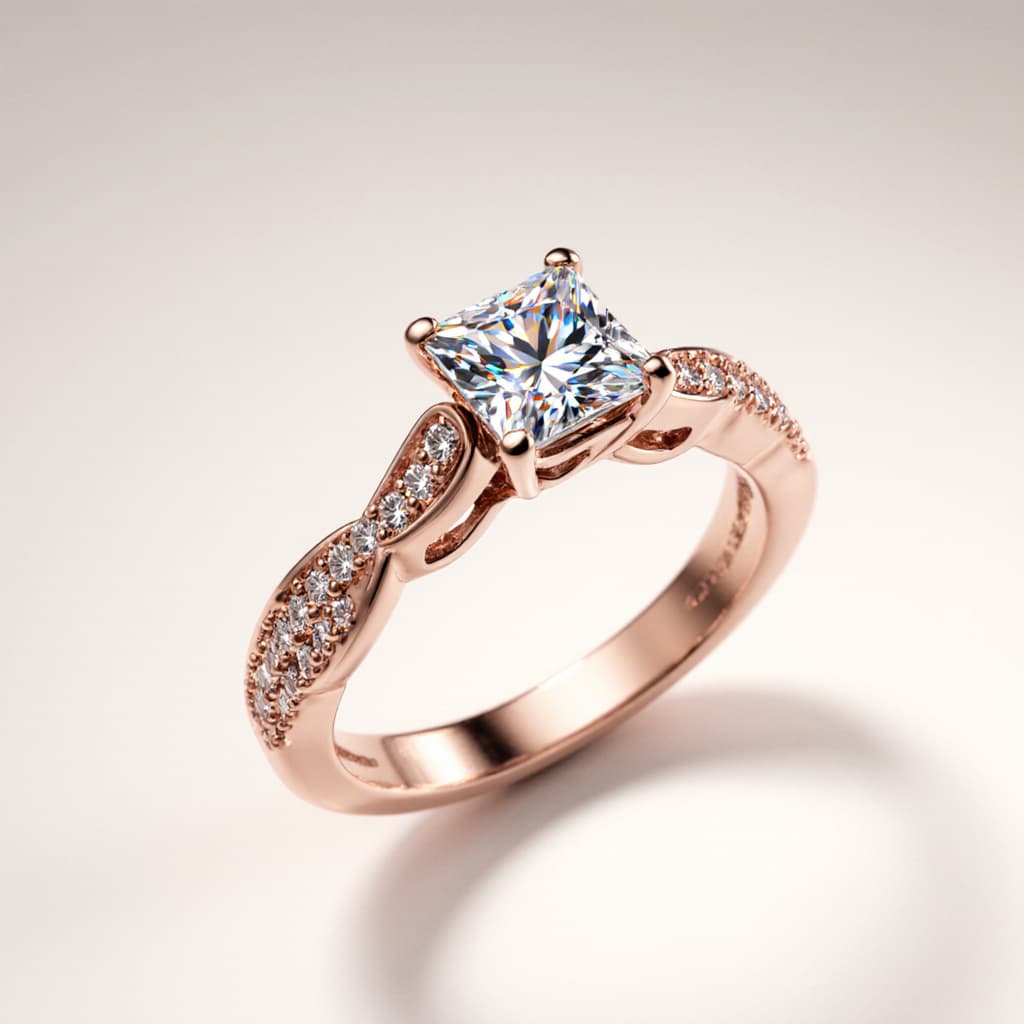
Jewelry has not yet had its Dove moment. No major house has issued an equivalent pledge. But the pressure is building. And the parallels are strong: jewelry buyers are in an emotional, high-stakes purchase — The Knot's 2024 Jewelry and Engagement Study pegs the average engagement ring spend at $5,500 with a common range of $2,000-$20,000, and Brides.com's annual ring report confirms a similar distribution. "Does this photo match what I'll hold in my hand?" is the entire question. If any luxury category rewards refusing AI imagery, jewelry is it.
This post takes the critics seriously. We steelman every objection — labor, authenticity, environmental, certification — and then draw the line that actually matters: generated fake jewelry versus AI-enhanced real photos. If you want the shopper-side version of this conversation, see Should I Buy Jewelry from Stores Using AI Product Photos?. For the technical detection companion, see How to Tell if Jewelry Photos Are AI-Generated.
Tashvi AI
Your product, our scene — never generated from scratch
Tashvi only enhances real jewelry photos. Facets, hallmarks, and stone geometry stay intact — AI just handles the backdrop, lighting, and lifestyle context. Try it free.
When a Photo Is a Promise: Why Engagement Rings Are Different
Jewelry photography is different from fashion photography, and engagement ring photography is different from jewelry photography. The reason is the contract.
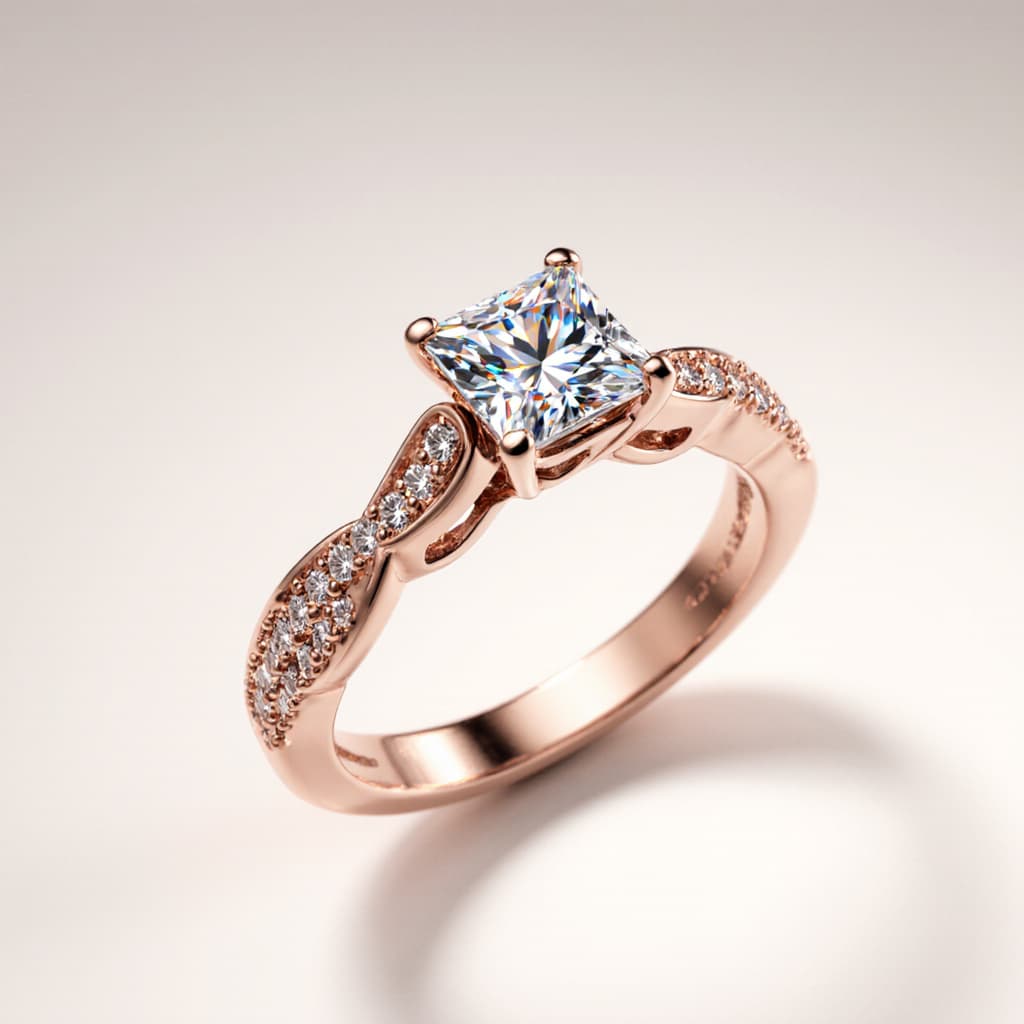
A fashion photograph sells an aesthetic. You might buy the dress, but you don't expect to look identical to the model. An engagement ring photograph sells a specific stone — its color grade, clarity, cut geometry, inclusion pattern, and proportions. The buyer expects the physical piece to match the photograph because that's the basis of the purchase. If it doesn't, they've been defrauded.
This is why the critics of AI jewelry imagery aren't wrong to single out engagement rings. A fully prompt-generated ring — no physical source, just "1-carat oval halo in rose gold" — can't guarantee facet count, stone orientation, or color. The peer-reviewed 2025 Taylor & Francis paper "When AI Doesn't Sell Prada" found that disclosed AI imagery in luxury advertising was rated by consumers as "less authentic" and "lower effort" than traditional photography. In a category where authenticity is the product, that penalty is existential.
The honest conclusion: if an AI photograph is not traceable to the actual physical piece, it has no business selling it. Brands that refuse to use AI at all are drawing that line wide; the question is whether the line can be drawn more precisely.
The Bench Jeweler's Objection: AI Flattens the Craft Story
Independent bench jewelers — the people running one-person studios, training at jewelry schools, selling on Etsy and at craft fairs — have a different but related objection. Their business model depends on the craft story. A hand-forged ring at $1,800 isn't competing with a cast-from-CAD ring at $400 on specs (typical ranges per our own cost breakdown for a gold ring and MJSA's 2024 custom jewelry pricing benchmarks. It's competing on provenance, process, and the human hand.
Generative AI imagery flattens that story. The process photograph — the bench, the files, the flame, the hand — is exactly what a craft-driven brand needs to show. An AI-rendered hero shot of the finished piece, no matter how technically perfect, sits awkwardly next to a real in-process video. The two aesthetics don't match, and customers notice.
Etsy's Creativity Standards have codified this concern. As of 2024, sellers cannot label AI-generated items as "Made by" or "Handmade," and TechCrunch reporting documented that in Q1 2024 Etsy removed 4× more listings year-over-year for Handmade-policy violations. Disclosure of AI use is mandatory. The platform's logic: craft buyers are paying for provenance; undisclosed AI imagery severs that provenance from the product.
For a bench jeweler, then, the objection isn't just ethics — it's positioning. AI imagery, however legal and well-disclosed, reads as the wrong aesthetic for the wrong customer.
What GIA, Etsy, and the FTC Actually Say About AI Imagery
Industry bodies have been measured but consistent.
GIA. The Fall 2024 Gems & Gemology feature on generative AI frames it as a tool for design — ideation, iteration, rendering mockups — and explicitly not a substitute for physical gemological examination. A GIA report is grounded in hands-on observation of the specific stone under magnification. AI has no role in the grading pipeline and no role in documentation.
Etsy. As above. AI use must be disclosed. "Made by" and "Handmade" are reserved for physical human-crafted work. The seller policy explicitly addresses generative AI as a specific case.
FTC. Operation AI Comply (September 2024) was unambiguous: "there is no AI exemption from the laws on the books." For jewelry specifically, the FTC Jewelry Guides already require accurate representation of material, karat, and stone origin. Using AI to depict a piece in a lifestyle scene is fine; using it to alter the representation of the stone itself is not.
The regulators and standards bodies are not anti-AI. They are anti-misrepresentation. Brands that refuse AI imagery entirely are choosing the safest interpretation — they know that drawing a precise line in-house is hard, so they refuse the whole category. That's a defensible choice even if it leaves value on the table.
The Environmental Math Nobody Talks About in Jewelry Marketing
Sustainable jewelry is a growing segment (see our sustainable lab-grown gemstone design guide). Brands in this segment are increasingly being asked about the energy cost of their AI tooling.
The numbers, from MIT News and MIT Technology Review:
- Average image generation: ~2.91 Wh per image
- Larger / higher-resolution models: up to 11.49 Wh per image
- 1,000 SDXL images ≈ driving 4.1 miles
- Data center cooling: ~2 L of water per kWh consumed
For a brand producing tens of thousands of images per year, this adds up. Honestly? It adds up to less than a single transatlantic photoshoot flight. The argument cuts both ways: AI photography replaces high-carbon studio shoots (lighting rigs for hours, model flights, location travel, print proofing), so the net environmental footprint of switching is often lower, not higher.
But the argument is real. Sustainability-positioned brands are correct to ask the question and to weigh the answer against their values. For some, the answer is "we don't use AI for anything." For others, "we use AI for low-energy catalog shots and keep craft and campaign work fully human." Both are coherent positions.
The Photographers Losing Work — and Why It Matters to Your Brand
This is the hardest part of the argument to dismiss.
A January 2026 PetaPixel-covered Association of Photographers survey found 58% of commercial photographers have lost work to generative AI. Licensed image volume has dropped roughly 65% year-over-year in affected categories. Product photography — including jewelry — is the hardest-hit segment because it's the use case where a tight-crop, well-lit catalog shot is most easily reproduced by AI.
The brands that refuse AI imagery on labor grounds are making a deliberate choice: they would rather pay for human photography as a craft-support decision, even when AI is cheaper. For a small, mission-aligned brand, that's a legitimate values call. For a larger brand, it can be a differentiator — the way "organic" or "fair trade" became differentiators in other categories.
The ethical middle ground, which we think most of the industry will land on over 2026-2027: use AI for background replacement, lighting normalization, and high-volume variations, while continuing to pay photographers for the original product shot that serves as the AI's source. That preserves the labor category that actually requires skill (getting the initial macro-lit shot of a reflective, fiddly piece right) while cutting the labor category that was mostly mechanical (volume catalog reshoots across 50 SKUs in identical lighting).
The Line That Matters: Generated Jewelry vs. AI-Enhanced Real Photos
Here's the distinction that does most of the work in this debate, and that the critics often (fairly) collapse because the category is young and the language is muddled.
Generated jewelry imagery is what you get when you type a prompt into Midjourney, Firefly, or DALL-E: "1.5-carat oval halo engagement ring in rose gold, macro photography, studio lighting." The image output is an average of training data. It's not a photograph of any ring. The "piece" depicted does not physically exist. A customer buying a ring based on this image has no guarantee that the received piece will match — facet count, stone size, proportion, metal color can all differ. This is the category the critics are objecting to, and they're right to object.
AI-enhanced real photography is different. You start with a real photograph of a real ring — shot in a small studio or even on a phone, following a workflow like our phone-to-professional jewelry image guide. AI then replaces the background, normalizes the lighting, adds lifestyle context, or generates a model-on-hand variant. Critically, the stone geometry, facet count, metal color, and hallmark stamps stay intact — because they come from the source photograph. The piece depicted is the piece the customer receives.
Every argument in this post applies more strongly to generated imagery than to enhanced imagery:
- Misrepresentation: generated = yes; enhanced = only if the enhancement distorts the piece, which is a process failure, not a categorical one.
- Craft-story flattening: generated = yes; enhanced = depends on how it's used; enhanced background on a real process photo is less corrosive than a fully synthesized hero shot.
- Labor displacement: both contribute, but enhanced imagery still requires human photographers for the source shot.
- Environmental cost: both use energy; enhanced typically uses less (smaller enhancement passes) than full generation.
- Certification compatibility: neither replaces GIA/IGI/AGS examination, but enhanced imagery can coexist with certificate photos in a trust chain; generated imagery cannot.
Many brands that say "we don't use AI for product photos" are specifically rejecting the generated category. When pressed, most are fine with background replacement, color correction, and other enhancement techniques that have been standard since the Photoshop era. The word "AI" has done most of the alarm work; the underlying process has precedent.
How Tashvi Draws That Line (Your Product, Our Scene)
Tashvi operates strictly on the enhanced side of the line.
- Real product input is required. We don't generate jewelry from prompts. Every piece of jewelry in a Tashvi image is sourced from an uploaded photograph of a real physical piece. Facet count, prong geometry, hallmark stamps, stone position — all preserved from the source.
- AI changes the scene, not the jewelry. Background, lighting, context, model shots, lifestyle composition — these are the AI's job.
- C2PA Content Credentials are embedded. Every Tashvi output carries provenance metadata identifying the source photograph and the enhancement applied. Retailers can display the Content Credentials badge, and shoppers can verify the chain themselves.
- Disclosure is expected. We ask retailers using Tashvi to disclose AI enhancement plainly on product pages. The shopper-trust literature (Getty, Quad, Relyance) is unambiguous: clear disclosure is a trust builder, not a trust cost.
This is the answer we give jewelers who tell us they don't want to use AI. Most of them don't actually mean "no AI at all" — they mean "nothing that misrepresents the piece or displaces the craft story." Both of those goals are compatible with enhanced AI photography. Neither is compatible with pure generation.
Our Commitments
If you're a jeweler or retailer evaluating whether to use AI imagery, here's the short list of commitments that make the line defensible to your most skeptical customer:
- Real product input required. No generated-from-scratch jewelry, ever.
- Preserve stone and metal specifics. Facet count, carat, metal color, hallmarks must match the source.
- Disclose clearly. Plain text on the product page, C2PA credentials on the image, or both.
- Back with a real-piece video and lab certificate. AI scene + real video + lab report = a trustworthy listing.
- Pay photographers for source work. Enhanced imagery still needs the initial product shot — that's a skilled craft, not a commodity.
- Allow returns. A generous return window is the ultimate signal that you stand behind the match.
Brands that adopt these commitments can use AI imagery ethically. Brands that won't or can't are right to refuse it entirely. Both choices are defensible.
Tashvi AI
Enhance real jewelry — never generate fake
Tashvi is built around the line this post draws. Upload a real product photo, get scene-enhanced catalog, lifestyle, and model imagery without touching the piece itself. Free to try.
Related Guides
- Should I Buy Jewelry from Stores Using AI Product Photos? — The shopper's trust framework
- How to Tell if Jewelry Photos Are AI-Generated — The detection toolkit
- Ethical AI Jewelry Design: Creativity & Authenticity — The deeper ethics discussion
- How to Tell if Gold Jewelry Is Real at Home — Physical-piece verification
- Blockchain Authentication in Jewelry — The other authentication stack
- Technology-Enabled Transparency in Jewelry Supply Chains — Broader provenance context
- AI-Powered Jewelry Rendering vs Traditional Photography — The rendering vs. photography distinction
See how Tashvi's product-first AI photography works — design.tashvi.ai →
Frequently Asked Questions
Quick answers to the questions readers ask most about this guide.
Which luxury jewelry brands have publicly banned AI-generated imagery?
No major luxury jewelry house has issued a formal AI-imagery ban as of April 2026. Hermès and Patek Philippe have not used AI in consumer marketing, and industry analysts frame their position as 'trust is the product.' The closest direct precedent is Unilever's 2024 Dove 'Keep Beauty Real' pledge — a major beauty brand explicitly committing to never use AI to create or distort images of women, citing consumer pressure.
Is AI jewelry photography bad for working photographers?
It has had measurable labor impact. A January 2026 Association of Photographers survey covered by PetaPixel found 58% of commercial photographers have lost work to generative AI, and licensed image volume has dropped roughly 65% year-over-year in affected segments. Jewelry photography is hit hard because the tight-crop catalog shot is the exact use case AI replaces first.
What does GIA say about AI imagery in jewelry?
GIA's Fall 2024 Gems & Gemology feature on generative AI frames it as a design tool, explicitly not a substitute for physical gemological examination. Certification photos in a GIA, IGI, or AGS report remain rooted in direct observation of the specific stone. AI has no role in the grading or documentation pipeline.
Is AI image generation environmentally costly?
MIT research cited by MIT News (2025) estimates roughly 2.91 Wh per generated image, up to 11.49 Wh for larger models. Generating 1,000 SDXL images is comparable to driving 4.1 miles, and data center cooling consumes around 2 liters of water per kWh. The environmental concern is a real argument against high-volume, low-purpose image generation — less so against targeted product photography that replaces multi-flight photoshoots.
Does Tashvi generate fake jewelry from scratch?
No. Tashvi requires a real product input — a photograph of the actual piece — as the source. AI enhances the scene (lighting, background, model context) around it; it does not invent the jewelry. That's the distinction between generated and enhanced imagery, and it's the line the ethical critics of AI photography are drawing.